REVIEW · AMSTERDAM
Absolutely Amsterdam – the Essential Introductory Walking Tour
Book on Viator →Operated by FreeDam Tours · Bookable on Viator
Follow the money and water through Amsterdam. This 2.5-hour walk connects the city’s key sights in a tight loop, with an eye on how water built Amsterdam and how that shows up in today’s streets. It’s a budget-friendly way to get your bearings in the UNESCO-listed center, and the structure leaves room for you to tip as much as you want.
I especially like the easy pace and small-group feel (up to 15 people). I also like how the tour mixes major landmarks with practical, human explanations—things like why buildings look the way they do, how laws shaped everyday life, and what “tolerance” meant in real history, not slogans.
One thing to consider: a few stops are marked as ticket-not-included, and you don’t enter every site. If you’re hoping for a long sequence of inside visits, you’ll want to plan extra time later.
In This Review
- Key highlights you’ll feel on day one
- Why this Amsterdam intro walk is such good value
- Before you go: where to meet, how long it takes, and what to wear
- Stop-by-stop: from Beurs van Berlage to Dam Square and the Royal Palace
- 1) Beurs van Berlage: why water and finance made Amsterdam
- 2) Damrak: the harbor streets that helped shape the Red Light District
- 3) Our Lord in the Attic Museum (Ons’ Lieve Heer op Solder): tolerance in practice, not theory
- 4) Chinatown: drug policy and how coffeeshops took shape
- 5) The Waag: Rembrandt’s first major portrait breakthrough
- 6) Oostindisch Huis: the courtyard that explains the Golden Age (and its shadows)
- 7) Waterlooplein Market: surviving the Nazi occupation and the hunger winter
- 8) The Amstel: canal houses explained (skinny, leaning, hook-and-curtain logic)
- 9) Oudemanhuispoort: bikes, bikes, bikes, and an old monastery turned campus
- 10) Royal Palace Amsterdam: the Republic-to-monarchy switch and Dam Square ending
- The big themes you’ll carry with you after the 2.5 hours
- What the guides do well, from Gianni to Raymond
- So, is it worth your time?
- FAQ
- FAQ
- How long is the Absolutely Amsterdam – the Essential Introductory Walking Tour?
- What is the price?
- Is the tour offered in English?
- How many people are in a group?
- Where does the tour start?
- Where does the tour end?
- Are admission tickets included?
- Does the tour enter the hidden church at Ons’ Lieve Heer op Solder?
- What is the cancellation policy?
- Is there a minimum number of travelers?
Key highlights you’ll feel on day one
- A tight 2.5-hour loop through Amsterdam’s old center, built for first-time orientation
- Most stops are ticket-free so you keep costs under control
- Big themes, small moments: water and money, tolerance in practice, and trade during the Golden Age
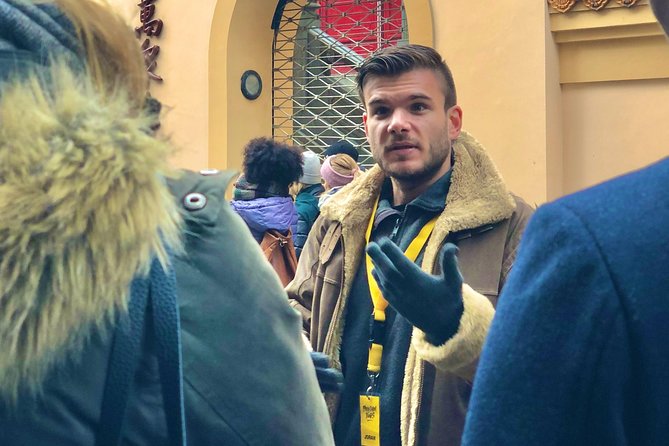
- Clear explanations on the move with pictures/visual aids at key points
- A small group size (max 15) that makes it easier to ask questions and stay together
- Dark-history honesty alongside the fun side of the city (not just postcard views)
Why this Amsterdam intro walk is such good value
At $5.93 per person, this tour is priced like an easy add-on—but it plays like a real orientation. The best value comes from the ratio: you cover a lot of famous locations in a short time, and you’re not locked into paid entrances for everything.
Most stops are listed as free admission, which matters when you’re traveling on a budget. The tour still marks a few places where tickets aren’t included, but even then, the guide’s role is to give you context you can carry forward. In other words, you don’t just see a name on a map—you learn why that name matters, so your later visits (museums, churches, and palace time) make more sense.
And because it’s designed as a walking tour, you get the city’s rhythm rather than a long sit-down lecture. You’ll be looking at façades, canals, and street patterns while the guide explains the logic behind them. Amsterdam rewards that kind of attention.
You can also read our reviews of more tours and experiences in Amsterdam.

Before you go: where to meet, how long it takes, and what to wear
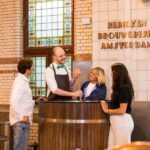
The tour starts at Freedam Tours, Beursplein 5 (1012 GZ Amsterdam) and finishes back at the meeting point area after walking the full route. Expect about 2 hours 30 minutes of time on foot, with shorter timed segments at each stop.
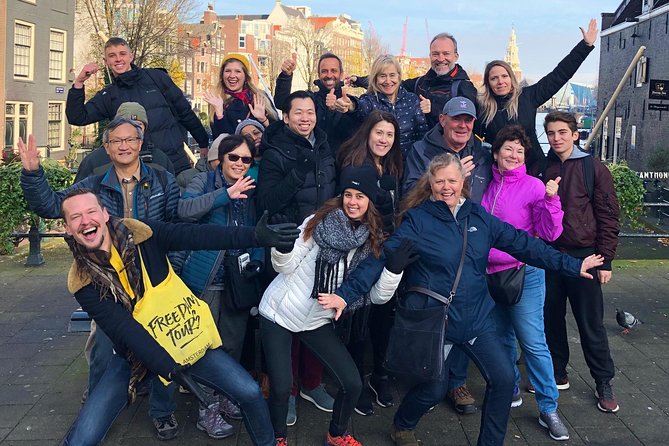
Group size is capped at 15, which is a sweet spot: small enough to stay connected, big enough to keep the energy going. It’s also offered in English, and the tour allows service animals.
What to wear is simple: comfortable walking shoes. Amsterdam’s streets can be crowded, and the canal-side lanes can feel like a live puzzle of bicycles, pedestrians, and sudden turns. Even if you’re in decent shape, you’ll be happier with shoes that handle cobbles and quick pace changes.
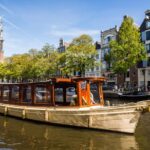
Weather is another practical factor. You’ll notice that at least one canal discussion may happen at different canal spots depending on conditions, so bring a layer you can deal with if it’s chilly or drizzly.
Stop-by-stop: from Beurs van Berlage to Dam Square and the Royal Palace
This route is built like a story map. Each stop answers a different question about how Amsterdam works—why it grew, what laws changed, and how everyday life formed around trade and tolerance.
1) Beurs van Berlage: why water and finance made Amsterdam
You start at Beurs van Berlage, right where the stock-and-commodities exchange buildings stand. The guide points you to the bigger idea first: Amsterdam wasn’t just built on luck—it was built on water and on the business systems that grew around it.
The tour also connects the modern city to older geography, discussing how the area relates to the Amtel river’s past. That shift from waterways to wealth is one of the tour’s key “aha” moments. You see a landmark tied to money, then you’re shown why money here is inseparable from water routes.
Practical note: this is roughly a 20-minute stop and no admission ticket is listed.
2) Damrak: the harbor streets that helped shape the Red Light District
Next comes Damrak, in the old harbor area. This is where the tour tackles the Red Light District’s origins, linking it to the church’s role and the way the city’s rules evolved over time. The guide discusses how sex work became legal as a profession and what the neighborhood faces in the 20th and 21st centuries.
If you’re expecting a sensational walk, you’ll likely be surprised by the tone. The point isn’t to gossip; it’s to explain how “holy” and “profane” can coexist in a city that also prized trade, taxes, and regulation.
Time is about 15 minutes, and admission is listed as free.


3) Our Lord in the Attic Museum (Ons’ Lieve Heer op Solder): tolerance in practice, not theory
This stop focuses on the hidden church at Ons’ Lieve Heer op Solder. Important detail: you do not enter the hidden church. Instead, you see the church from outside and the guide uses pictures of the interior to explain what was going on.
The story centers on tolerance once Catholicism became illegal in the 17th century. The tour’s useful angle is that it doesn’t treat tolerance as a simple modern virtue. It describes how tolerance worked through specific rules—peculiar conditions, real compromises, and practical survival.
You’ll spend around 15 minutes here. Admission tickets for this stop are not included, so if you want to go inside later, plan for that separately.
4) Chinatown: drug policy and how coffeeshops took shape
Then it’s Chinatown time, with the tour using Dutch drug policy as the thread. You’ll hear how this area became a no-go zone in the 1970s, and how that helped spark the coffeeshops model for selling marijuana.
What I like about this approach is that it treats policy as something you can see in the street layout. Instead of arguing opinions, the guide links the legal framework to how neighborhoods developed.
This stop is about 15 minutes with free admission listed.
5) The Waag: Rembrandt’s first major portrait breakthrough
At The Waag, the guide brings you to a specific art milestone: where Rembrandt painted his first major work, and how that helped revolutionize portrait making. There’s also a practical “show, don’t just tell” moment—the guide has a copy of the painting and points out details.
This is one of those stops that makes you slow down, look up, and realize you’ve walked past something tied to major art changes. It’s short—about 10 minutes—and admission isn’t included here, so don’t plan on a museum-style visit on this stop.
6) Oostindisch Huis: the courtyard that explains the Golden Age (and its shadows)
Next you reach Oostindisch Huis, a striking 17th-century building with a courtyard inside. The big practical point: the courtyard access is listed as only available on weekdays. So depending on the day you go, what you see can feel slightly different.
The guide frames this place as the heart of Amsterdam’s leap into global trading—making the city extremely wealthy in the Golden Age. You’ll also hear the harder side: the darker legacy of that period. The tour doesn’t pretend trade was only clean money and clever ships.
Time is about 15 minutes, and admission is listed as free.
7) Waterlooplein Market: surviving the Nazi occupation and the hunger winter
At Waterlooplein Market, the tour goes into the former Jewish Quarter and its near-total destruction at the end of World War II. But the story isn’t only about tragedy—it’s about survival, including what happened during the last hunger winter and the consequences of Nazi occupation that decimated Jewish communities that had once been a safe haven for persecuted Jews across Europe.
This part can feel heavier than the rest, and that balance is important. Amsterdam’s story is not all canals and bikes; it also includes forced displacement and starvation.
It’s roughly 15 minutes, with free admission listed.
8) The Amstel: canal houses explained (skinny, leaning, hook-and-curtain logic)
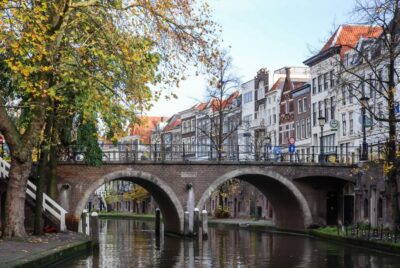
Now you get the city’s “how does this work?” questions. The guide discusses why Amsterdam has canals, then shifts into canal-house architecture: why houses are so skinny, why they lean in different directions, and what the hooks on the buildings are for.
You’ll also hear about Dutch curtains and why they often stay open. It’s a small detail, but it connects to the broader idea of visibility—how streets function socially when homes and waterfronts are always part of the public view.
This stop is about 15 minutes with free admission, and the canal location might vary with weather.
9) Oudemanhuispoort: bikes, bikes, bikes, and an old monastery turned campus
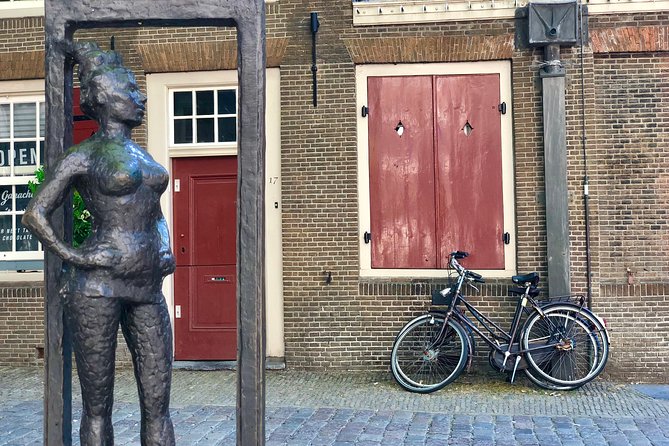
The tour moves to Oudemanhuispoort, a beautiful, hard-to-find former monastery now tied to the University of Amsterdam. Here the story shifts to bikes: why there are more bikes than people, and why Amsterdam’s proud cycling culture can make bikes look, well, a little awkward up close.
This stop is a nice reset after the emotional history. It’s also practical. Once you understand the bicycle logic here, you stop feeling lost when you’re near intersections and bike lanes.
Time is about 10 minutes, with free admission listed.
10) Royal Palace Amsterdam: the Republic-to-monarchy switch and Dam Square ending
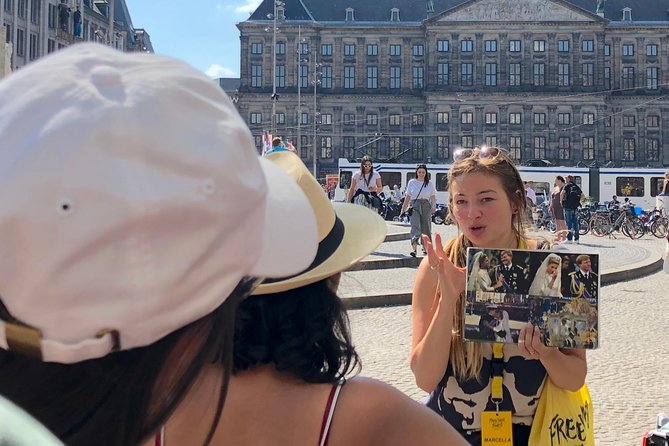
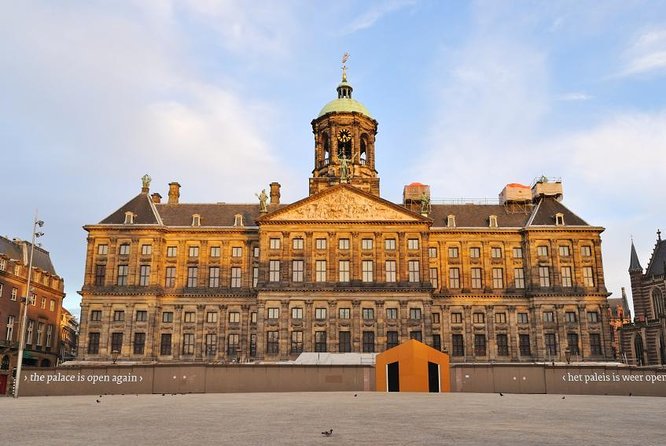
The final stop is Royal Palace Amsterdam, with the tour ending at Dam Square. The guide explains the palace’s peculiar history and covers Amsterdam’s transition from a Republic to a Monarchy. You’ll also meet the current royal family via pictures and get quick, light “royal gossip” context.
Admission isn’t included here, and this is about 15 minutes on the walk’s final stretch. The main value is leaving with a sense of how political power is staged in buildings—and how a square becomes the city’s stage.
The big themes you’ll carry with you after the 2.5 hours
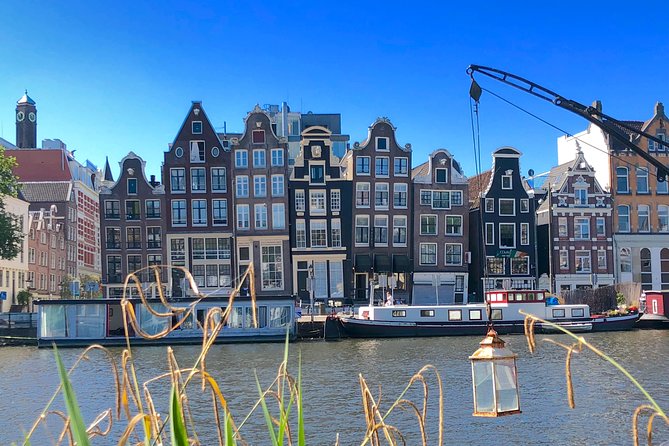
If you do this tour early, you’ll start to notice patterns on your own the rest of the trip.
Water and finance: The city’s exchange culture isn’t random. When you connect Beurs van Berlage to the way waterways shaped trade routes, Amsterdam stops feeling like a set of pretty streets and starts feeling like a working system.
Religion and tolerance as policy: The stop at Ons’ Lieve Heer op Solder makes tolerance feel real. The guide frames it as something shaped by rules and restrictions, not just a moral slogan. That context makes it easier to understand later churches, hidden spaces, and the way people adapted.
Law shaping neighborhoods: The Damrak and Chinatown segments both show how laws can change street life. Red Light District regulation and Dutch drug policy history are presented as explanations for how neighborhoods evolved, not as shock content.
Golden Age trade with a moral cost: Oostindisch Huis is a strong reminder that Amsterdam’s wealth came through global trade—and that trade has winners and victims. You learn to look at beautiful architecture while keeping the darker legacy in view.
War’s impact on safety and survival: Waterlooplein Market brings the conversation back to the human cost of occupation and starvation. It gives the “safe haven” idea a sharper edge and helps you understand why some neighborhoods are rebuilt in grief.
Architecture and daily habits: The Amstel stop helps you read the city. You’ll look at house proportions and street visibility in a new way, and bikes won’t feel like chaos—they’ll feel like the system.
What the guides do well, from Gianni to Raymond
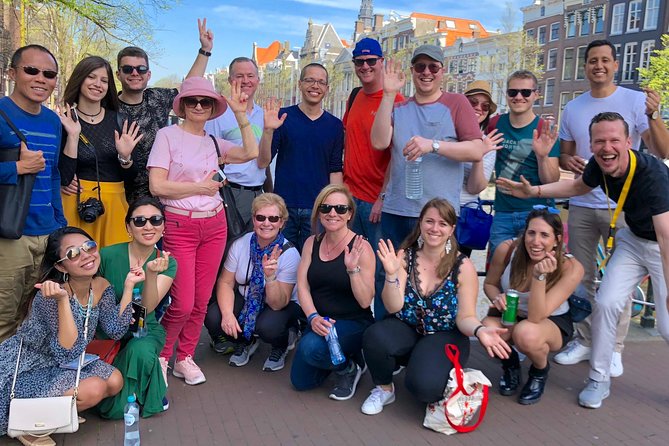
This tour’s quality comes down to guide style. The best guides on this route share three traits you can feel right away: clear pacing, humor without turning serious history into a joke, and practical visuals when needed.
You’ll see names like Gianni, Jaap, Esi, Sergio, Raymond, David, Fernando, Ramses, Roman, Dani, Sebastien, and Alexander mentioned as guides for this experience. Since guides rotate, you can’t guarantee your exact person. But the consistent pattern in the guide stories is strong: they explain details with visual aids, they keep the walk manageable, and they tailor the narration so the group stays together.
I also like the way many guides handle questions in real time. With a maximum group size of 15, it’s easier for the story to stay interactive instead of turning into a monologue.
One practical note from the way guides handle crowds: if you can, try not to schedule this at the busiest parts of the day. Narrow streets can get packed fast, and your guide will be working to keep the group moving safely.
So, is it worth your time?
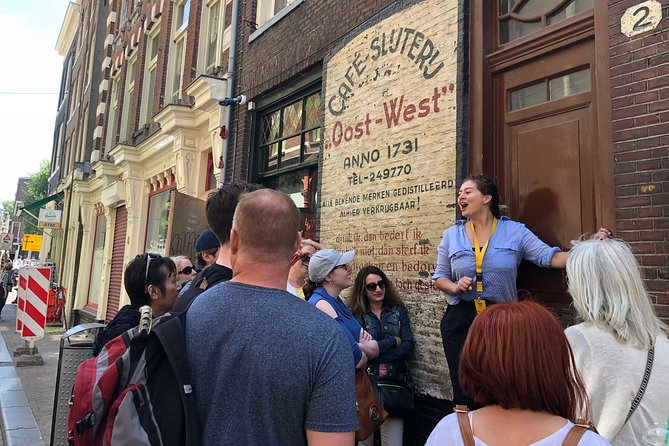
Yes—especially if you’re short on time or you want a smart first day.
I’d book this if:
- you’re seeing Amsterdam for the first time and want a fast orientation loop
- you like history that connects to the street you’re standing on
- you want mostly free stops, with just a few ticket-not-included options for later
I might skip or add something else if:
- you’re hoping for lots of inside museum time (a few stops don’t include admission, and at Ons’ Lieve Heer op Solder you stay outside)
- you dislike walking for a couple hours or you’re sensitive to bike and pedestrian crowds
If you want a clean, economical way to understand Amsterdam’s logic—water, money, policy, and architecture—this tour is a strong starting move.
FAQ
FAQ
How long is the Absolutely Amsterdam – the Essential Introductory Walking Tour?
It lasts about 2 hours 30 minutes.
What is the price?
The price is $5.93 per person.
Is the tour offered in English?
Yes, it’s offered in English.
How many people are in a group?
There’s a maximum of 15 travelers.
Where does the tour start?
You meet at Freedam Tours, Beursplein 5, 1012 GZ Amsterdam.
Where does the tour end?
The activity ends back at the meeting point, after finishing at the Royal Palace Amsterdam / Dam Square area.
Are admission tickets included?
Some stops are free, but a few are ticket not included. Tickets are not included for Our Lord in the Attic Museum (Ons’ Lieve Heer op Solder), The Waag, and Royal Palace Amsterdam.
Does the tour enter the hidden church at Ons’ Lieve Heer op Solder?
No. You do not enter the hidden church. You’ll see it from the outside and view pictures of the interior.
What is the cancellation policy?
You can cancel for a full refund up to 24 hours in advance. If you cancel less than 24 hours before the start time, the amount paid isn’t refunded.
Is there a minimum number of travelers?
Yes. If the experience doesn’t meet the minimum number of travelers, it may be canceled, and you’ll be offered a different date/experience or a full refund.