REVIEW · AMSTERDAM
Amsterdam: Anne Frank and Jewish Quarter Walking Tour (TOP RATED)
Book on Viator →Operated by Trigger Tours · Bookable on Viator
Anne Frank’s Amsterdam starts before the famous museum. This walk through the Jewish Quarter brings the era into focus with a small group capped at 15 and a local guide who keeps the route tight and readable. It’s not just about one story, either; you’ll see how community life, persecution, and resistance show up in real street corners.
What I like most is the balance: you get stops that are free to enter plus short, clear context so you’re not just standing in front of plaques. I also appreciate that guides such as James, Guido, Aaron, Maria, and Andrea come through in the stories, which tells you this isn’t a one-note script.
One big consideration: this tour does not go into the Anne Frank House. If that’s your top priority, you’ll want to book it separately.
In This Review
- Key things to know before you go
- Why this walk matters more than just checking off the Anne Frank House
- Amstel 51C meeting point and how the 2-hour pace works
- Portuguese Synagogue: starting with a living Sephardic landmark
- The Auschwitz Monument and deportation theme on the streets
- Verzetsmuseum Amsterdam and resistance: the WWII angle beyond the worst moments
- De Plantage and the Spinoza Monument: learning the neighborhood’s language
- Dam Square, Royal Palace area, and finishing near Nieuwmarkt
- Price and value: $33.26 for a lot of guided meaning
- The guide factor: why names like James and Aaron keep showing up
- What to wear, what to bring, and how to handle the outdoor pacing
- Who should book this tour (and who might prefer something else)
- Should you book this Anne Frank and Jewish Quarter walking tour?
Key things to know before you go

- Small group size (max 15) keeps the pacing human and questions possible.
- Free-entry stops help you get value without paying for multiple admissions.
- WWII sites and memorials are woven into the walk so the neighborhood feels connected, not random.
- Your guide’s storytelling matters, and several guides are named positively in feedback (James, Guido, Aaron, Maria, Andrea).
- You’ll hit Dam Square and the Royal Palace area for a major Amsterdam finale.
- Most of the walk is outdoors, so plan for wind, chill, or sun.
Why this walk matters more than just checking off the Anne Frank House
If you’re coming to Amsterdam for Anne Frank, it’s easy to treat it like a single, contained visit. This tour is different. It helps you place Anne Frank in a broader map of Jewish Amsterdam—before the war, during the occupation years, and in the memorial sites that still mark the area.
You’ll also notice how Amsterdam changes depending on what you pay attention to. This route nudges your eyes toward the neighborhood’s threads: places tied to worship, deportation, and resistance, plus the names you’ll see again when you later read, watch, or visit museums.
And yes, the subject is heavy. You won’t leave with a “happy” feeling. But you can leave with understanding that actually sticks.
You can also read our reviews of more tours and experiences in Amsterdam.


Amstel 51C meeting point and how the 2-hour pace works
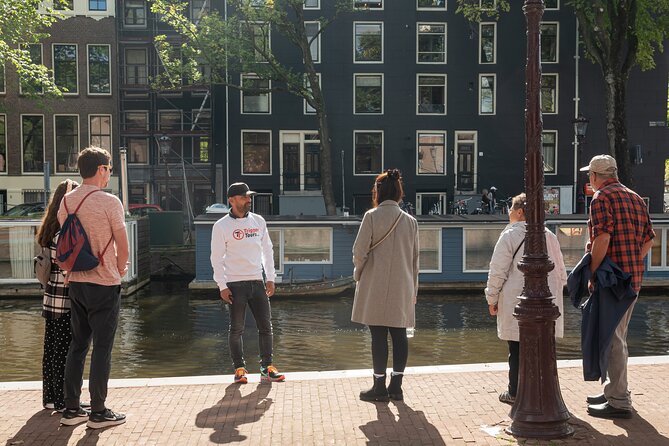
The tour starts at Amstel 51C, 1018 EJ Amsterdam. The activity ends back at the meeting point, so you’re not stuck wandering cross-town at the finish.
Plan on about 2 hours total. Most stops are short—around 10 minutes each—plus walking time between them. That format is good for two reasons: first, it prevents the “too long at one spot” problem; second, it keeps the story moving so you don’t forget what each location is supposed to represent.
A practical bonus: there’s pickup from select city center hotels, so if you’re staying nearby, you may be able to cut down on pre-walk logistics. The meeting point is also near public transportation, which helps if you’re navigating by tram/bus on your own.
Portuguese Synagogue: starting with a living Sephardic landmark
The walk begins at the Portuguese Synagogue. This isn’t a museum-only stop. It’s described as an active place of worship and also a popular tourist attraction—so you get a sense of continuity, not just a historical dead end.
Your guide frames it through the Amsterdam Sephardic community during the Dutch Golden Age: the community was among the largest and richest in Europe, and the synagogue’s size reflected that prosperity. That context matters because it pushes the story earlier than most visitors think about.
Expect a short stop with big context: you’ll learn what the synagogue represented, not just what it looks like.
Tip: because this is an active site, keep your volume and movement respectful. Even when you’re there as a visitor, you’re sharing the space.
The Auschwitz Monument and deportation theme on the streets
Next you’ll move to the Auschwitz Monument, where the focus is the Jewish deportation story. This stop is designed to connect the neighborhood with the larger machinery of persecution.
Then the route continues to Hollandsche Schouwburg, where your guide explains deportation camps. The wording on the tour is careful and clear, and the pacing stays tight—short time at each location, then walking so it doesn’t become “standing and reading only.”
Here’s what you’ll get out of this structure: you’re not asked to memorize a timeline on your feet. Instead, you’re guided through the idea that deportation wasn’t an abstract concept. It had places, processes, and routes that touched real people in real parts of Amsterdam.
Drawback to keep in mind: these are emotional stops. If you’re the kind of person who struggles with heavy topics in public spaces, consider how you want to pace your day around this.
Verzetsmuseum Amsterdam and resistance: the WWII angle beyond the worst moments
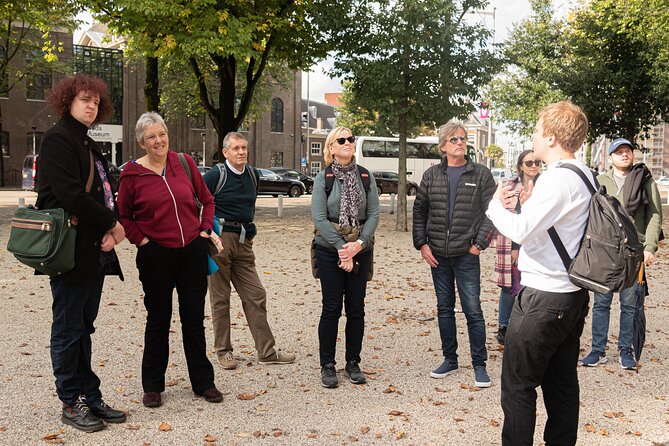
After the deportation theme, you’ll stop at Verzetsmuseum Amsterdam, focused on Jewish resistance.
This part helps balance the emotional weight. It shifts the tour from only survival by endurance to survival through action—ideas, networks, and people resisting the occupation years. It’s one of the reasons this tour can feel more complete than a “marker walk” that only points at tragedy.
Even with short stop times, resistance gets treated as more than a footnote. The goal is to show that Jewish life in WWII Amsterdam wasn’t just what happened to people; it was also how communities responded.
If you only do one WWII-focused experience in the Jewish Quarter, this is one of the reasons the tour earns strong ratings: it doesn’t stay stuck in the darkest chapter.




De Plantage and the Spinoza Monument: learning the neighborhood’s language
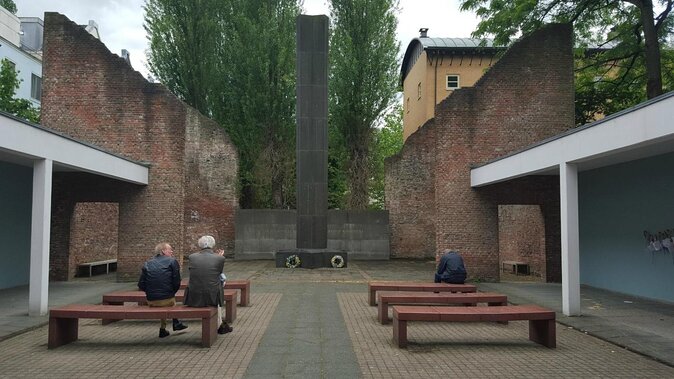
From the memorial-heavy moments, the tour opens up with De Plantage, where you’ll see the area and hear the history tied to it.
Then you’ll reach the Spinoza Monument, which anchors the story to a cultural figure associated with Amsterdam’s Jewish community. Spinoza comes up as a named landmark, and that’s useful for you because it gives the tour a human scale beyond dates and events.
What I like about ending this way is that it changes how you look at streets. Instead of thinking only about what was lost, you’re encouraged to notice the places that carried identity, thought, and community life.
This is also a good section for getting your bearings. If you’re planning to wander afterward on your own, you’ll have a better sense of where everything fits.
Dam Square, Royal Palace area, and finishing near Nieuwmarkt
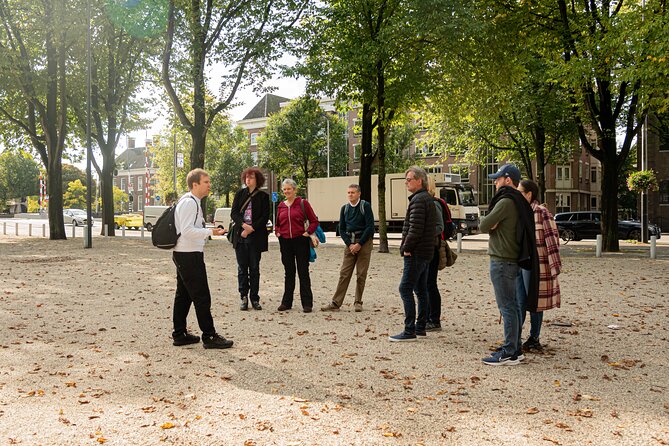
As the tour moves on, you’ll walk toward Dam Square and the Royal Palace area. This is a practical and emotional contrast: you go from neighborhood memorials to one of Amsterdam’s most central, postcard-known spaces.
It helps you connect your WWII-focused learning with the city’s present-day geography. You’ll start to see that the Jewish Quarter story is not sealed in the past; it’s layered under the modern streets you’re walking today.
The tour then finishes at Nieuwmarkt, where your guide ties in more of the Anne Frank story and wraps things up.
One small note from the tour details: the Nieuwmarkt stop lists Admission Ticket Not Included. That usually means you should be ready for any on-the-spot entry you might want to do there to cost extra. If you’re only there for the walk narrative, you can treat it like a guided ending point.
Price and value: $33.26 for a lot of guided meaning
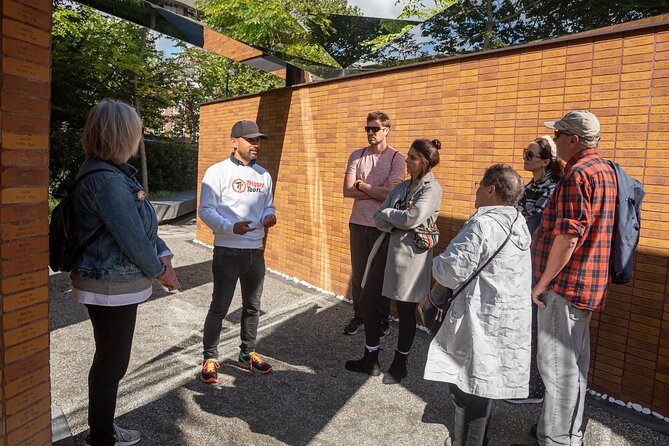
At $33.26 per person for about 2 hours, you’re paying for something you can’t easily DIY: a focused guide, a linked route, and interpretation that connects multiple sites into one story.
What boosts the value is that several stops are noted with free admission (including the Portuguese Synagogue, and the memorial/museum-related stops listed). So your money goes toward the guided walk and context, not toward buying multiple tickets just to see the basics.
Also, with a max 15-person group, you’re more likely to get a smoother pace and fewer “everyone hear nothing” moments than on big bus-style tours.
Is it cheap? No. Is it fair for what you learn and how you move through the city? In my view, yes—especially if you’re short on time and want your Jewish Quarter time to count.
The guide factor: why names like James and Aaron keep showing up
A standout theme in the feedback is how guides shape the experience. Several guides are named positively: James, Guido, Aaron, Maria, Andrea, and others. The praise is consistent: guides explain the story in a way you can follow, bring details to life, and keep the tone sensitive for the topic.
One tip based on how this tour tends to run: ask yourself what kind of learning you want. If you like discussion and context, this format works well because the stop-by-stop route leaves you time to process and ask questions between locations.
Also, you may see practical prep from guides. For example, one guide’s approach included contacting guests ahead of time via WhatsApp with contact details—useful if you’re the type who hates feeling lost.
Tiny reality check: while most feedback is excellent, any live-tour company can have occasional mismatches in guide delivery. If you’re going to be very sensitive about tone or strict fact-only storytelling, read the most recent reviews before you book.
What to wear, what to bring, and how to handle the outdoor pacing
You’ll be outside much of the time. One review notes that 90% of the tour is outdoors, and that warm clothes matter when it’s chilly.
So:
- Wear layers you can handle in wind and sun.
- Bring water if you’re touring in warm weather.
- Expect walking between points, even though each stop is short.
Because the tour is described as requiring good weather, plan for the possibility that a cloudy/rainy day might trigger a different date or a refund path. If your trip is tight, build in a flexible window on your calendar.
Who should book this tour (and who might prefer something else)
You’ll likely love this if:
- You want a walking route that connects Anne Frank’s story to the broader Jewish Quarter experience.
- You’d rather understand the neighborhood first, then do the Anne Frank House later.
- You want a small-group experience with room for questions and pacing that doesn’t feel rushed.
You might skip or add a different option if:
- You only care about the Anne Frank House itself, since this walk does not include it.
- You prefer heavy WWII topics in a museum setting with more shelter.
Should you book this Anne Frank and Jewish Quarter walking tour?
I’d book it if you want Amsterdam to make sense while you learn. The route connects places of worship, deportation-related memorials, resistance, and neighborhood landmarks into one coherent story you can carry around the city afterward.
Just don’t treat it as a replacement for the Anne Frank House. Think of this as the “neighborhood context” tour. If you do both—this walk plus the house—you’ll understand more, and you’ll feel less like you’re seeing separate islands.
If you’re ready for an emotional but well-structured walk, and you appreciate a small group format, this is a strong choice at this price.