REVIEW · AMSTERDAM
Amsterdam Jordaan Food & Drinks Tour with Eating Europe
Book on Viator →Operated by Eating Europe Food Tours Amsterdam · Bookable on Viator
Food and history meet in Jordaan. This Eating Europe tour pairs Dutch classics with smart neighborhood storytelling in Amsterdam’s prettiest pocket of canals and narrow streets. I love the way it keeps the pace social and local, and I especially like the small group size that makes it easy to ask questions. One drawback to consider: it’s a walking-focused tasting, so plan for steady steps and expect only small portions at each stop.
For me, the best part is the lineup: you get a real cross-section of what people actually order in the Netherlands, from apple pie that’s been drawing repeat fans for generations to fish, cheese, and fried snacks that feel like a proper local meal. I also like that the tour connects food to place, with stops that explain why Jordaan became a foodie hub and how older communities shaped what’s on plates today.
The only real caution is food-allergy related: the tour can’t guarantee safety for severe or life-threatening allergies, and tastings vary by season, so if you have strict needs, you’ll want to flag them early.
In This Review
- Key highlights that make this Jordaan tour worth your time
- Why Jordaan is the right neighborhood for your food crawl
- Price and what you actually get for $110.05
- The pace: walking Jordaan like a local, not a marathon
- Where you meet and how the tour ends
- Stop-by-stop: what you taste (and why each one fits)
- Stop 1: Papeneiland and Amsterdam’s legendary apple pie
- Stop 2: Vishandel Centrum for herring and kibbeling
- Stop 3: Café De Poort for Gouda, aged and paired with intention
- Canal-walk storytelling: Golden Age connections you can taste later
- Stop 4: Mama’s Koelkast for Surinamese rotirol
- Stop 5: Pat’s Poffertjes at Oude Leliestraat
- Stop 6 (WWII context): a WWII-era site connection near Anne Frank’s House
- Final stop: Café Dialoog for bitterballen and jenever
- The drinks: beer, wine, and jenever in the right moments
- The best part: how the guide changes the whole experience
- Vegetarian, gluten-free, and allergy reality check
- Who this tour fits best (and who might want something else)
- Should you book the Amsterdam Jordaan Food and Drinks Tour?
- FAQ
- How long is the Amsterdam Jordaan Food & Drinks Tour?
- What is the price per person?
- How many stops and tastings should I expect?
- What drinks are included?
- Where do I meet the tour?
- Where does the tour end?
- Is the tour group small?
- Can the tour accommodate dietary requirements?
- Are children allowed?
- What if I have trouble finding the start point?
Key highlights that make this Jordaan tour worth your time
- Eight tastings across local shops and cafés that keep old-school Dutch food traditions alive
- Included drinks ranging from beer and wine to traditional jenever, not just water with snacks
- Jordaan walking route through the canal-side streets (including 17th-century architecture context)
- Surinamese and Indonesian influences that many visitors miss completely
- A small group capped at 12, which feels friendly and personal without being precious
Why Jordaan is the right neighborhood for your food crawl
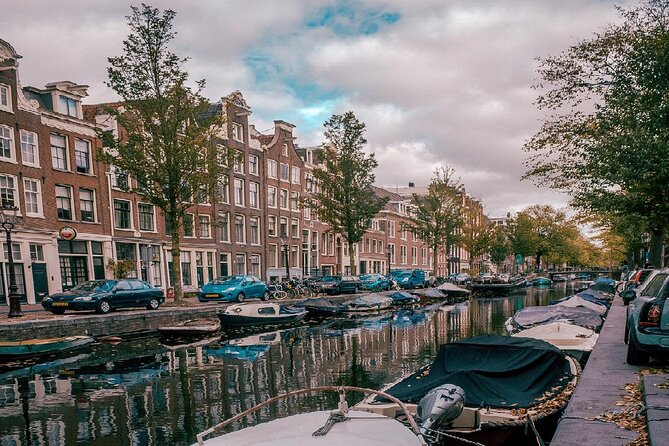
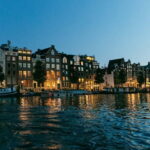
Jordaan is one of those Amsterdam areas that looks like it was made for wandering: narrow lanes, classic canal views, and brown cafés that feel like they’ve seen a few centuries of life. What makes this tour work so well is that it doesn’t treat the neighborhood as a backdrop. It uses the streets themselves as the story.
You’ll start your walk in and around the Jordaan district, a former working-class area that later transformed into a popular food-and-drink destination. As you move from stop to stop, your guide ties dishes to the people and history behind them—so the food lands with context, not just as a checklist.
And because it’s about three hours, you get a “good first plan” payoff. It’s long enough to feel like an actual experience, but short enough that you can still do canals, museums, or a second meal afterward without burning the whole day.
You can also read our reviews of more tours and experiences in Amsterdam.
Price and what you actually get for $110.05
At about $110.05 per person for roughly 3 hours, the value comes from the mix: multiple tastings plus drinks, not just one fancy sit-down meal. You’re paying for (1) local access to long-running spots, (2) guided history that helps you understand what you’re eating, and (3) the convenience of having it all organized into one efficient route.
This is also one of those tours where “small samples” still add up. Even when you eat in bites, you can expect the tour to include enough different foods that it feels like you’ve eaten a full meal’s worth by the end—especially because dessert is part of the plan.
One small trade-off: because tastings are spread out, you might not leave with a belly-busting feast. If you want big portions, you’ll still need a later dinner. But if you like variety and want to eat like a local (not like a tour bus), this pricing makes sense.
The pace: walking Jordaan like a local, not a marathon
The tour runs about 3 hours with several stops. Most of the time is spent walking short stretches between cafés and shops, with tasting moments that typically last around 15 to 30 minutes depending on the location.
The route is designed for casual strolling along canal-adjacent streets and neighborhood lanes, so it’s not about speed. Still, you’ll do enough walking that good shoes matter. I’d treat it as a “morning-to-afternoon snack walk,” not a museum sprint.
Group size also affects pace. With a maximum of 12 travelers, you won’t feel herded. It tends to feel informal: you get time at each stop, and the guide can answer questions without shouting over crowds.
Where you meet and how the tour ends
You’ll meet at Noordermarkt 48 (1015 NA), and you’ll finish at Prinsengracht 261a (1016 GV). That matters because it shapes how your day flows.
Starting near Noordermarkt helps you get into the Jordaan vibe fast. Ending on the Prinsengracht side means you can keep exploring right after, rather than feeling stranded across town. Also, the final stop is a cozy brown café setup, so it’s a satisfying landing point after the walking.
Stop-by-stop: what you taste (and why each one fits)
Stop 1: Papeneiland and Amsterdam’s legendary apple pie
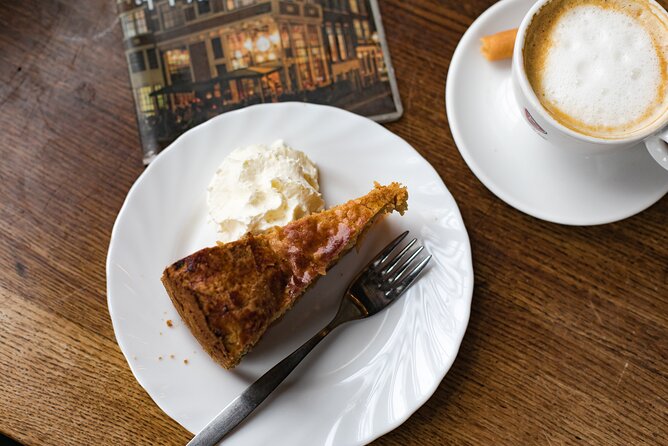
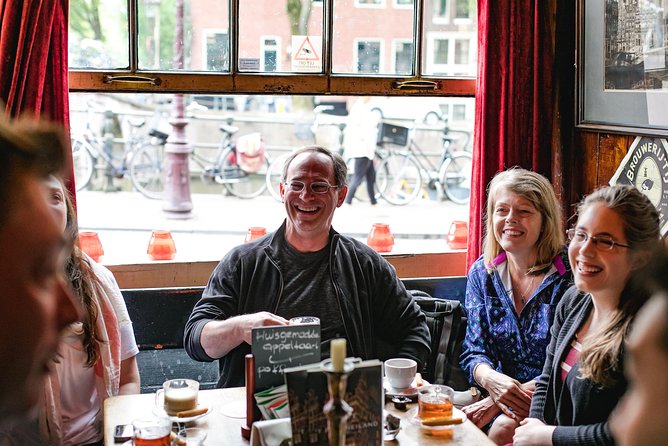
You begin at The Papeneiland, a brown café that dates back about 400 years. The centerpiece here is the apple pie, served with your choice of coffee, cappuccino, or tea. This is one of those “simple but famous for a reason” Dutch treats.
Why this works early: apple pie is easy to enjoy without being distracted by big flavors. It also gives you a cultural anchor. When a place has survived that long, you’re not just tasting dessert—you’re tasting continuity.
Practical note: if you’re craving something sweet later in the trip, you’ll still be glad you started with pie. It sets the tempo for the rest of the tastings.
Stop 2: Vishandel Centrum for herring and kibbeling
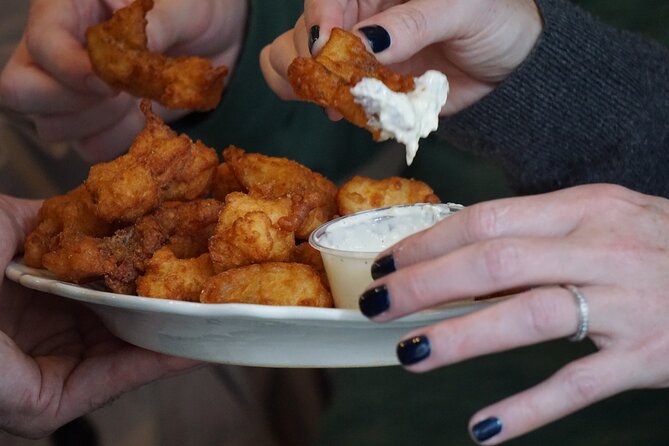
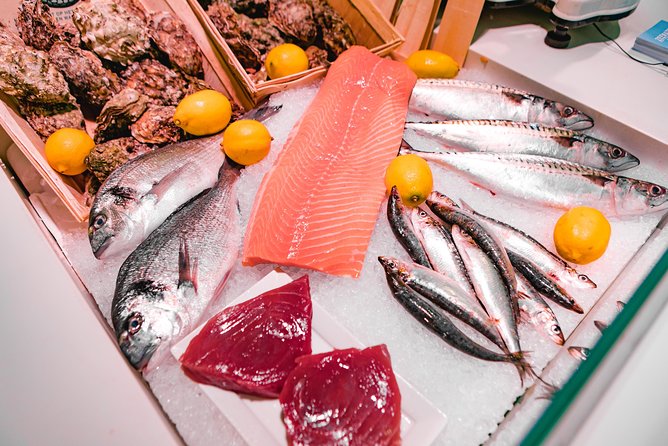
Next up is Vishandel Centrum, a classic Dutch fishmonger where you’ll taste fresh herring plus crispy kibbeling. You also get the chance to watch the fish preparation in the open back area, which adds to the “local life” feel.
If herring sounds intimidating, don’t overthink it. Dutch pickled fish is built for a straightforward pairing with onions and pickles, and many people end up surprised by how much they enjoy it once it’s served properly.
This stop is a good reality check too: Amsterdam’s food scene is not just pancakes and tourist cheese shops. There’s serious tradition here.
Stop 3: Café De Poort for Gouda, aged and paired with intention
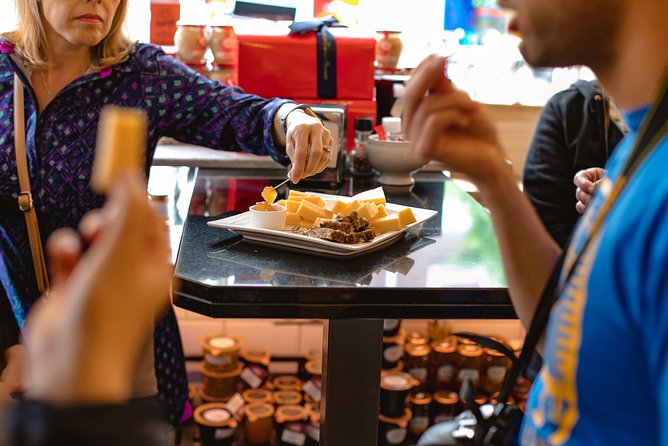
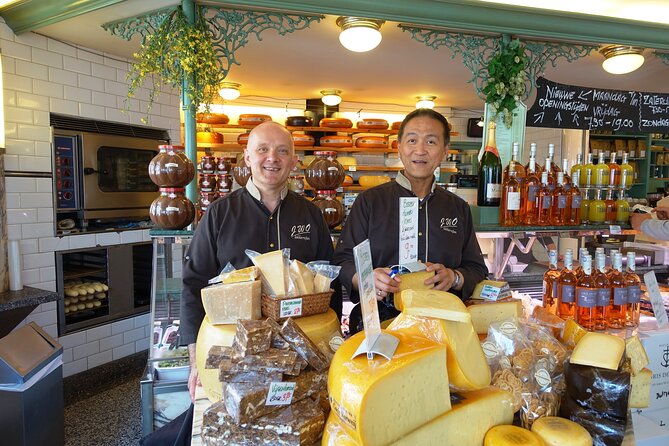
At Café De Poort Amsterdam, the focus shifts to organic Gouda cheese, served with attention to how aging changes flavor. You’ll try a selection rather than one cheese straight out of the fridge.
Why the aging detail matters: as Gouda matures, it typically moves toward deeper, nuttier notes and stronger character. So tasting in stages helps you understand Dutch cheese as a craft, not a snack.
Canal-walk storytelling: Golden Age connections you can taste later
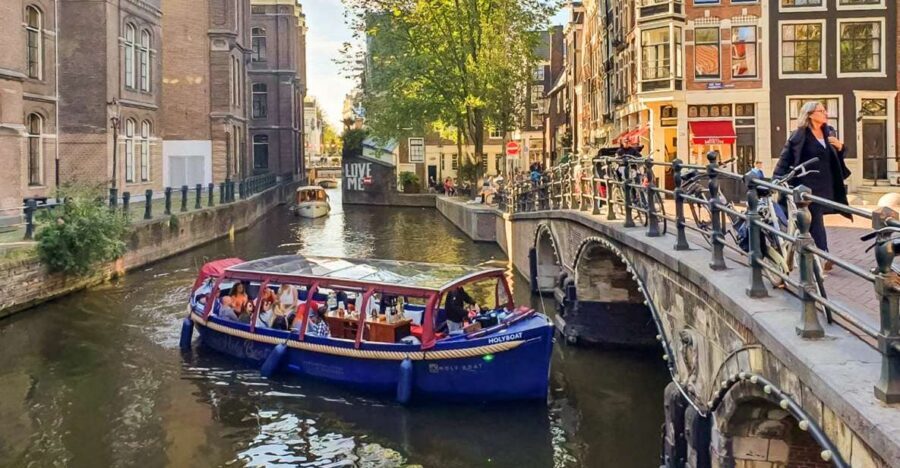
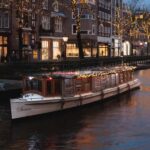
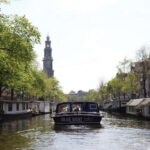
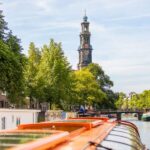
Between food stops, you’ll walk along one of Amsterdam’s most beautiful canals while your guide shares context about the city’s Golden Age and how it influenced cuisine. This kind of pause matters because it prevents the tour from turning into a nonstop food blur.
You’ll also get stories tied to places behind the scenes of old Amsterdam—like De Gangen Willemstraat, once known for narrow alleys that housed the city’s poorest residents. It’s a reminder that today’s fashionable streets sit on older layers.
If you like your food with meaning (not just brag-worthy photos), this storytelling is a big part of the value.
Stop 4: Mama’s Koelkast for Surinamese rotirol
This stop is where the tour quietly becomes more interesting than the average Dutch-only tasting. At Mama’s Koelkast, you’ll taste homemade Surinamese rotirol served by Mama Jane, with a home-cooked vibe tied to Surinamese culinary heritage.
This is where you start seeing Amsterdam as a global food port, not a country-sized museum. The flavors you’ll encounter here fit into the Netherlands’ reality: migration shaped what people cook and how they share meals.
The drawback: if you’re expecting only classic Dutch dishes, this can feel like a surprise pivot. But for many people, that’s the point.
Stop 5: Pat’s Poffertjes at Oude Leliestraat
Now for something sweet and comforting: poffertjes. At Pat’s Poffertjes Oude Leliestraat, you’ll watch the fluffy mini pancakes being made fresh on the griddle, then served warm with butter and powdered sugar.
Why it’s a perfect mid-tour sugar reset: poffertjes are light enough not to stop the walking enthusiasm, but satisfying enough that you won’t feel snack-deprived until later.
Stop 6 (WWII context): a WWII-era site connection near Anne Frank’s House
As you continue, you’ll view the exterior of a poignant historical site while your guide shares context about Amsterdam during World War II and its impact on the city’s culture and cuisine. The broader tour framing also references Anne Frank’s House as a prominent landmark.
This adds an emotional layer to the day. It’s not the kind of history that makes the tour heavy—it’s more like a reminder that food and culture survive through hardship, and that neighborhoods carry memory.
If you want light entertainment, this part may feel less fun than the pie stop. If you want a more rounded Amsterdam experience, it’s an important shift in tone.
Final stop: Café Dialoog for bitterballen and jenever
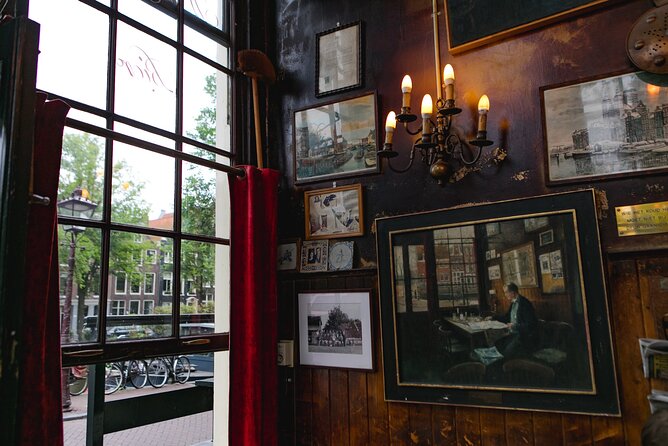
You end at Café Dialoog, a cozy brown café. Here you’ll taste crispy bitterballen paired with a smooth glass of jenever.
This pairing is a classic for a reason: bitterballen bring the savory crunch and rich filling, while jenever (traditional juniper-based gin) brings a fragrant backbone that cuts through the fried texture.
This is a strong ending because it hits the Dutch “pub food” identity without feeling like a rushed final stop. You’ll likely leave knowing what to look for on your next night out.
The drinks: beer, wine, and jenever in the right moments
The tour includes drinks throughout, including local favorites like local beer, wine, and jenever. You also get coffee, cappuccino, or tea at the apple pie stop.
The practical advantage is simple: you’re not left wondering where to buy drinks or whether your meal plan will hold you over. The tastings come with drink pairings so you experience the flavors as locals would—snack plus sips, not dry food.
A small word of caution: if you’re sensitive to alcohol, pace yourself. Jenever can be smooth and still strong, so enjoy it slowly.
The best part: how the guide changes the whole experience
This tour is very guide-dependent in the best way. Multiple guides are mentioned in past experiences, including Micky, Gerard, Stephanie, Paul, Elena, Danielle, and Jacob. The consistent thread is that guides connect food and city-lore, and they handle details like guiding you through allergy substitutions when possible.
If you’re trying to pick the right day, look for one where you can arrive relaxed. The best tours start with a calm start and a guide you can hear.
Tip for you: bring one question you care about, like how Dutch cheese aging works or why pickled herring stays popular. Guides usually love those.
Vegetarian, gluten-free, and allergy reality check
The tour says it can try to accommodate vegetarians and gluten-free guests where possible, and you can email ahead or add a note at booking.
For severe or life-threatening allergies, the tour isn’t suitable. If you have a serious allergy, don’t rely on guesswork. Contact the operator early and ask what can be done safely for your specific ingredients.
Also remember that even if substitutions are possible, tastings can vary by day or season. So your best strategy is communication, not hope.
Who this tour fits best (and who might want something else)
This tour is a great match if you want:
- A local-focused intro to Amsterdam that avoids the most obvious tourist-only stops
- Dutch classics plus colonial-era flavor influence, including Surinamese and Indonesian touches
- A small-group experience that feels friendly, not like a line at a theme park
It might be less perfect if you:
- Need big restaurant-style meals rather than tastings
- Have a severe allergy and need absolute certainty beyond what the tour supports
- Prefer minimal walking, since it’s built as a route with multiple stops
Should you book the Amsterdam Jordaan Food and Drinks Tour?
Book it if you want a smart first taste of Amsterdam’s food culture with a neighborhood setting that feels real. The value is strongest when you enjoy variety, like learning what you’re eating, and want drinks included rather than added later.
I’d skip it only if you want huge portions, can’t handle walking between short stops, or have severe allergy needs that go beyond what’s stated as safe for this kind of tour. Otherwise, this is a highly practical way to get full-flavor Amsterdam without guessing where to go next.
FAQ
How long is the Amsterdam Jordaan Food & Drinks Tour?
It lasts about 3 hours.
What is the price per person?
The listed price is $110.05 per person.
How many stops and tastings should I expect?
You’ll visit eight authentic shops and eateries for a selection of Dutch food and drinks tastings.
What drinks are included?
Included drinks include local beer, wine, and traditional jenever, plus coffee or tea at the apple pie stop.
Where do I meet the tour?
The meeting point is Noordermarkt 48, 1015 NA Amsterdam.
Where does the tour end?
The tour ends at Prinsengracht 261a, 1016 GV Amsterdam.
Is the tour group small?
Yes. The group size is capped at a maximum of 12 travelers.
Can the tour accommodate dietary requirements?
The operator says it will do its best to accommodate vegetarians, gluten-free guests, or other dietary needs if you email ahead or add a note at booking. Severe or life-threatening allergies aren’t suitable for the experience.
Are children allowed?
Children under 4 join for free without a ticket, but food is not included. Paid tickets with food included are available for ages 4 and up.
What if I have trouble finding the start point?
The tour is near public transportation, and it includes a clear meeting point at Noordermarkt. If you have difficulty arriving on time, it’s best to contact the operator using your booking details.