REVIEW · AMSTERDAM
Amsterdam Red Light District Walking Tour in EN/DE/IT/ES
Book on Viator →Operated by Amsterdamliebe · Bookable on Viator
Amsterdam can be blunt. So is this tour. You’ll walk the streets around the Red Light District with a guide who explains how it works, why it exists, and what rules keep the area safer and more legal than most people expect.
What I really like is the mix of landmark stops and real-world context: the area around Oude Kerk (Amsterdam’s oldest church) and the history tied to contraception at Condomerie. I also like that the experience is framed as both factual and human, with guides such as Risheet, Lilly, Francesco, Micaela, Noah, and Sam described as engaging and respectful.
One caution: the district can look different depending on timing. At some hours you may see fewer windows lit up, so don’t book this expecting a constant show; come for the history, rules, and the way the city manages sex work.
In This Review
- Key things to know before you go
- A 1.5-hour walk that explains Amsterdam’s sex-work system
- Logistics that matter: meet, move, and manage the crowd
- National Monument to the district: how the story starts at Dam
- Condomerie stop: contraception as part of the city’s sex-work reality
- Around Oude Kerk: the oldest church and the first windows
- Amsterdam Centraal: legal questions, costs, and how window renting works
- Nieuwmarkt: coffeeshops, cannabis politics, and the district’s future
- Oudezijds Voorburgwal: tips for exploring on your own plus a peepshow option
- Price and value: what $38.71 buys you here
- Who should book, and who should think twice
- Should you book this Amsterdam Red Light District tour?
- FAQ
- Where does the tour start and end?
- How long is the Amsterdam Red Light District walking tour?
- What language is the tour offered in?
- Do I need a mobile ticket?
- Is the peepshow included in the price?
- Are there entrance fees for the stops?
- How far will we walk?
- Is photography allowed during the tour?
- What are the age rules for joining?
- What should I expect about crowds and weather?
Key things to know before you go
- Dam as your anchor point: you start at National Monument and end back where you began.
- Oude Kerk stop: you’ll spend time near the oldest church in Amsterdam and hear how the district took shape nearby.
- Condomerie includes contraception history: you’re not just looking at the area; you’re learning its practical background.
- Optional 1970s peepshow (2 EUR): a small paid add-on if you want that nostalgic angle.
- Small group size: up to 15 people, which makes questions and safety checks easier.
- Photo rule is strict: taking photos of the prostitutes is forbidden.
A 1.5-hour walk that explains Amsterdam’s sex-work system
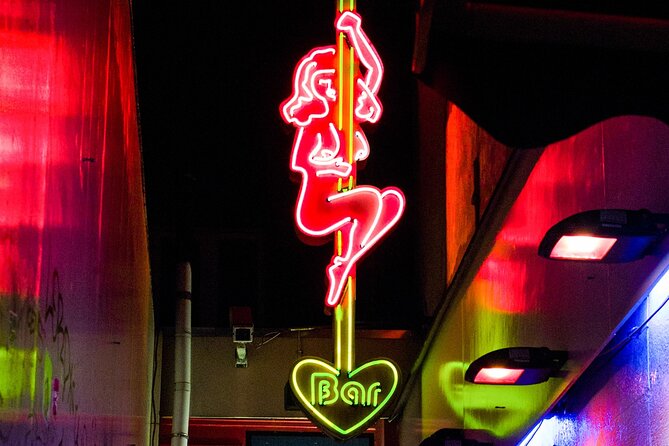
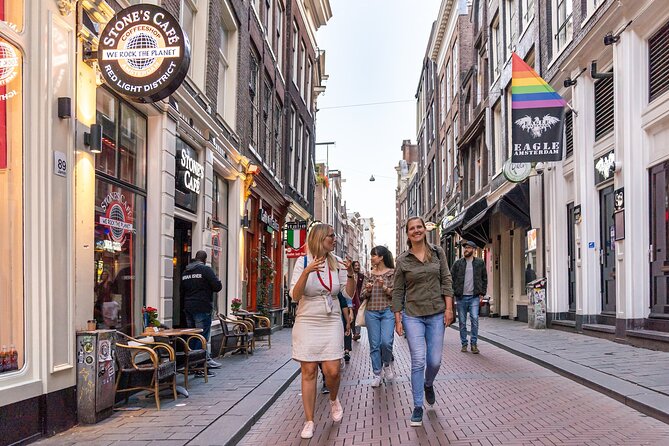
This is a straightforward, city-center walking tour built for one goal: you should leave understanding how Amsterdam’s Red Light District became the way it is, and how the city tries to handle a sensitive business with rules instead of hiding it.
You’ll be on your feet for about 1 hour 30 minutes at a comfortable pace, covering roughly 1.8 kilometers. The path is compact, so even if you’re not into “big sightseeing days,” you can still fit this into an evening slot and keep your daytime free for museums, canals, or just getting lost on purpose.
The price is $38.71 per person, which is not cheap for a walking tour. But here’s what you’re actually paying for: a professional guide, structured stops, and context you won’t get from wandering alone. The paid optional peepshow (2 EUR) is extra, but the core route is included, with free admission tickets noted for the stops.
You can also read our reviews of more tours and experiences in Amsterdam.



Logistics that matter: meet, move, and manage the crowd
You meet at National Monument on Dam (1012 JS Amsterdam) and the tour ends back at the meeting point. That matters because the Red Light District streets can feel maze-like, and ending where you started makes it easier to pivot back to dinner, the tram, or a night walk through other neighborhoods.
This is offered in English and you get a mobile ticket. Confirmation comes at booking, and the meeting area is near public transportation, which helps if you’re already bouncing between sights.
If you’re thinking of going on Friday or Saturday, plan ahead: those days are heavily visited by tourists in the district. I’d choose a different day if you want a calmer pace and less “street noise.” Also, you’ll be walking in any weather, so bring an umbrella when rain shows up.
In summer it gets dark around 22:00, which can affect the street vibe. If you love night atmosphere, pick an evening slot. If you want the most “active-looking” window streets, know that what you see can vary hour to hour.
National Monument to the district: how the story starts at Dam
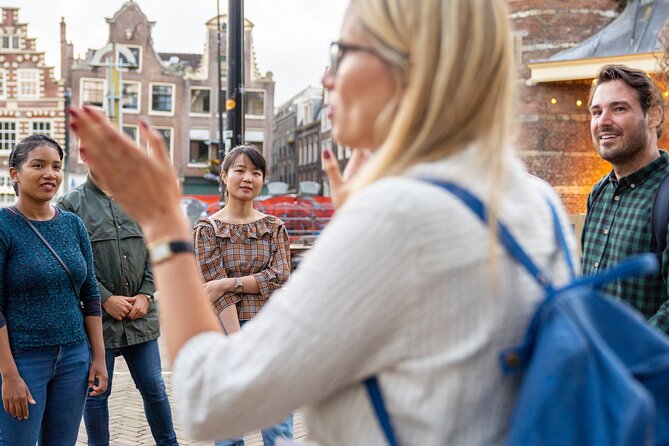
The tour begins at National Monument at Dam, which is an easy-to-find landmark and a good “reset point” before you enter the more intense streets. Starting there also keeps the tour grounded in Amsterdam as a normal city first, not just a tourist spectacle.
From the start, you’re guided to understand the district with a critical lens: how sex work is positioned in a city that’s known for liberal policies, and how that plays out on the street level. Even before you reach the densest parts of the route, you’ll get the framework for what you’re about to see.
Then you move into the Red Light District itself for the first main segment. This isn’t a slow “look around” with no structure. It’s an informative 1.5-hour tour focus that sets expectations so you aren’t just staring at storefronts and street corners.
Condomerie stop: contraception as part of the city’s sex-work reality
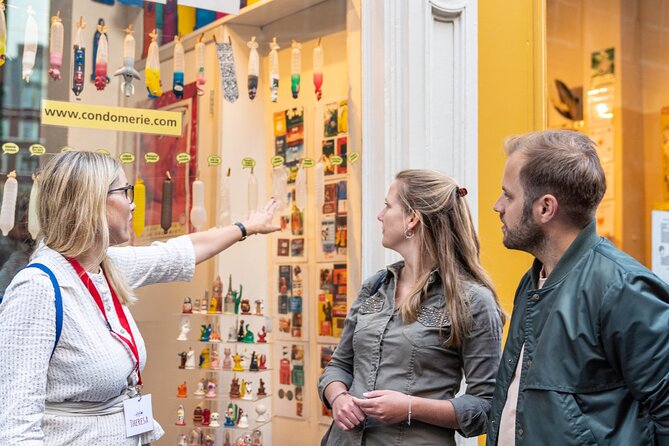
One stop that adds real value is Condomerie, the iconic condom shop in the area. It’s easy for visitors to treat this neighborhood like pure voyeurism, but this stop forces a different question: what tools, rules, and health ideas keep sex work workable in a city that regulates it?
At Condomerie, you’re taught about contraception’s history and importance in Amsterdam’s Red Light District context. That’s not just “sex-ed trivia.” It helps you see the district as something the city manages—partly through harm reduction and public health thinking—rather than something left entirely to chance.
A 10-minute stop here is short, but it’s the right kind of short. It gives you a practical angle you can’t easily find on your own unless you specifically search for it.
Around Oude Kerk: the oldest church and the first windows
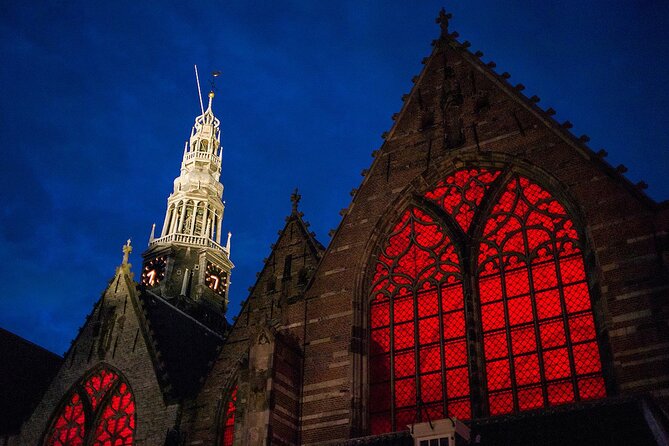
Another standout is the time near Oude Kerk, the oldest church of Amsterdam. You won’t just walk past it. You’ll explore the surrounding area and learn how the district was established in the historical center.
There’s also a chance to see the first windows. That detail matters because it changes what you’re looking at. Instead of seeing windows as a generic “thing to photograph,” you start seeing them as part of a long, urban timeline.
This is where the tour’s tone can really help you. The guides who are praised most often—people name Risheet and Lilly in particular—are described as mixing humor with respect. That style makes the topic feel less like a shock and more like a complicated social system you’re being taught to read.



Amsterdam Centraal: legal questions, costs, and how window renting works
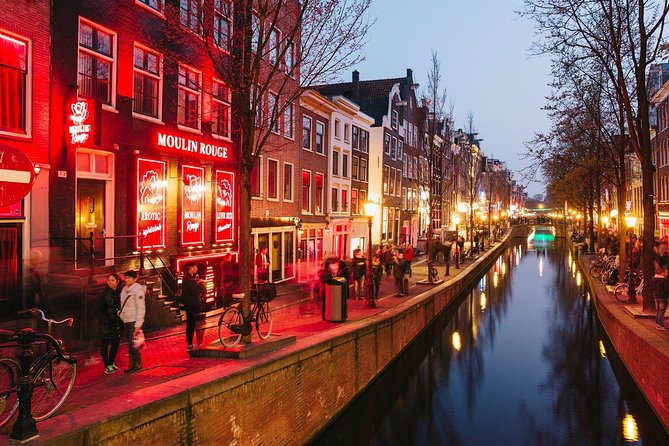
The route brings you to Amsterdam Centraal for two segments. The first one is focused on facts: the historic old harbour area, and what matters when you ask whether sex work is legal, how the system works, and what “window renting” actually looks like in practice.
You’ll get answers to the questions people usually hesitate to ask out loud:
- Is sex work legal here?
- How does the renting system of the windows work?
- What do services cost, at least in general terms?
Even if some parts feel uncomfortable, the point is clarity. The tour doesn’t leave you with vague impressions. It gives you the “how it functions” layer that makes the rest of Amsterdam’s streets easier to interpret.
The second Centraal segment shifts to a critical perspective. You’ll hear about issues sex workers face, including whether there are pimps and what the city does to make the district safe. That’s an important balance point. If the tour only showed the regulated system, you’d miss the pressures that still exist in real life.
If you’re someone who worries about safety (physically or emotionally), this is where you’ll likely feel the most reassurance. A well-run guide can also help you understand what’s normal street behavior versus what you should treat as a problem.
Nieuwmarkt: coffeeshops, cannabis politics, and the district’s future
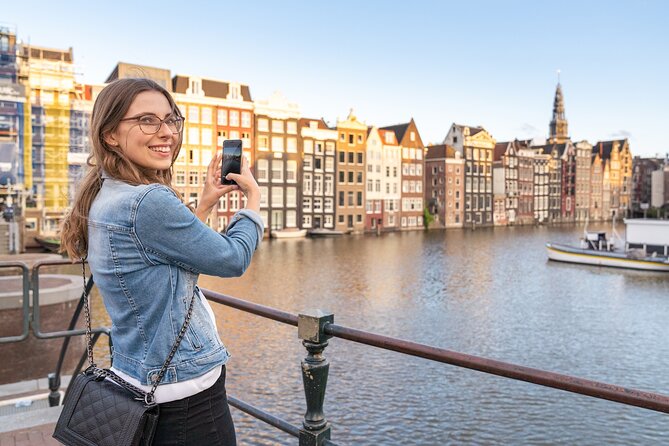
The route then shifts to Nieuwmarkt, where the tour connects Amsterdam’s coffee shop history and cannabis politics to the neighborhood’s larger policy culture. You’ll learn how coffeeshops got established in Amsterdam, and what political situation surrounds cannabis and the future of the Red Light District.
This stop is clever because it broadens the story. The Red Light District isn’t just one business. It sits inside a city that has a distinct way of handling contested issues through law, licensing, and public debate.
The stop is about 15 minutes, which is enough time to build a mental map without turning into a lecture you’ll tune out. It’s also a good moment to catch your breath before returning to the denser streets.
Oudezijds Voorburgwal: tips for exploring on your own plus a peepshow option
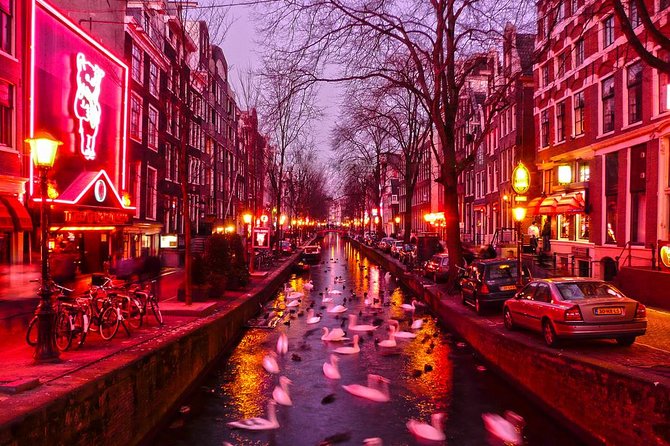
Near the end, you’ll be at Oudezijds Voorburgwal, where the guide gives tips for how to explore the district at your own pace. That’s one of the most practical parts of the tour. It helps you translate what you heard into smart choices later.
One important local detail: there’s also an optional 1970s-era peepshow. It’s extra cost at 2 EUR. If you’re curious about the nostalgic side of how the area sells itself to tourists, this is the time to consider it.
Also remember the rules. Taking photos of the prostitutes is forbidden. That doesn’t just protect privacy. It also keeps you from turning the walk into something disrespectful that could ruin your night.
Price and value: what $38.71 buys you here
Let’s talk value without sugarcoating it. You’re paying for structure, context, and a trained guide. The listed stops show free admission tickets for the stops along the way, so your money isn’t going to entry fees—it’s going to interpretation.
You’re also getting a small group size (max 15). That matters because questions are easier, and you’re more likely to feel safe and guided instead of left in a crowd. In the feedback, multiple guides are praised as funny, engaging, and respectful—especially people named Lilly, Francesco, and Sam.
Is this something you could walk through on your own? Yes, physically. But you’d miss the “why” parts: contraception history at Condomerie, how windows are rented, and the critical look at safety and how the city tries to handle problems.
If your goal is only to see the street and take in the atmosphere, you might feel the cost is unnecessary. If your goal is understanding and comfort walking away with a better mental model, the price starts to make more sense fast.
Who should book, and who should think twice
This tour fits best if you want:
- A guided explanation of how the district is run and regulated
- A calmer way to approach a topic most people avoid
- A walking itinerary with landmarks like Oude Kerk and Amsterdam Centraal
It may feel like too much if you’re expecting a kid-friendly sightseeing vibe. The window displays are part of the environment, and this isn’t a tour built to smooth that out. The tour is public for ages 16 and older only with a parent or guardian, and unaccompanied from 18.
You should also go in with realistic expectations about what you’ll see. One downside from experience reports is that at certain times, fewer windows may be lit or occupied. That doesn’t mean the tour failed; it just means you’re seeing a working district, not a staged show.
Should you book this Amsterdam Red Light District tour?
If you want the street-level version of Amsterdam’s sex-work reality—how it’s legal, how window renting works, and how safety is handled—this is a strong choice. The route is short, structured, and designed for learning without turning the day into a circus.
I’d book it if you like guides who combine facts with a human tone, and if you want to feel more comfortable walking the area afterward using practical advice. I’d think twice if you’re mainly chasing visual stimulation, or if you already feel you know the basics and just want a casual stroll.
If you can, choose a day other than Friday or Saturday for a calmer pace, and consider the optional 1970s peepshow only if you genuinely want that extra layer.
FAQ
Where does the tour start and end?
The tour starts at National Monument, Dam, 1012 JS Amsterdam, Netherlands, and ends back at the meeting point.
How long is the Amsterdam Red Light District walking tour?
It is approximately 1 hour 30 minutes.
What language is the tour offered in?
The tour is offered in English.
Do I need a mobile ticket?
Yes, the tour includes a mobile ticket.
Is the peepshow included in the price?
No. The peepshow is not included and costs 2 EUR extra.
Are there entrance fees for the stops?
Admission ticket is listed as free for the stops included in the tour.
How far will we walk?
The distance traveled is approximately 1.8 kilometers at a comfortable pace.
Is photography allowed during the tour?
No. It is forbidden to take photos of the prostitutes.
What are the age rules for joining?
Participants of the public tour 16 years old and older must be accompanied by a parent or guardian. Participants can go unaccompanied from 18 years of age.
What should I expect about crowds and weather?
The tour runs in any weather, so bring an umbrella for rainy days. Fridays and Saturdays are especially busy in the Red Light District, so for a quieter tour pick another day.