REVIEW · AMSTERDAM
Amsterdam Treasure Hunt: The Mystery of a Secret Sender
Book on Viator →Operated by Mystery City Games · Bookable on Viator
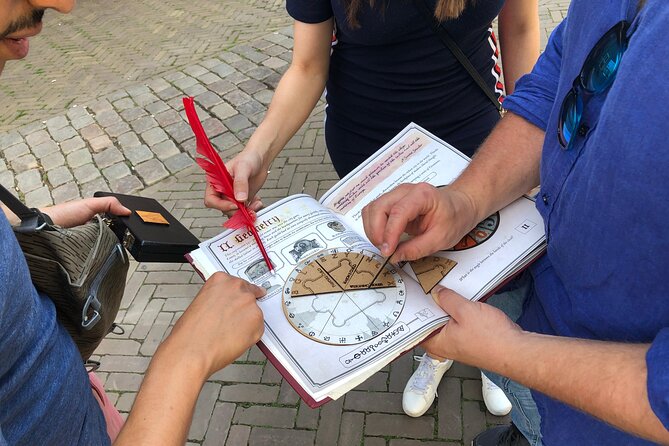
A detective game, but on real Amsterdam streets. This treasure hunt wraps together a walking tour and puzzle challenge, sending you through Golden Age Amsterdam to figure out who A Secret Sender really is. I like the mix of history-and-architecture clues with an honest-to-goodness game feel, and I also love that it’s self-paced, so you can pause and look when something catches your eye. One thing to consider: you will walk about 3 km in the city center, so comfortable shoes are a must.
I also appreciate that the story is built to keep a wide range of people interested, from teens to adults. You’ll spend around 2 hours playing, solving cryptic tasks with your group, and learning true stories from the places you pass—without sitting through a lecture. Choose a start time that fits your day, then follow the route from start to finish at the same meeting point.
In This Review
- Key Highlights You’ll Care About
- The Mission: Who Is A Secret Sender?
- Price and What You Really Get for $30.25
- Your 3 km Route and How the Self-Guided Format Works
- Stop-by-Stop: From Oude Kerk to Amsterdam Museum
- Oude Kerk: Start With the City’s Oldest Atmosphere
- Nieuwmarkt: Break Out of the Quiet and Into the City Pulse
- Westerkerk: Use the Architecture for Puzzle Fuel
- Torensluis: The Water-Edge Clue Zone
- Amsterdam Museum: Finish Strong With the City’s Storybook
- Puzzles, Clues, and Learning Without a Lecture
- Where It Fits Best: Who Should Book This Hunt?
- Families and teens
- Couples
- First-timers
- Time It Right: Start Early, Then Stay Curious
- Quick Tips That Make the Hunt Smoother
- Should You Book the Amsterdam Treasure Hunt: The Mystery of a Secret Sender?
- FAQ
- How long is the Amsterdam treasure hunt?
- How far do you walk?
- Is it self-guided or guided by a person?
- Where does the tour start and end?
- What languages are available?
- Is it offered as a private activity?
- Is there mobile ticketing?
- Is there free cancellation?
Key Highlights You’ll Care About
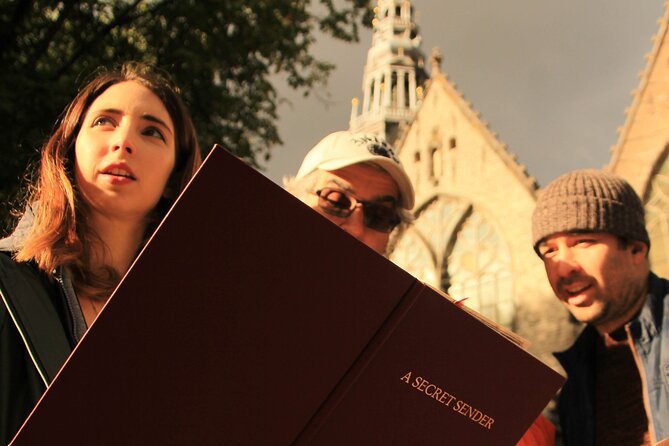
- A story-driven scavenger hunt centered on the Order of the Rosy Cross and a named mystery
- Self-guided, at-your-own-pace play with a clear 2-hour timeframe
- Golden Age city-center route covering about 3 km and major sights
- Puzzle difficulty tuned for fun, not so easy it feels like busywork
- Works well for groups who want movement, from couples to families with teens
The Mission: Who Is A Secret Sender?
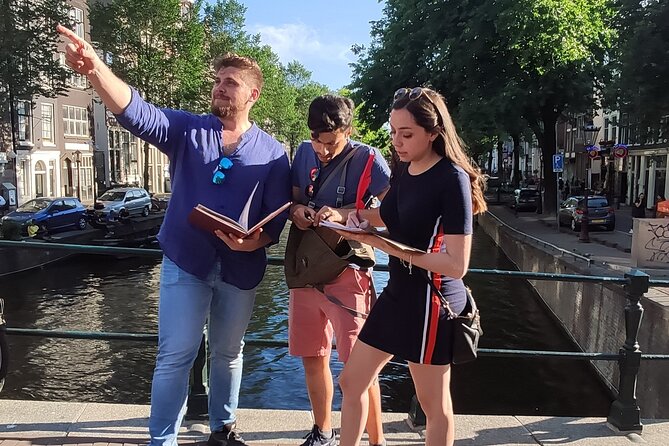
This tour is built like a mystery. The Order of the Rosy Cross is recruiting new members, and you’re the test case. Your job is to solve ancient-style puzzles and uncover the identity of one historic member—known to you only as A Secret Sender.
What makes this work in Amsterdam is that the game doesn’t just float you past landmarks. It pushes you to look at them like evidence. You’ll be searching for clues in history, architecture, and monuments—the kind of details you’d normally walk by without noticing. The result is that the city becomes part of the puzzle, not just a backdrop.
The tone is secretive and playful. You’ll feel the pressure of time because it’s a game with a goal: only the best can solve the mystery in time. That’s a good motivator when you want something more than sightseeing.
You can also read our reviews of more tours and experiences in Amsterdam.



Price and What You Really Get for $30.25
At about $30.25 per person for roughly 2 hours, this isn’t a “quick activity” price. It’s more like paying for an experience that actively uses the city. You’re not just getting a map. You’re getting a guided-by-puzzles format that keeps you moving through the center and learning as you go.
Here’s what you’re getting value for:
- Structure for your time: you know it’s about 2 hours and ~3 km, so you can plan around it.
- A built-in reason to look closely: the clues push your attention to facades, corners, and historical context.
- Group interaction: you’re solving with friends, which usually beats walking independently while everyone scrolls their phone.
Would I recommend this if you want a sit-down, commentary-heavy walking tour? Probably not. This is for people who enjoy figuring things out and walking at a steady clip.
Also, you’ll likely want to book ahead. On average, this gets reserved about 21 days in advance, which suggests it’s a popular add-on for visitors planning their days tightly.
Your 3 km Route and How the Self-Guided Format Works
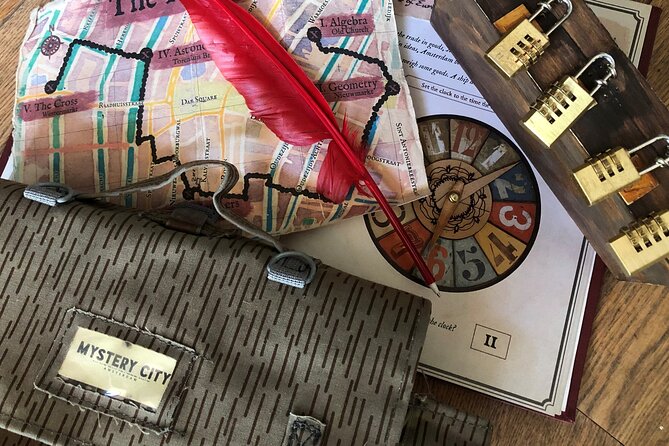
The hunt is described as self-guided, which matters because it changes the whole feel. You’re not stuck with a group pace set by a guide talking nonstop. Instead, you play through puzzles while walking the route and you can slow down when you want to read details or take a quick photo.
The route runs through the city center with a total walking distance of about 3 km over roughly 2 hours of play time. That’s a comfortable distance for most people, but it adds up if your legs already have sightseeing miles in them.
A few practical notes:
- You’ll start at Zwanenburgwal 178, 1011 JH Amsterdam.
- The activity ends back at the meeting point, so you’re not stranded across town.
- You’ll use a mobile ticket.
- It’s available in multiple languages, including English (plus Dutch, French, German, Spanish, and Italian).
Because it’s private—meaning only your group participates—this can feel calmer than big group tours. It also helps puzzle-solving, since everyone gets to contribute without battling crowds.
Stop-by-Stop: From Oude Kerk to Amsterdam Museum
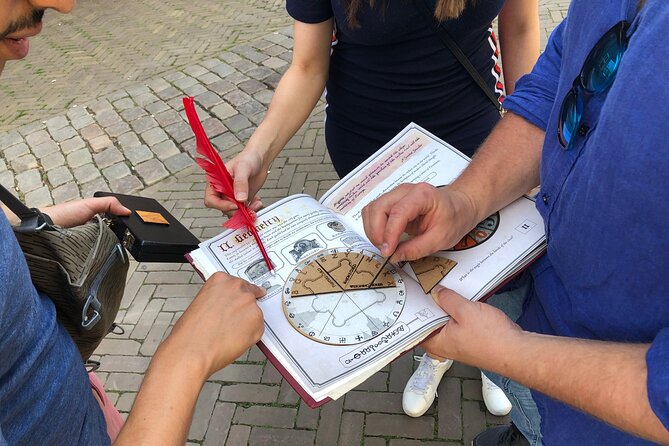
You’ll move through five key areas, and each one is chosen for how much visual and historical material it offers. Here’s how to get the most out of each stop—plus what to watch for.
Oude Kerk: Start With the City’s Oldest Atmosphere
You begin at Oude Kerk. This is a strong opening point because it sets an old-Amsterdam mood fast. When a hunt starts at a historic church, you can expect the clues to lean into the idea that the past leaves marks you can still read.
How to play this stop right:
- Don’t rush through the surroundings. Pause and take in the building’s age and presence.
- Treat any readable features (signs, names, architectural cues) like potential puzzle hints.
Drawback? If your group wants lots of modern city views early, this stop may feel more grounded and “serious.” But that’s exactly why it works as the first chapter.






Nieuwmarkt: Break Out of the Quiet and Into the City Pulse
Next is Nieuwmarkt, a lively area that’s useful for clues because it mixes street life with historical texture. In a scavenger hunt, the best moments often happen where people might normally just pass through on their way to coffee. Here, you slow down on purpose.
What you’ll likely do:
- Match what you notice in the streets to what the puzzle asks.
- Look for hints that connect the setting to Amsterdam’s larger story.
Consideration: this is also where you’ll feel more pedestrian traffic. It can be distracting if your group struggles to focus. A quick “team huddle” and one person reading the clue out loud helps.
Westerkerk: Use the Architecture for Puzzle Fuel
At Westerkerk, the hunt gets stronger on architecture. Big church exteriors and their visual lines are perfect for puzzle moments because there’s a lot to compare and interpret—even from street level.
How to maximize this stop:
- Look for distinctive features rather than trying to memorize everything.
- If your clue references something about design or symbolism, don’t treat it as abstract. Use the building as your proof.
Small reality check: if you’re on the smaller side of a group, it’s easier to gather around one clue without everyone milling around. With more people, you may need tighter teamwork to keep the puzzle from becoming chaos.
Torensluis: The Water-Edge Clue Zone
Then you head to Torensluis, a place where Amsterdam’s relationship with canals becomes part of the experience. Water areas can be great for clue hunts because the environment includes both history and practical details you can still observe.
This stop is especially good if you like:
- spotting small details that connect people and places
- reading the environment like evidence
Why this helps your brain: puzzles get easier when you can point to real things. If your group is the type that needs visual confirmation, Torensluis is a helpful waypoint.
Amsterdam Museum: Finish Strong With the City’s Storybook
Finally, you reach Amsterdam Museum. Ending near a museum works for a scavenger hunt because you can feel the wrap-up energy: you’ve gathered clues across the route, and now you’re in a place associated with interpretation and context.
What to do at the end:
- Re-check your final answers as you walk in. Don’t assume the first guess is correct.
- Take a moment to read the atmosphere even if you don’t go inside anywhere. The point is the last puzzle and how it connects the route you walked.
One practical note: since you end back at the meeting point, you’re not dealing with a long post-game transit plan. That’s great for planning dinner.
Puzzles, Clues, and Learning Without a Lecture
This is where the treasure hunt format shines. The game doesn’t ask you to memorize facts. It asks you to notice patterns and connect clues to the city around you.
From what you can expect in the experience, the puzzles are:
- interactive and designed for group problem-solving
- just challenging enough that you feel smart when you solve
- tied to real stories connected to the buildings and monuments you pass
A big plus: this approach is naturally friendly for teens. If you’ve ever tried to get younger people to “do a walking tour,” you know it can turn into a slow debate about snack timing. Here, the hunt structure keeps everyone engaged because there’s a task in motion.
It can also work well for adults who want something lively. The clues are designed to feel like fun, not like homework. And the route itself gives you enough variety that you’re not stuck looking at the same kind of street corner for 2 hours.
And yes, there’s human warmth at the start and finish. One host you might encounter is Ben, and he’s the kind of guide who makes the handoff feel easy—chatty, friendly, and ready to help you get rolling.
Where It Fits Best: Who Should Book This Hunt?
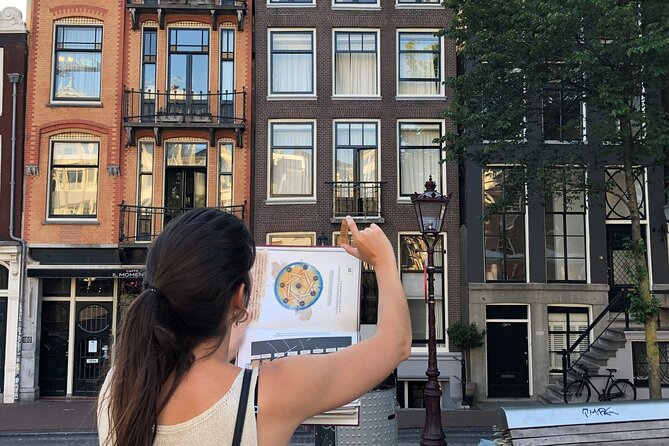
This is a strong match if you want to see Amsterdam in a way that’s active, social, and story-driven.
Families and teens
It’s built to keep kids entertained, and it’s especially good for teens because they get to solve, compete a little, and stay in control of their pace. It can be a sweet way to turn a school-day brain into a holiday brain.
Couples
The self-paced element makes it easier to stay relaxed. You can argue about clues without feeling guilty about holding up a whole group. It’s also a nice way to do something shared that isn’t just another meal reservation.
First-timers
If it’s your first couple of days in Amsterdam, this is a clever way to get orientation. You walk through central areas and start learning the “why” behind what you’re seeing. That helps the rest of your trip feel more grounded.
Who might not love it:
- If you hate walking or only want short hops between attractions
- If your group doesn’t enjoy puzzles at all
Time It Right: Start Early, Then Stay Curious
Even though the play time is about 2 hours, plan like it will take a bit longer when you factor in breaks and the time it takes to work through puzzles. The game encourages you to explore details, so you don’t want to start late afternoon if your goal is also to squeeze in dinner plus a canal cruise.
A simple strategy:
- Start earlier in the day so you’re not rushing.
- Give yourself a buffer so you don’t feel pressure to beat the clock at each stop.
Also, choose a start time that fits your group’s energy. If you’re traveling with kids or teens, earlier tends to be easier than the end-of-day “I can’t think anymore” mood.
Quick Tips That Make the Hunt Smoother
These are small things that can save your group from frustration.
- Wear good shoes. You’re walking around 3 km total.
- Assign roles for puzzle-solving (reader, clue matcher, guess captain). It speeds things up.
- Keep the group together near clues. If people spread out, you’ll waste time collecting everyone back.
- Pause to look, not just to walk. The whole point is finding architectural and historical hints in what you see.
- If you’re traveling with a larger group, manage expectations. The experience is built for groups to solve together, but a big crowd can make decision-making slower.
Should You Book the Amsterdam Treasure Hunt: The Mystery of a Secret Sender?
Book it if you want Amsterdam to feel like a game, not just a photo parade. This tour offers a well-defined 2-hour activity, a satisfying 3 km city-center route, and a story that keeps attention on the real details around you. The value is strong for the price because you’re getting time, movement, and puzzle-based learning bundled into one plan.
Skip it if you prefer a traditional guide-led tour with lots of straight narration, or if walking 3 km feels like too much for your current energy level.
If you’re traveling with teens, partners, or a mixed-age group that likes challenges, this is an especially smart first-day or early-trip choice. It’s the kind of activity that makes the city feel interactive—like Amsterdam is playing along.
FAQ
How long is the Amsterdam treasure hunt?
It lasts about 2 hours of play time.
How far do you walk?
The route is about 3 km through the city center.
Is it self-guided or guided by a person?
It is self-guided, so you explore and solve at your own pace.
Where does the tour start and end?
It starts at Zwanenburgwal 178, 1011 JH Amsterdam, Netherlands and ends back at the meeting point.
What languages are available?
The experience is offered in English, Dutch, French, German, Spanish, and Italian.
Is it offered as a private activity?
Yes. It’s private, and only your group participates.
Is there mobile ticketing?
Yes, you’ll use a mobile ticket.
Is there free cancellation?
Yes. You can cancel for a full refund up to 24 hours before the experience’s start time.