REVIEW · HAARLEM
Discover Haarlem with a self-guided Outside Escape city game tour
Book on Viator →Operated by Outside Escape · Bookable on Viator
Haarlem turns into a walkable puzzle. This self-guided Outside Escape city game connects key sights with façade/photo-style challenges so you’re not just passing by landmarks. I especially like how the route threads together canal beauty and landmark architecture without dragging the pace.
You’ll also be treated to a string of ticket-free stops—most of the fun is outside, at street level, where Haarlem’s details are easy to read. The one possible drawback: if you’re not great with following photo cues, the game can leave you momentarily unsure where to go next.
Expect a simple start and a satisfying finish: begin at Haarlem Station (Stationsplein 9b) and end right by De Waag on the Spaarne, where you can grab a drink after the last clue. It’s designed for an English-speaking group (up to 6 people) and runs about 1–2 hours at a relaxed walking pace.
In This Review
- Key things to know before you start
- Haarlem Station to De Waag: a city game that’s actually easy to follow
- Bakenessergracht canal and Bakenesserkerk’s white tower
- Amsterdamse Poort: the 1486 city gate, seen as you trace the route
- Pavilion Welgelegen and the North Holland Archives: architecture and civic purpose
- Scheepmakersdijk and the fading footprint of shipbuilders
- De Waag (1595): finish on the Spaarne with a café built from a former weighing house
- Price and value: $30.10 per group (up to 6) for a 1–2 hour Haarlem loop
- How the game’s photo cues can help—or trip you up
- Who this Haarlem city game is best for
- Should you book this Haarlem game tour?
- FAQ
- How much does the Haarlem self-guided Outside Escape game cost?
- How long is the experience?
- Is it available in English?
- Where do I start the tour?
- Where does the tour end?
- Is there an admission ticket needed for the stops?
- Is this a private tour?
- Can service animals join?
- Can I cancel and get a full refund?
- What are De Waag’s listed hours for the end point?
Key things to know before you start
- Façade/photo-style clues: the game asks you to look carefully at buildings, not just landmarks.
- Ticket-free sights: each stop is listed as admission ticket free, so you’re not juggling extra costs.
- A tight, walkable route: the stops are clustered along canals, streets, and key architectural nodes.
- Multiple Haarlem highlights: from the Bakenessergracht canal to the Amsterdamse Poort and De Waag.
- Finish at a café landmark: De Waag (built 1595) is now a café, ideal for a post-tour break.
- Private group of up to 6: you move together as your own small crew, not in a big crowd.
Haarlem Station to De Waag: a city game that’s actually easy to follow
This tour works because it stays small and focused. You don’t have to plan a half-day of logistics or jump across town. You start at Haarlem Station on Stationsplein (the meeting point is given as Stationsplein 9b), then work your way through the center toward De Waag (Spaarne 28). The entire experience is listed at about 1 to 2 hours, so it fits well between museum visits, shopping, or a train schedule.
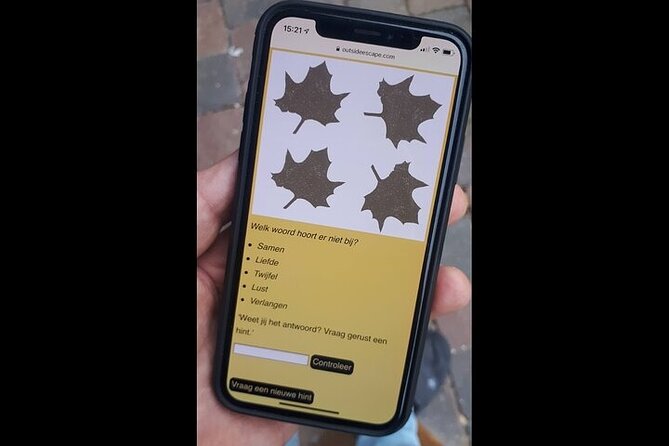
What makes the format feel different from a typical self-guided stroll is the game layer. Instead of “see a church, see a gate,” you’re nudged to identify and match details—often from street-level angles. A review highlight mentioned solving puzzles with building fronts and learning Haarlem through the way façades are used as clue material. That’s a big deal: it turns ordinary walking into active sightseeing.
The other practical win: the itinerary is built from outdoor-friendly stops. Even when you’re looking at buildings like Bakenesserkerk or Pavilion Welgelegen, you’re not stuck outside in the rain for an entire museum visit. You can keep moving in short segments, roughly 5 to 10 minutes per stop.
You can also read our reviews of more tours and experiences in Haarlem.


Bakenessergracht canal and Bakenesserkerk’s white tower
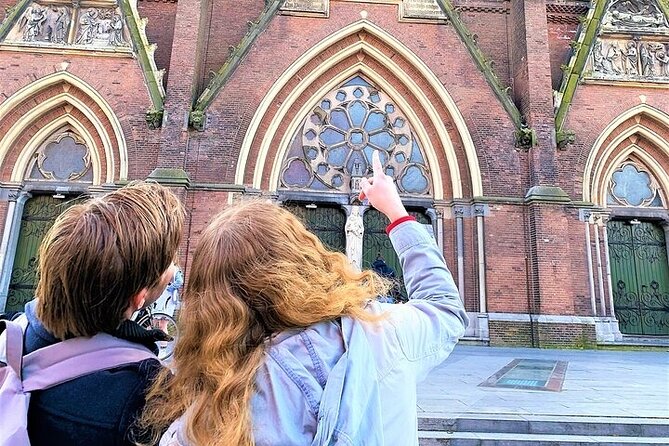
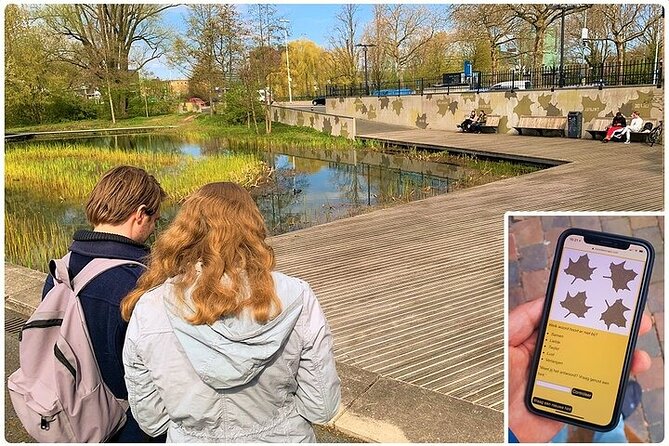
Your early momentum matters, and this route nails the first moments. The tour kicks off at Bakenessergracht, a picturesque canal lined with monuments along its banks. If you’ve never done Haarlem before, this is a smart opener because it shows the city’s character right away: water, stone edges, and the way landmarks sit close to the canal.
Next comes Bakenesserkerk, known in the description for its striking white tower. This is exactly the kind of landmark that helps you orient yourself visually. Even if you only glance at it while moving, it’s the sort of tower your eyes can latch onto later. And because the stop is short, it feels like a quick checkpoint rather than an all-day commitment.
One thing to keep in mind: short stops mean you should slow down for a minute. With a game, your pace can become too fast if you’re eager to “finish.” I’d rather you spend 60 extra seconds noticing what the clue might be pointing at—then you’ll move on feeling like you solved something, not just walked past photos.
Amsterdamse Poort: the 1486 city gate, seen as you trace the route
The route brings you to Amsterdamse Poort, a city gate dated 1486. The description also gives you a key historical framing: this was the road into Amsterdam, and it’s the only remaining gate out of the original twelve. That’s not trivia you just read and forget. It helps you understand why this gate matters as a landmark. Gates like this aren’t decorative—they mark how cities used to control movement.
You’ll pass Amsterdamse Poort more than once. The itinerary lists it as a stop early on, then again later. That’s useful. Seeing the gate twice from slightly different walking angles helps your brain build a mental map. It also reduces the chance you miss it, because you get a second chance after you’ve picked up your bearings.
If you want a practical trick, use the first visit to spot where the gate sits in relation to nearby streets and the general flow of foot traffic. Then, on the second visit, check the same cues again. The game structure already supports that kind of pattern recognition, and it makes the city feel more coherent.
Pavilion Welgelegen and the North Holland Archives: architecture and civic purpose
After the gates and canal views, the tour turns toward civic and architectural landmarks.
First is Pavilion Welgelegen (also written Villa Welgelegen), described as a historical building that currently houses offices for the provincial executives of North Holland. It sits at the north end of a public park, and the description calls it neoclassical architecture—created by Abraham van der Hart. It also notes something unusual for the Netherlands: the building’s architectural style stands out because it’s not common here.
That matters because you’re not just looking at an old building. You’re looking at a particular design choice and how it fits in Haarlem’s streetscape. Even without going inside, you can enjoy the contrast between the gate-era city layout and a more formal architectural statement.
Then you head to North Holland Archives. The description is straightforward and helpful: this is the Regional Historic Center of North Holland, Kennemerland, and Haarlem, and it holds historical records of the entire province. Even if you don’t plan to study archives during your walk, this stop gives you a sense of place. Haarlem isn’t only canals and brick walls; it also serves as a home for the documentation of the wider region.
For this kind of stop, I recommend you shift into “slow look” mode for a couple of minutes. The game tends to reward that. If you rush, you’ll miss the small details that clues often rely on—building edges, signage, or specific façade features.
Scheepmakersdijk and the fading footprint of shipbuilders
Next you arrive at Scheepmakersdijk. The name tells you a story: it’s named after the ship wharfs and ship builders that used to be along this dyke. The listing adds a twist—these shipbuilding presences are gone today.
That short note is exactly why this stop works. Haarlem’s center can feel timeless, but names preserve what used to happen here. A street name like Scheepmakersdijk becomes a kind of street-level memory, pointing to an economic past even when the physical evidence is no longer there.
In a city game format, this is a good pause because you’re not hunting only for beauty—you’re also connecting meaning. If the clue at this stop nudges you to look for something specific on the buildings or street frontage, you’ll probably enjoy the contrast: a reminder of shipbuilding along a modern-looking corridor.
Also, because the stop is listed at about 10 minutes, it’s a comfortable checkpoint. You’re still in motion, but it won’t feel like a long detour.
De Waag (1595): finish on the Spaarne with a café built from a former weighing house
The last stop is De Waag (Waegh), described as a former weighing house built in 1595. Today it serves as a café catering to tourists. That conversion is one of those practical city details that makes the ending feel satisfying rather than abrupt.
You finish at Spaarne 28, and the schedule provided for De Waag in the tour info lists opening hours from 7:00 AM to 10:00 PM daily. Translation: even if you’re doing the walk earlier in the day, or later after another activity, you should have time to sit down afterward.
This is a great place to land because it’s a landmark you can keep using after the game ends. You now know the Spaarne stretch and how to get back to the cafés and transit options around it. If you want to decompress, do it here. If you want to continue exploring, this gives you a solid anchor point.
And because the tour is self-guided, the ending matters. You won’t feel rushed out by a schedule of museum closing times. You can decide what your next step is after you wrap the final clue.
Price and value: $30.10 per group (up to 6) for a 1–2 hour Haarlem loop
At $30.10 per group (up to 6 people), this is one of those deals where the math favors small groups. If you fill the group size, you’re looking at roughly $5 per person. Even if you’re fewer than 6, it still tends to work out well because you’re not paying separate entry fees—the itinerary’s stops are listed as admission ticket free.
Time is the other part of value. A 1–2 hour walking experience is easy to slot in. That’s important in Haarlem, where you might otherwise spend time deciding what to do next. This route gives you a pre-built flow: station to canal and churches, onward to a historic gate, then toward civic buildings, shipbuilding street memory, and finally a classic landmark café.
One more value point: the experience is private for your group. That means you can keep a steady pace together rather than chasing someone else’s group rhythm. For a game format, that matters—you’ll pause when you want, and move on when you’re ready.
How the game’s photo cues can help—or trip you up
The best part of this kind of city game is that it teaches you to look. One of the highlights from the positive side is that the puzzles encouraged paying attention to façades, so you learned more than you would from casual sightseeing. That’s how street-level clues turn into real memory.
The caution is about clarity of direction. If the prompts rely heavily on spotting the right photo-match point and you’re unfamiliar with Haarlem, it’s easy to hesitate. One negative note you may want to consider in advance is that the experience felt unclear at a point when stops required you to find a specific photo location, leaving the route ambiguous for the participants.
My practical advice: give yourself permission to slow down at each checkpoint. Stand where the instructions want you to stand, then compare the immediate street scene to the clue. If you’re unsure, pause instead of walking on. You’ll likely save time overall, because guessing the direction can lead to backtracking.
Also, keep an eye on the fact that you see Amsterdamse Poort twice. If you feel you might have missed it the first time, the game’s structure gives you that second chance. Use that as a confidence boost rather than a sign something broke.
Who this Haarlem city game is best for
I think this is a strong fit if you want Haarlem on foot but don’t want to plan every turn. It works well for couples, small friend groups, and families who enjoy light problem-solving during sightseeing.
It’s especially good if:
- You like architecture and street details (canals, churches, gates, façades).
- You enjoy structured walking without a full tour group schedule.
- You want a short window of exploration between other plans.
It may be less ideal if you:
- Hate photo-based wayfinding and prefer turn-by-turn maps.
- Get frustrated when instructions leave wiggle room.
- Need a highly controlled pace and directions (this is self-guided by design).
The good news is that the stops are mostly brief and outdoors-focused. That keeps the experience flexible even if your group stops to read or compare details.
Should you book this Haarlem game tour?
If you’re visiting Haarlem for the first time and want a memorable route that mixes landmarks + façade puzzles without entry fees, I’d say yes. The price per group, the compact timing, and the ticket-free stop list make it a practical choice.
Book it if you’re open to a little mental work while walking. The game layer is the point, and when it clicks, you’ll come away understanding Haarlem more than you expected.
Hold off if you strongly prefer classic, fully guided narration or if you know you’ll struggle with photo-match directions. In that case, a more traditional guided option might save you frustration.
Either way, ending at De Waag is a smart payoff: you finish where you can sit, snack, and keep exploring the Spaarne at your own pace.
FAQ
How much does the Haarlem self-guided Outside Escape game cost?
It costs $30.10 per group, up to 6 people.
How long is the experience?
Plan for about 1 to 2 hours.
Is it available in English?
Yes, it’s offered in English.
Where do I start the tour?
The start is Stationsplein Haarlem Station, listed as Stationsplein 9b, 2011 LR Haarlem, Netherlands.
Where does the tour end?
It ends at Spaarne 28, 2011 CH Haarlem, at De Waag.
Is there an admission ticket needed for the stops?
The itinerary lists each stop as admission ticket free.
Is this a private tour?
Yes. Only your group participates.
Can service animals join?
Yes, service animals are allowed.
Can I cancel and get a full refund?
Yes. Free cancellation is available up to 24 hours in advance for a full refund.
What are De Waag’s listed hours for the end point?
The listed hours are 7:00 AM to 10:00 PM, Monday through Sunday.