REVIEW · AMSTERDAM
Amsterdam: History, Culture & Highlights tour
Book on Viator →Operated by Trigger Tours · Bookable on Viator
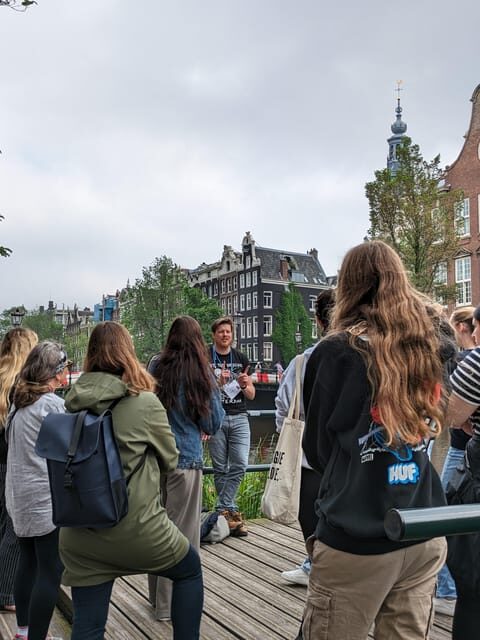
Two hours in Amsterdam can feel like a sprint. This private walking tour turns that sprint into a smart route with a guide who helps you get your bearings fast and points you toward the Amsterdam you’ll want to revisit. You’ll cover the classic headline sights, but the pace and focus stay flexible to match your questions and your walking comfort.
I especially like how the itinerary is built for first-timers: you get context for what you’re seeing instead of just collecting photos. My one caution: it’s only about 2 hours, so it’s not a full-city tour—think downtown highlights plus a couple of quieter corners, not everything.
In This Review
- Key highlights worth your time
- Damrak meet-up and quick orientation in central Amsterdam
- Dam Square: where power, politics, and daily life collide
- The UNESCO canal ring: learning to read Amsterdam from the water
- Begijnhof courtyard: the 14th-century quiet break you’ll remember
- Royal Palace: from 17th-century town hall to royal power
- Why a private, customizable route matters more than extra stops
- Price and value: is $30.64 for 2 hours worth it?
- Walking tips so the pace stays fun, not annoying
- Who should book this tour (and who might skip it)
- Should you book this Amsterdam history, culture, and highlights tour?
- FAQ
- How long is the Amsterdam walking tour?
- What does the tour cost?
- Is this tour private or shared?
- Where does the tour start?
- What languages is the tour offered in?
- Is there free cancellation?
Key highlights worth your time
- Private tour feel with only your group, so questions don’t get lost in the crowd
- Customizable pacing so you can linger at the stops that grab you
- Beyond the usual tourist loop thanks to your guide’s choices
- Dam Square to the canal ring as a fast lesson in how Amsterdam grew and organized itself
- Beguijnhof (14th century) courtyard calm for a nice contrast to the busy streets
Damrak meet-up and quick orientation in central Amsterdam
The tour meets at Damrak 1-5 (near Damrak and central connections) and ends back around the same area. That matters more than it sounds: Amsterdam’s center can feel like a maze at first, and starting in a practical location helps you keep the rest of your day easy.
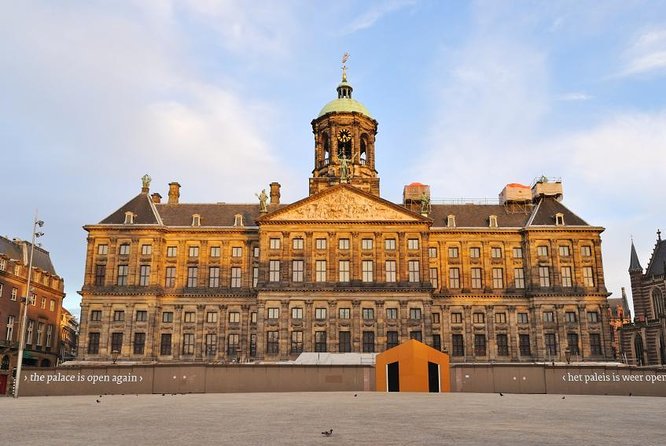
It’s a private tour, and the vibe reflects that. Instead of being herded at a fixed pace, you can ask what you should see next, where to walk for the best viewpoints, or how to structure the rest of your Amsterdam time. The guides mentioned in the reviews—James, Andrea, Arri, and Stan—are repeatedly praised for making the walking feel effortless and for telling stories street-by-street.
Also, you’ll get a mobile ticket, and the tour is offered in English. It’s near public transportation, and service animals are allowed. If you’re trying to fit Amsterdam into a tight schedule, this is a clean way to start without wasting time figuring things out on your own.
You can also read our reviews of more tours and experiences in Amsterdam.



Dam Square: where power, politics, and daily life collide
Dam Square is one of those places that looks simple until you learn what it represents. You’ll stand in the heart of Amsterdam at a square that’s been tied to political and cultural significance for centuries. That long timeline changes how you read the buildings around you: it stops being just a big open space and starts feeling like a stage where the city’s priorities have played out over and over.
Here’s what I like about using Dam Square as your first anchor: it gives you a mental map. Once you understand why this square matters, you can connect the dots to the canal ring and the civic buildings you’ll see next. And because your itinerary is customizable, you can spend a bit more time here if you want to understand the city’s role in Dutch life and government, or move on quickly if you just want the big-picture overview.
One practical note: Dam Square is a busy hub, so if you prefer very quiet stops, you may want to take your time in the smaller courtyard section later. The tour’s structure helps with that contrast.
The UNESCO canal ring: learning to read Amsterdam from the water
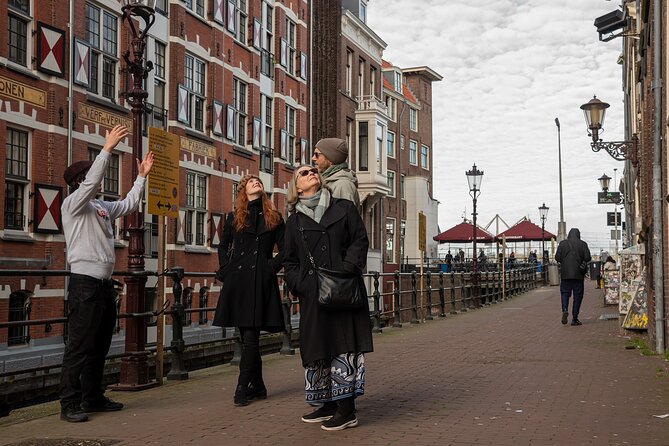
Next comes Amsterdam’s famous canal ring, a UNESCO World Heritage Site and one of the most picturesque parts of the city. The key here isn’t just how pretty it is—it’s what the design says about Amsterdam’s urban thinking and engineering.
When you’re walking and looking at canals, it’s easy to treat them like background scenery. Your guide helps you interpret what you’re seeing, including why the waterways and the layout mattered to the city. That’s a real value for you because Amsterdam’s neighborhoods and sights make more sense once you understand how the canals organized movement, commerce, and growth.
The best way to enjoy this portion is to slow your attention, not necessarily your feet. Look at how streets meet the canals, notice how different sides feel, and use the guide’s explanations to connect the water to the broader story of the city. It’s also a good stretch for photos, since canal streets tend to give you classic angles from multiple directions.
If you’re someone who likes “why did they build it this way?” questions, this stop usually lands well. And if you’re just soaking in the visuals, the UNESCO label helps you understand why people come from all over to walk the ring.
Begijnhof courtyard: the 14th-century quiet break you’ll remember
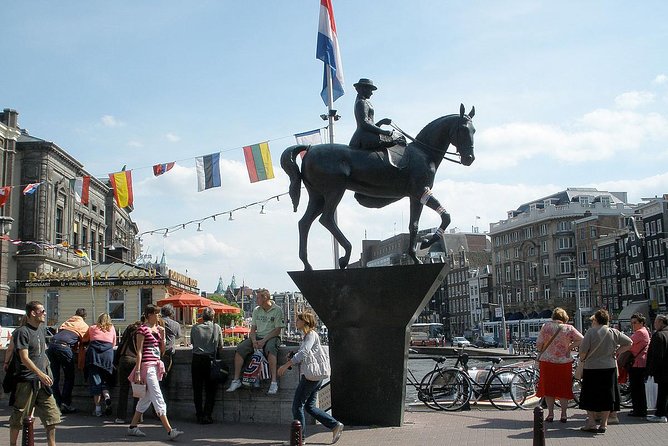
Then you get a very different mood: a historic courtyard dating back to the 14th century, among the oldest and best-preserved parts of Amsterdam. This is where the tour does a smart trick—while the streets around you may feel busy, the courtyard gives you a sense of scale and privacy.
The courtyard was originally home to Beguines, religious women who lived in a semi-monastic community. Learning that background changes the way you interpret the space. You’re not just looking at an old courtyard; you’re seeing a setting designed for a particular kind of life—quiet, structured, and sheltered from the louder city outside.
This stop is often the one that makes the tour feel like more than a highlights checklist. It’s a reminder that Amsterdam has pockets where life moves differently, and that you don’t need to travel far to find them. It’s also a nice break if your legs are starting to feel the weight of the walk after the square and the canals.
If you’re planning your own day after this tour, Begijnhof is a perfect example of what your guide is aiming for: not only famous landmarks, but also those calmer corners that give you a fuller picture of the city.
Royal Palace: from 17th-century town hall to royal power
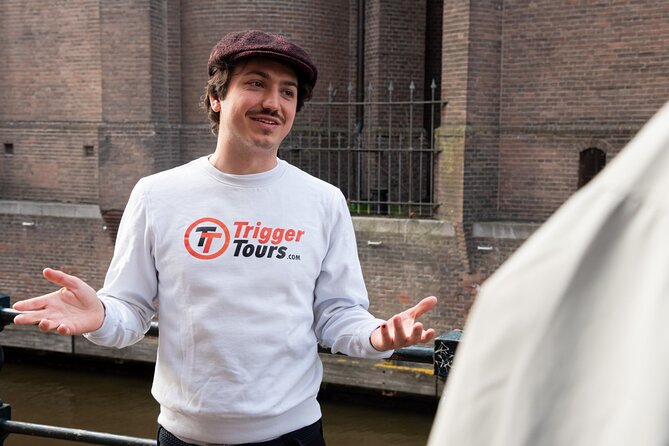
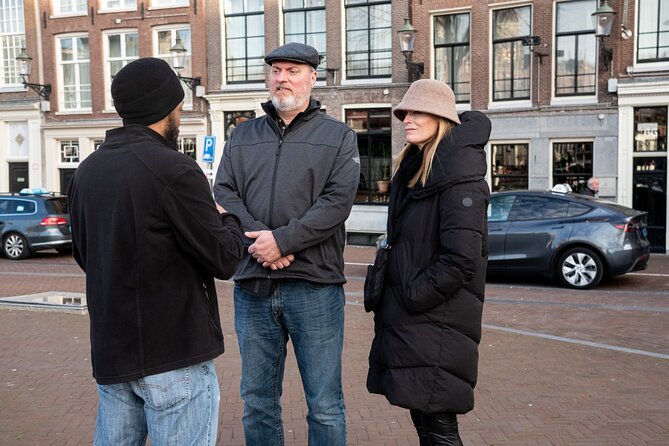
The final major stop is the Royal Palace, originally built as a town hall in the 17th century. Today it’s one of three palaces used by the Dutch royal family, and it’s open to the public for tours.
What I like about this stop is the contrast. A building that started life as a civic center eventually became a symbol of royal presence, yet it still carries the architecture and authority you’d expect from a major 17th-century institution. Dutch classicism shows up in the design, and the story behind the building makes that style feel less like decoration and more like messaging.
Even if you don’t go inside during your walking tour window, the key value is understanding what you’re looking at. You’ll leave with a better sense of how power and governance have shifted in Amsterdam over time—and how the city repurposed impressive buildings rather than constantly starting over.
Because your itinerary is flexible, you might be able to spend a little extra time here if you’re drawn to architecture or the idea of civic buildings evolving into royal landmarks. If you’re more photo-focused, you’ll still get enough context to make the exterior meaningful.





Why a private, customizable route matters more than extra stops
Plenty of walking tours cover “the big names.” This one earns its keep because it’s private and built to be customizable. That means you’re not locked into a rigid script where you have to pretend you’re not curious about what’s right in front of you.
In the reviews, guides are praised for helping people understand how to get around and for having a story about every street you walk. That’s the difference between a tour that feels like a lecture and one that feels like you’re walking with a local who’s paying attention to what you care about.
You’ll also go beyond the typical tourist areas. In practical terms, that usually translates to routes that feel less crowded and more coherent, with stops chosen for meaning rather than just convenience. On a first visit, that’s gold. You get your bearings faster, and you’re more likely to know where to return later for a longer visit.
One more small detail that adds up: the tour is around 2 hours. It’s long enough for a real orientation and a few big landmarks, but short enough that you can still enjoy your afternoon without dragging yourself through another half-day of standing and walking.
Price and value: is $30.64 for 2 hours worth it?
At $30.64 per person for about 2 hours, you’re paying for a guide-led walk that targets both famous sights and quieter, meaningful stops. That’s not just “time”—it’s local interpretation that helps you avoid the common trap in Amsterdam: spending hours sightseeing without knowing what you just saw.
Private tours cost more than group tours in many cities, but this one stays in a pretty accessible range for what you get: a local guide, a focused route, and a structure that helps first-timers understand how the city works. If you’re comparing value, ask yourself this: would you rather pay for a guide to interpret Dam Square, UNESCO canals, Begijnhof, and the Royal Palace, or spend that money later trying to piece the city together solo?
For most people, the guide’s explanations are the part you feel immediately. The reviews repeatedly mention guides helping guests revisit ideas, learn how to get around, and understand the history behind the areas they’re walking through. That’s exactly the kind of value you’re buying with your ticket.
Walking tips so the pace stays fun, not annoying
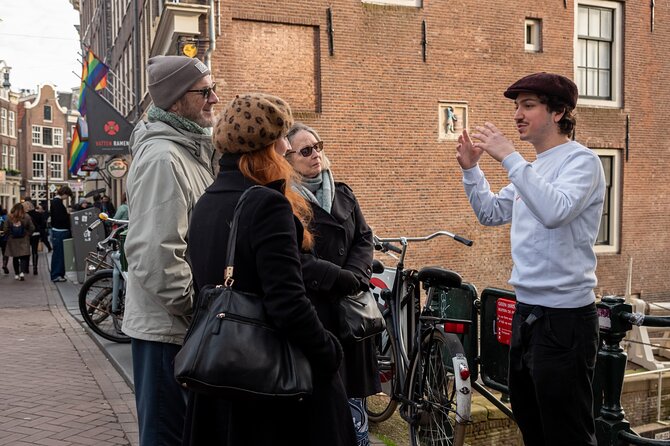
You’re doing a walking tour through central Amsterdam, and that means cobblestones and uneven sidewalks are always a possibility. I’d wear shoes you trust for long stretches, and I’d keep your day plan flexible. This tour is great for orientation, but it’s also a “use your legs early” experience.
If you’re trying to pace yourself, focus on what you want to remember most. The canal ring and palace are easy to photograph, but Begijnhof is the stop that benefits from slower attention. Treat it like a breather.
Because the itinerary can be tailored, you can also shape how you experience each place. If you’re into stories, linger while your guide explains. If you’re more visual, move along quickly and use your guide’s cues to pick the angles worth photographing.
Finally, since the tour ends back near the meeting point, it’s a smart opener. You can knock out orientation, grab food nearby, and then plan the rest of your visit with a clearer sense of distance and direction.
Who should book this tour (and who might skip it)
This is a great fit if you’re:
- Visiting Amsterdam for the first time and want a fast way to understand the center
- Short on time but still want more than postcard-level sightseeing
- Curious about the stories behind Dam Square, the canal ring, Begijnhof, and the Royal Palace
- The kind of person who enjoys asking questions and getting a route shaped to your interests
It may be less ideal if you’re:
- Looking for a full-day, multi-neighborhood deep survey of Amsterdam beyond the downtown core
- Expecting a tour that includes lots of museum time (this is a walking tour with major stops)
In other words, you should book it to start strong. Use it to build a foundation, then follow up with the neighborhoods and specific interests that the guide points you toward.
Should you book this Amsterdam history, culture, and highlights tour?
I’d book it if you want the simplest path to understanding Amsterdam’s center without wasting your first hours wandering. The private setup and the praise for guides like James, Andrea, Arri, and Stan matter because they point to a consistent payoff: you’re walking with someone who helps you interpret what you see.
The stops are well-chosen for beginners: Dam Square gives you the political and cultural anchor, the canal ring teaches you how Amsterdam’s layout tells a story, Begijnhof adds that peaceful 14th-century contrast, and the Royal Palace ties the civic past to the present.
My only reason to hesitate is the time limit. If you want every neighborhood, every museum, and every canal side street, you’ll need more than 2 hours. But for most first visits, this is a smart, efficient start with great value for your money.
FAQ
How long is the Amsterdam walking tour?
It’s approximately 2 hours.
What does the tour cost?
The price is $30.64 per person.
Is this tour private or shared?
It’s a private tour/activity, so only your group participates.
Where does the tour start?
The meeting point is Damrak 1-5, 1012 TM Amsterdam, Netherlands.
What languages is the tour offered in?
It’s offered in English.
Is there free cancellation?
Yes. You can cancel up to 24 hours in advance for a full refund. If you cancel less than 24 hours before the start time, the amount paid is not refunded.