REVIEW · AMSTERDAM
Amsterdam Light Festival Tour in German | Including Drinks
Book on Viator →Operated by Amsterdam Circle Line · Bookable on Viator
There’s a cozy way to see Amsterdam at night. This Amsterdam Light Festival canal cruise mixes a warm, covered boat with German audio commentary, so you get more than pretty lights.
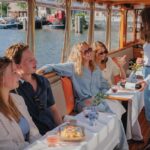
I like the onboard setup: unlimited drinks (beer, wine, and soda) plus a lounge area for views without freezing. One thing to plan for is boarding: you climb a few steps, so it can be tricky if you have reduced mobility.
In This Review
- Key highlights worth your attention
- Why this Light Festival cruise works (even if it’s your first time)
- Getting the best views: where to stand and when to go outside
- German audio in a city of visual cues
- On-board experience: heated boat, toilets, and drinks that change the mood
- Duration, group size, and the value math
- The route: seeing major landmarks and quiet canal corners
- Stop-by-stop: what you’ll notice as lights float past
- Anne Frank House on the Prinsengracht
- Westerkerk: a Calvinist church with a central-city setting
- Houseboat Museum and the Hendrika Maria
- Leidsegracht: the canal connector you’ll recognize by pattern
- De Beulingsloot: one of the older, shorter canal slices
- Bartolotti House: a 1617 canal house that reads like wealth
- Melkmeisjesbrug: milk-market origins under festival illumination
- Amstel River: the broader waterline beyond the tight canals
- Hermitage Amsterdam on the Amstel’s banks
- Stopera: Amsterdam’s city hall and opera-ballet home
- Amsterdam Centraal and the shift toward the waterfront feel
- The IJ: Amsterdam’s waterfront waterway
- Practical planning tips before you board
- Should you book this Amsterdam Light Festival canal cruise?
Key highlights worth your attention
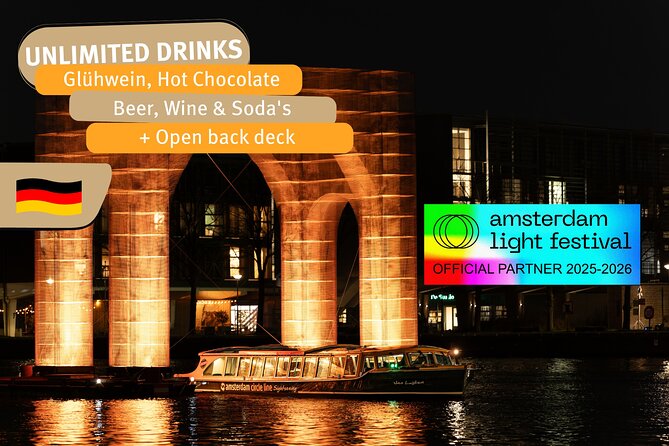
- Heated and covered boat so cold weather is less of a deal-breaker
- German audio guide that adds meaning to what you’re seeing
- Unlimited beer, wine, and sodas included for the full 75 minutes
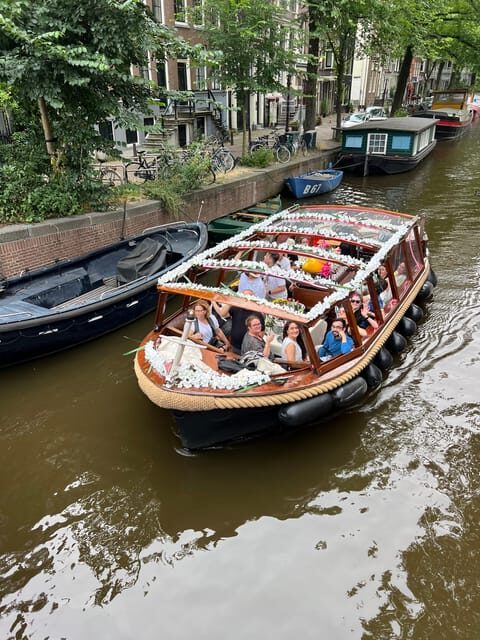
- Back-deck lounge plus a panoramic skylight for photos and views
- Friendly skippers who share stories as you cruise the canals and landmarks
Why this Light Festival cruise works (even if it’s your first time)
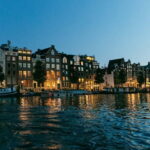
The Amsterdam Light Festival is basically a lighting scavenger hunt for your eyes. The clever part here is that you don’t have to walk block after block in the dark. You sit in a heated, covered boat while canals, bridges, and landmark facades slide by.
I also like the pace. At about 75 minutes, it’s long enough to get into the mood but short enough that you won’t feel like you’re stuck in the cold. And because the boat is set up for viewing, you can spend less effort on figuring out angles and more time enjoying the show.
You can also read our reviews of more tours and experiences in Amsterdam.
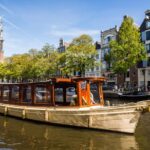
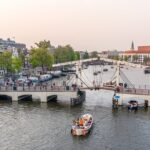
Getting the best views: where to stand and when to go outside
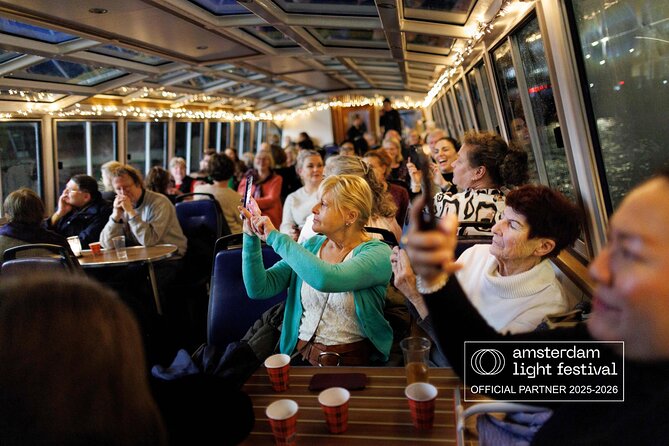
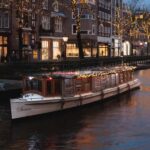
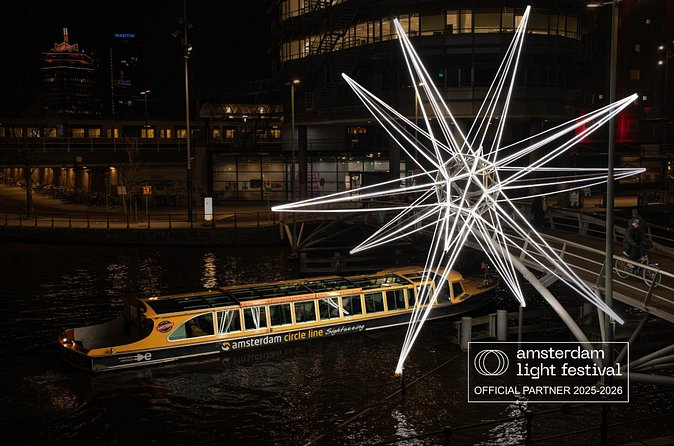
This cruise is designed around comfort and sightlines. You’ll have a lounge on the back deck for the best exterior views, and you can also look up through the panoramic skylight when you want a warmer option.
On a night cruise, I use this simple strategy: start inside long enough to get oriented, then step outside when you see a cluster of lights coming up. With bridges and canal houses, the magic often happens right at the moment you pass under or alongside the installation.
Practical tip: have your camera ready before you reach the first big sight. The boat moves steadily, and the best photo moments are quick.
German audio in a city of visual cues
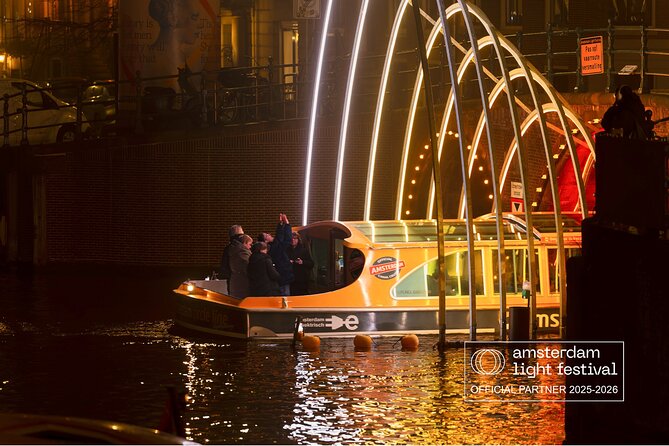
Lights are doing the heavy lifting on this tour. Still, the German audio commentary matters because it gives you something to attach to the scenes: what you’re looking at, why it matters, and how it connects to the neighborhoods you’re floating through.
If you’re not fluent in German, you won’t be totally lost because the visuals do most of the work. But you’ll get the most value if you’re comfortable following along at least loosely. I’d treat the audio like context, not a substitute for looking carefully.
The biggest upside is that landmarks feel less random. Instead of just seeing church towers, historic facades, and canal bridges lit up, you start understanding their roles in Amsterdam’s story.
On-board experience: heated boat, toilets, and drinks that change the mood
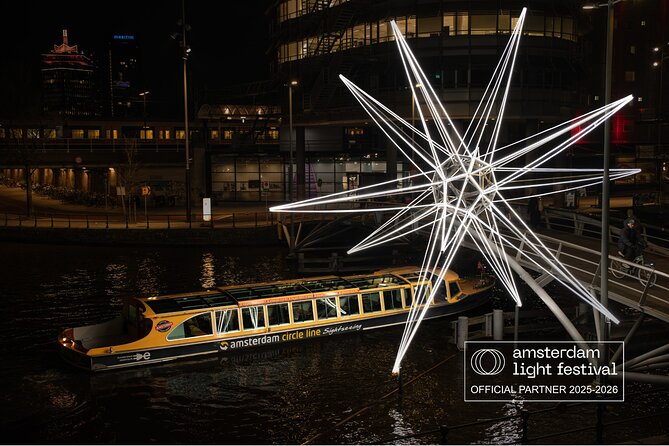
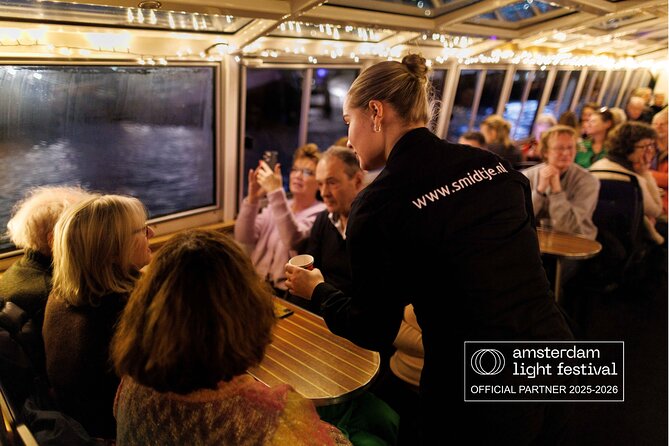
A canal cruise can be either a pleasant night out or a cold slog. Here you avoid the slog. The boat is heated and covered, and there’s a toilet on board, which sounds basic until you’re halfway through a winter evening.
Then there are the drinks. Unlimited beer, wine, and soda are included, which turns the cruise from sightseeing into a relaxed hang. If you enjoy a glass of wine with your views, this is one of the easiest ways to make the time feel special without spending extra.
There’s no full snack program included, though. You can buy small items on board like nuts and chips, so if you snack-plan, come prepared.
Duration, group size, and the value math
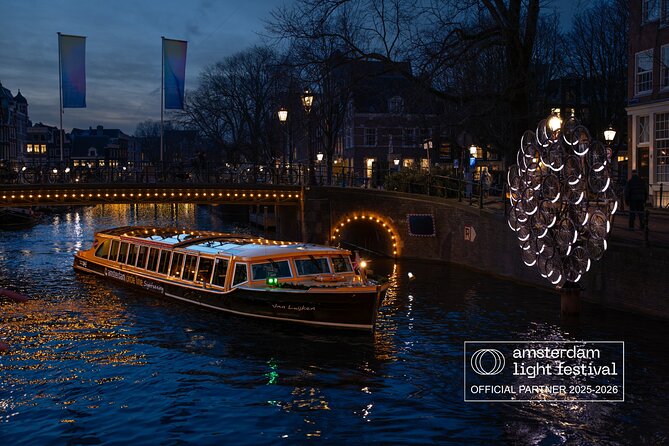
This is about 1 hour 15 minutes, and the group is capped at 60 travelers. That matters because it keeps the experience from turning into a slow, crowded shuffle. You still get a real sense of being on the water together, not trapped in a moving line.
At $45.91 per person, the value depends on one question: will you drink at least a few beverages during the cruise? If yes, the included unlimited beer/wine/soda can quickly offset the ticket cost. If you only want water, it can still be a decent deal because the boat is heated, covered, and set up for night viewing, but you’ll likely feel the price more than someone who orders a few drinks.
The route: seeing major landmarks and quiet canal corners
This cruise is built around a mix of famous Amsterdam names and smaller, older canal sections. From the boat, you’ll see the city’s classic pattern: narrow water corridors, gabled canal houses, and bridges that are basically permanent landmarks.
What makes this combo work for the Light Festival is contrast. You’ll get big, recognizable areas where lights feel grand, then you’ll slide into tighter stretches where the lighting feels more intimate and detailed.
Stop-by-stop: what you’ll notice as lights float past
Anne Frank House on the Prinsengracht
You’ll pass the Anne Frank House (Anne Frank Huis), on the Prinsengracht near the Westerkerk. From the water at night, the building area reads differently than from the street. The canal framing gives it a calmer, more reflective feel, which is especially noticeable with festival lighting in the background.
If you know the basics, this stop hits harder. During World War II, Anne Frank and her family hid in the Secret Annex (Achterhuis). Her diary was later published in 1947, and the property became protected through the Anne Frank Foundation.
Practical note: the emotion here is real. Keep your voice low and give yourself a moment to look, even if you’re on a moving cruise.
Westerkerk: a Calvinist church with a central-city setting
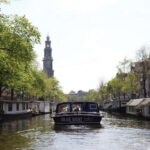
Next up is the Westerkerk, a Reformed church within Dutch Protestant Calvinism. Its location in the central Grachtengordel area—between the Prinsengracht and Keizersgracht, next to the Jordaan—means it often anchors views from multiple canals at once.
On this kind of night cruise, church lighting usually has two effects: it shows off architecture and it turns the surroundings more dramatic. Expect the Westerkerk to feel like a landmark you can always re-find in your head later.
Houseboat Museum and the Hendrika Maria
The Houseboat Museum is your “wait, Amsterdam can do this?” moment. You’ll be able to experience what living on a canal houseboat feels like, and the museum is housed in the Hendrika Maria, a former cargo ship built in 1914.
The cargo hold is now a cozy living space, with surprising comfort for something that used to be for goods. The light installations can make this stop feel extra warm and human—less postcard, more “how people actually live here.”
If you like quirky museums, this is the stop that turns your cruise into something memorable beyond the lights.
Leidsegracht: the canal connector you’ll recognize by pattern
You’ll also glide past Leidsegracht, a cross-canal that connects Herengracht, Keizersgracht, Prinsengracht, and Lijnbaansgracht, then flows into Singelgracht at Marnixstraat.
From the boat, you’ll notice how canals act like Amsterdam’s internal wiring. The lights often follow those lines, so Leidsegracht can look especially graphic—straight runs, intersections, and bridge shadows all working together.
De Beulingsloot: one of the older, shorter canal slices
Then comes De Beulingsloot, one of the oldest and shortest canals in the center. Short canals are often where the lighting feels most detailed because you pass through them with less “scenery sprawl.”
This is a good section for quiet looking. If you’re hoping for that small-scale Amsterdam feel, this stop helps deliver it.
Bartolotti House: a 1617 canal house that reads like wealth
You’ll pass the Bartolotti House on Herengracht, built around 1617. It was built for Willem van den Heuvel tot Beichlingen, one of the richest Amsterdammers of the time, tied to inheritance through his marriage to Giovanni Battista Bartolotti’s line.
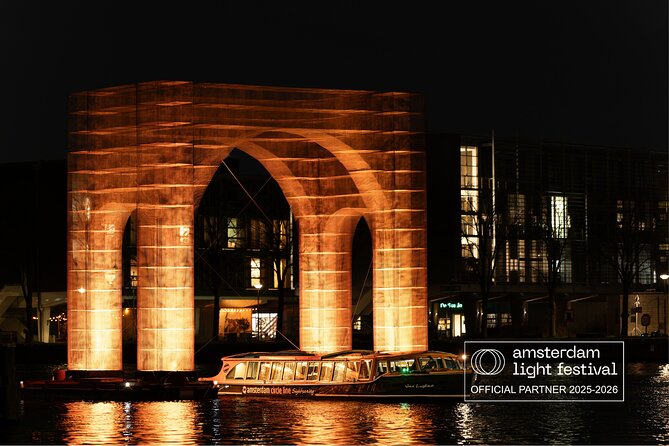
At night, canal houses like this often look taller and more sculpted. The festival lights add contrast, making details easier to spot from the water: rooflines, facade rhythm, and the way the building meets the canal edge.
Melkmeisjesbrug: milk-market origins under festival illumination
The Melkmeisjesbrug is a fixed bridge with a history stretching back centuries, tied to maps signed by Balthasar Florisz. van Berckenrode (1625), Joan Blaeu (1649), and Daniël Stalpaert (1662). Its modern story began in 1883, when a pedestrian drawbridge was replaced by a permanent bridge.
Why it’s interesting: the bridge is named after the milk market that used to be held nearby. Later, a catering establishment had a milkmaid image as a sign, and it’s also considered a likely place where an early type of Amsterdammertje was placed.
From the boat, bridges are where light installations often create the strongest reflections. Keep your eyes on the underside and the water directly beneath.
Amstel River: the broader waterline beyond the tight canals
You’ll also cruise the Amstel, a major river in North Holland that flows northwards toward Amsterdam’s IJ. It was formed around 1050 BC, and the wider water makes a different kind of view from the narrower canals.
The Amstel is also associated with big annual events like the Liberation Day concert, the Head of the River Amstel rowing match, and Amsterdam Gay Pride boat parade. On a festival evening, the Amstel can feel less like a small corridor and more like a city stage.
Hermitage Amsterdam on the Amstel’s banks
Next is Hermitage Amsterdam, a branch museum of the Hermitage Museum in Saint Petersburg. It’s located on the banks of the Amstel in the former Amstelhof building, from 1681, with exhibition spaces arranged across large halls and smaller rooms.
The Hermitage satellite opened with exhibitions in the adjacent Neerlandia building from 2004 until the main museum opened in 2009. Even if you’re not stepping inside, seeing it from the water helps you understand why this area works so well for an evening cruise.
Stopera: Amsterdam’s city hall and opera-ballet home
You’ll pass Stopera, a complex that houses the city hall of Amsterdam and the Dutch National Opera and Ballet. The name “Stopera” comes from the protest slogan “Stop the Opera,” not a nickname built from city hall plus opera.
At night, opera-house and civic buildings often light up in a way that makes them feel grand and slightly theatrical. Stopera is the kind of stop that makes your cruise feel like you’re seeing Amsterdam as a living system, not just canals and churches.
Amsterdam Centraal and the shift toward the waterfront feel
Then comes Amsterdam Centraal, designed by architect Pierre Cuypers, who also designed the Rijksmuseum. Cuypers was the principal architect, though it’s believed he focused on decoration more than structural design, which was handled by railway engineers.
Station areas are busy even at night, and from the boat you’ll get a different angle than you would on foot. Expect it to feel like a scale jump: you’re moving from historic canal texture toward a wider, more urban waterfront mood.
The IJ: Amsterdam’s waterfront waterway
Finally, you’ll reach the IJ, a body of water that was formerly a bay and is known for being Amsterdam’s waterfront.
This closing stretch is a nice way to end the cruise because the water opens up. It gives your eyes a rest after all the tightly framed canal scenes, especially if you’re stacking photos in your phone like I do.
Practical planning tips before you board
If you want this to feel smooth, do these three things:
- Arrive ready for steps. Boarding involves climbing a few steps, so plan carefully if balance is an issue.
- Bring layers. The boat is heated, but you’ll likely move between warm inside and cooler outside deck areas.
- Use the lounge window. The back deck is where the best views happen, but you can rotate between deck and skylight viewing to avoid over-freezing.
Also: this cruise runs in good-weather conditions. If conditions are poor, you may be offered another date or a refund.
One last heads-up: there was at least one case where a cruise didn’t run as expected around New Year’s Eve because lights were turned off for the event. That’s rare, but it’s a reminder to double-check your date close to departure during major holidays.
Should you book this Amsterdam Light Festival canal cruise?
I think this is a solid pick if you want a comfortable night cruise with German audio and you’ll use the onboard perks. The heated, covered boat, included unlimited drinks, and viewing-focused design make it feel like good value for a winter evening.
I’d hesitate if German audio is a deal-breaker for you, or if steps to board are a concern. And if you’re traveling during a big holiday period, build in a little flexibility in your expectations.
If your goal is simple—sit back, stay warm, and watch Amsterdam’s lights drift by with helpful context—this cruise fits the bill.