REVIEW · AMSTERDAM
Amsterdam private guided tour with Marieke, local guide
Book on Viator →Operated by Amsterdam A La Carte · Bookable on Viator
A great first circuit through the city. This private Amsterdam guided tour with Marieke strings together the places that shape the city’s story: Dam Square, the De Wallen red light district, the canal ring (Grachtengordel), and a stop in the Jewish quarter at JOMA. I love that it’s private, so you can ask questions and move at your pace, and I also like how the focus stays practical—canals, neighborhood context, and what to notice when you’re out on your own. One thing to plan for: the JOMA museum admission is not included.
You’ll spend about 3 hours on the street (walking or bike format is possible), with an English-speaking guide. The tour is ticketed with a mobile voucher, starts and ends at SpuiKalverstraat 139, 1012 WX Amsterdam, and it’s in the central area—handy for restaurants, museums, canal boats, and shopping afterward.
In This Review
- Key things you’ll like right away
- Why the SpuiKalverstraat meeting point is a smart choice
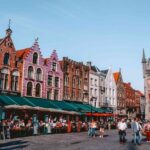
- Dam Square and the Royal Palace area: the city’s founding landmark
- De Wallen in a short stop: the history behind Amsterdam’s famous red light district
- Canal Ring (Grachtengordel): making the canals more than postcard scenes
- JOMA in the Jewish quarter: what’s included and what costs extra
- Marieke’s private-guided approach: why it feels smoother than DIY
- Timing and comfort for a ~3-hour walking/bike circuit
- Price and value: is $300.40 per person worth it?
- Who should book this Marieke-led Amsterdam route
- Should you book this private Amsterdam guided tour?
- FAQ
- FAQ
- Is this a private tour?
- How long is the Amsterdam tour?
- What language is the tour offered in?
- Where does the tour start and end?
- Is the tour ticket mobile?
- Which stops are included?
- Is JOMA admission included?
- Does the guide suggest a canal boat trip?
- What’s the cancellation policy?
Key things you’ll like right away
- Marieke’s local storytelling that connects what you see to why it developed that way
- Canal ring (Grachtengordel) views with guidance on how to enjoy Amsterdam’s canals
- Dam Square orientation at the city’s founding point, plus Royal Palace context
- De Wallen history explained clearly in a short, focused stop
- JOMA visit in the Jewish quarter, with WWII and Anne Frank context (ticket extra)
Why the SpuiKalverstraat meeting point is a smart choice
The meeting and ending point—SpuiKalverstraat 139—isn’t just a random pin on a map. It puts you in a central pocket of Amsterdam where you can realistically turn the tour into a full afternoon: grab food nearby, continue to museums, and line up a canal boat trip without having to cross town afterward.
That matters because Amsterdam can feel like a puzzle when you’re moving between neighborhoods. Starting here helps you avoid the “long transit penalty” that eats into your sightseeing time. And ending in the same area makes it easier to stay flexible: you can follow your guide’s suggestions for canals and boats, or simply pivot to shopping streets and nearby sights.
This is also a private tour, meaning it’s only your group. In practice, that usually translates to less waiting and fewer pacing issues than you’d see on larger group tours. You can ask for directions, request a slower walk through a busy area, or spend an extra minute focusing on something that caught your eye.
Finally, the tour is described as being near public transportation, which is useful if you’re combining it with other plans (like arriving by tram or metro). If you’re trying to make Amsterdam fit into a tight schedule, being near transit and staying central is a real advantage.
You can also read our reviews of more tours and experiences in Amsterdam.
Dam Square and the Royal Palace area: the city’s founding landmark
Your first stop is Dam Square, and it’s a strong opener. The dam itself is described as the place where the city was founded, so this isn’t only a scenic square—it’s a starting point for understanding how Amsterdam became what it is today.
You’ll spend about 10 minutes here, and the big anchor is the Royal Palace on the square. Even if you don’t go inside (and the stop is listed as free admission), this location gives you a high-value “mental map.” It’s one of those places where everything feels like it radiates outward: streets, neighborhoods, and the sense of where you are in the city’s layout.
What I like about starting at a place tied to the city’s origin is that it makes the next neighborhoods easier to place. When you later move toward the canal ring or the Jewish quarter, you’ll have a reference point. Amsterdam can be visually confusing, but landmarks like Dam Square help you keep your bearings fast.
One practical note: Dam Square can be busy. Since your time here is limited, think of it as a quick orientation stop. If you want extra time for photos or people-watching, you can do that, but plan to keep the tour moving so you don’t run out of time for the rest of the route.
De Wallen in a short stop: the history behind Amsterdam’s famous red light district
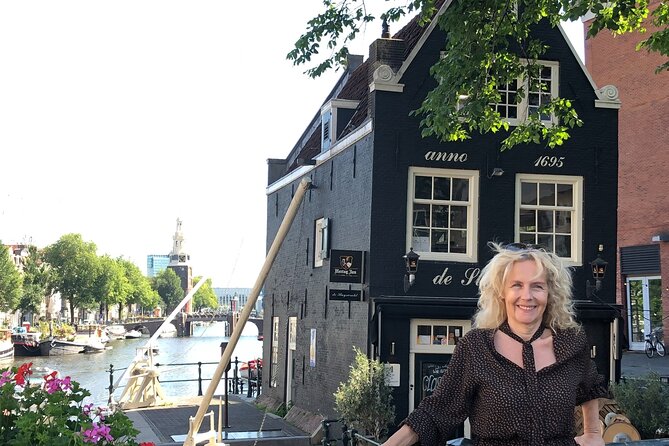
Next comes De Wallen (the Red Light District), visited for about 5 minutes. This stop is focused on history: the guide will explain what makes this area what it is, including why it became a red light district.
Because the time is short, it helps to approach this stop with the right expectation. You’re not going deep into every corner. Instead, you’re getting a framework—how the neighborhood evolved and what shaped its role in the city. That kind of context is often what makes a place stop feeling like a headline and start feeling like part of a real city story.
Now, a balanced heads-up: De Wallen is a visually and socially different kind of street environment than a quiet museum lane. If you’re sensitive to adult-themed scenes or just prefer calmer sightseeing, this is the moment to decide how you want to handle it. The tour gives you a guided explanation, but it still puts you in the middle of the area’s identity.
The good news is that the stop is listed as free admission, so there’s no extra ticket hurdle. And you’ll likely leave with a better understanding of how Amsterdam’s neighborhoods changed over time—an understanding that makes your later canal-ring sightseeing feel more grounded.
Canal Ring (Grachtengordel): making the canals more than postcard scenes
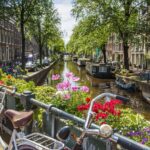
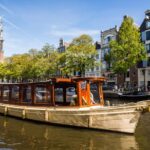
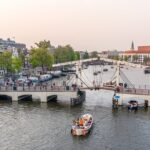
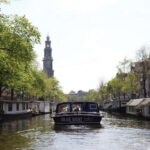
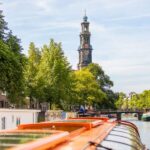
Then you hit what many people come to Amsterdam for: the canals. You’ll spend about 15 minutes around the Canal Ring (Grachtengordel), with time to look closely at the canal views that define the city’s look.
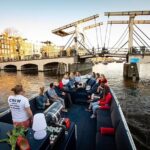
This stop is listed with free admission, and it’s also where the guide gives you useful options. You may be able to make a boat trip, and the guide is set up to provide suggestions for how to do it well.
Here’s the key value: a canal boat can be either great or a waste of time, depending on timing, your route, and what you’re trying to notice. Even without you changing plans, getting canal-ring guidance during the tour helps you know where to look from land. You’ll likely start spotting the details that matter—how buildings line up with water, how bridges shape movement, and how the city feels when you’re not just taking static photos.
Also, 15 minutes is just enough to form a sense of the shape of the canal ring. If you want a longer look, you can build on that after the tour. Since the tour ends near places linked to boat companies, this makes follow-up easier.
If you’re a first-timer, don’t worry about perfect navigation. The canal ring can feel like a maze. The point of this part is to give you a simple framework so you can enjoy the canals immediately, not after hours of wandering.
JOMA in the Jewish quarter: what’s included and what costs extra
Your final stop is JOMA – Jewish second generation art & family museum Amsterdam, in the Jewish quarter. This is a 10-minute stop, and it’s where the tour shifts from streets and scenery into personal and historical context.
The guide will cover the Jewish community and key WWII context, including Anne Frank. The stop is positioned as part of learning about the Jewish quarter of Amsterdam, not just a quick glance at a building.
Here’s the practical detail that matters most: museum admission is not included. So while your guided visit is part of the tour, you should budget for the ticket if you want to go in. If you’re not sure you’ll have the time or interest to enter, you can still use this as a guided orientation moment to understand the neighborhood’s story.
Because the scheduled museum time is fairly short, don’t expect a long, slow museum visit. Think of it more like a guided introduction that sets you up to do deeper reading or follow-up visits on your own if you want.
This stop can also feel heavy, depending on your preferences. It’s a good match if you like history that connects places to people. If you’d rather keep things lighter, consider whether you want to spend extra time elsewhere afterward, especially since the tour ends near other museums and central dining.

Marieke’s private-guided approach: why it feels smoother than DIY
The standout theme is that Marieke’s guidance is the difference between walking through Amsterdam and understanding what you’re walking through. Her style is described as friendly and effective at sharing local details—not just dates and names, but explanations that make the city click.
This matters because Amsterdam can be beautiful in a way that’s hard to parse without context. Canals look gorgeous, but without guidance they’re just views. Neighborhoods look busy, but without history they’re just streets. Marieke’s approach aims to connect those visuals to the reasons behind them.
In a private setting, you also get flexibility. If something sparks a question—about why De Wallen developed as it did, or what canal-ring development changed over time—you’re not stuck waiting your turn. That’s one of the real advantages of a private tour over group options.
Another practical plus: the pacing is built around short targeted stops (10 minutes here, 5 there), which often helps people who have limited vacation time. You still get meaningful time in each place, but you avoid the long, drawn-out feeling that can drain energy.
If you’re the type who likes to walk and figure things out slowly on your own, you’ll still get value here. You’ll just start with better context, so your free time afterward feels smarter instead of random.
Timing and comfort for a ~3-hour walking/bike circuit
The tour is listed at about 3 hours. With scheduled stop times of 10 + 5 + 15 + 10 minutes, you can see that the bulk of your experience likely happens in the in-between walking segments. That’s normal for central Amsterdam routes, and it’s actually part of the value: the guide can use those travel moments to connect the dots and point out what to notice.
Comfort is important here. You’ll be outdoors and moving through busy central streets. Wear shoes that can handle cobbles and lots of walking. If the tour uses a bike component (the format is described as walking or bike), expect it to feel faster between locations. Either way, it’s wise to keep your plan flexible—don’t schedule a demanding appointment right after the tour ends.
Because it’s only about 3 hours, you’re also not getting “everything” in Amsterdam. You’re getting the high-signal parts that help you understand the city quickly: founding landmark, a major district, canal-ring identity, then an important museum stop in the Jewish quarter.
If you’re building a multi-day itinerary, this is a great fit as an early outing. If you’ve already seen a lot of Amsterdam, it’s still useful because it gives you the connective tissue—why these places developed and what you should notice next time you’re nearby.
Price and value: is $300.40 per person worth it?
At $300.40 per person for a private guided tour lasting about 3 hours, the value depends on how you like to travel.
You’re paying for a few specific things:
- a private guide (only your group participates)
- a structured route across central Amsterdam
- English interpretation
- clear explanations at each stop, including canal context and Jewish quarter WWII context
- a guided route that ends near places you’ll probably want next (restaurants, museums, boat companies, shopping)
The big thing that can change your cost outcome is that JOMA admission is not included. So your final spend might be a bit higher once you decide whether to enter the museum during that visit. Still, you control that choice.
Who gets the best value? Couples, small groups, and anyone who wants context without spending half a day figuring out logistics. If you’re comfortable navigating on your own and you mainly want scenery, you might find the cost steep. But if you want the city explained in real time—while you stand in front of the dam square, the canals, and the Jewish quarter—this price starts to make sense.
One more thing to keep in mind: the tour can be canceled if a minimum number of travelers isn’t met (you’ll be offered an alternate date/experience or a full refund). It’s not a reason not to book, but it’s smart to avoid scheduling this as your only plan on a fixed date.
Who should book this Marieke-led Amsterdam route
This tour fits best if you want:
- a private way to get your bearings in central Amsterdam
- focused stops that include Dam Square, De Wallen, the canal ring, and the Jewish quarter
- historical context alongside sightseeing, including Anne Frank and WWII themes
- guidance on canal boat-trip options so your free time afterward is more useful
It’s also a good match for people who like asking questions. In a private setup, you’re not fighting the pace of a bigger group.
I’d think twice if you’re looking for a purely relaxing scenic walk with no attention to adult-themed district identity. De Wallen is part of the route, and while the focus is history, you will still be in that area.
Should you book this private Amsterdam guided tour?
If your goal is to understand Amsterdam fast—with the canals as the payoff—this Marieke private tour is a strong choice. The route is structured in a way that builds from the city’s founding square to the canal ring, then adds meaningful context at JOMA in the Jewish quarter. And because it starts and ends at a central address, your afternoon doesn’t end when the tour ends.
I’d book it if you value explanations and want a guide-led plan you can follow without stress. I’d only hesitate if you really dislike the idea of visiting De Wallen at all, or if you’d rather avoid paying extra for museum admission at JOMA.
FAQ
FAQ
Is this a private tour?
Yes. It’s a private tour/activity, and only your group participates.
How long is the Amsterdam tour?
The tour is about 3 hours.
What language is the tour offered in?
It’s offered in English.
Where does the tour start and end?
Both the start and end point are at SpuiKalverstraat 139, 1012 WX Amsterdam, Netherlands.
Is the tour ticket mobile?
Yes, the tour uses a mobile ticket.
Which stops are included?
The tour includes Dam Square, De Wallen (the Red Light District), the Canal Ring (Grachtengordel), and a stop at JOMA (Jewish second generation art & family museum).
Is JOMA admission included?
No. The museum admission at JOMA is not included.
Does the guide suggest a canal boat trip?
Yes. The tour notes that a boat trip is possible and that the guide will give suggestions.
What’s the cancellation policy?
Free cancellation is available. You can cancel up to 24 hours in advance for a full refund, with cut-off times based on the experience’s local time.