REVIEW · AMSTERDAM
Amsterdam Sightseeing Canal Cruise with Audio Guide
Book on Viator →Operated by Tours & Tickets · Bookable on Viator
A canal cruise is how Amsterdam clicks into focus fast. You glide over UNESCO-listed waterways in a glass-topped boat with audio that points out the big landmarks, including the Anne Frank area and the famous canals. What I like most is the easy overview in one hour and the clear narration that helps you spot what you’re seeing instead of just passing it by. The main drawback is that the boat is enclosed with overhead window frames, which can limit sightlines and photo angles.
You choose your departure point and time, then step aboard and settle in—no planning-heavy route. The audio guide is available in multiple languages (English included), and check-in is at Lovers about 10 minutes before your reserved time.
In This Review
- Key things I’d pay attention to before you go
- Why a 1-hour canal cruise is such a smart move in Amsterdam
- Getting on board: choosing Lovers check-in and your best starting point
- Onboard experience: glass roof comfort vs. limited photo angles
- Audio guide reality check: headsets, noise, and how to actually hear the narration
- The canal belt from the water: Keizersgracht, Herengracht, and Prinsengracht
- Bridges and landmark spotting: Magere Brug, Westerkerk, and the Anne Frank area
- City corners from the canal: De Wallen, De 9 Straatjes, and Bloemenmarkt
- Beyond the center: Het IJ, Scheepvaartmuseum, NEMO, and Nieuwmarkt
- Price and value: how $16.74 stacks up for a one-hour overview
- Timing tips: morning vs. evening, and comfort on changeable days
- Who should book this cruise (and who might want a different format)
- Should you book it?
Key things I’d pay attention to before you go
- Choose your departure point (Central Station, Anne Frank House, Rijksmuseum, or Leidse Square) so the cruise fits your day.
- Glass-roof boat comfort keeps you warmer and dryer than open-top options, but windows can block photos.
- Audio is essential: if headphones or onboard sound systems get noisy, you may miss parts of the narration.
- This is a quick city overview (about 1 hour), ideal when your feet are tired.
- It’s popular and can feel busy, since the boat size supports up to 60 people.
Why a 1-hour canal cruise is such a smart move in Amsterdam
Amsterdam is built to be seen from water. From the canals you get the real scale of the canal belt, how the bridges connect neighborhoods, and how the city’s growth shows up in the architecture. This cruise is short enough that it won’t hijack your whole day, but long enough to feel like you actually toured something, not just sat on a boat for photos.
For me, the value is that the narration turns sightseeing into pattern-spotting. You’re not just floating past pretty buildings—you get cues about what the canal names mean, why certain spots became important, and what makes landmarks recognizable even at a distance.
The other advantage is practical: it’s a low-effort way to cover ground without heel pain. If you’re doing museums, markets, and neighborhoods on the same trip, this kind of canal time is a great reset.
You can also read our reviews of more tours and experiences in Amsterdam.
Getting on board: choosing Lovers check-in and your best starting point
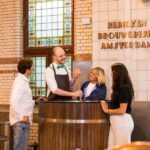
You make your way to one of four departure points: Central Station, Anne Frank House, Rijksmuseum, or Leidse Square. You pick the time that matches your itinerary, then you meet your boat for about a one-hour cruise.
One detail that matters: check-in is at Lovers about 10 minutes before your reserved time. That’s quick, so I’d plan to arrive early enough to walk up, find the right line, and settle before boarding starts—especially on busy days.
Also, this is near public transportation, so it fits easily between other plans. And because the group size is capped at a maximum of 60, it’s not a tiny private boat, but it typically isn’t an enormous floating crowd either.
Onboard experience: glass roof comfort vs. limited photo angles
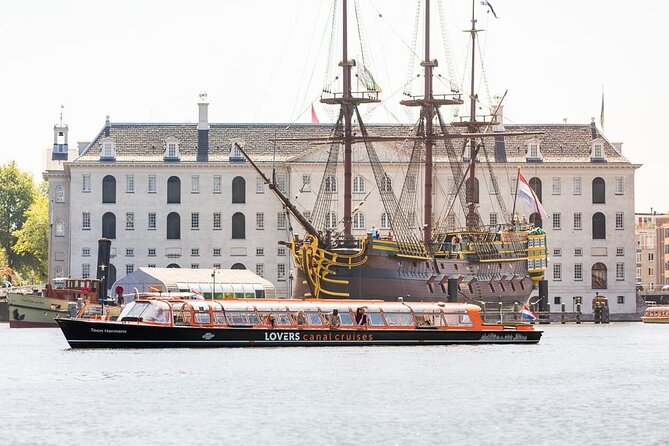
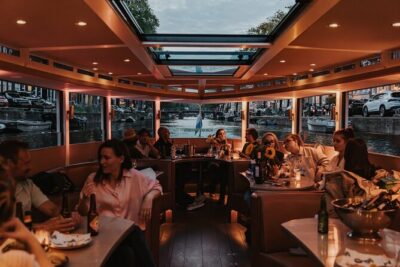
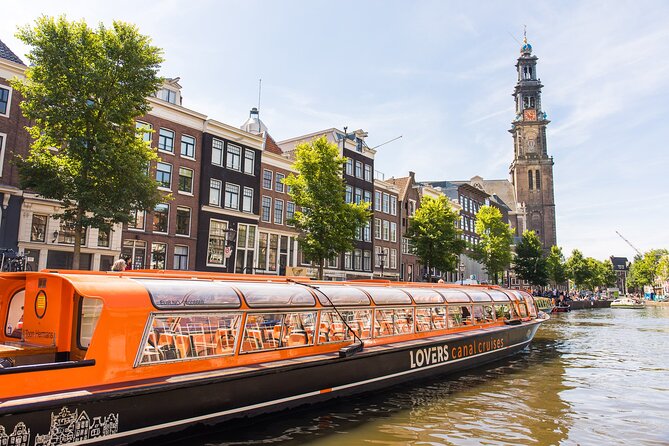
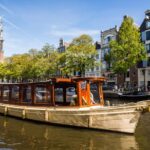
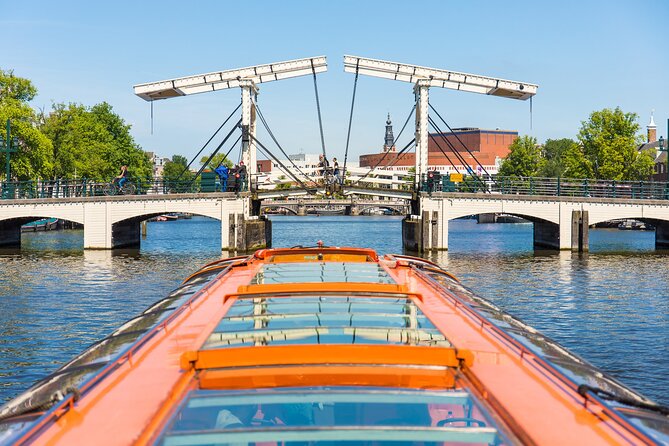
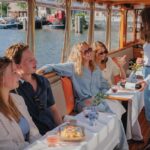
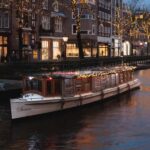
The boats are designed for viewing while staying comfortable—glass-topped for visibility and a more sheltered ride than you’d get on an open-top option. That matters in Amsterdam, where you can go from sunshine to drizzle fast.
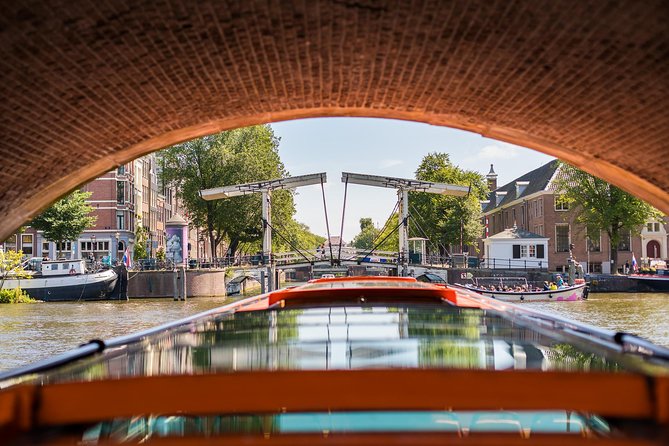
The catch is that the boat is still enclosed. Overhead window frames can block some angles, which means you might not get the cleanest “postcard” shots from every seat. If you care a lot about photos, aim for a seat that faces forward and gives you the clearest line toward the canal and bridge scenery.
There’s also a temperature tradeoff. One review-style theme I keep seeing with canal boats like this: it can get hot and crowded. If the weather is warm, windows and airflow options can make a big difference, so choose your timing and dress for comfort.
Audio guide reality check: headsets, noise, and how to actually hear the narration
The cruise includes an audio guide in several languages, with English specifically offered. In theory, it’s a set-it-and-listen experience: you look at the scenery, and the narration gives you the story.
In practice, the audio quality depends on conditions on board. Some people report that when the boat gets loud—children crying, adults chatting loudly, or frequent announcements—it can become hard to hear the recorded commentary. If you run into that, you can improve your odds by:
- keeping your headset volume up enough to cut through ambient noise
- adjusting the headset fit so it seals properly
- stepping to a quieter side of the boat when possible
I also recommend treating the audio guide as a tool you use actively. When you hear a landmark name, glance up right away. These canal scenes pass quickly, and the best payoff comes when you connect narration to what you’re seeing at that moment.
The canal belt from the water: Keizersgracht, Herengracht, and Prinsengracht
Amsterdam’s canal belt isn’t random. The way the main canals were planned shows how the city expanded and how wealth shaped architecture along the water.
As you glide past, you’ll get oriented to three headline canals:
Keizersgracht
This canal, named after Emperor Maximilian I, was built in 1612 and is described as the widest of the main canals in the canal belt. When you pass it, you’re often looking at the grand merchant-house style of Amsterdam’s wealth from that era.
Herengracht
Also dug in 1612, Herengracht was the most prestigious canal. It’s lined with stately mansions and is often referred to as the Golden Bend. From the boat, it’s one of the easiest canals to appreciate because the homes feel formal and elevated compared to smaller water-adjacent streets.
Prinsengracht
Named after the Prince of Orange and dug in the early 17th century during the big Grachtengordel expansion, Prinsengracht became a desirable residential area. Passing it gives you a sense of how the city grew outward while keeping a canal-centered lifestyle.
If you want the “aha” moment, it’s this: from the water you can see how the city’s layout favors movement by boat, how bridges create rhythmic connections, and how canal names map onto social hierarchy.
Bridges and landmark spotting: Magere Brug, Westerkerk, and the Anne Frank area
Some Amsterdam scenes are so iconic you recognize them even without context. This cruise steers you past several of them.
Magere Brug (Skinny Bridge)
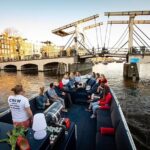
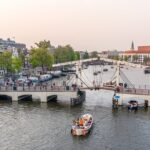
This wooden drawbridge was built in 1691 and rebuilt in 1934 in a traditional style. It’s known for its elegant design and nightly illumination, which is especially pretty if you go later in the day. On the water, the shape of the bridge can feel more graceful than it does from streets.
Westerkerk (Western Church)
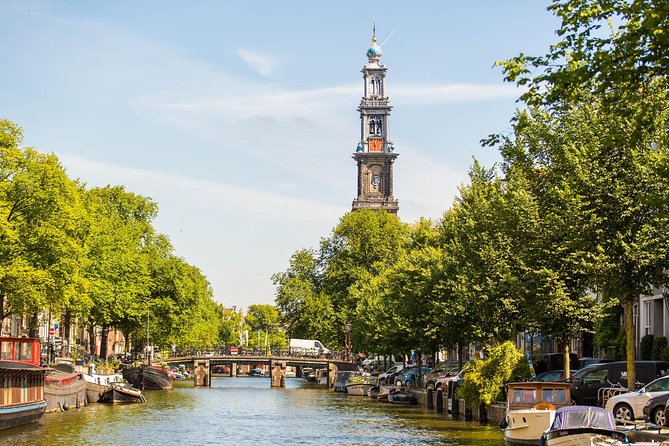
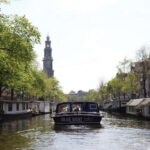
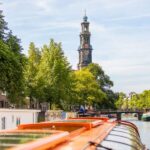
Completed in 1631, Westerkerk is tied to Dutch Renaissance architecture and its tall Westertoren tower. It also sits near the Anne Frank House area, so you get a strong sense of the historic geography in that district as you pass.
Anne Frank House (Anne Frank Huis)
You’ll cruise by the Anne Frank House area, which many visitors find deeply moving. From the canal, you get a view that feels more human-scale than a distant street glimpse, but keep expectations realistic: a boat photo might not substitute for being nearby on foot.
One consideration: because the tour is about gliding and viewing, you don’t get the same close inspection you’d get by walking through these places. If you want intimate photos or museum time, plan that separately.
City corners from the canal: De Wallen, De 9 Straatjes, and Bloemenmarkt
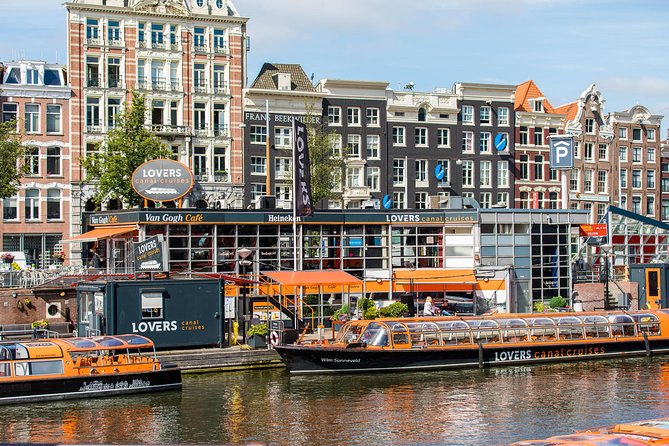
Amsterdam’s canal lines cut through neighborhoods with very different vibes, and this cruise tends to surface that variety quickly.
De Wallen (Red Light District)
This is Amsterdam’s oldest neighborhood, dating back to the 14th century as a harbor area. Today it’s a regulated zone with legalized sex work plus a mix of tourism and nightlife. Seeing it from the water can feel more “city neighborhood” than sensational—still lively, still distinct, but framed by historic canals.
De 9 Straatjes (Nine Streets)
This is a charming canal-belt pocket of nine narrow streets known for boutiques, vintage shops, and cozy cafes. From the boat, you’ll get a sense of the tight, walkable layout even if you won’t step inside. If shopping is your thing, this is a good mental bookmark for later.
Bloemenmarkt (Floating Flower Market)
This market is the world’s only floating flower market, established in 1862. The stalls sit on houseboats along the Singel canal. From the water, it looks like Amsterdam’s love of flowers made practical—an old method turned into a modern attraction. Just note that a cruise view is a glance; if you want to browse, you’ll need follow-up time on foot.
Beyond the center: Het IJ, Scheepvaartmuseum, NEMO, and Nieuwmarkt
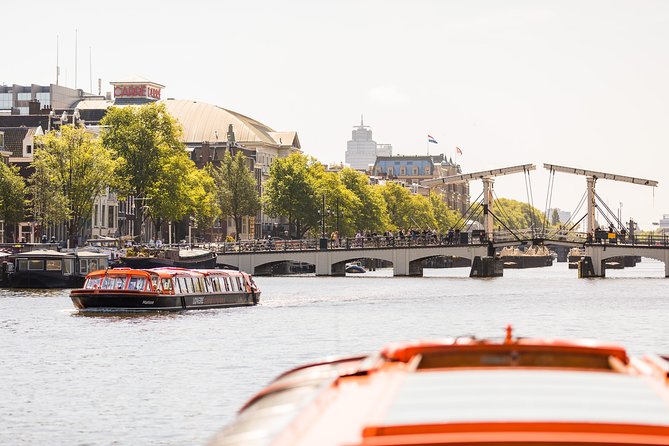
Amsterdam’s waterway story doesn’t stop at the canal belt. The route also frames the city’s maritime connection and modern science culture.
Het IJ
This former bay connects Amsterdam toward the North Sea. It was central to maritime trade and transport, and now it’s a lively waterfront with ferries, cultural venues, and recreational space. Seeing Het IJ from the water gives you perspective that Amsterdam isn’t only canals-by-design—it’s also water-by-economy.
Scheepvaartmuseum (Maritime museum area)
Housed in a historic 17th-century warehouse, this museum spotlights Dutch maritime history with ships, maps, and nautical artifacts. It’s been renovated and offers engaging exhibitions about the Netherlands’ relationship with the sea. From the cruise, you’re mostly appreciating setting and location, but it’s a strong pointer if you’re the type who likes museum time built around a theme.
NEMO Science Museum
Designed by Renzo Piano and opened in 1997, NEMO has an iconic green, ship-like structure rising above Oosterdok. It’s especially interactive for families and kids, with a hands-on science and tech focus. If you’re traveling with children, this cruise can function as a visual pre-planning moment.
Nieuwmarkt and the Waag building
Nieuwmarkt is a public square that took shape after the city wall’s demolition. Its centerpiece is the Waag building, which started as a city gate and later served as a guildhall. From the boat, it’s the kind of place you can recognize later when you walk into the square—another win for orientation.
Price and value: how $16.74 stacks up for a one-hour overview
At $16.74 per person for about an hour, this isn’t a luxury experience. It’s a straightforward buy: you’re paying for an easy city orientation plus audio explanation as you pass major sights.
Here’s what that price usually does well:
- gives you a first-time overview with minimal walking
- helps you connect landmark names to actual canal geography
- covers a lot of “mental map” territory quickly (Anne Frank area, canal belt, bridge icons, and multiple neighborhood areas)
Here’s what it does not do:
- it isn’t a substitute for museum tickets or walking tours
- you may not get perfect photos because of the enclosed boat design
- if onboard noise rises, audio clarity can drop
So I’d frame it like this: if you have limited time, tired legs, or you want a low-effort way to choose what to explore next, this price feels reasonable. If you’re a detail-obsessed photographer or you need silence to enjoy narration, you’ll want to be strategic about timing and seat choice.
Timing tips: morning vs. evening, and comfort on changeable days
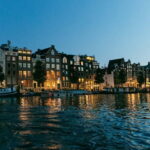
The cruise runs about an hour, and many of the most recognizable scenes—especially bridges—look great in the soft light of late afternoon or evening. If you can manage it, going later can add extra atmosphere, and the nightly illumination of Magere Brug is part of why evening cruises are popular.
For comfort, Amsterdam weather matters. Since the experience is designed for practical enjoyment outdoors with onboard shelter, you still shouldn’t plan it like a summer-only activity. Bring a light layer even when it looks mild. And if rain is expected, a glass-roof boat is often a calmer option than fighting the elements.
Finally, if you care about hearing the audio, pick a cruise time when the boat is less likely to be chaotic. Peak holiday moments can mean lights and fun, but they can also increase noise levels.
Who should book this cruise (and who might want a different format)
This works best for:
- first-timers who want to get their bearings fast
- visitors who want a relaxing break between museums and neighborhoods
- travelers who like architecture and canal geography more than step-by-step commentary on foot
- families looking for a short, low-effort outing (especially since NEMO is on your route area)
It might be less ideal if:
- you strongly prefer open-top boats for maximum photo angles
- you get frustrated by ambient noise and need quiet for audio
- you’re expecting deep, stop-by-stop explanations that feel like a live guide walking beside you
Also, because the schedule and boarding are tight, I recommend not stacking this as your last-minute plan. Some cancellations or operational changes can happen due to major city events, and when that happens, it can be stressful to deal with it late in the day. Give yourself buffer time.
Should you book it?
Yes, if you want a fast, relaxing Amsterdam orientation with audio that helps you recognize what you’re seeing. The one-hour format is the sweet spot: enough time to absorb the canal belt rhythm and landmarks like Magere Brug and Westerkerk, not so long that you feel stuck on the water.
Book it if value matters, your feet need a break, and you’re curious about how Amsterdam’s canals shaped the city. Skip it (or plan a different tour) if your priority is photography without any window obstruction, or if you need near-total quiet to enjoy narration.