REVIEW · AMSTERDAM
Anne Frank’s Amsterdam Jewish History WWII Semi-Private 12ppl Max
Book on Viator →Operated by Babylon Tours Amsterdam · Bookable on Viator
Memorials, not just museums. This semi-private walk links Amsterdam’s Jewish WWII story with other victim groups, from Anne Frank’s hiding to names and deportations. With a 12-person max group, you get real back-and-forth instead of a lecture from the curb.
I love how the tour sets the tone at the Anne Frank House area, then keeps widening the lens to explain what else was happening in the city under Nazi occupation. I also like the way you connect the dots across different memorials—Jewish resistance, persecuted LGBTQ+ people, deaf victims, and the workers’ protest—so the “why” sticks, not just the dates.
One thing to consider: entry to key sites isn’t included (Anne Frank House and the Portuguese Synagogue/Jewish Museum are outside-only on this tour). If you want to go inside those places, you’ll need separate tickets or a different plan.
In This Review
- Key highlights you’ll actually feel
- A semi-private WWII walk that links the whole city
- Price and timing: what $62.54 buys you
- Before you go: tickets, pickup, and the “no coats stored” reality
- Start point at Westermarkt: get your bearings fast
- Stop 1: Anne Frank House exterior only (and why that still works)
- Stop 2: The Statue of Anne Frank by Westerkerk
- Stop 3: Homomonument—memorial for LGBTQ+ victims
- Stop 4: Dam Square and the National Monument
- Stop 5: Spinoza Monument—Jewish thought and political ideas
- Stop 6: Joods Verzetsmonument—Jewish resistance, not only victims
- Stop 7: Monument Megadlé Jethomiem—children, deportation, Sobibor
- Stop 8: Portuguese Synagogue area—world-famous Jewish life, then interruption
- Stop 9: The Dokwerker—February Strike of 1941
- Stop 10: Deaf Memorial—when persecution was specifically targeted
- Stop 11: Auschwitz Monument—shattered mirror, broken heavens
- Stop 12: National Holocaust Names Monument and Stumbling Stones
- The guide matters: what makes this tour feel strong
- Logistics that help you have a smoother day
- Who should book this one (and who might want something else)
- Should you book Anne Frank’s Amsterdam Jewish History WWII Semi-Private 12ppl Max?
- FAQ
- Is entry to Anne Frank House included?
- Are tickets for the Portuguese Synagogue included?
- How long is the tour?
- What group size is this tour?
- Is the guide English-speaking?
- Where do I meet the tour?
- Where does the tour end?
- Does the price include food or drinks?
- Do I need to tip?
- Is hotel pickup or drop-off included?
Key highlights you’ll actually feel

- Small group control with a 12-person maximum, which makes questions easy to ask
- WWII focus that keeps moving through 12 stops in about 2.5 hours, not a slow “sit and listen” format
- Anne Frank context without the ticket stress, starting at the Anne Frank House exterior and adding nearby tributes
- Memorials for more than one community, including LGBTQ+, deaf Jewish victims, and Jewish resistance
- A powerful ending at the Names and Stumbling Stones, grounded in specific victim records
- Strong guiding examples like Anita and Klaus, known for clear answers and staying patient in tough weather
A semi-private WWII walk that links the whole city
Amsterdam can feel like a set of postcard neighborhoods—canals here, boutiques there. This tour flips that perspective. You’ll walk through real historical ground where Jewish life, persecution, resistance, and remembrance all left traces in the city’s streets.
What I like about this format is the pacing. It’s not just “look at this plaque.” You’ll get enough time at each stop to understand what you’re seeing, then you move on before the story gets stale.
And with a semi-private group size, you’re not stuck listening to someone else’s questions. If you care about the details—who, what, when—your guide can tailor the explanations.
You can also read our reviews of more tours and experiences in Amsterdam.

Price and timing: what $62.54 buys you
At about $62.54 per person for roughly 2 hours 30 minutes, you’re paying for three practical things: (1) an expert local guide, (2) a structured route that covers major WWII-era memorials, and (3) a group size that stays manageable.
You should also know where the value stops. This price does not include entry tickets for the Anne Frank House, and it does not include admission for the Portuguese Synagogue/Jewish Museum. So if those inside visits are non-negotiable for you, think of this as the story-building companion—not the full ticket package.
Since the tour is offered in English, it’s straightforward to follow without translation headaches. The start-to-finish walking route also means you’ll be outside a lot. Bring comfortable shoes and plan for weather.
Before you go: tickets, pickup, and the “no coats stored” reality
This tour includes a mobile ticket and an expert local guide, and it’s capped at 12 travelers. That’s a good combo for Amsterdam, where walking and transit connections matter.
What’s not included is equally important:
- Anne Frank House entry is not included (you’ll view the Anne Frank House exterior only).
- Portuguese Synagogue entry is not included.
- Food and drinks aren’t included.
- There’s no hotel pickup/drop-off, so you’ll want to arrive on your own (Uber/taxi or public transit works).
- There’s no luggage or coat storage. Keep your load light.
If you’re the kind of person who likes to travel with a big tote bag, make a quick rethink here. A memorial walk is easier when you’re unburdened.
Start point at Westermarkt: get your bearings fast
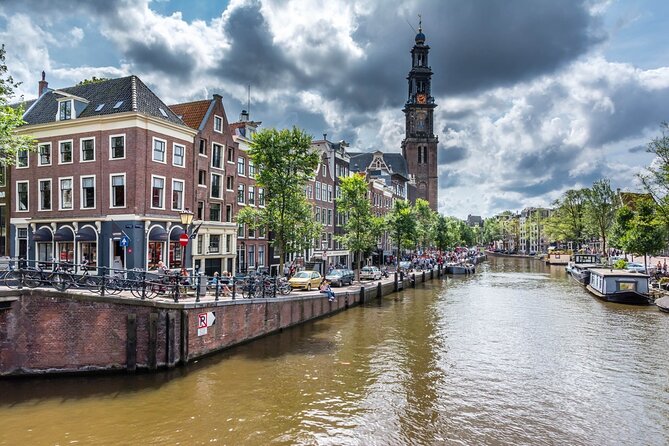
You’ll meet at Westermarkt 60 (near Westermarkt). This is a handy spot because Amsterdam’s public transportation network makes it relatively easy to reach.
The tour’s end point is at the National Holocaust Names Monument area (National Holocaust Names Monument, 1018 DP). That matters: you’ll finish at a place that feels like a deliberate emotional closing, not just another “check-the-box” stop.
Stop 1: Anne Frank House exterior only (and why that still works)
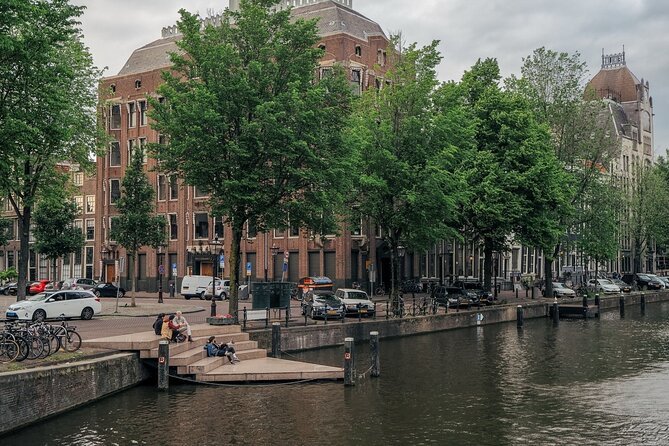
The first stop is the Anne Frank House exterior, where Anne, her family, and four others hid from the Nazis for two years. Even without entering, you’re starting in the right place—this sets the emotional and historical gravity for everything that follows.
You’ll also want to pay attention to the details you might miss on your own: this isn’t just a famous building. It’s part of a larger story of hiding, surveillance, and the limits of safety under occupation.
One practical note: because entry isn’t included, you won’t get the full inside experience of the house itself. But you will get the surrounding context that helps the entire route make sense.

Stop 2: The Statue of Anne Frank by Westerkerk
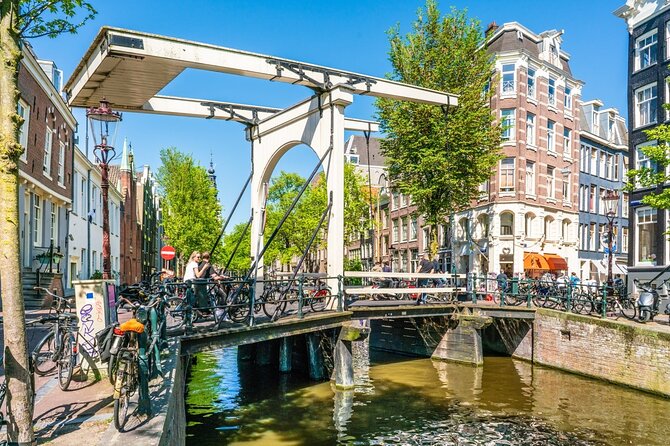
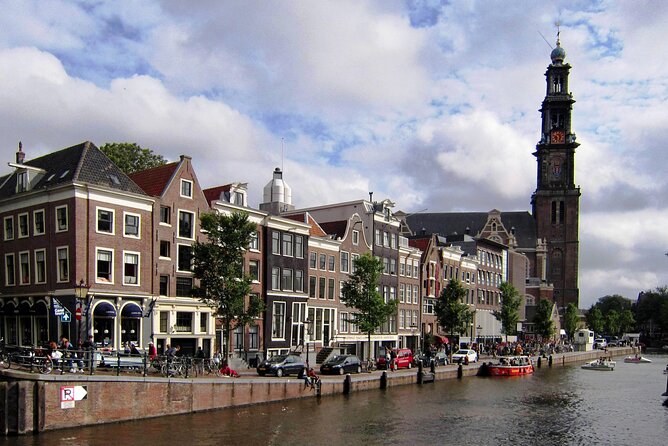
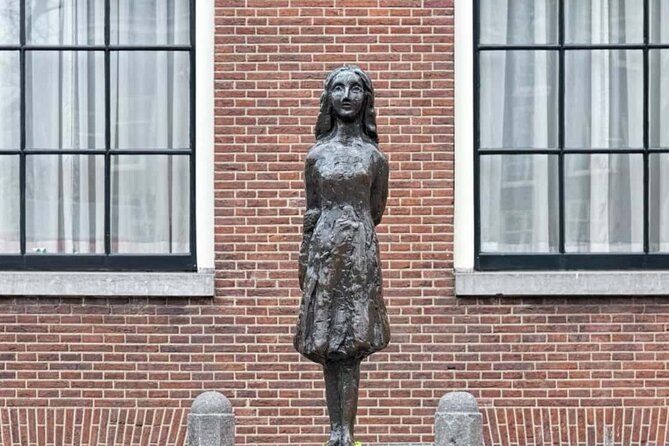
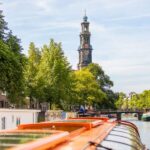
From the Anne Frank House area, you’ll see the statue of Anne Frank. It sits with Westerkerk in the background, a 17th-century church whose bells were described as comfort and reminder—comfort from sound in the distance, reminder of a world continuing beyond the attic.
This stop is short, but it’s meaningful. It helps you separate two things that often blur together for first-time visitors: Anne Frank as a wartime diarist and as a long-lasting symbol people still return to today.
Stop 3: Homomonument—memorial for LGBTQ+ victims
Next up is the Homomonument. This is the first memorial in the world dedicated to persecuted LGBTQ+ individuals, honoring those who lost their lives under the Nazi regime.
For me, this is one of the most important stops because it corrects a common gap in WWII tours. If your mental picture of Nazi persecution is only about one group, this stop forces a more accurate view: the machinery of oppression targeted more than one identity, and remembrance should reflect that.
Stop 4: Dam Square and the National Monument
You’ll walk through Dam Square, Amsterdam’s historic main square. It’s also tied to the occupation through the detail that a Nazi recruitment office once stood here.
From there, you’ll pay respects at the National Monument, a cenotaph honoring victims of World War II and later conflicts. It’s a good reminder that WWII memory in Europe doesn’t end at 1945. It ripples into later wars too.
Stop 5: Spinoza Monument—Jewish thought and political ideas
The Spinoza Monument is a smaller stop (just about five minutes), but it matters. You’ll learn about Dutch Jewish philosopher Spinoza—his rationalist ideas on religion and politics were considered radical in his time and later influenced the Enlightenment.
This is a smart pivot. After the memorial weight of persecution and loss, you get a sense of intellectual life. It’s not just about suffering. It’s also about a community’s ideas shaping the wider world.
Stop 6: Joods Verzetsmonument—Jewish resistance, not only victims
Then you’ll reach the Jewish Resistance Monument (Joods Verzetsmonument). It was erected in 1988 to commemorate Jewish resistance fighters who lost their lives during WWII, and it marks the first mass protest against Nazi occupation.
This stop is a key part of why the tour feels different from a “sad sights only” route. You’re shown that people resisted, even when resistance was deadly.
Stop 7: Monument Megadlé Jethomiem—children, deportation, Sobibor
At Monument Megadlé Jethomiem, you’ll pause at a subtle sidewalk monument where stones trace the outline of the orphanage from which Jewish children and caretakers were deported to Sobibor in 1943.
This is one of those places that can feel almost too quiet. That’s the point. Instead of loud symbolism, the monument uses shape and outline—letting you feel how specific and human the loss was, including children.
If you’re the type who wants to understand the details, take your time here. The description is short, but the implication is heavy.
Stop 8: Portuguese Synagogue area—world-famous Jewish life, then interruption
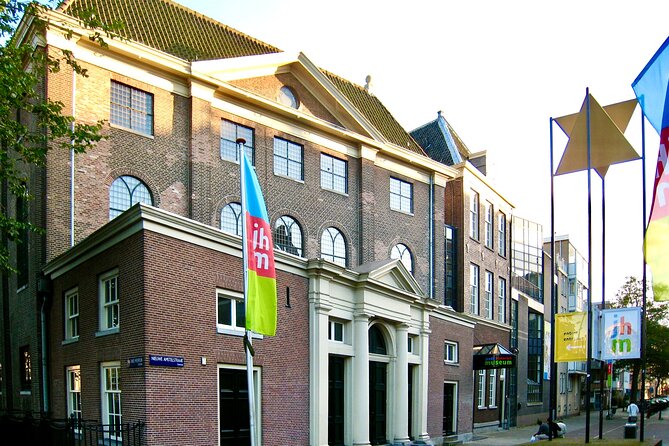
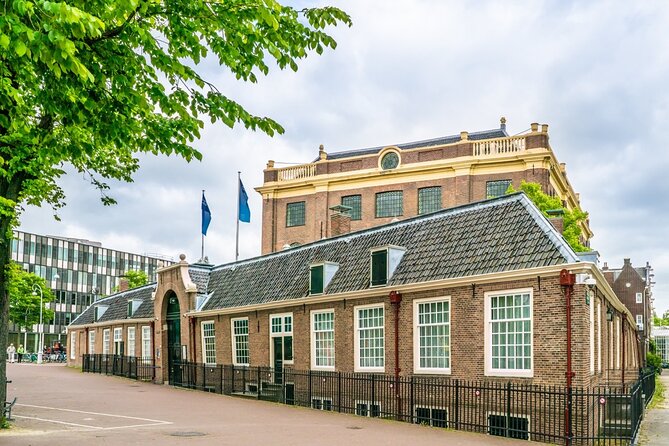
You’ll admire what was once the Portuguese Synagogue, described as the world’s largest synagogue. It’s positioned as a symbol of Amsterdam’s once-thriving Jewish community.
The tour also notes that the Jewish Museum sits across the street for a deeper look into Jewish life, history, and culture in the Netherlands—just remember the tour price does not include museum admission.
For practical planning, this is where you decide what kind of visitor you are. If you want inside context, you can add the museum separately. If you’re prioritizing the walking route and memorials, seeing the synagogue area externally is still a strong reminder of what was lost and what survived.
Stop 9: The Dokwerker—February Strike of 1941
Next is The Dokwerker (Memories of the February strike). This statue commemorates the February Strike of 1941, when thousands of workers staged the first public protest in occupied Europe against Nazi persecution.
This stop shifts the story into resistance through action. It’s also a reminder that people protested even under systems designed to shut protests down.
If you care about how occupation changed daily life, this is a great “what that world looked like” checkpoint.
Stop 10: Deaf Memorial—when persecution was specifically targeted
At the Deaf Memorial, you’ll remember Jewish deaf and hard-of-hearing victims of the Nazi regime from 1940 to 1945.
The memorial language highlights that Nazis labeled people as Untermenschen and systematically murdered them. This stop is short, but it’s precise, which is what makes it stick in your mind.
It’s also a good example of why this tour’s approach feels fuller than many WWII walks. It doesn’t treat persecution as a single uniform story.
Stop 11: Auschwitz Monument—shattered mirror, broken heavens
In Wertheimpark, you’ll pause at the Auschwitz Monument. It uses a shattered mirror effect to reflect the sky—meant to symbolize how the heavens themselves were broken by the horrors of Auschwitz and other concentration camps.
I like this imagery because it doesn’t rely on numbers. It relies on feeling. You’ll probably notice your mood shift at this point. That’s normal. The route has been building toward this kind of silence.
Stop 12: National Holocaust Names Monument and Stumbling Stones
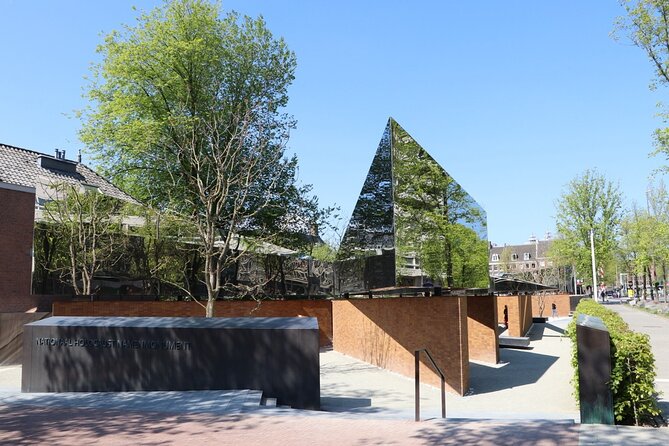
The tour ends at the National Holocaust Names Monument and the nearby Stumbling Stones.
You’ll see the Names Monument engraved with the names of 102,000 Jewish victims and 220 Roma and Sinti murdered by the Nazis. Then you’ll look at the Stumbling Stones: small brass plaques embedded in the pavement, each marking the last known residence of a deported Holocaust victim.
This is why the ending feels like more than a stop. It turns abstract tragedy into contact points—places, names, and routes that once had real lives.
The guide matters: what makes this tour feel strong
A walking route like this lives or dies by the guide’s ability to explain without turning it into a scripted march.
From what I’ve picked up from strong guiding patterns on this route, names that often come up are Anita and Klaus, both described as clear, responsive, and good at answering questions. That question-friendly style is exactly what you want on a tour like this, where people naturally ask things like why a memorial is shaped a certain way, or what a specific term means.
One other practical point: because it’s a walking tour through outdoor sites, weather can be a factor. The tour still keeps going in hard rain, so a rain shell beats a flimsy umbrella.
Logistics that help you have a smoother day
This is a moderate physical fitness walking tour. You’ll be on your feet for about 2.5 hours, with short pauses at each stop.
To keep it comfortable:
- Wear shoes you can walk in for a long block.
- Bring a light layer. Churches and museums are one kind of temperature; memorial streets can be another.
- Keep your bag small since luggage/coat storage isn’t provided.
Also, since the tour ends at the National Holocaust Names Monument area, it can be easier to plan a later meal or transit connection nearby instead of rushing off immediately.
Who should book this one (and who might want something else)
This is a great match if you want:
- A semi-private group experience rather than a big crowd
- A WWII-focused Amsterdam route that includes multiple persecuted groups
- A structured way to see the Anne Frank-related area and connect it to other memorials
It may be less ideal if:
- You only want to do Anne Frank House inside access (this tour is exterior only)
- You plan to add the Portuguese Synagogue/Jewish Museum as part of your main plan and don’t want to manage extra tickets
Think of it this way: this tour helps you understand the city’s memorial map. If you want the museum-level deep dive inside specific buildings, you’ll likely add those separately.
Should you book Anne Frank’s Amsterdam Jewish History WWII Semi-Private 12ppl Max?
If your goal is to understand Amsterdam under Nazi occupation through a set of meaningful landmarks, I’d say yes. The value comes from the guided storytelling, the small group size, and the fact that the route doesn’t stop at one narrative. It spreads across Jewish resistance, persecution of LGBTQ+ people, deportations, deaf victims, and the names of victims—ending with a powerful, grounded remembrance experience.
Just be honest with yourself about tickets. Because Anne Frank House entry and Portuguese Synagogue/Jewish Museum entry are not included, you’ll want either separate plans or a different tour if those inside visits are your top priority.
If you’re okay with outdoor viewing and guided context, this is a strong way to spend an afternoon and leave with a clearer, more accurate sense of Amsterdam’s WWII story.
FAQ
Is entry to Anne Frank House included?
No. The tour includes Anne Frank House exterior only, and admission tickets are not included.
Are tickets for the Portuguese Synagogue included?
No. Admission to the Portuguese Synagogue (and the Jewish Museum across the street) is not included.
How long is the tour?
The tour lasts about 2 hours 30 minutes.
What group size is this tour?
It’s semi-private with a maximum group size of 12 people.
Is the guide English-speaking?
Yes. The tour is offered in English.
Where do I meet the tour?
Meet at Westermarkt 60, 1016 DL Amsterdam.
Where does the tour end?
The tour ends at the National Holocaust Names Monument, 1018 DP Amsterdam.
Does the price include food or drinks?
No. Food and drinks are not included.
Do I need to tip?
Gratuities are optional, and they are not included in the price.
Is hotel pickup or drop-off included?
No. There is no hotel pickup or drop-off included, and you’ll need to get there on your own.