
REVIEW · AMSTERDAM
Cursed Houses of Jordaan: Self-Guided Mystery Walk in Amsterdam
Book on Viator →Operated by Questo · Bookable on Viator
A mystery-game map in Amsterdam sounds fun. This self-guided phone walk turns the Jordaan into a story you follow block by block, with directions that keep you from wandering in the wrong direction. I especially like the way it strings together classic stops like Westerkerk and Noordermarkt with quieter lanes in between, so you cover more ground than a casual stroll.
I also like the clever “choose-your-own-pace” feel: you pause for photos or a coffee break, then keep going when you’re ready. The one thing to watch is that the challenges can feel easy for people who want tougher puzzles, and if your phone app has trouble, you may lose time.
In This Review
- Key Highlights at a Glance
- A Phone-Led Mystery Walk Through the Jordaan
- Is This Worth $8.70? Value, Pace, and What You Skip
- Your Route: Westerkerk to Bloemgracht, Stop by Stop
- Stop 1: Westerkerk (Westertoren area)
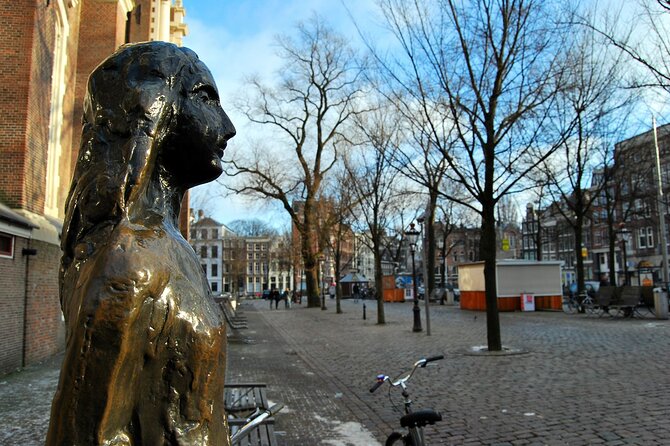
- Stop 2: Anne Frank Monument
- Stop 3: Prinsengracht 70
- Stop 4: Noordermarkt
- Stop 5: Prinsengracht 2
- Stop 6: Brouwersgracht
- Stop 7: Het Raepenhofje
- Stop 8: Lindengracht
- Stop 9: Karthuizersstraat 61 (Coöperatieve Vereniging)
- Stop 10: Westerstraat
- Stop 11: Bloemgracht (finish)
- What the Story Actually Does (Lysa Jansen and Postcard Clues)
- Using the Questo App Smoothly on Amsterdam Streets
- Who This Self-Guided Game Fits Best
- Final Call: Should You Book Cursed Houses of Jordaan?
- FAQ
- FAQ
- What app is used for Cursed Houses of Jordaan?
- How long does the walk take?
- Where does the self-guided walk start and end?
- Do I need tickets for attractions along the route?
- Is there a tour guide with you?
- Can more than one person share a phone?
Key Highlights at a Glance
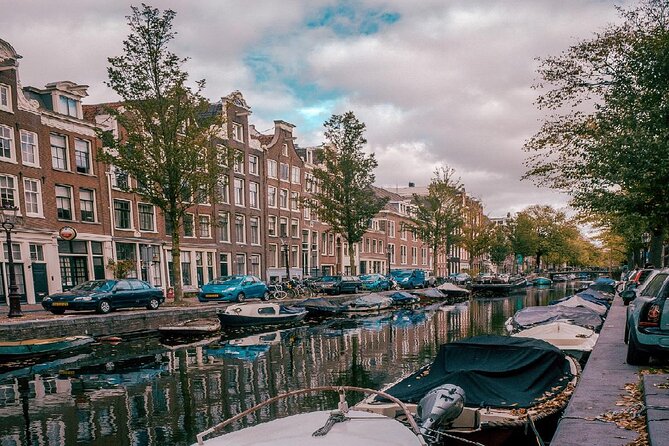
- Quests via your phone: The route and clues come through the Questo app, step by step.
- A Jordaan route with texture: You move between big landmarks and smaller streets that most casual walks miss.
- Story through details: The narrative includes postcards and a focus on places like Westerstraat’s miniature houses.
- Short and doable: Expect about 1.5–2 hours of walking at a relaxed pace.
- Budget-friendly format: At $8.70 per person, it’s a low-cost way to get a guided-feeling route without a human guide.
A Phone-Led Mystery Walk Through the Jordaan
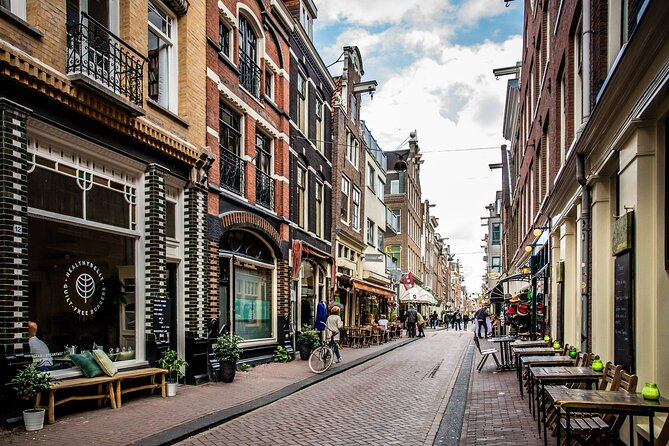
If you’ve ever wished your Amsterdam walk came with a script and a reason to look up from your phone, this is that. Cursed Houses of Jordaan is a self-guided mystery walk built around a story called Lysa Jansen, starting with postcards and moving you through the Jordaan one clue at a time. You don’t need to schedule anything beyond showing up at the start point and having your phone ready.
What makes it work is the structure. Instead of “go explore the neighborhood,” you get short challenges that lead to the next location, plus directions on your screen. It turns the city into a moving checklist, but without that stiff, guided-tour feeling. You can stop as long as you like at several points and continue at your own pace.
Two things I value for this kind of experience: it’s efficient and it’s flexible. Efficient, because the route stitches together multiple Jordaan-area addresses in about two hours. Flexible, because you’re not stuck with a fixed pace or a group dynamic—especially handy in a city where you’ll want to stop for canals, bridges, and photo angles.
That said, this style of game is only as good as your phone’s performance. One of the less happy notes tied directly to the app freezing, which is the main real-world risk of any app-based tour.
You can also read our reviews of more tours and experiences in Amsterdam.



Is This Worth $8.70? Value, Pace, and What You Skip
At $8.70 per person, you’re not paying for museum entry or a guided talk. You’re paying for the route, the story format, and the phone-based clue system. That means you should go in with the right expectations: this is not a guided history lesson, and it’s not an attraction ticket.
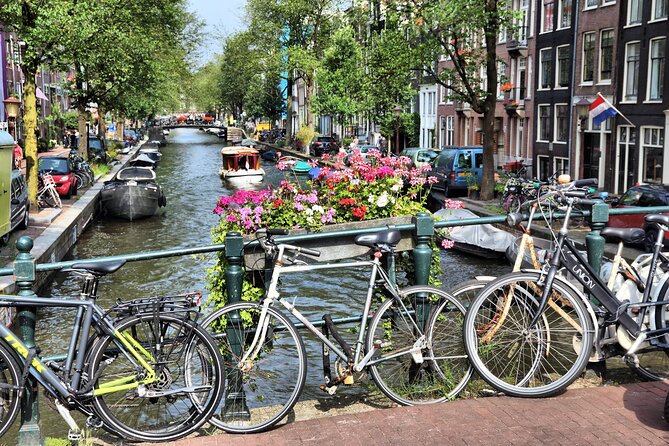
The value shows up in how much walking you get for a short time. You’ll hit places like Westerkerk, the Anne Frank area (via the Anne Frank Monument), and then several canal streets including Prinsengracht and Brouwersgracht. There’s also time built into the experience. The stops are tight on time paper—many are listed as about 5 minutes—but you’re explicitly allowed to linger at several points and then keep going.
For people who like structure, it’s a win. For people who crave hard puzzles, the experience may feel light. One complaint called out repeat-style questions and challenges that didn’t feel challenging enough. If you’re the type who likes complicated scavenger hunts with brain-burners, you might find yourself finishing quickly and then wishing the story had more friction.
Also, while you’re guided by directions, you’re still responsible for street-level navigation. Amsterdam is walkable, but you’ll want comfortable shoes and a phone battery that won’t give up midway.
Your Route: Westerkerk to Bloemgracht, Stop by Stop
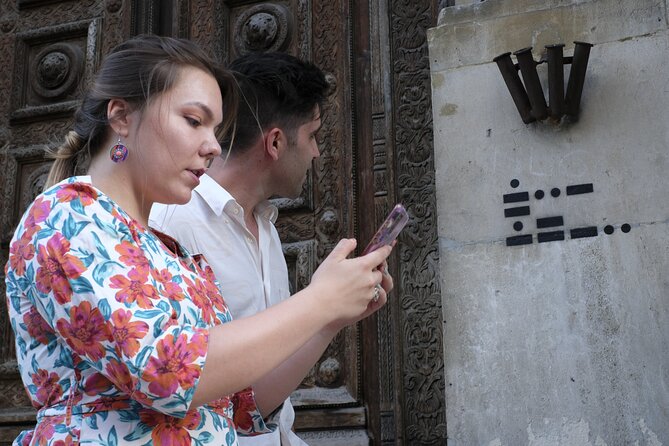
This walk runs from WesterkerkPrinsengracht 279 to Bloemgracht. Even though it’s self-guided, you should still treat it like a timed plan: get going near your start time, follow the clue flow in order, and don’t try to jump ahead.
Here’s how the main stops shape the vibe of the route—what you’ll likely see, why each location matters, and what to keep in mind.
Stop 1: Westerkerk (Westertoren area)
You begin by lining up near Westerkerk and the Westertoren. The first clue sets the tone. This is useful because it gets you started with confidence: you learn how the game format works before you’re deep into the neighborhood.
Why I like the start: it’s a clear landmark, easy to orient around, and it helps you build momentum. If you’re arriving late or your phone needs a minute, starting at a big recognizable point helps.
Stop 2: Anne Frank Monument
Next comes the Anne Frank Monument area, where you’ll find another clue and move to the next point. This stop gives you a strong emotional anchor without requiring ticketed entry.
Practical note: this is a popular zone. You don’t need an admission ticket for the walk, but you do need to be prepared for foot traffic.






Stop 3: Prinsengracht 70
Then you shift to Prinsengracht 70. This is where the game starts blending into real street-view Amsterdam. Think canals, house-front details, and the kind of architecture you only notice when you’re forced to look closely.
Why this matters: Prinsengracht is one of those streets that looks good at every angle, so being asked to check a specific address makes your photos better and your route smarter.
Stop 4: Noordermarkt
Noordermarkt is a good breather point. It’s also a natural place to pause, reset your phone, and grab a snack or drink if you want to keep your walking energy steady.
What to watch: depending on the time of day, the area can be busy. Build in a little buffer so you don’t feel rushed while your phone loads the next clue.
Stop 5: Prinsengracht 2
Back on Prinsengracht, this time at Prinsengracht 2. It keeps you in that canal rhythm and prevents the route from becoming a straight “one street the whole time” kind of walk.
The upside of repeated canal streets: it helps you notice how neighborhoods change within just a few blocks.
Stop 6: Brouwersgracht
Brouwersgracht arrives next, and this is another point where you can take your time. The game’s pacing here feels more realistic: you’re outdoors, you’re walking, and you’re allowed to keep exploring before moving to the next clue.
This stop is where the walk becomes more than a checklist. If you enjoy canal-side details—bridges, house lines, reflections—this is where you’ll want to slow down.
Stop 7: Het Raepenhofje
Het Raepenhofje is a quieter, tucked-away style stop. These smaller courtyard-like places are exactly the kind of Amsterdam moments that reward a self-guided route, because you can linger without asking permission or waiting for a guide.
I’d treat this as a “look carefully” pause. When a game sends you here, it’s usually because the story has something specific to tie to the location.
Stop 8: Lindengracht
Lindengracht continues the canal circuit. Like the earlier Prinsengracht stops, it’s a street that’s visually rewarding even when you’re not focused on the clue.
Helpful for your planning: the route stays walkable and doesn’t pretend you’re doing a marathon. This feels like a neighborhood adventure.
Stop 9: Karthuizersstraat 61 (Coöperatieve Vereniging)
Next you’ll be prompted around Karthuizersstraat 61, including the Coöperatieve Vereniging area. This sounds like a detail-driven stop, the kind of place you might walk past without noticing unless a game points you directly at it.
This is also a good reminder: the experience isn’t only about seeing famous buildings. It’s about getting your eyes to behave like a local’s.
Stop 10: Westerstraat
Westerstraat is a highlight street, and it’s where the story includes details like the 7 miniature houses on Westerstraat. This is one of the most “worth it” parts of the walk because the game content matches what you’re looking at.
If you like odd architectural facts and small-scale curiosities, you’ll probably enjoy this section more than the faster canal segments.
Stop 11: Bloemgracht (finish)
You finish at Bloemgracht. The game ends here—both the story and the city exploration element—so treat this as your last good photo zone and your final “check if you missed anything” moment.
What the Story Actually Does (Lysa Jansen and Postcard Clues)
The narrative is built around Lysa Jansen and the idea that postcards lead you into the neighborhood. As you solve each challenge, the story unfolds and the app gives you exact directions to the next location.
This is the core value for most people: it creates motivation to move through the Jordaan in sequence. Otherwise, it’s easy to roam Amsterdam for hours and end up with mostly scenic but scattered sightseeing. Here, you get a defined route that still feels like wandering.
The experience also aims for a mix of styles: part tour route, part outdoor escape game, part treasure hunt. That matters because it keeps you from feeling bored. If the clues were too long, it would drag. If it were only a route with no problem-solving, it would feel like a self-guided brochure walk. This lands somewhere between.
One “nice touch” from the materials is that it includes references beyond canals—things like an older cafe in Amsterdam and other lesser-known places. You may not need to know every cultural detail in advance. The game is designed to give you a reason to look.
Using the Questo App Smoothly on Amsterdam Streets
This experience runs through the Questo app. After booking, you’ll receive an email with instructions to download and play. You’ll also use a mobile ticket.
Here’s the practical side: app-based tours live or die on your phone. Before you start, do the boring stuff:
- Fully charge your phone (or at least get close).
- Make sure you have enough data or connectivity for the app to function.
- Keep your brightness reasonable so you can read clues outdoors.
If multiple people are in your group, you can share a phone. That’s a good cost-saver and a good way to keep everyone involved. Just don’t expect everyone to scan their own clues separately—this experience is set up around one device guiding the story.
Now, a caution based on real feedback: one person reported difficulty with the game flow because the app froze and support responses felt unhelpful. That doesn’t mean it will happen to you. It does mean it’s smart to plan for a backup minute or two, like restarting the app if it stalls and keeping the help option in mind.
Your best strategy is calm patience. Amsterdam streets are easy to walk, but they’re not a good place to troubleshoot a phone for 30 minutes.
Who This Self-Guided Game Fits Best
This is a great fit if you want:
- A short, structured walking plan through the Jordaan
- A low-cost way to feel guided without paying for a tour guide
- An outdoor activity that’s more engaging than reading a map
It’s also a good option for people who don’t want to fight the schedule of a classic tour. The walk is about 1.5–2 hours, and you can take breaks. You’ll see a mix of more famous landmarks and more ordinary street scenes, which is where Amsterdam becomes memorable.
If you’re a puzzle expert who hates easy levels, you might feel under-stimulated. The “too easy” note is worth taking seriously. This game seems designed for casual fun and exploration, not hard-core problem-solving.
If you hate relying on apps, consider skipping it. The entire experience depends on the app flow and the directions it provides. You don’t need a separate museum ticket for attractions on the route, but you do need the app.
Final Call: Should You Book Cursed Houses of Jordaan?

I’d book this if you’re visiting Amsterdam and want a compact way to explore the Jordaan with a story-driven route. For $8.70, the value comes from combining a walk through major canal-area points with stops that nudge you toward less obvious details, like the 7 miniature houses on Westerstraat and the smaller courtyard-style atmosphere of Het Raepenhofje.
I would hesitate if you know you want tougher puzzles or if you’ve had bad luck with mobile apps on travel days. In that case, you could end up spending more time managing tech than enjoying streets.
If you do book, go in ready to walk, keep your phone charged, and treat it like a neighborhood adventure with a script rather than a brain-teaser. It’s a simple setup, and when the app behaves, the experience feels like a smarter way to roam.
FAQ
FAQ
What app is used for Cursed Houses of Jordaan?
The experience uses the Questo app. After booking, you’ll get an email with instructions to download and play the game on your phone.
How long does the walk take?
Plan on about 1 hour 30 minutes to 2 hours.
Where does the self-guided walk start and end?
It starts near Westerkerk at Prinsengracht 279 (1016 DL Amsterdam) and ends at Bloemgracht.
Do I need tickets for attractions along the route?
No. The experience does not require entry tickets to attractions to complete the walk.
Is there a tour guide with you?
No. This is a private, self-guided activity using your phone and the app.
Can more than one person share a phone?
Yes. The information notes that several people can share a phone for an optimal experience.
—
If you tell me your travel dates and whether you prefer harder puzzles or more relaxed sightseeing, I can suggest the best time of day to do this route.