REVIEW · AMSTERDAM
Exclusive small-group Amsterdam Red Light District tour
Book on Viator →Operated by Trigger Tours · Bookable on Viator
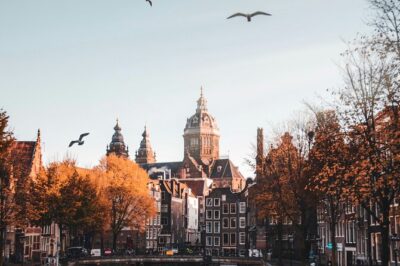
Red Light District walking tours can feel either preachy or sensational. This one works because it stays grounded in how Amsterdam actually grew, block by block. You’ll hear how De Wallen became what it is today, and you’ll move at a pace that lets you notice real street-level details.
Two things I really like: first, the focus on local perspective over myth-making, so the stories connect to the city instead of staying generic. Second, it’s short—about 2 hours—which means you can fit it into a tight schedule without spending your whole day on one neighborhood.
One possible drawback: De Wallen is a working area, and the subject matter includes sex work. If you’re uncomfortable with that topic or you want a purely “photo and landmarks” tour, this may feel a bit heavy for your tastes.
In This Review
- Key highlights you’ll actually care about
- De Wallen on foot: why 2 hours feels just right
- Where you meet: Geldersekade and the practical setup
- Stop-by-stop: what you’ll see and why it matters
- De Wallen streets and Old Town context
- The Dam and Amsterdam’s “city built on trees” foundation
- Pub The Ape (Int Aepjen): surviving since around 1540
- The Waag: from city gate to guild space
- The smallest house in Amsterdam and VOC storage
- The condom shop since 1987: modern, direct, and very Amsterdam
- Guides: how Adam and Aarre set the tone
- Price and value: is $63.67 worth a 2-hour walk?
- Timing, start times, and how to plan your day
- Who should book this tour—and who should skip it
- Final verdict: should you book?
- FAQ
- How long is the Amsterdam Red Light District small-group walking tour?
- Where does the tour start and end?
- What is the price per person?
- How big is the group?
- Do I need an admission ticket?
- Do they offer multiple start times?
- Is a mobile ticket used?
- Is the tour suitable for limited mobility?
- What’s the cancellation rule?
- Is the tour near public transportation?
Key highlights you’ll actually care about
- Small-group size (max 32): easier questions and less crowd pressure on narrow streets
- Local-led storytelling: history and culture tied to what you see right now in De Wallen
- Old Town + De Wallen mix: you walk beyond the headlines into the city’s foundation story
- Multiple start times: helps if your day is packed
- Mobile ticket: you’ll have an easy way to show up and get in the group quickly
De Wallen on foot: why 2 hours feels just right
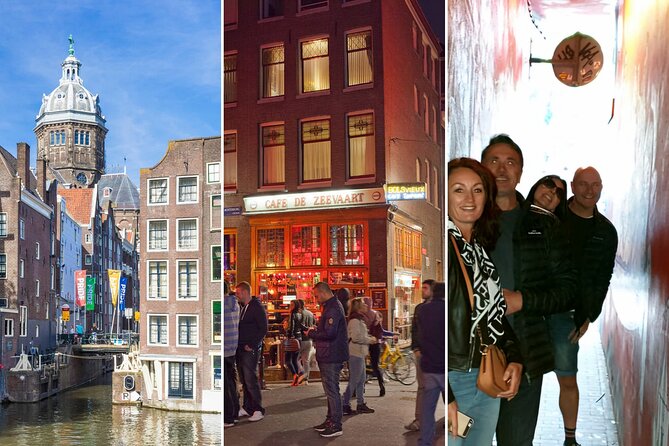
Amsterdam can be a lot. Streets are close together, sidewalks are busy, and attractions pull you in every direction. That’s why I like tours that keep a clean length and a clear route. In about two hours, you get an orientation to De Wallen without it turning into a full-day stress test.
Walking also changes the experience. You notice the size of doorways, the way a square connects to a street, and how old structures still shape what happens there today. On a map, De Wallen looks like one big zone. On foot, it feels like a series of small, meaningful places—each with its own layer of history.
And because this is a small group, you’re not stuck watching someone else’s highlights through the back of heads. You can actually listen, and you can usually ask questions when the guide pauses.
You can also read our reviews of more tours and experiences in Amsterdam.



Where you meet: Geldersekade and the practical setup
The meeting point is Geldersekade 2HS, 1012 BH Amsterdam, and the tour ends back there. That matters more than you’d think. It saves time getting back, and it helps you plan meals afterward without guessing where you’ll land.
You’ll also be using a mobile ticket, so you don’t need to print anything. Service animals are allowed, and the meeting area is near public transportation, which makes it easier to slot into an existing day of trains/trams/buses.
The tour also comes with multiple start times, which is great if you’re juggling museum tickets, canal time, or a late dinner plan.
Stop-by-stop: what you’ll see and why it matters
De Wallen streets and Old Town context
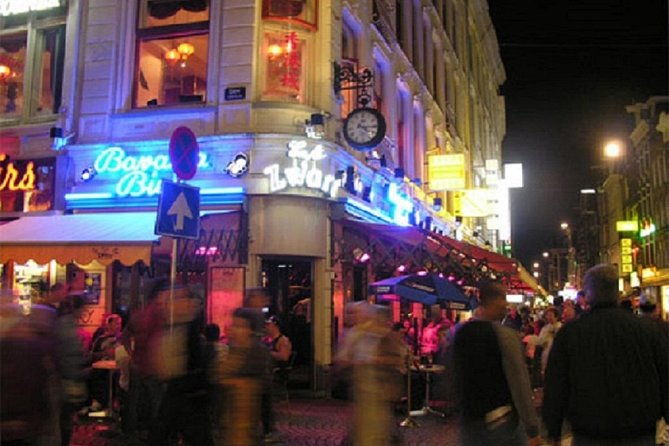
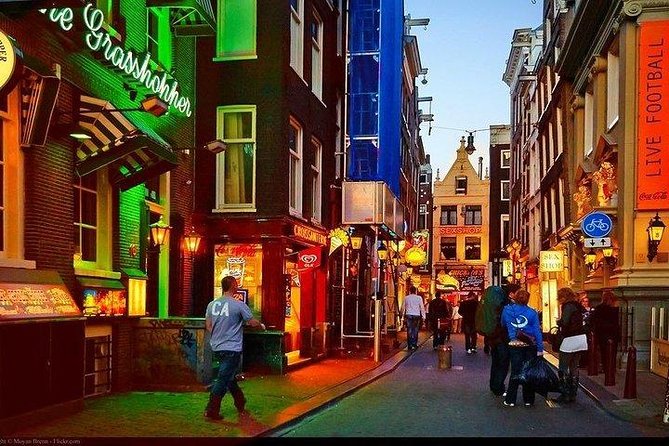
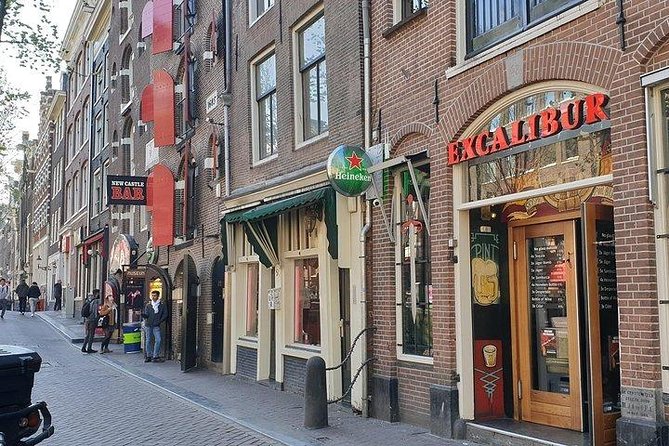
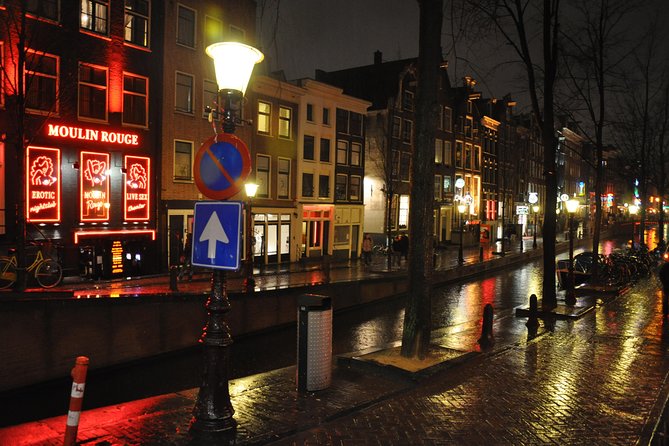
Your first main idea is simple: De Wallen isn’t just a headline. It’s part of Amsterdam’s Old Town fabric. You’ll walk narrow streets in and around De Wallen and get a local perspective on how the neighborhood fits into the wider city.
You’ll also hear about Amsterdam’s coffee shop culture alongside the sex work industry. That combination can surprise people. The point isn’t to shock you—it’s to explain how multiple subcultures have coexisted in the same compact space for years, shaped by law, economics, and local decisions.
If you only ever hear broad descriptions of De Wallen, you’ll probably leave with a clearer sense of how the city’s routines and rules create the atmosphere you see on the street.
Consideration: the tour centers on a real industry. If you’re expecting a light, purely historical stroll, the topic can feel intense even when the guide keeps it factual and human.
The Dam and Amsterdam’s “city built on trees” foundation
As you move through the area, you’ll also connect the neighborhood to Amsterdam’s famous building reality: the city sits on soft ground, with a thick layer of fen and clay. That’s why so many buildings are supported by wooden foundation piles driven deep—about 11 meters—until they reach a stable sand layer.
This part is worth your attention because it changes how you look at everything. Amsterdam isn’t just picturesque; it’s engineered on a difficult base. When you understand the piles and soil, old buildings stop feeling like magic and start feeling like smart survival.
This also helps make sense of why Amsterdam’s neighborhoods developed the way they did. If the city is literally built on wood in wet conditions, you can’t treat “where things are” as accidental.






Pub The Ape (Int Aepjen): surviving since around 1540
One standout stop is Pub The Ape, also called Int Aepjen. The guide ties it to the fact that it was built around 1540, and it’s one of the last remaining wooden buildings in Amsterdam.
That detail isn’t a trivia flex. It matters because Amsterdam had a major shift after a fire in 1452. After that, the government pushed for brick facades, changing how buildings were constructed. So seeing (and talking about) a surviving wooden structure becomes a quick way to understand how regulations can reshape a whole city’s look.
If you like architecture that tells a story—this is the stop that gives you that feeling fastest.
The Waag: from city gate to guild space
You’ll also visit the Waag, which used to be one of Amsterdam’s city gates and part of the defensive wall. Built around the 1400s, it’s described as the second oldest building in Amsterdam.
Later, the Waag shifted roles and became a place for guilds—craft and trade organizations—meaning craftspeople gathered there and worked around the square. In other words, it’s not just old stone. It’s proof that Amsterdam’s spaces were designed for specific jobs, then repurposed when the city’s needs changed.
This stop gives you a clean “then vs. now” feeling: defense and control at one point, local industry and organization later, and now a landmark that frames the neighborhood you’re walking through.
The smallest house in Amsterdam and VOC storage
Next you’ll hear about the smallest house in Amsterdam, built around the 1700s. The story includes how it began as storage for the VOC trading company, then later became a long-term home for people.
That makes the building feel personal. It’s easy to think of trading companies as abstract money and ships. This turns VOC history into a physical space—small, practical, and used over time for real needs.
Even if you don’t care about shipping, the broader idea lands: Amsterdam’s economy didn’t just live on the water. It shaped tiny urban spaces on land too.
The condom shop since 1987: modern, direct, and very Amsterdam
Finally, the tour points out the world’s first condom shop dedicated to condoms, in place since 1987, where you can get customized sizes and specialty condom types.
I appreciate including this stop because it’s a reminder that De Wallen isn’t stuck in the past. It’s part of a city that adapts to public health, consumer demand, and regulation. The presence of a dedicated condom shop feels blunt in the best way: practical rather than symbolic.
If you’re uncomfortable with the general topic, this stop may feel like too much. If you can handle it, it gives a reality check that the neighborhood’s businesses don’t exist only for spectacle—they exist to meet needs.
Guides: how Adam and Aarre set the tone
The tour’s success depends heavily on the guide voice. In the feedback you’ll see two names come up again and again: Adam and Aarre.
Adam is described as entertaining and well-informed, with a tone that keeps things moving while still making time for questions. That’s a great combo for a short walk because it prevents the tour from turning into a monologue you can’t get your bearings from.
Aarre is described as very accommodating and highly informative, and there’s also mention of customizing the tour to meet needs. If you like asking for “one more stop” context or clarifying what you’re seeing as you walk, a flexible guide approach is a big plus.
And yes, the stories can be frank. One highlight included a story about prostitute twins with a wildly large body count. That kind of detail isn’t there to shock for shock’s sake—it’s used to illustrate how the neighborhood’s realities can be extreme, fast-moving, and historically documented.
Price and value: is $63.67 worth a 2-hour walk?
At $63.67 per person for about 2 hours, you’re paying for two things: guided interpretation and time-saving focus. You’re not trying to “figure it out” on your own in one of Amsterdam’s most confusing zones.
This price also makes sense given the small-group limit (max 32). For a city tour, group size affects everything—question time, walking pace, and how much you can hear through street noise.
Another value point is that there’s an admission ticket free note for the activity, so you’re not likely facing surprise entrance costs mid-route based on what’s listed.
Also, it’s commonly booked around 37 days in advance on average, which is a sign that people plan it like a real schedule item—not a last-minute impulse.
Timing, start times, and how to plan your day
Because there are multiple start times, you can choose the one that best matches your energy. If you’re arriving in the area for the first time, pick a time when you’re not rushing to connect to another ticket right after. You’ll be listening, and you’ll want a calm moment to look up and around.
The tour ends back at the meeting point on Geldersekade, so you can plan an easy next step: a meal, a drink, or a short walk toward other Old Town sights—without needing to find transportation immediately.
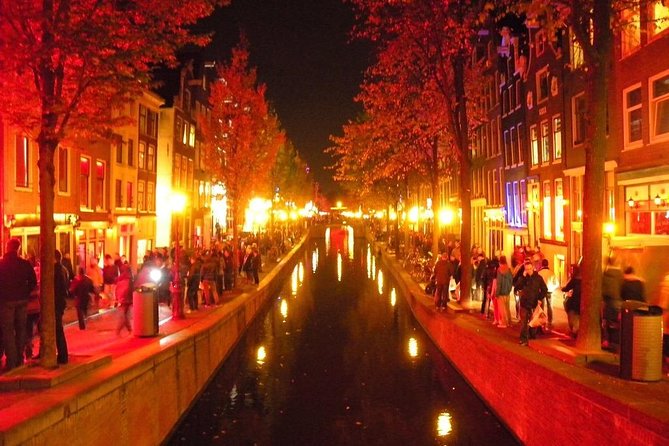
One practical note: De Wallen streets can be narrow and busy. I suggest keeping your phone put away while the guide speaks, then doing photos during natural pauses.
Who should book this tour—and who should skip it
This tour fits best if you want:
- Street-level context in De Wallen, not just general explanations
- A short itinerary that still covers multiple historical stops
- The kind of guide-led conversation where you can ask questions
You might want to skip it if:
- You strongly dislike discussions of sex work and the realities of that industry
- You need step-free access, since it’s not recommended for travelers with limited mobility based on the activity info
It’s also ideal if you prefer small groups. With a cap of 32, it’s easier to keep the tone respectful and orderly even in a dense neighborhood.
Final verdict: should you book?
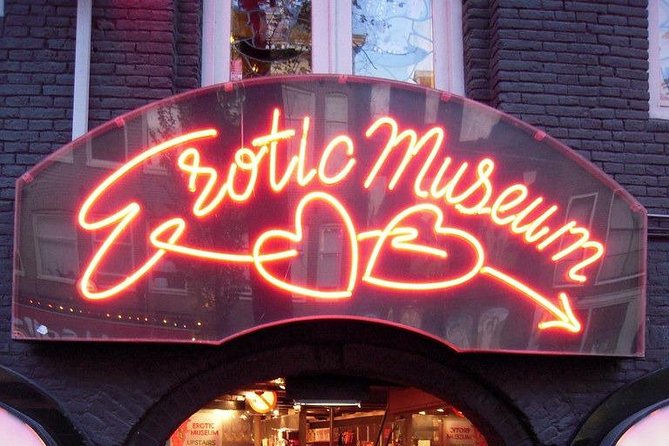
If your goal is to understand De Wallen through history, urban design, and local perspective, this is a smart use of time. The route connects De Wallen to deeper Amsterdam context—wooden foundations, old civic buildings like the Waag, surviving structures like Int Aepjen, and even modern street-level business like the condom shop since 1987.
Book it if you’re open to candid storytelling and you want a guided walk that turns confusion into clarity. Skip it if you’re hoping for a sanitized version of the neighborhood or you need a tour that avoids sensitive subject matter. Either way, with a 2-hour length and a mobile ticket setup, it’s also an easy experiment to add to a day in Amsterdam without overcommitting.
FAQ
How long is the Amsterdam Red Light District small-group walking tour?
The tour runs for about 2 hours.
Where does the tour start and end?
It starts at Geldersekade 2HS, 1012 BH Amsterdam, Netherlands and ends back at the same meeting point.
What is the price per person?
The price is $63.67 per person.
How big is the group?
The tour has a maximum group size of 32 travelers.
Do I need an admission ticket?
The activity notes admission ticket free, meaning you shouldn’t need paid entry tickets for what’s listed.
Do they offer multiple start times?
Yes, the schedule includes multiple start times so you can pick what fits your day.
Is a mobile ticket used?
Yes, the tour includes a mobile ticket.
Is the tour suitable for limited mobility?
It is not recommended for travelers with limited mobility.
What’s the cancellation rule?
You can cancel for a full refund up to 24 hours in advance of the experience start time.
Is the tour near public transportation?
Yes, it is listed as near public transportation.