Amsterdam has a way of grabbing you fast. This private walk slows it down and takes you to the places that explain why Amsterdam looks the way it does—plus the sidestreets you only find when you’re not chasing the loudest crowd.
I especially like the mix of big-city origin stories and small, human details. And I really enjoy how the guides (Christian or Michael) keep the pace friendly, with enough context to make courtyards, squares, and churches feel personal, not like a textbook.
One thing to consider: it’s a 2.5-hour walk (about 4 km / 2.5 miles), so if you want a mostly-sitting tour, this is better as a day-part than a full travel fix.
In This Review
- Key highlights worth penciling in
- Beursplein and the money story that shapes Amsterdam
- The central square and a town hall building with heavyweight purpose
- Crossing the Amsterdam Canal Ring like you’re reading a timeline
- Nine cozy shopping streets and trendy coffee shops—without the crush
- Jordaan’s hidden streets and squares: authentic neighborhood mode
- Karthuizerhof: the courtyard that explains care in 1650
- Westerkerk and Rembrandt’s burial connection
- Private group feel, English-speaking guidance, and walkable pacing
- Price and what you’re really paying for ($101.15 per person)
- Who this tour fits best (and who might want a different style)
- Should you book this hidden streets private tour?
- FAQ
- How long is the Explore hidden streets with friends private tour?
- Where is the meeting point and where does the tour end?
- Is this tour private?
- How much walking is involved?
- Is the tour offered in English?
- Can I get a full refund if I cancel?
Key highlights worth penciling in
- Beursplein start linked to Amsterdam’s first stock-market story, setting the tone in the city’s financial heart
- Canal Ring crossing with medieval growth context, so you understand what you’re seeing instead of just snapping photos
- Jordaan back streets and squares that feel lived-in, not staged
- Karthuizerhof courtyard (1650) for widows, an early example of social housing
- Westerkerk church visit, including Rembrandt’s burial connection, giving a real anchor point for art and memory
Beursplein and the money story that shapes Amsterdam
Your tour starts at Beursplein 1-3, near the city’s historic financial zone. It’s a smart way to begin, because Amsterdam’s canals and neighborhoods don’t just appear out of pretty luck. They’re tied to trade, investment, and the way people organized risk and opportunity.
You’ll hear about the origins of Amsterdam, with a specific stop tied to the world’s first stock market. Even if that topic isn’t your favorite subject in school, it clicks here because the setting is real and you can look around while the story lands. It also explains why Amsterdam’s public spaces and institutions matter—not just as landmarks, but as parts of daily life.
One of the best parts of starting in this area: you get your bearings fast. After the intro, you’re ready to notice how the city’s layout supports commerce, community, and movement.
You can also read our reviews of more tours and experiences in Amsterdam.


The central square and a town hall building with heavyweight purpose
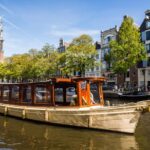
Next comes a look at the central square’s importance and history. The tour then points to a fascinating building that originally served as the town hall of Amsterdam—the kind of place where you’d expect decisions, not just architecture.
This stop is valuable because it reframes the center of the city. Instead of thinking of squares as postcard backdrops, you start seeing them as the places where power, policy, and public life met. You’ll likely walk away with a clearer mental map: this is where Amsterdam made calls that affected the whole city.
If you’re the type who loves history but hates long museum lectures, this works well. It’s outside, paced, and explained in small segments.
Crossing the Amsterdam Canal Ring like you’re reading a timeline
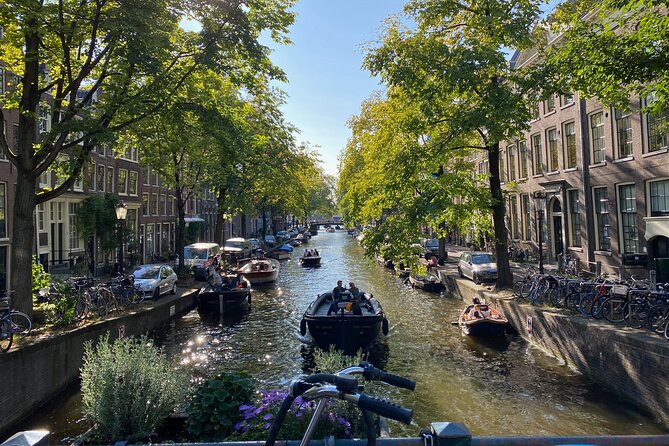
Then you’ll cross the Canal Ring, learning how the city extended itself during medieval times. This is one of those moments where a guide changes everything. Without context, canal-ring photos blur together. With a story attached—trade routes, expansion, and how the city grew—you start spotting patterns.
You can also think of this crossing as your “city scale calibration.” You’re not just seeing canals; you’re learning how Amsterdam’s form relates to its growth. That makes later neighborhoods feel less random.
A bonus: the tour keeps the stops walk-and-look friendly rather than pushing you into paid entry fees. Here and at later points, the focus stays on what you can experience directly from the street.
Nine cozy shopping streets and trendy coffee shops—without the crush
After the canal-ring section, you head toward the nine streets area that becomes a more comfortable zone for shopping. The idea is simple: you step into a part of the city that still has energy, but it isn’t built around nonstop tourism.
You’ll also get time with the city’s more relaxed rhythm—think coffee-shop culture and everyday streets where locals likely move at a calmer pace. Even if you don’t plan to buy anything, it’s a good way to reset after the busier sights.
Potential downside to flag: if you’re hoping to do a ton of shopping, the tour time is limited. This isn’t designed as a retail outing. It’s designed to show you where the local-feeling areas begin, then let you continue on your own afterward.
Jordaan’s hidden streets and squares: authentic neighborhood mode
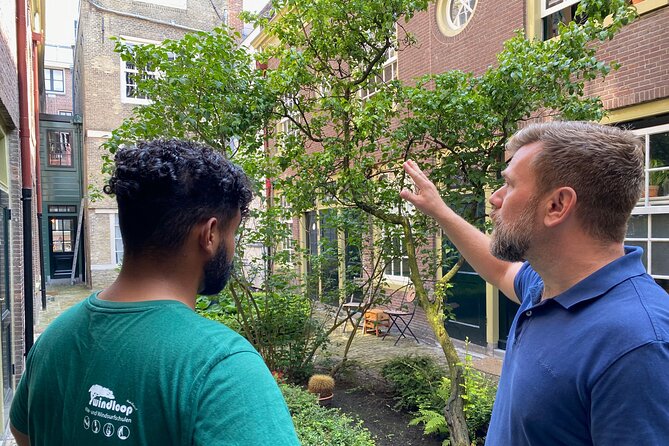
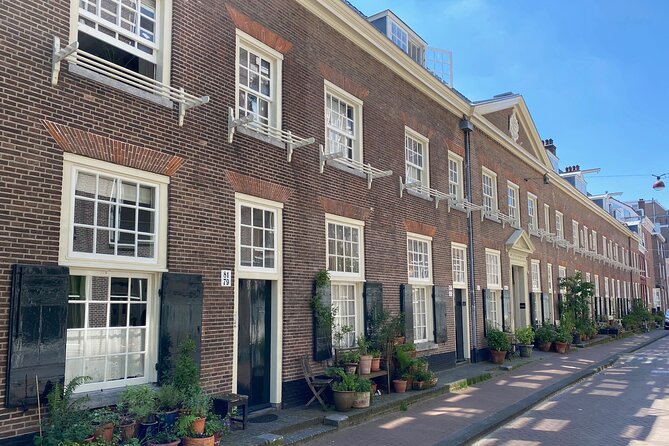
The core of the tour shifts into the Jordaan, which you’ll explore with an emphasis on hidden streets and squares. This is where the experience earns its name—quiet lanes, small corners, and the kind of neighborhood details you’d miss if you only stuck to the most famous routes.
Jordaan is especially useful if you want Amsterdam to feel human. The city can become very “attraction-shaped” for first-timers. Here, you get a different lens: blocks and crossings that make sense for residents, not tour buses.
During this Jordaan stretch, you’ll also pass by the Anne Frank House. The tour doesn’t position it as a stop to linger for long entry time. Instead, it gives you a moment to connect the location to the neighborhood and the streets around it—useful if you’ve come to Amsterdam with that story already in your head.
Another small but meaningful touch: you’ll learn about a church for the poor, including why it was built exactly where it was. I like this kind of detail because it ties architecture to social life—who needed help, and how a city arranged support in real space.



Karthuizerhof: the courtyard that explains care in 1650
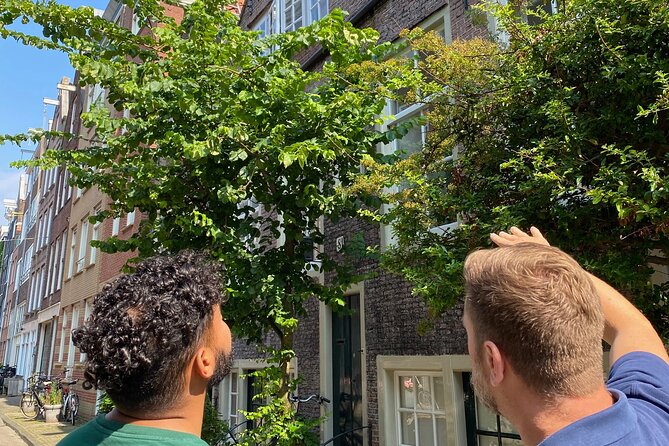
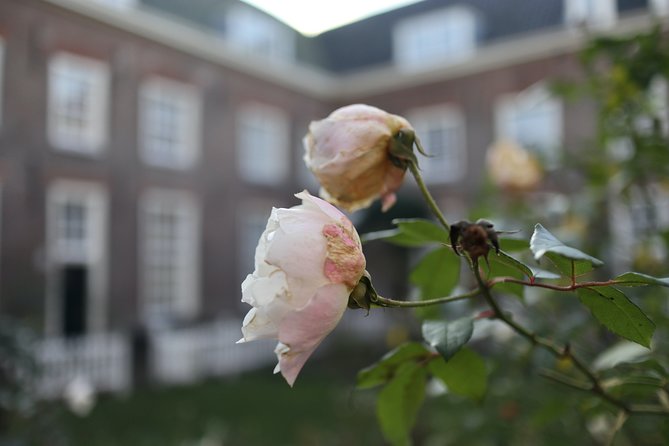
One of the most memorable stops is Karthuizerhof, a courtyard constructed in 1650 for widows. It’s described as one of the first social housing projects in the world, and you can feel why this hits people. It’s not just an architectural postcard. It’s a window into what the city tried to solve when circumstances got hard.
You’ll spend a short time here—about 10 minutes—but it’s the type of place that expands in your mind after you leave. Courtyards like this can be easy to overlook on your own, especially if you’re rushing between major sights. With a guide, you learn what you’re looking at, and that turns “pretty courtyard” into “real social history.”
This is also one of the stops that tends to land best with different trip styles. History lovers get the context. Busy people get a quick hit that doesn’t eat the whole afternoon. And families often like it because it’s visual, calm, and easy to follow.
Westerkerk and Rembrandt’s burial connection
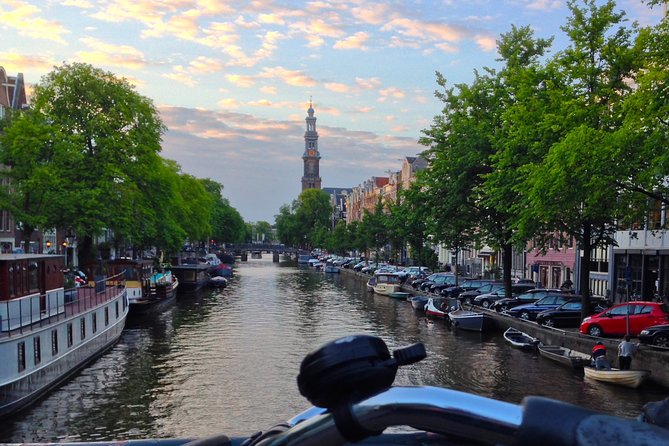
The tour also includes the Westerkerk, a church described as a marvel, with the note that Rembrandt was buried there. Even if you’re not a hardcore art history person, this is a clean way to connect Amsterdam to broader European culture.
This stop works as an emotional anchor. Courtyards and streets can feel like scenes. A church linked to a major artist gives the day a stronger sense of continuity—this city remembers, and it builds places where memory stays visible.
If you’re trying to choose between church-and-canal priorities in Amsterdam, this is a good compromise. You get both: the city’s practical, everyday structure and its cultural weight.
Private group feel, English-speaking guidance, and walkable pacing
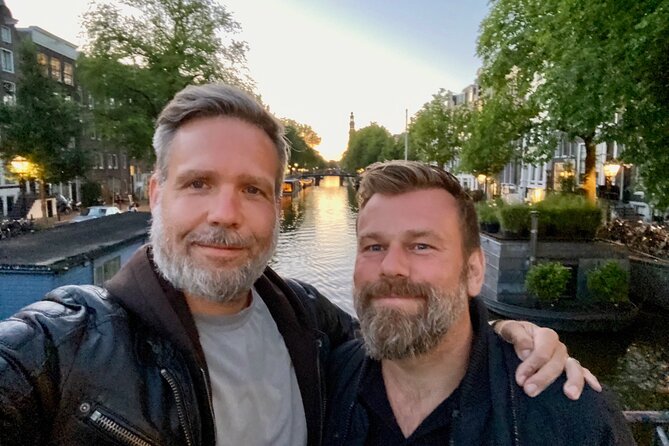
This is a private tour—only your group participates. That matters more than it sounds. In a city like Amsterdam, where streets can twist and detours are common, having a guide who can keep your group together and adjust pacing is a real quality-of-life upgrade.
It’s offered in English, and the tour runs about 2 hours 30 minutes (approx.) with walking around 2.5 hours over 2.5 miles / 4 km. That’s a moderate distance. You won’t be trudging across the city for half a day, but you also won’t get a fully seated, low-effort experience.
You’ll end in Elandsgracht. I like that finish because it leaves you in an area where you can continue exploring without immediately needing transit, especially if your next stop is dinner or a relaxed canal walk.
Price and what you’re really paying for ($101.15 per person)
At $101.15 per person, this isn’t a “cheap and cheerful” hop-on walk. It’s priced like a quality private city guide with a specific theme: quiet streets, courtyard stories, and history you can place in the real city.
Here’s how I think about the value:
- You’re not paying for a stack of museum tickets. Much of the experience is walk-and-look with ticket-free focus at major stops.
- You’re buying a human filter. The big value is interpretive: stories that make canal rings and courtyards make sense, not just be seen.
- You get tailored recommendations for the rest of your trip. That can be worth real money in Amsterdam, where one smart afternoon plan beats wandering.
If you’re traveling with friends and can arrange your group size, there’s also mention of group discounts. That can make the per-person cost feel more reasonable, especially compared to doing the same day on separate self-guided routes.
Who this tour fits best (and who might want a different style)
This tour suits you best if you want Amsterdam to feel calmer and more personal than the classic highlights route. It also fits well if you like history but prefer it told in street-level pieces—stock-market origins, town-hall functions, canal growth, social housing, and art connections.
I’d also say it can work nicely for older teens and groups that enjoy walking. The pace is active but not punishing, and the topics aren’t just dates and names.
If you’re the type who wants to maximize sights per minute, you might feel like it’s too slow. This is about quality and context, not checking off ten landmarks at speed.
Should you book this hidden streets private tour?
Yes, if your goal is to see Amsterdam with fewer crowds and more meaning. The strongest reason to book is the combination of quiet neighborhood focus (Jordaan and courtyards) with clear historical storytelling (from the first stock market connection to social housing in Karthuizerhof and Rembrandt’s Westerkerk tie-in).
Skip it only if you want a mostly sit-down experience, or if you already have a deep fascination with very specific building names and museum collections that require indoor time. For most first-timers who want a better Amsterdam than the obvious route, this private format is a smart spend.
FAQ
How long is the Explore hidden streets with friends private tour?
It runs for about 2 hours 30 minutes.
Where is the meeting point and where does the tour end?
You meet at Beursplein 1-3, 1012 JW Amsterdam and the tour ends at Elandsgracht, Amsterdam.
Is this tour private?
Yes. It’s a private tour/activity and only your group will participate.
How much walking is involved?
You should be able to walk for about 2.5 hours and cover roughly 2.5 miles / 4 km.
Is the tour offered in English?
Yes, it’s offered in English.
Can I get a full refund if I cancel?
You can cancel for free up to 24 hours in advance of the experience start time for a full refund. If you cancel less than 24 hours before, the amount you paid won’t be refunded.