REVIEW · KINDERDIJK
Kinderdijk Windmills, Delft City & Delft Blue Factory Visit
Book on GetYourGuide →Operated by Private Day Tours Amsterdam · Bookable on GetYourGuide
Windmills always look better up close. This private day trip turns the Netherlands’ water story into something you can actually see, with a boat cruise over UNESCO Kinderdijk and expert talk as you travel. I also love the way the day stays human-sized, with a guide who can slow down when needed.
In my favorite moments, I got a real feel for Dutch water management, and the Delft segment connects the art world to the streets and canals. I especially appreciated that guide Steven kept the pace comfortable and considerate, even with a 90-year-old in the group.
The main thing to consider is walking conditions. You may face cobblestones and steps, and the tour notes it is not suitable for wheelchair users.
In This Review
- Key highlights that make this trip worth your time
- From Amsterdam to Kinderdijk: the drive that sets the tone
- UNESCO Kinderdijk windmills by boat: 19 mills in one ride
- A guide-led Delft walk: canals, churches, and Delft Blue context
- Delft Blue factory visit: seeing the craft behind the famous pattern
- Time in the real Netherlands: pacing, stops, and what the minivan solves
- Price and value: is $347 per person fair for this route?
- What to bring so the day feels easy
- Who this day trip is best for (and who should skip it)
- Should you book this private Kinderdijk and Delft Blue day trip?
- FAQ
- What time does the tour start?
- How long is the day trip?
- What’s included in the price?
- Is lunch included?
- How do we see the Kinderdijk windmills?
- Which languages are the guides?
- Is this tour suitable for wheelchair users?
- What should I bring?
- Are there any rules about food and drinks in the vehicle?
Key highlights that make this trip worth your time
- UNESCO Kinderdijk boat tour to see 19 windmills from the water
- Photo-friendly working windmill time for close-up pictures
- Delft Blue culture in context, not just a quick stop in a shop
- A walking tour with a guide through cobblestone streets, canals, and historic churches
- Delft Blue factory visit to see how the craft still works
- Private minivan comfort for a full day without fighting public transport
From Amsterdam to Kinderdijk: the drive that sets the tone
This trip starts the way a good Dutch day should: by leaving the city and watching the scenery change from urban blocks to open countryside. You’re picked up from your Amsterdam accommodation, and the tour runs on a clear rhythm—everything begins at 09:30.
Even if you already know the Netherlands is flat, you still get that sense of “how did they manage water here” once you’re outside the city. The drive is part of the education. Your guide points out what makes Dutch land useful: dikes, polders, and the long-term idea that water needs constant attention, not occasional heroics.
What I like about a private format is that you’re not sharing a cramped schedule with a bus full of strangers. In practice, it means you can move at a sensible speed and ask questions as you go.
And yes, the minivan matters. It’s an air-conditioned Chrysler style vehicle, which is a relief on a warm day and still comfortable when the weather does its quick-switch trick.
You can also read our reviews of more tours and experiences in Kinderdijk.
UNESCO Kinderdijk windmills by boat: 19 mills in one ride
Kinderdijk is famous for a reason. It’s UNESCO-listed, and seeing those windmills from the water makes the whole place feel like a working system instead of a photo backdrop.
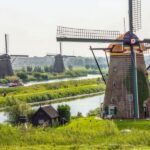
The heart of this stop is the boat cruise. You’ll admire 19 windmills along the canals, and the viewpoint does something walking can’t: it shows how the machinery fits into the water network. You’re not just looking at towers; you’re watching how people shaped a landscape for survival and farming.
On top of that, there’s usually a big difference between reading about Dutch water control and understanding it when you’re surrounded by the infrastructure. Your guide frames it around history and how wind power helped move water where it needed to go.
You’ll also get time to see a working windmill and take photos. This is where your camera can earn its keep. Try a few angles, including shots that capture the spacing between mills—those gaps are part of the story.
One practical note: bring a jacket and expect cool air near the water. Layers help, because the weather can feel different once you’re out on the canal.
A guide-led Delft walk: canals, churches, and Delft Blue context
After Kinderdijk, the day shifts gears into Delft. This is where the tour becomes more than “Dutch engineering sightseeing.” You get to connect that engineering mindset to Dutch culture, art, and identity.
Delft is a classic walking city: cobblestone streets, canals, and historic church architecture you can’t fake with a single picture. With your guide, you stroll through the center and get pointed commentary on what you’re seeing.
A few themes are built into the route:
- The legacy of Johannes Vermeer, who is tied to Delft’s artistic atmosphere
- The William of Orange connection, which helps explain why the city matters historically
- The story of Delft Blue, Delft’s world-famous earthenware tradition
I like that this doesn’t turn into a “museum talk.” It stays connected to the street scene. When someone points out a detail and then you see it in front of you two minutes later, the city clicks.
Also, the pacing is described as flexible, and in my experience that makes a big difference in Delft. You don’t want to feel rushed while you’re trying to read the canal edges, notice the facades, and pause for a better angle.
Delft Blue factory visit: seeing the craft behind the famous pattern
Next up is a visit to a Delft Blue factory. This is one of the last remaining Delft Blue factories in the world, which matters if you’re the kind of traveler who hates the idea of “souvenir factories” where nothing feels real.
Here, you’re not just buying something. You’re watching a living tradition. The point isn’t to guess how it’s made from a label. It’s to understand the process and appreciate what still takes effort in an age where so much can be mass-produced.
Even if you don’t become a pottery expert by the end of the day, you’ll likely look at Delft Blue patterns differently. You’ll spot the careful repeat work and the way the style is tied to Delft’s identity.
This part of the tour is also a good counterbalance to Kinderdijk. One is about moving water through wind power. The other is about making beauty last through human skill and tradition. Both are about long-term thinking.
Tip for you: if you’re shopping, plan for time to look, compare, and decide. Rushing can turn a charming craft stop into regret.
Time in the real Netherlands: pacing, stops, and what the minivan solves
This is a full 8-hour day, so you’ll want to think like a local: comfortable shoes, a water plan, and patience for travel time.
A few details help you manage expectations:
- It’s a private group, so you’re not stuck with the loud “everyone move” energy that can drain a day.
- You’ll enjoy pickup and drop-off in Amsterdam at your holiday accommodation, so you don’t spend mental energy on logistics.
- Traffic can cause delays, so leaving a little buffer in your overall Amsterdam schedule is smart.
The itinerary is also described as not rushing you around. That sounds like marketing language, but it really matters in practice. Delft rewards slow attention. Kinderdijk rewards pauses for photos. A guide who can adjust the pace makes the whole day feel more relaxed.
That’s part of why the guidance from Steven stood out to me. He was patient, asked for what the group needed, and didn’t push a rigid timeline when someone needed more time.
For you, the takeaway is simple: this day works best when you go in expecting a real guided experience, not a checklist sprint.
Price and value: is $347 per person fair for this route?
At $347 per person, you’re paying for a private, guided “best-of” day that’s hard to replicate on your own without extra planning.
Here’s what your money covers:
- Pickup and drop-off from your Amsterdam accommodation
- A live guide
- Admission tickets
- Parking fees
- The private vehicle transfer (air-conditioned)
What’s not included is equally important:
- Lunch
- Beverages
So is it worth it? For me, the value comes from three areas.
First, you’re saving time and stress. Getting from Amsterdam to Kinderdijk and then to Delft efficiently is doable, but doing it smoothly while also fitting a boat cruise and factory visit takes planning. A private setup removes that friction.
Second, the guide adds interpretive value. Kinderdijk isn’t just windmills; it’s water management history. Delft isn’t just charming canals; it’s art, politics, and craft. The guide helps you connect those dots while you’re in the places.
Third, the boat piece is part of what makes this trip special. You’re not just “seeing” mills; you see them from the water, which changes how they make sense.
If you’re the type of traveler who likes to do things efficiently with a clear plan, this price can feel fair. If you prefer a DIY day and don’t care much about guided context, you might find cheaper options. But you’ll likely trade away comfort, pace flexibility, and the smooth handoffs between stops.
What to bring so the day feels easy
A day mixing boat time, cobblestones, and walking through towns calls for simple gear choices.
Bring:
- Comfortable shoes (seriously, this matters in Delft)
- A camera (your best photos will likely be in Kinderdijk)
- Water
- A jacket for cooler canal air
Good to know:
- Bottled water is available.
- Smoking is not allowed.
- Try not to bring take-away beverages into the car.
If you’re traveling in shoulder season, layers are your friend. Even when the forecast looks mild, the water and wind can turn “fine” into “cold enough to regret it.”
Who this day trip is best for (and who should skip it)
This tour fits best if you want a guided, private day that mixes scenery with meaning.
You’ll enjoy it if you:
- Like UNESCO sites and want more than a quick photo
- Want Delft Blue context tied to the city’s history and people
- Prefer a slower pace where questions are welcome
- Appreciate private transportation to cut out the hassle of transfers
You might skip it if:
- You need wheelchair-friendly routing. The tour notes it is not suitable for wheelchair users, and cobblestones and steps may be involved.
- You don’t want to walk much. You’ll be on your feet in Delft.
If you’re traveling with older relatives, this trip can still work well, especially with a guide who understands pacing. The Steven experience described a patient approach that helped a 90-year-old move comfortably.
Should you book this private Kinderdijk and Delft Blue day trip?
I think you should book if you want one well-paced day that hits the Netherlands’ two big “wow” themes: water management and Dutch craft and art. The private guide, the boat cruise at Kinderdijk, and the Delft Blue factory stop are the three pillars that make this more than a scenic day.
Skip it if you hate walking on cobblestones or you need wheelchair-friendly access; the tour’s notes point to practical barriers there.
For the right match, though, this is a strong value because you get guided interpretation in three different settings: the canals of Kinderdijk, the historic streets of Delft, and a working craft environment where Delft Blue still has real weight.
FAQ
What time does the tour start?
All tours start at 09:30. Pickup is included from your Amsterdam accommodation.
How long is the day trip?
The duration is 8 hours.
What’s included in the price?
Pickup, drop-off, admission tickets, and parking fees are included. You also get a live tour guide and a private group experience.
Is lunch included?
No. Lunch and beverages are not included.
How do we see the Kinderdijk windmills?
You’ll take a boat cruise and admire the 19 windmills, plus you’ll have time around a working windmill for photos.
Which languages are the guides?
The live tour guide speaks English, Dutch, and German.
Is this tour suitable for wheelchair users?
The tour is listed as not suitable for wheelchair users. Cobblestones and steps may be involved, so it’s important to consider mobility needs carefully.
What should I bring?
Bring comfortable shoes, a camera, water, and a jacket.
Are there any rules about food and drinks in the vehicle?
You should refrain from bringing take-away beverages into the car. Bottled water is available.