REVIEW · AMSTERDAM
Private Off-the-beaten-path Countryside Windmill Tour
Book on Viator →Operated by Windmillgirl Tours · Bookable on Viator
Windmills are better when you’re not stuck in tours. This private day keeps you away from the crowds with a small, just-for-your-group pace, and hotel-to-hotel transfers that save you time (and hassle) from the first minute.
I especially like the focus on how the Netherlands works, not just how it looks. Esther, a local guide who grew up around a windmill, shares real water-management stories in plain terms, and you get hands-on stops like a museum mill and a cheese tasting. One drawback to keep in mind: it’s about a 6-hour day, and lunch isn’t included, so you’ll want to use that included lunch choice in Volendam.
In This Review
- Key highlights you’ll feel on the day
- Private pickup and a route built to save your time
- Museummolen Schermer: a windmill museum you can understand fast
- Driving the Schermer dikes and getting the family-story context
- De Rijp: a fishing village turned landlocked
- Beemster UNESCO polder: the planned grid you can actually see
- Jacobs Hoeve by Henri Willig: cheese tasting plus real Dutch craft
- Volendam for lunch: choose your style, keep the pace
- Edam’s cheese-town charm in a 30-minute hit
- Broek in Waterland: water village details you’ll notice up close
- The value question: what $473.17 per person buys you
- Who this tour is best for (and who should skip it)
- Should you book this private off-the-beaten-path windmill tour?
- FAQ
- What time does the tour start?
- How long is the tour?
- Is hotel pickup included?
- Is this tour private?
- What language is the tour offered in?
- What does the price include?
- Is lunch included?
- Which places are visited during the day?
- Do I get a ticket on my phone?
- What’s the cancellation policy?
- About accessibility, can most people participate?
Key highlights you’ll feel on the day
- Private door-to-door pickup from your Amsterdam hotel, so you start relaxed and end right where you need to be
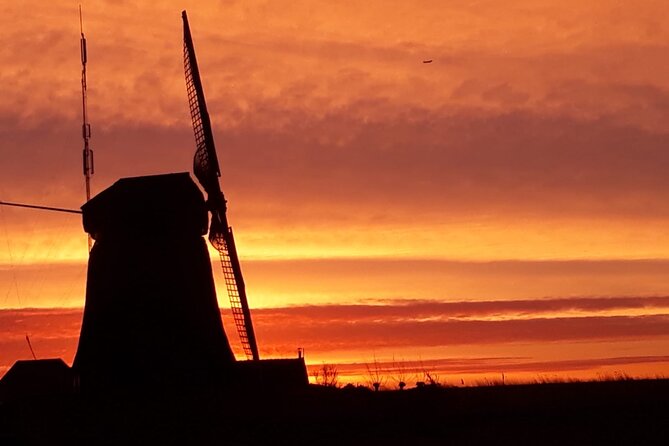
- Museummolen Schermer lets you see a windmill from top to bottom, with how it ran and how people lived
- Esther’s windmill connection adds extra context as you drive dikes and pass surrounding village scenes
- Beemster UNESCO polder design shows the planned grid of roads, plots, farms, and canals after lake drainage
- Jacobs Hoeve by Henri Willig combines cheese tasting with a wooden shoe craft demonstration
- Broek in Waterland delivers classic water-village details, including a church floor paved with tombstones
Private pickup and a route built to save your time
The biggest practical win here is the private transportation and Amsterdam hotel pickup. You don’t spend your morning “figuring it out” on transit or chasing the right bus; you simply get collected, ride out, and come back after a full day.
This format matters because countryside days can get choppy fast. When you’re moving between windmills, polder landscapes, and small towns, every saved stoplight and detour helps you actually enjoy the places you paid to see.
Also, since it’s a private tour only for your group, the pace stays flexible in a way group tours often can’t manage. You’re not forced into a rigid rhythm when you want photos, a restroom break, or a few extra minutes at a dike viewpoint.
You can also read our reviews of more tours and experiences in Amsterdam.
Museummolen Schermer: a windmill museum you can understand fast
Your first major windmill stop centers on the Schermerpolder area, a region shaped by water control during the Dutch Golden Age. The key story is simple and fascinating: the lake Schermeer was drained using 52 mills, which created the land that became the Schermerpolder. In other words, this wasn’t just pretty scenery, it was engineering with daily consequences.
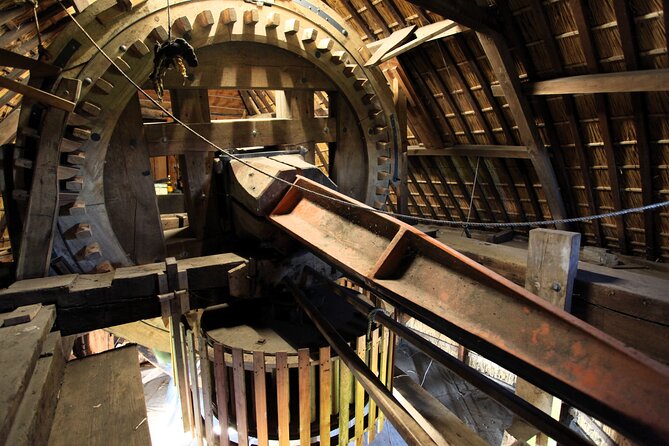
At Museummolen Schermer, you visit the museum mill where you can see the windmill from top to bottom. That vertical walkthrough is a big deal because it turns the windmill from a postcard into a functioning machine. You’ll get a clear sense of how the mill worked and how people used to live in windmills.
Time here is about 30 minutes, so it’s not a long museum marathon. That’s a good thing if you want to keep the day moving without feeling rushed, but it also means you’ll get the main story rather than a deep, slow-study experience.
Driving the Schermer dikes and getting the family-story context

Between the museum mill and the villages, you’re taken along dikes through the regained lands of the Schermer. This stretch is short, but it’s the kind of short that helps you “read” the area. Roads, water, and fields in this region aren’t random; they’re tied to drainage and land reclamation.
A standout moment is passing Esther’s family windmill. That personal link changes the tone of what you saw at the museum. Instead of only hearing about history, you also get a sense of how windmills fit into real local life and memory.
You only spend around 15 minutes on this drive segment, so if you’re the type who wants long photo time at every spot, just know the itinerary is built for variety, not extended stillness.
De Rijp: a fishing village turned landlocked
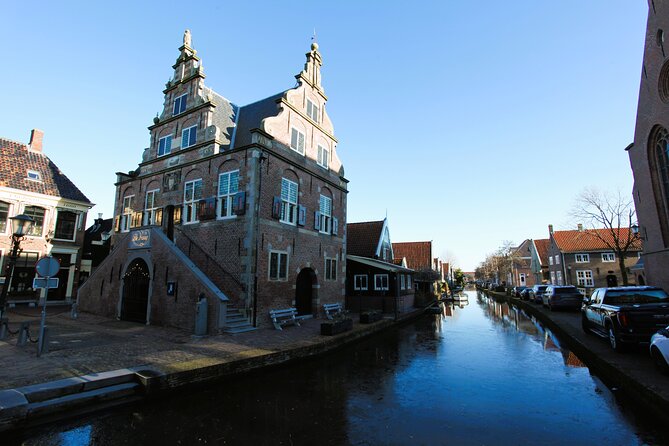
Next comes De Rijp, a town with a past that feels almost contradictory: it was once busy as a fishing village tied to a herring fleet and even whalers, but later the surrounding sea drained and left Rijp encircled by land.
That shift is exactly why this countryside route feels different from a simple “see some windmills” plan. You’re watching how livelihoods change when the water changes. And for history buffs, De Rijp also connects to Jan Adriaanzoon Leeghwater, a hydraulic engineer born here—an important name in Dutch water management.
Your visit is brief at about 15 minutes, which is enough to get the feel of the town without turning it into a full-on museum stop. Since admission is free here, you’re paying mainly for the transfer, guiding, and time with someone who can explain why the place developed the way it did.
Beemster UNESCO polder: the planned grid you can actually see
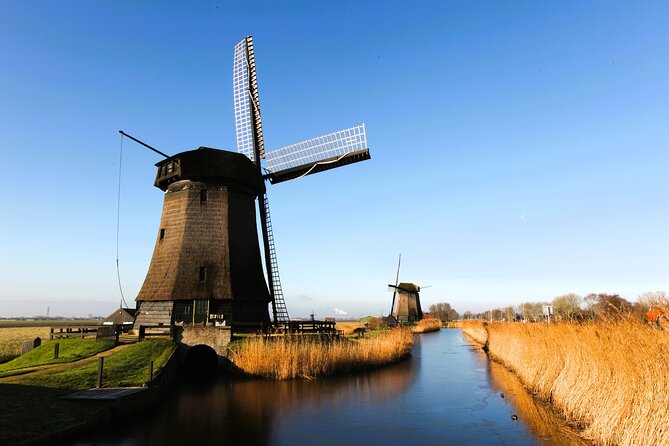
After De Rijp, you’re driven through the Beemster UNESCO World Heritage site. This is one of those places where the story behind the scenery matters more than you’d think.
Beemster is a polder shaped by careful planning after the Beemster Lake was drained. You’ll see the planned system of roads, plots, farms, and canals, laid out with deliberate structure across the reclaimed land. That “geometry” shows up in the way the farms sit, how fields are divided, and how the water routes connect.
The route here is a drive-through, so you’ll want to be ready to pause for views if timing allows. Even without long walking time, it helps to see how Dutch water engineering created not just farmland, but a whole organized way of living.

Jacobs Hoeve by Henri Willig: cheese tasting plus real Dutch craft
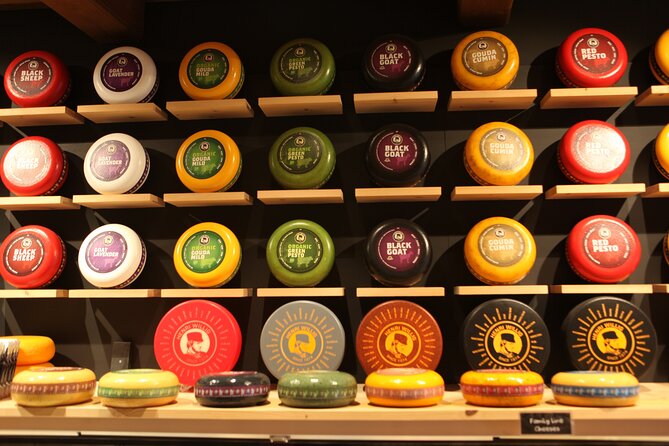
If you like food, this is a high-value stop. At Jacobs Hoeve cheese farm by Henri Willig in Katwoude, you get a tasting built around Gouda and Edam. The info provided makes the point that they’re among the top 10 world cheesemakers, and the experience is designed for people who want to understand what they’re eating—not just sample and move on.
One detail I like from the description: they offer 30 flavors and develop cheeses specifically for travel. That’s useful because it gives you a sense of how the Dutch cheese tradition adapts to a global palate, not just a single-style local product.
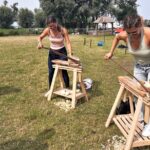
You also get the chance to watch a wooden shoe craft demonstration—yes, the clog story comes in right here. If you’ve ever wondered how clogs are made, this is where you find out. You can even try or buy a pair of wooden shoes if you want a souvenir that’s actually tied to the craft.
This stop runs about 40 minutes, which is a good length: long enough for tasting and the craft segment, short enough to keep the day comfortable.
Volendam for lunch: choose your style, keep the pace
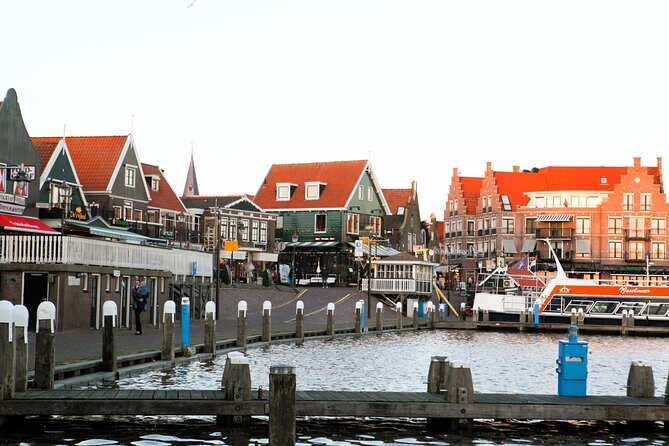
Then it’s Volendam for lunch. Lunch isn’t included, but the tour includes the flexibility to choose where you want to eat—fish restaurant, traditional Dutch pancake restaurant, or another preference you share. Your driver/guide sets you up so you spend your time eating, not hunting for a place.
That choice matters. Volendam can be touristy in the wrong way, but having local guidance helps you pick a spot that fits what you want to spend your time on. If you’re traveling with picky eaters or you have dietary limits, this is the kind of built-in option that reduces stress.
You’ll have about 1 hour here, so it’s not just a “quick bite” window. It’s enough time to eat without feeling like you’re rushing back to make the next pickup.
Edam’s cheese-town charm in a 30-minute hit
After Volendam, you head to Edam for a short visit of about 30 minutes. This is a good stop if you like towns that feel preserved and easy to wander for a bit.
Edam is famous for its world-renowned Edam cheese, and the town’s charm is the blend of history and a classic Dutch feel. Since your time is limited, think of this as a “reset and enjoy the vibe” window rather than a deep dive into every street.
The best move here is to walk slowly, pause for a photo, and take in the architecture while you can. With only 30 minutes, speed will make it feel like a checklist; patience will make it feel like a snapshot of Dutch everyday life.
Broek in Waterland: water village details you’ll notice up close
Next is Broek in Waterland, one of those villages where “small and quiet” actually means something. It’s surrounded by water and gets compared to Giethoorn, but here you still get the feeling of a classic Dutch village with preserved details.
You take a pleasant stroll passing old wooden houses with original features like ceremonial doors and carved lintels. There’s also a restored sixteenth-century church, which helps anchor the village in real time rather than just aesthetics.
One detail that’s hard to forget: the church floor is paved with tombstones of formerly rich inhabitants. That kind of physical reminder makes history feel very close—less about dates and more about people who lived, prospered, and left marks.
This stop is about 20 minutes, so it’s long enough to enjoy the street-level details, but not long enough for a long sit-down museum style visit.
The value question: what $473.17 per person buys you
At $473.17 per person, this isn’t a budget day. The value comes from what you’re actually paying for: private transportation, parking fees, bottled water, admission to a historic windmill, and cheese tasting—plus the guide time to connect the dots between all those places.
If you’re traveling solo, it may feel steep compared with group tours. But if you’re a pair or small group, the private format can start to look more reasonable because the cost buys you time efficiency and a guide who can steer the day instead of forcing you into set timings.
Also, the day includes multiple “story stops,” not just photo stops. That matters because the countryside route makes more sense when you understand the water-engineering logic behind the villages and polders.
Who this tour is best for (and who should skip it)
This is a great fit if you:
- want windmill context (how drainage and machines shaped daily life)
- like small towns more than big-city attractions
- enjoy food experiences that include cheese tasting and craft demonstrations
- prefer a day structured around comfort, with hotel pickup and no transit planning
You might want to think twice if you:
- want long stays at each place instead of quick, guided variety
- plan to rely on the tour for lunch (since lunch isn’t included, you’ll be choosing your own meal in Volendam)
- don’t enjoy tasting stops or craft demos
Should you book this private off-the-beaten-path windmill tour?
I’d book it if you want a countryside day that feels educational without becoming heavy, and scenic without turning into a crowded circuit. The combination of Museummolen Schermer, the Beemster polder drive, and the food-and-craft stop at Jacobs Hoeve by Henri Willig gives you variety with a clear theme: water management shaping Dutch life.
Book it especially if you like the idea of guided storytelling from someone like Esther, whose background ties directly to the windmills you’re seeing. And if you’re the kind of traveler who values not wasting time in transit, the door-to-door transfers are the kind of convenience that pays off quickly.
FAQ
What time does the tour start?
The tour starts at 9:30 am.
How long is the tour?
It runs for about 6 hours.
Is hotel pickup included?
Yes. Pickup from your hotel in Amsterdam is offered.
Is this tour private?
Yes. It’s a private tour/activity, and only your group participates.
What language is the tour offered in?
The tour is offered in English.
What does the price include?
It includes private transportation, parking fees, bottled water, entrance fee to a historic windmill, and cheese tasting.
Is lunch included?
No. Lunch is not included, though lunch time in Volendam is part of the plan and you can choose where you want to eat.
Which places are visited during the day?
The tour includes stops such as Museummolen Schermer, the Schermer mills area, De Rijp, the Beemster UNESCO site (drive-through), Jacobs Hoeve cheese farm by Henri Willig, Volendam, Edam, Broek in Waterland, and then back to your Amsterdam hotel.
Do I get a ticket on my phone?
Yes. The tour offers a mobile ticket.
What’s the cancellation policy?
You can cancel for free up to 24 hours in advance of the experience start time for a full refund.
About accessibility, can most people participate?
The information states that most travelers can participate.