REVIEW · AMSTERDAM
Private WW II Tour: Nazi Camp, WW2 battle grounds and cemetery
Book on Viator →Operated by Dutch Tours · Bookable on Viator
WWII is heavy, and this tour stays human. You’ll start with the Nationaal Monument Kamp Vught site in South Holland, then move into Arnhem to see the key geography of Operation Market Garden and the places where the fighting played out. I like how the day is structured so you’re not just looking at plaques—you’re getting context that makes the locations click.
Two things I especially liked were the time spent at Kamp Vught with its original features (including the execution site in the woods), and the stop at the Airborne Museum at Villa Hartenstein, where personal stories are told through historical objects. One possible drawback: this is an emotionally intense day, and lunch is not included, so plan for that long stretch.
In This Review
- A clear, story-led WWII route
- Key highlights you shouldn’t miss
- A private WWII day that connects sites you’ve seen on maps
- Stop 1: Nationaal Monument Kamp Vught (and why the details hit harder)
- Stop 2: John Frost Bridge (the geography of Operation Market Garden)
- Stop 3: Villa Hartenstein and the Airborne Museum’s human-scale objects
- Stop 4: Arnhem Oosterbeek War Cemetery (the final ledger of loss)
- What the day feels like: timing, pacing, and food reality
- Price and value: is $450.59 per person worth it?
- Who this tour suits best (and who should think twice)
- Should you book this private WWII tour?
- FAQ
- What time does the tour start?
- Is hotel or cruise ship pickup included?
- How long is the tour?
- Is the tour private?
- What language is the tour offered in?
- Are tickets included for all stops?
- Is lunch included?
- What food and drinks are provided during the day?
- Is free cancellation available?
- Can most travelers participate, and are service animals allowed?
A clear, story-led WWII route
This private format matters. You get a guide speaking English, plus hotel or cruise ship pickup so the day starts with less stress and more daylight. I also like that you’re not trapped in a cookie-cutter pace, because the tour is built around specific memorial sites and museums, each with enough time to understand what you’re seeing.
Still, you should expect a lot of walking and standing in memorial environments. If you’re sensitive to Holocaust and wartime content, bring your pacing needs with you and take breaks when you feel them.
Key highlights you shouldn’t miss
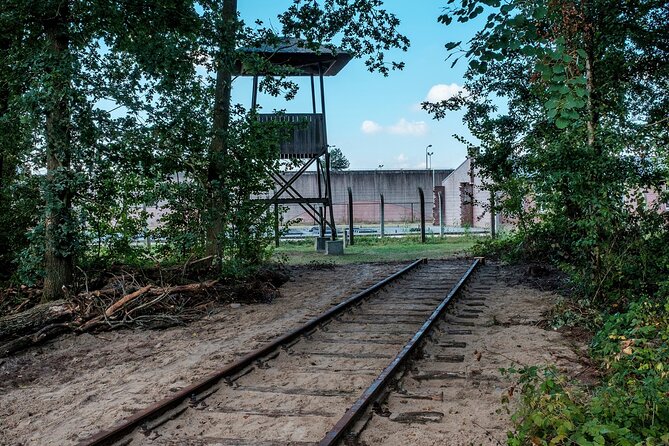
- Nationaal Monument Kamp Vught: original remaining features like watchtowers, barracks, crematorium area, and an original train.
- Execution site in the woods: a sobering stop tied to the resistance story, with over 300 resistance members executed.
- John Frost Bridge (John Frostbrug): the last bridge needed for Operation Market Garden, made famous beyond history books by A Bridge Too Far.
- Villa Hartenstein as HQ: the British Airborne Division headquarters during heavy fighting in September 1944.
- Arnhem Oosterbeek War Cemetery: burial site for most of the 1,684 fallen from the September landings.
- Included admissions where it counts: ticket entry for Kamp Vught and the Airborne Museum, while other key sites are free.
You can also read our reviews of more tours and experiences in Amsterdam.
A private WWII day that connects sites you’ve seen on maps
If you’ve ever tried to connect WWII events in your head, you’ll know the problem: dates and names are everywhere, but geography is hard to hold onto. This tour solves that with a single, logical route—first the concentration camp site, then the Arnhem bridge and battlefield story, and finally the cemetery. You’ll go from imprisonment and execution to frontline decisions and last-ditch efforts, without the day turning into a random grab bag.
Because it’s private, your group stays together and you can ask the questions that matter to you. The guide’s job isn’t just to describe what happened—it’s to help you understand why these particular places were so important. That matters most on days like this, where one wrong assumption can turn a meaningful site into a blur.
Also, you start early. The day begins at 8:00 am, with pickup from your hotel or cruise ship. That one detail alone saves you from wasting time wrestling with transport. After pickup, you’re in “day mode” fast—boots on, mind ready.
Stop 1: Nationaal Monument Kamp Vught (and why the details hit harder)
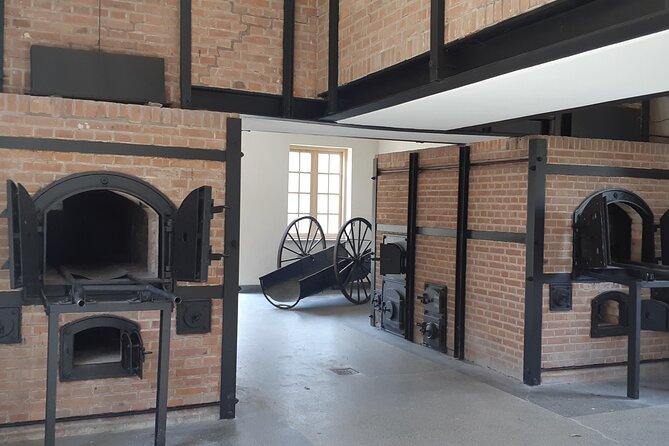
Your first major stop is the Nationaal Monument Kamp Vught, the former Nazi concentration camp in South Holland. The camp was first used in 1942 and held around 31,000 Jewish and political prisoners. That number is the starting point, but the site makes you slow down and look at how the camp was designed to function.
What I like here is the blend of surviving elements and memorial meaning. You’ll see things such as watchtowers, barracks, the crematorium area, and an original train. Those physical remnants keep the story grounded. It’s one thing to read about confinement; it’s another to stand in a place where the layout is still partly legible.
You’ll also have access to a children’s memorial, which is powerful in a way that doesn’t feel like a generic add-on. If you’re wondering what to do with that moment, I recommend standing still long enough for your brain to catch up. Memorial sites work better when you let them interrupt your normal tourist rhythm.
Another essential piece is the execution site in the woods. The tour includes this stop, tied to the fact that over 300 resistance members were executed there. This is where the camp’s story stops being only about imprisonment and becomes about active resistance, punishment, and the brutal cost of organizing against the Nazis.
Practical note: the site has a book shop, a good audio tour, and a small cafeteria. Even though your guide leads the main flow, these extras help you linger in the way that feels right for you—especially if you want to read a bit or re-listen to key sections without feeling rushed.
Possible drawback: Kamp Vught is emotionally heavy and can be mentally draining. If you know you need breaks, plan them. Use water breaks and quick rest moments strategically so you still enjoy the later Arnhem stops instead of running on fumes.
Stop 2: John Frost Bridge (the geography of Operation Market Garden)
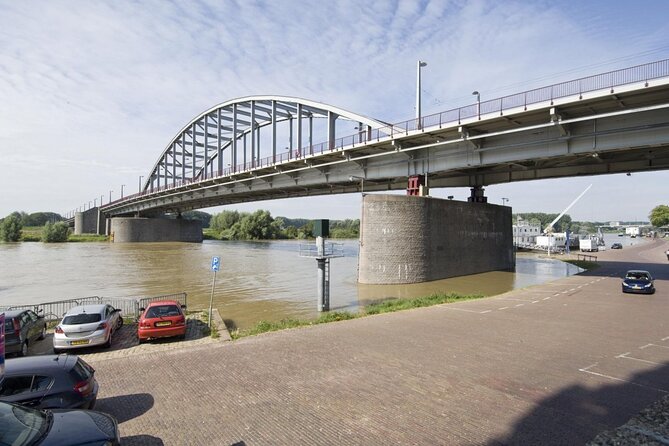
Next you head to the John Frost Bridge, or John Frostbrug, over the Rhine at Arnhem. This stop is short—about 45 minutes—but it’s not a throwaway. It’s a key piece of the WWII puzzle because it was the last bridge the Allies needed to capture during Operation Market Garden.
The whole logic is simple and terrifying: if that bridge fell, the road to Germany would open. In other words, capturing this point wasn’t just tactical—it was about keeping momentum at a moment when momentum was everything.
You’ll likely recognize the bridge name from pop culture. The bridge played a role in the movie A Bridge Too Far. That can help you anchor the storyline, but I recommend treating the movie as a hook, not the final word. Let the physical setting do the teaching: bridges are chokepoints, and chokepoints decide outcomes.
Even in a short visit, this stop helps you understand why later battlefield sites mattered. Once you get your bearings at the bridge, Villa Hartenstein and the cemetery hit with more clarity. Suddenly, you’re not just watching history happen—you’re seeing the constraints that shaped it.
Admission here is free, so you’re not juggling ticket logistics or extra costs mid-day. It’s also a nice moment to reset before you enter another museum-style setting.
Stop 3: Villa Hartenstein and the Airborne Museum’s human-scale objects
After the bridge, you’ll visit the Airborne Museum at Villa Hartenstein, about a 3-hour stop that becomes the emotional centerpiece for many people. During the Battle of Arnhem in September 1944, Villa Hartenstein became the headquarters of the British Airborne Division during heavy fighting.
I like that the museum doesn’t just label places. It connects the attempt to break through German lines with the wider goal: capturing the Ruhr area to help end the war more quickly. The attempt was unsuccessful, and the museum explains why the situation tightened around the Arnhem bridge being effectively a bridge too far.
One thing you’ll appreciate is the way personal stories are presented. The museum includes narratives from British, Polish, and German soldiers, plus civilians. That mix is important because Arnhem was not a one-sided stage play. Everyone living and fighting in that area faced consequences, even if their roles were different.
You’ll see these stories told through the museum’s historical objects. That’s a big deal for how the museum lands on you. Objects are slow, specific, and real. A name on a page can fade; an item tied to a person’s experience tends to stick.
If you’re trying to pace yourself, this is where I’d choose your focus. Pick a couple of story threads that pull you in, then let the rest come as you go. You do not need to absorb every exhibit for it to be meaningful.
Admission is included for this stop, which is also a practical win. Museums can eat up budgets, and having entry covered at least once in the day makes the overall pricing feel more sensible.
Stop 4: Arnhem Oosterbeek War Cemetery (the final ledger of loss)
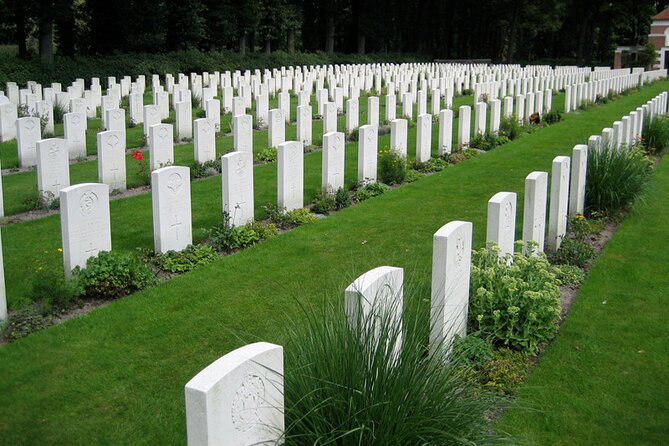
To close the day, you’ll visit the Arnhem Oosterbeek War Cemetery. This stop lasts about an hour and is free to enter.
Here, most of the fallen soldiers from the September landings—1,684—are laid to rest. That fact does something to your sense of scale. A number like 1,684 can float in your mind like trivia. In a cemetery, it becomes something you feel in your body: the gravity of how many people were pulled into a single month of fighting.
I think cemeteries work best when you give yourself permission to do something simple: walk, look, and read at your own pace. Don’t rush to “finish the circuit.” Let your eyes land where they land.
This cemetery also ties back to what you saw in the Arnhem area. The bridge stop explains why the battle mattered. Villa Hartenstein explains how people tried to make decisions work. The cemetery records what the fight cost.
What the day feels like: timing, pacing, and food reality
The total day runs about 10 hours, starting at 8:00 am. Travel time is included, and the tour also includes time for lunch, but lunch itself is not included. That means you’ll get a window to eat, but you’ll need to bring your own plan—either grab something on your own or use nearby options.
Good news: you’re not left empty-handed. Bottled water, soft drinks, and stroopwafels are available during the day, and snacks are provided. For a long memorial-heavy day, that helps more than people think. Sugar and hydration don’t solve everything, but they do prevent the day from collapsing into fatigue.
The tour also includes soda/pop. In practical terms, it’s an easy morale boost when you’re moving from one serious site to the next.
A small planning tip: wear shoes you can stand in for a few hours total. The day includes camp grounds and memorial spaces, and your comfort level will shape your experience more than you expect.
And yes, the subject matter is intense. I’d treat this like a day trip you mentally prep for, not like a casually check-the-box sightseeing sprint. If you do that, you’ll get more out of it.
Price and value: is $450.59 per person worth it?
At $450.59 per person, this is not a cheap “bus tour” kind of day. But it’s also not priced like a bare-bones transfer. You’re paying for several value drivers that add up:
- Private format: your group is the only group doing the tour, which makes the day feel like a focused lesson rather than a carousel of strangers.
- Pickup from your hotel or cruise ship: less time spent figuring out transit, and you start the day with less friction.
- Admissions built into key stops: Kamp Vught and the Airborne Museum at Villa Hartenstein include admission. Those are the two ticketed anchors.
- Guide-led interpretation: the day is about meaning, not just location. The strongest reviews emphasize that the guide’s stories and explanations help the day land with the right pace and clarity.
If you’re traveling as a small group, private pricing often looks more reasonable because you’re not dividing costs across a full coach. If you’re a solo traveler, it can feel steep, but you’re still buying time, entry, and guided context in one package.
So here’s my straight value take: if you want a controlled, English-speaking day that connects Kamp Vught with Arnhem’s WWII battle geography, this price can make sense. If you mostly want quick photo stops and low-budget freedom, you’ll probably prefer a lighter DIY approach.
Who this tour suits best (and who should think twice)
This is a great fit if you:
- want a guided, English-speaking understanding of WWII in a tight route,
- care about the connection between Arnhem’s bridge problem and the wider operation,
- appreciate museums and memorial sites that explain context instead of rushing through.
It’s also a good choice if you prefer structure. With allocated time at each site, you won’t end up spending half the day trying to decide what to do next.
Who might think twice: if you’re trying to keep your schedule light, this won’t feel light. Even with snacks and drinks, you’re spending the day in places tied to persecution, executions, and war deaths.
Also, because the content is so serious, some people prefer to pair it with a low-stress evening afterward. If your next day has lots of big sightseeing plans, consider booking rest time.
Should you book this private WWII tour?
I’d book it if you want a single day that gives you a clear through-line: camp life and execution, then Arnhem’s strategic bridge, then the HQ stories of the airborne fighters, and finally the cemetery where the loss is counted in names and numbers.
I’d reconsider if you need a cheerful day trip or if you don’t want memorial content to dominate your schedule. This is not that kind of outing.
One more practical tip before you decide: pack mentally. Bring a calm mindset, water-ready habits, and shoes that can handle a long day. If you do that, you’ll come away with a much sharper sense of how and why the events in this part of the Netherlands unfolded.
FAQ
What time does the tour start?
The tour starts at 8:00 am.
Is hotel or cruise ship pickup included?
Yes. You can be picked up at your hotel or your cruise ship.
How long is the tour?
The duration is about 10 hours.
Is the tour private?
Yes. Only your group participates.
What language is the tour offered in?
The tour is offered in English.
Are tickets included for all stops?
Admissions are included for Nationaal Monument Kamp Vught and the Airborne Museum at Hartenstein. The John Frost Bridge and the Airborne War Cemetery are free.
Is lunch included?
No. Lunch is not included, though lunch time is included in the total duration.
What food and drinks are provided during the day?
You’ll have bottled water, soft drinks and water, and stroopwafels. Snacks are also available, along with soda/pop.
Is free cancellation available?
Yes. You can cancel up to 24 hours in advance for a full refund.
Can most travelers participate, and are service animals allowed?
Most travelers can participate, and service animals are allowed.