REVIEW · AMSTERDAM
Red Light District Tour by Locals, Small Group (approx 4)
Book on Viator →Operated by Those Two Guides · Bookable on Viator
A night walk through Amsterdam’s Red Light District is never just about what you see. This small-group tour (max 6) gives you an open-minded insider view, with stops that explain how the area works today and how it got that way. Two things I like a lot: you get real context beyond the street-level spectacle, and your guide keeps the vibe respectful toward the people who work there. One thing to consider: it’s adult-only and you’ll be walking through areas that can feel awkward if you hate confronting taboo topics.
I also like the pace. You’re not herded around. The tour is designed for questions, so guides such as Ian, Wendy, Paul, Stan, and Peter (names repeatedly associated with this experience) can steer the night toward what you care about most. You’ll meet at Beursplein 5 and loop back to the same spot, usually in about 1 hour 30 minutes to 2 hours, with a mobile ticket and an English-speaking guide.
In This Review
- Key Highlights Worth Your Attention
- Why This Red Light District Tour Feels Different at Night
- Small Group Format and the Role of Your Guide
- Your 90-Minute Walk: From Beursplein to Iconic Stops
- The Sex Theatre Stop: Icon Status Without the Tabloid Noise
- The Fruit-Alternative Bar Stop: A Funny Doorway Into How Amsterdam Works
- The Loo Stop: Yes, It’s Silly. Yes, It’s Useful.
- Colorful Street Time: Chinatown, Gay Bars, and a Broader Amsterdam
- The Old City Gate: Where Urban History Shows Through
- Oldest Church and the Prostitution Zone: The Juxtaposition That Explains Everything
- One of the Oldest Coffeeshops (Since 1975)
- The One-Product Shop: A Small Detail With Big Meaning
- Peepshow Entrance When Open: What It Adds to the Tour
- What You’ll Learn: History, Legalization, and How the District Works Today
- How to Stay Comfortable and Show Respect
- Price and Value: Is $96.79 Worth It?
- Upgrades and Custom Options (If You Want More)
- Who This Tour Suits Best
- Should You Book This Red Light District Tour?
- FAQ
- How long is the Red Light District tour?
- What group size should I expect?
- Is the tour only for adults?
- Is it offered in English?
- What’s included in the tour price?
- Where does the tour start and end?
Key Highlights Worth Your Attention
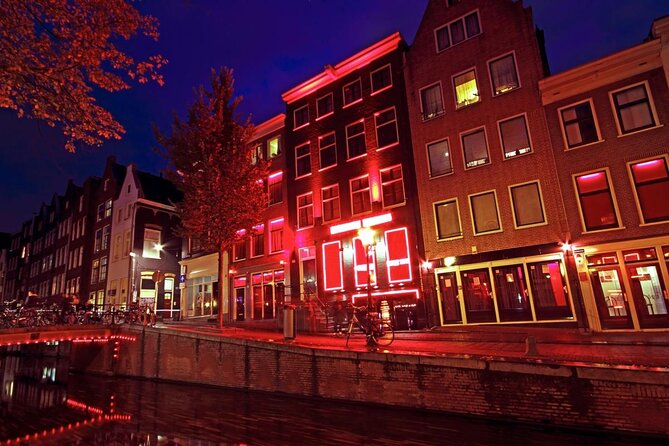
- Maximum six travelers so you’re not yelling over a crowd when questions pop up
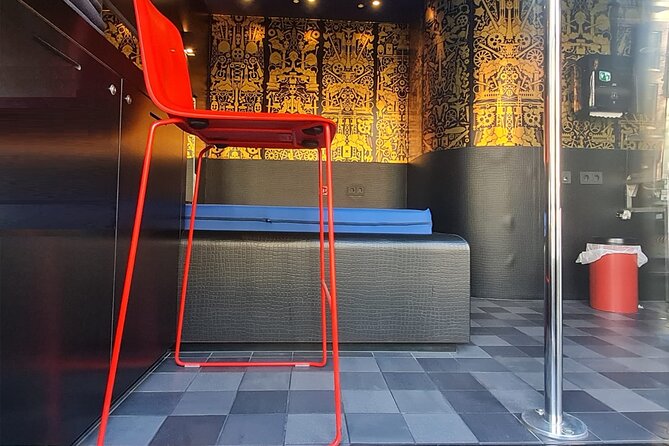
- Peepshow entrance when open (a rare, practical chance to understand what guests actually do)
- Open-minded local explanations focused on how the district developed and how it’s regulated
- Respect built into the route with a clear sense of boundaries in sensitive places
- Practical variety of stops, from an iconic theatre to coffeeshop history and a one-product shop
Why This Red Light District Tour Feels Different at Night
The Red Light District has a reputation for shock value. This tour treats it more like a cultural system—history, laws, commerce, and local attitudes all layered together in one compact neighborhood.
What makes this version stand out is the tone. The guides lean on explanation, not gossip. You’re shown the places that people talk about, then you’re given the background that makes the whole thing make sense. It helps you see the district as part of Amsterdam, not just a weird side show.
And because it’s a small group, you can ask the questions that bubble up mid-walk: How did it become legal? What’s the difference between window colors? How do coffeeshops and sex-related businesses coexist here? That’s the kind of stuff you can’t easily piece together when you’re wandering alone.
You can also read our reviews of more tours and experiences in Amsterdam.



Small Group Format and the Role of Your Guide
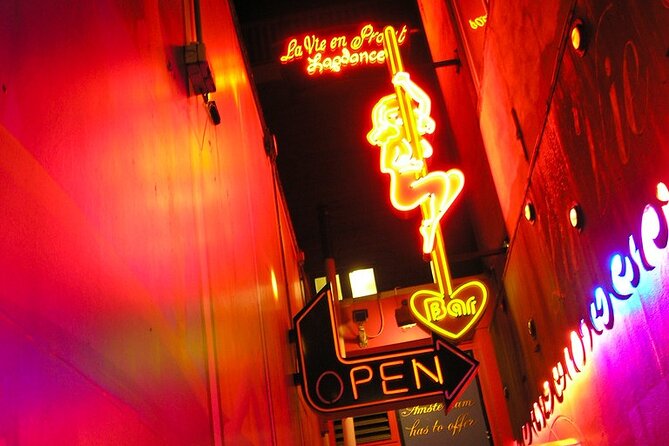
This experience caps out at six travelers, which changes how the night feels. In a big group, you see the sights and move on. In a tiny group, you notice details—signs, lighting, storefront rules, and how different entrances work. You also get more personal attention if you have a question about a specific stop.
It’s also a tour where guides clearly care about professionalism. One guide is praised for contacting the group ahead of time and making sure everyone knew where to meet. Others are praised for balancing humor with respectful storytelling. The common thread across the named guides is that they keep you feeling safe while they explain the district’s realities.
If you like a tour that’s part walking tour, part Q&A session, this setup is a good match.
Your 90-Minute Walk: From Beursplein to Iconic Stops
You start at Beursplein 5, 1012 JW Amsterdam, and the tour ends back near the same meeting point. That loop matters. You’re not zig-zagging across the city late at night, which keeps things comfortable and practical.
Also, the timing works. The experience runs about 1 hour 30 minutes to 2 hours, which is long enough to cover multiple “layers” of the neighborhood but short enough that you’re not exhausted before you even find dinner plans.
Here’s how the stops shape the story, in the order you’ll likely experience them.
The Sex Theatre Stop: Icon Status Without the Tabloid Noise
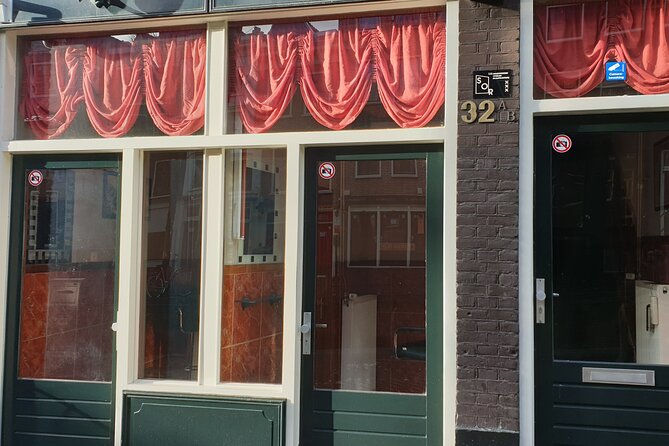
One of the first major landmarks you’ll see is the famous Sex Theatre, described as an Amsterdam icon. This is a helpful early stop because it sets the theme: this isn’t hidden history; it’s been part of the city’s entertainment landscape for decades.
Instead of treating it like a scandal, the guide frames it like a business and a cultural phenomenon. You learn how these venues fit into local norms and tourist expectations. Even if you’re not interested in anything sexual yourself, this stop helps you understand why the district exists in a way that feels both commercial and historically rooted.
If you’re sensitive to adult themes, expect it to be direct—but not crude. The goal is explanation, not shock.
The Fruit-Alternative Bar Stop: A Funny Doorway Into How Amsterdam Works
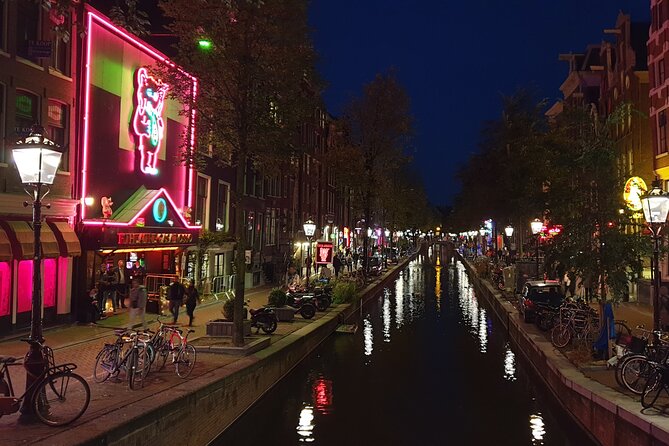
Another stop centers on a bar known for alternative ways of consuming what people call their daily fruit. The wording is playful, but the point isn’t the joke. The real takeaway is how Amsterdam’s “adult leisure” culture overlaps with other habits and regulations.
This is where your guide’s framing matters. You’ll get context on how these places operate and why the district includes so many different kinds of storefronts. In many other cities, you’d see a hard separation between nightlife districts and regulated adult entertainment. Here, they’re intertwined in a small area.
The vibe at this stop can be light, but you’re still being educated on the real-world rules that make the neighborhood function.




The Loo Stop: Yes, It’s Silly. Yes, It’s Useful.
One itinerary item leans into a very practical subject: the most entertaining loo for a restroom break. That sounds goofy, but it’s also smart planning. In a neighborhood like this, toilets aren’t always easy to find on your own, and you don’t want to break your night up searching for a restroom while everyone else is already walking.
It’s one of those small tour decisions that improves your experience even if you don’t notice it at first. When you’re comfortable, you pay attention more.
Colorful Street Time: Chinatown, Gay Bars, and a Broader Amsterdam
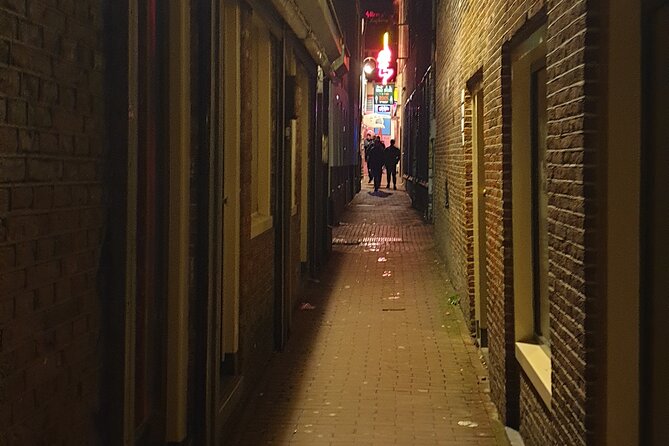
The tour then shifts beyond the classic “red lights only” narrative. You’ll walk a colorful street that links to Chinatown vibes and also includes gay bars.
This part matters because it’s a reminder that the Red Light District isn’t a sealed bubble. It’s surrounded by other communities and nightlife patterns that help shape the district’s feel. You’ll understand the area as a crossroads of Amsterdam’s social life, not just a single headline.
If you want to see how Amsterdam holds multiple identities and entertainment styles in close proximity, this segment delivers.
The Old City Gate: Where Urban History Shows Through
Next comes an older landmark: an old city gate packed with stories. This is a turning point in the walk because it stretches your thinking beyond the adult entertainment angle.
A city gate signals a different time scale—defense, boundaries, movement, and how the urban fabric evolved. It helps you understand that the area’s notoriety didn’t appear out of nowhere. This neighborhood sits inside an older city story, and your guide connects those threads.
If you love seeing how modern culture sits on top of older structures and older routes, you’ll appreciate this stop.
Oldest Church and the Prostitution Zone: The Juxtaposition That Explains Everything
You’ll also visit the oldest church in town, tied to stories connected to a prostitution zone. The contrast is part of the point: sacred architecture and adult commerce are in visual conversation here.
A good guide makes that juxtaposition feel logical rather than chaotic. You’ll learn how attitudes changed over time, including when prostitution became legal, and how regulation shaped the neighborhood’s layout.
This is often the stop where the tour shifts from “what is there” to “why it’s allowed to exist.” It’s also where you’ll hear the most thoughtful answers to questions like: How do laws work in this area? What’s the difference between what tourists expect and what’s actually going on?
One of the Oldest Coffeeshops (Since 1975)
Another highlight is the stop at one of the oldest coffeeshops in town, dating to 1975. This isn’t included just to add variety. It shows how Amsterdam’s approach to adult culture includes regulated venues that aren’t identical but run alongside each other.
Your guide can explain the logic behind the neighborhood’s mix: the district isn’t only sex entertainment; it’s a cluster of adult leisure activities under a local system of rules and social acceptance.
Even if you don’t plan to buy anything, this stop helps you grasp how Amsterdam’s policies shaped what you see on the street.
The One-Product Shop: A Small Detail With Big Meaning
You’ll finish with a stop connected to the most famous shop selling only one product. That sounds simple, but it’s memorable because it highlights how this district evolved into specialized commerce.
Some guides in this experience are praised for pointing out origins—like early forms of the district’s entertainment and retail. In the same spirit, this stop helps you see the niche logic behind the storefronts. The district is organized around specific needs, and the shops reflect that.
If you like micro-history and small objects that represent bigger systems, this will land well.
Peepshow Entrance When Open: What It Adds to the Tour
A big item in what you get is the peepshow entrance when open. This is valuable for two reasons.
First, it’s not just seeing windows. It’s understanding one of the core “experiences” built into the district’s entertainment model. Second, it gives context for the voyeurism angle without you guessing.
If it’s open, it’s a standout “behind the scenes” moment. If it’s not open, you’ll still get plenty of storytelling and sights—but this entrance is specifically called out as included when operational.
What You’ll Learn: History, Legalization, and How the District Works Today
This tour’s strength is the way it connects the district’s past and present. Guides are praised for explaining the history of legalized prostitution and how it has shaped society in Amsterdam. You’ll hear about origins and how the neighborhood became known for what it is.
You’ll also get practical interpretation of what you’re looking at, including details that many people miss on their own—like the idea that there are different types of windows and lighting cues (including red and blue comparisons) and that there are long-running venues tied to early versions of the district.
One more theme shows up again and again: the guides aim for a non-biased, non-judgmental tone. You get humor, yes, but the goal is clarity. You walk away understanding the area more than you walk in.
How to Stay Comfortable and Show Respect
This neighborhood is sensitive. The guides consistently emphasize respect for the people working there, and you should follow that lead.
A few practical pointers that make the experience smoother:
- Keep your questions calm and curiosity-focused.
- Avoid blocking entrances or standing in the way of pedestrians.
- If you want to take photos, don’t assume. Ask yourself what’s appropriate in the moment and follow your guide’s cues.
- If you feel awkward, that’s normal. Use your guide to translate what you’re seeing into context.
You’ll enjoy the tour more when you treat it like an education—because it’s really that.
Price and Value: Is $96.79 Worth It?
At $96.79 per person, you’re paying for three things that add real value compared to walking it on your own: a private in-person guide, a route shaped for context, and the chance to include a peepshow entrance when open.
Duration is about 1 hour 30 minutes to 2 hours, and the group limit stays tight (max 6). That combination matters. You’re not paying for a long, slow trek. You’re paying for a concentrated explanation from someone who knows how to connect the dots.
If you like guided learning—especially when the topic is complicated or sensitive—this feels like solid value. If you prefer to wander independently with no structured explanation and no entry components, you might decide the cost isn’t for you. But for most first-timers who want understanding rather than guessing, the price tends to make sense.
Upgrades and Custom Options (If You Want More)
The tour includes options that can adjust comfort and personalization. There’s mention of upgrades such as hotel pickup service, drinks, or even a private guide.
If you’re traveling with limited energy, arriving late, or you just want the highest level of one-on-one attention, upgrades can be worth considering. If you’re already comfortable meeting at Beursplein and don’t need extra add-ons, the standard small-group format is the main appeal.
Who This Tour Suits Best
This is a good fit if:
- You’re curious about how Amsterdam’s adult entertainment district operates and became legal.
- You want an open-minded local perspective with lots of room for questions.
- You like small groups more than crowded tours.
- You’re 18+ and okay walking for up to about 2 hours.
It might be a poor fit if:
- You hate adult subject matter and need a more family-friendly evening plan.
- You’re uncomfortable with controversial history and direct explanations.
- You’re expecting a club-like atmosphere rather than a guided walking education.
Should You Book This Red Light District Tour?
If you want to understand the Red Light District as Amsterdam actually does—history, rules, commerce, and modern reality—this is one of the smarter ways to do it. The small-group size, the respectful tone, and the added peepshow entrance when open make it more than a sightseeing walk.
Book it if you’d rather know what you’re seeing than just react to it. Skip it if you want to treat the district like a simple photo stop or you strongly prefer to avoid adult themes altogether.
Either way, go with an open mind, ask questions, and let the guide steer you toward clarity.
FAQ
How long is the Red Light District tour?
It runs about 1 hour 30 minutes to 2 hours.
What group size should I expect?
It’s a small group with a maximum of 6 travelers.
Is the tour only for adults?
Yes. Participants have to be over 18 years old.
Is it offered in English?
Yes, the tour is offered in English.
What’s included in the tour price?
You get a private in-person guide, and a peepshow entrance when it’s open.
Where does the tour start and end?
It starts at Beursplein 5, 1012 JW Amsterdam, and it ends back at the meeting point.