REVIEW · AMSTERDAM
Red Light District tour in Amsterdam
Book on Viator →Operated by Guidance Travel · Bookable on Viator
Sex work history meets Dutch tolerance. This Amsterdam walk is interesting because it explains how the city’s attitudes formed around De Wallen and the so-called “tolerance” mindset. I also like that it keeps a relaxed pace while still packing in practical context you won’t grab from a quick brochure.
Two things I especially like: you get a human, story-driven tour from guides such as Carlos, Nadav, Valeria, Manouk, and David, and you also receive a map to help you finish exploring on your own. One thing to keep in mind: since city rules changed in 2020, the guided group does not enter the actual Red Light District area.
In This Review
- Key Points I’d Put on Your Must-Do List
- A 90-Minute Walk Around Amsterdam’s Red Light Perimeter
- Price and value: $31.44 for context
- What You’ll Learn (And What You Probably Want to Know First)
- Meeting Point: Where to Start Without Stress
- Stop 1: De Wallen (The De Wallen Perimeter Lesson)
- Stop 2: Dam Square and the Coffee-Shop Origins Thread
- Stop 3: Warmoesstraat and the Old Church Glimpse
- Stop 4: Zeedijk and Chinatown’s Comeback Story
- Stop 5: Nieuwmarkt and the Legalization Story
- Stop 6: Kloveniersburgwal and Coffee Shops Under the Rules
- Stop 7: Paulusbroederssluis and Your Self-Guide Map
- The Pace, Group Size, and Why You’ll Feel Comfortable
- The Tour Style: More Stories, Fewer Lectures
- The Small Gift and the Map: A Nice Bonus
- Should You Book This Red Light District Tour?
- FAQ
- How long is the Amsterdam Red Light District walking tour?
- Where does the tour start and end?
- Does the tour enter the Red Light District area?
- What language is the tour offered in?
- What is the group size?
- Can I cancel for free?
Key Points I’d Put on Your Must-Do List
- You learn the “why,” not just the “what,” with context around prostitution and Amsterdam’s broader tolerance reputation.
- The tour avoids entering the district, but still shows the surrounding streets that shape what you’ll see.
- Coffee-shop culture gets real context, including the idea that the “coffee shop” concept traces back to Dam Square.
- Chinatown and old streets are part of the story, with stops near Zeedijk and Warmoesstraat.
- Small group size (max 15) keeps questions easy and the walk comfortable.
- A map plus a small gift helps you keep the experience going after the tour ends.
A 90-Minute Walk Around Amsterdam’s Red Light Perimeter
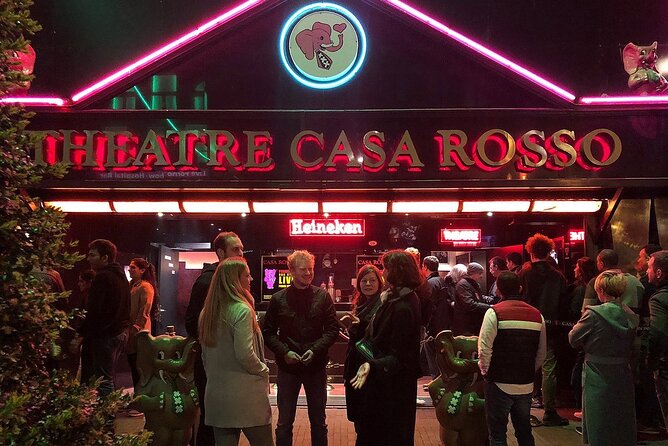
This isn’t a grab-your-pitchfork kind of tour. It’s a street-level explanation of how Amsterdam became famous for mixing old-world life, legal gray zones, and blunt rules that work for the city. You walk roughly 1.5 hours, mostly through central areas that connect the Red Light District with nearby landmarks.
I like that the pace feels “manageable,” not rushed. Amsterdam is very flat, so it’s mostly about staying steady on your feet and paying attention when the guide talks. You’ll also find the start point in the city is easy to reach by public transport, and the tour runs in English.
You can also read our reviews of more tours and experiences in Amsterdam.
Price and value: $31.44 for context
At $31.44 per person, you’re not paying for attraction tickets. You’re paying for the guide’s ability to connect dots: why certain streets became important, why laws evolved, and what all of this looks like today. For me, this price makes sense if you want context before you wander on your own afterward—especially because you do get a map for that final stretch.
If you’re hoping for a guided “inside the district” look, set expectations early. The tour goes around the perimeter and stops at the surrounding streets where you can still understand what’s going on, without entering the exact Red Light District zone.
What You’ll Learn (And What You Probably Want to Know First)
The tour focuses on Amsterdam as a system: history, law, and local culture all tangled together. You’ll hear how sex work became associated with specific streets and how the city developed a reputation for being liberal about it. You’ll also learn how coffee-shop culture became part of the same broader conversation about freedom and rules.
The best part is the tone. Even when the subject is sensitive, the tour’s goal is explanation, not shock. People often come in with questions like:
- Why did this area become the center of the story?
- How did the city handle legalization and enforcement?
- Why are coffee shops part of the same neighborhood identity?
And you’ll get practical answers by walking from place to place and hearing what each location signals.
Meeting Point: Where to Start Without Stress
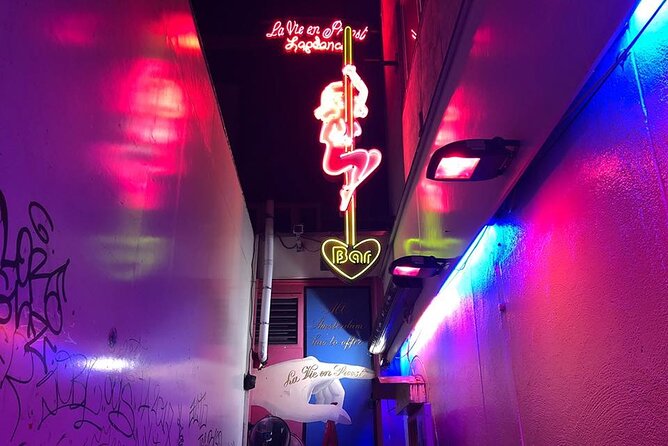
The tour starts back-to-back with your evening plans at Bistro Berlage, Beursplein 1, 1012 JW Amsterdam. It’s right in central Amsterdam, and that matters because you’re not trekking across town before you even start learning.
One small thing to watch: the exact meeting spot can be a little tricky if you arrive distracted. Give yourself a few extra minutes, and double-check the mobile ticket and message instructions when you book.
Stop 1: De Wallen (The De Wallen Perimeter Lesson)
Your first stop is the Red Light District area (De Wallen). This is where you get the big-picture explanation: why sex workers settled in this specific place and how Amsterdam’s reputation for liberal attitudes around sex formed over time.
Even though you’re not walking through the exact zone with a tour group, this stop still matters. Standing near the area gives you a sense of scale and boundaries. It also sets the tone for everything that follows, because you’ll keep hearing the same themes—law, tolerance, and community—while moving outward.


Stop 2: Dam Square and the Coffee-Shop Origins Thread
Next up: Dam Square. This stop connects two things people often assume are separate—coffee-shop culture and Amsterdam’s tolerance story. You’ll hear about the idea that the “coffee shop” concept originated here and that Dam Square used to be the center of Amsterdam’s freedom-and-tolerance identity.
Why this is useful: it helps you avoid seeing coffee shops as just a modern trend. You start to understand them as part of a longer cultural and legal evolution in the city. Even if you don’t plan to visit one afterward, you’ll understand why the neighborhood identity keeps coming back to the same themes.
Stop 3: Warmoesstraat and the Old Church Glimpse
On Warmoesstraat, you’ll learn about one of Amsterdam’s older streets and how it evolved into an entertainment center. There’s also a chance to catch a glimpse of the Old Church, which adds a layer of Amsterdam that’s easy to miss if you only focus on one headline.
This stop is a good pause in the walk. It shifts the focus from the “main narrative” to the streets around it—exactly where you’ll notice how the city’s identity changes block by block. It’s also a reminder that this is still Amsterdam, not a museum set.
Stop 4: Zeedijk and Chinatown’s Comeback Story
Then comes Zeedijk, where you’ll hear about Chinatown and how it was once described as the most dangerous place in Amsterdam during the 1970s. You’ll also learn how the street’s situation changed and how it became a favorite spot for many Amsterdammers.
This part works because it adds nuance. The Red Light District isn’t a single isolated “thing.” Nearby neighborhoods evolve, and that evolution reshapes how people experience the area in everyday life.
For you, it’s a helpful reality check: even in a place famous for controversy, street life keeps moving. What you see today is the result of changes over decades.
Stop 5: Nieuwmarkt and the Legalization Story
At Nieuwmarkt, the tour shifts to the legal side. You’ll learn about the legalization of prostitution and the challenges sex workers face today.
This stop is the “keep it human” moment. It’s where the tour tries to connect law and outcomes, not just policy and labels. You’ll also come away with a better idea of how difficult it is to separate moral debate from real-world living conditions—because the topic is part legal, part economic, and part safety.
If you’re coming to Amsterdam expecting everything to feel laid-back and freewheeling, this stop grounds the conversation in practical reality.
Stop 6: Kloveniersburgwal and Coffee Shops Under the Rules
Next is Kloveniersburgwal, a street connected to the city’s well-known coffeeshops. Here, you’ll get insight into their cultural significance and learn about their legal status.
This is a smart stop even if you’re not into coffeeshops. Why? Because it explains why Amsterdam has both “tolerance” and boundaries at the same time. You’ll understand the difference between what people talk about socially and what the city allows legally.
Also, if you plan to visit one later, you’ll go in with less confusion. You’ll have a sense of why the rules exist and how the city frames them.
Stop 7: Paulusbroederssluis and Your Self-Guide Map
You end with Paulusbroederssluis, where you receive a map with information for the final stretch. This matters because the tour itself doesn’t enter the Red Light District zone. The idea is that you get the setup, then you can decide how you want to explore afterward.
So the map isn’t just a souvenir. It’s your bridge between guided context and independent walking, and it helps you keep the pace on your own terms. It also supports the respectful approach the tour uses: learn, then explore carefully.
The Pace, Group Size, and Why You’ll Feel Comfortable
A lot of people worry that “a Red Light District tour” will feel awkward or uncomfortable. The style here is different. The group maximum is 15 people, and that small size keeps the tour interactive. You’re more likely to get your questions answered without the guide feeling rushed.
The walking pace is also part of the experience. People mention the pace as manageable, and guides handle real-world conditions like weather and slick surfaces. Amsterdam is flat, so the main physical factor is stamina for a 90-minute stroll and standing for short moments at each stop.
This tour is a good fit if you have moderate physical fitness and you want facts with a side of humor—not a lecture.
The Tour Style: More Stories, Fewer Lectures
I like how the tour balances history with street-level explanation. You’ll get cultural context, legal context, and the kind of local detail that makes the area make sense.
That said, there’s one consideration: some people feel parts of the tour can become more “standing and listening” than “walking and seeing.” The group spends short time at each landmark and then focuses on explanation. If you want a lot of movement and visuals nonstop, you might want to plan a second self-walk right after for extra sensory time.
The Small Gift and the Map: A Nice Bonus
Included are a map for the last stretch and a small gift guaranteed to bring a smile. The gift has been described as silly and playful—things like novelty gummies shaped like anatomy items have shown up for some people—so it’s usually light-hearted, not cheesy.
You don’t need the gift to value the tour, but it’s a fun extra reminder that this is meant to be approachable. The serious part is the context; the gift is just a wink.
Should You Book This Red Light District Tour?
Book it if you want:
- Context before you wander, especially about De Wallen, legalization, and coffee-shop culture.
- A small-group walk that keeps questions possible.
- A tour that stays respectful and informative, with real local perspective from guides like Carlos, Nadav, Valeria, Manouk, and David.
- A map to help you finish exploring on your own after the guided portion.
Skip (or adjust expectations) if you:
- Want to walk through the exact Red Light District with a guide. City rules since 2020 prevent that kind of guided entry, so this is a perimeter-and-surroundings style tour.
- Prefer tours with lots of moving visuals and fewer stop-and-explain moments.
If you’re doing Amsterdam for the first time and you want to understand why this area has the reputation it does, I think this is a solid use of money and time.
FAQ
How long is the Amsterdam Red Light District walking tour?
It runs about 1.5 hours, with short stops and walking between them.
Where does the tour start and end?
It starts at Bistro Berlage, Beursplein 1, 1012 JW Amsterdam, Netherlands and ends back at the same meeting point.
Does the tour enter the Red Light District area?
No. Since city regulations changed in 2020, guided groups are not permitted to enter the Red Light District. This tour goes around the outskirts and gives you a map for exploring afterward.
What language is the tour offered in?
The tour is offered in English.
What is the group size?
The tour has a maximum of 15 travelers.
Can I cancel for free?
Yes. You can cancel up to 24 hours before the experience for a full refund. If you cancel less than 24 hours before, the amount you paid is not refunded.