REVIEW · AMSTERDAM
Rembrandt House & Neighborhood Exclusive Guided Walking Tour
Book on Viator →Operated by Babylon Tours Amsterdam · Bookable on Viator
Rembrandt’s Amsterdam feels personal on foot. I love the private pace, where my guide can slow down for the details that matter, and I love that the tour ends at the Rembrandt House with your admission included. One thing to consider: you’re walking for about 2 miles with moderate fitness needs, and some parts of the day can involve brief waits at security checks.
The best part is how the neighborhoods and landmarks “explain” Rembrandt instead of just naming them. Our guide, Haas, tied together canals, guild connections, and daily life so the house visit didn’t feel like a museum stop in a bubble.
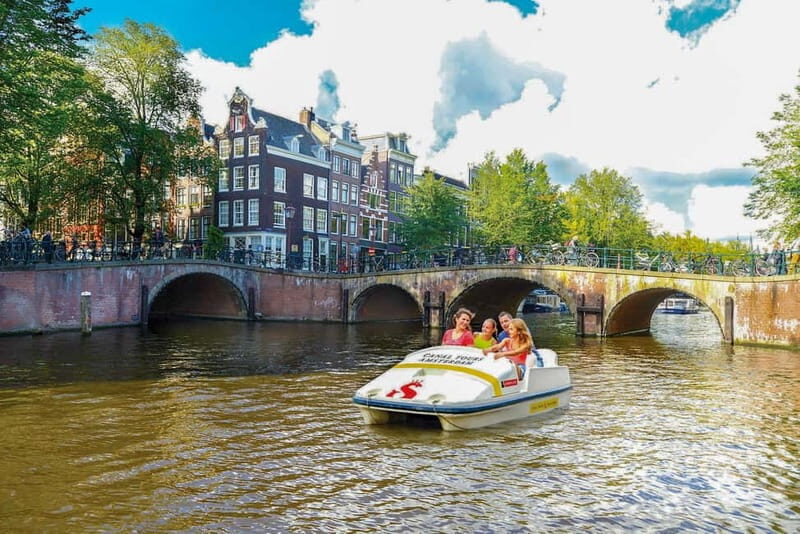
It’s also a smart way to see Amsterdam’s canal-side center without cramming in a long list of unrelated sights. You’ll move through classic spots like the Keizersgracht area and Rembrandtplein, then shift toward the Jodenbuurt streets before stepping into the painter’s world.
In This Review
- Key things to know before you go
- Why this Rembrandt walk works better than a quick hit
- Meeting at Cobra Café and getting your bearings fast
- Stop-by-stop: canals, guilds, monuments, and then the house
- Spiegelkwartier and the Singelgracht/Spiegelgracht canal chain
- Keizersgracht (Emperor’s Canal): the wide one in the middle
- Museum Van Loon (Ferdinand Bol connection) with admission not included
- Bloemenmarkt and Munttoren (Mind Tower) area
- Rembrandtplein and the bronze Night Watch monument
- Amstel River: Skinny Bridge and Blue Bridge
- Stopera (National Opera & Ballet) and the 60-year construction note
- Jodenbuurt: moving toward the former Jewish neighborhood
- Rembrandt House Museum: what the included entry actually gives you
- Guide impact: when your tour turns from facts into understanding
- Value check: is $159.21 worth it for your time?
- Who this tour suits (and who should think twice)
- Should you book Rembrandt House & Neighborhood Exclusive?
- FAQ
- How long is the Rembrandt House & Neighborhood Exclusive Guided Walking Tour?
- Is this a private tour?
- What time does the tour start, and where do we meet?
- Is the Rembrandt House Museum entry included?
- Are there any other museum admissions included besides Rembrandt House?
- Does the tour run in bad weather?
- What should I know about bags and security for the museum?
- Is there anything I need to provide before the tour?
- What happens if Rembrandt House has a closure?
Key things to know before you go
- Private guide time: your group only, so you get real back-and-forth instead of a rush-through script
- Canal focus with UNESCO context: you’ll walk the Singelgracht and Spiegelgracht corridors and understand why they mattered
- Rembrandt’s life, not just his paintings: the tour is built to connect city blocks to what you see at his house
- One paid museum stop is included: Rembrandthuis entry is included, while nearby extras like Museum Van Loon are not
- Security and bag limits are real: plan on small bags only for the museum portion
- Rain-or-shine, guide-led: the walk runs even if the weather misbehaves
Why this Rembrandt walk works better than a quick hit
Most Amsterdam “Rembrandt” stops turn into a checklist: see a monument, pop into a museum, move on. This tour is structured like a story you walk through. You start by orienting yourself along the water network that shaped the city, then you transition toward the Rembrandtplein area, and finally you arrive at the house where you can connect what you learned to real rooms and objects.
You also get the advantage of real tempo. In a private format, your guide can answer follow-up questions without the usual squeeze. That matters at Rembrandt’s house, where it helps to know what to look for—small clues about work, materials, and daily routines rather than just dates and big labels.
At the price point (listed at $159.21 per person), the value isn’t only the museum ticket. It’s the guide time plus the fact that the walking portion is organized around specific canals, guild-linked landmarks, and neighborhood context that would be hard to recreate on your own in the right order.
You can also read our reviews of more tours and experiences in Amsterdam.



Meeting at Cobra Café and getting your bearings fast
You meet at Cobra Café, Hobbemastraat 18, right near the center, at 1:30 pm. I like this start because it’s not tucked away on some edge of the city—you begin close enough to landmarks that you won’t feel like you’re “traveling to the start” all afternoon.
The tour is designed to run rain or shine, which is practical for Amsterdam. Bring layers, and if you’re the type who hates soggy discomfort, pack a small rain layer. The walking sections aren’t described as long set-pieces, but you should expect steady movement across neighborhoods.
One small but important note: you’re asked to provide a mobile phone number (with country code). This is usually how the operator contacts you if there are updates. It’s a good idea anyway to keep your phone ready during the day, especially if anything affects entry timing.
Stop-by-stop: canals, guilds, monuments, and then the house
Spiegelkwartier and the Singelgracht/Spiegelgracht canal chain
The tour begins by heading to the canal system that borders Amsterdam’s central area: the Singelgracht (described as the former outer defenses of the city) and then to the Spiegelgracht. This is where the tour earns its keep: you’re not just looking at pretty water. You’re learning how the canal layout shaped movement, defense, and the way neighborhoods developed.
Spiegelgracht is part of the Canals of Amsterdam UNESCO World Heritage designation, so you get that larger context while still walking the streets like a local. Expect to see art galleries and antiques along the way—enough that you can feel the area’s present-day creative vibe without it swallowing the history lesson.
What I like: it’s an easy warm-up walk, and it sets up the rest of the day by giving you the mental map.
Keizersgracht (Emperor’s Canal): the wide one in the middle
Next comes the Keizersgracht, the “middle” of Amsterdam’s three main canals and the one named after Emperor Maximillian of Austria. The practical point here is scale: it’s described as the widest canal in the inner city, which helps you understand why certain streets and viewpoints feel open and ceremonial.
This stop is short, but it’s useful. A canal walk is all about proportions. If you know which waterway is the widest and what it’s named for, you’ll read the city differently when you look back later from another angle.




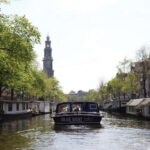

Museum Van Loon (Ferdinand Bol connection) with admission not included
From the canal corridor you’ll be taken to Museum Van Loon, a canalside house on the Keizersgracht. It’s specifically noted as the house of Ferdinand Bol, Rembrandt’s favorite pupil.
Here’s the tradeoff: the tour lists Museum Van Loon as 10 minutes with admission not included. That means you can view it from the outside and learn why it matters, but you shouldn’t expect a full museum visit unless you arrange something separately.
How to think about it: if you love Rembrandt’s circle, Bol is a natural name to follow up on. But if you’re mainly here for Rembrandt the person and his house, this “extra” is more of a context-building moment than a second ticketed attraction.
Bloemenmarkt and Munttoren (Mind Tower) area
After that, the tour moves through the flower market, where you’ll see the Munttoren, nicknamed the Mind Tower. It’s described as having once been part of Amsterdam’s medieval city wall gate system.
This is one of those stops that feels quick but lands because it changes your perspective. You go from canals and art-adjacent streets to a market space that shows how old structures and new street life coexist. It also gives you a visual anchor—Munttoren is distinctive enough that you can find it again on your own later.
Rembrandtplein and the bronze Night Watch monument
Then you reach Rembrandtplein, a lively square named after Rembrandt. The centerpiece you’ll see is a bronze-cast representation of The Night Watch, created for the artist’s 400th birthday celebration in 2006.
This part is more than a photo stop. It acts like a pivot point. The tour uses Rembrandtplein to connect the name you already know with the city blocks you’re about to walk through next—especially as you move toward the Jodenbuurt area and the historical layers that shaped Amsterdam life.
Amstel River: Skinny Bridge and Blue Bridge
From there you walk along the Amstel River and pass two notable bridges: the Skinny Bridge (described as Amsterdam’s most famous bridge) and the Blue Bridge. The fun detail is that the Blue Bridge is not blue at all—its name comes from a wooden blue bridge that apparently spun across the Amstel in the 17th century.
This is the sort of detail that makes a city feel less like “landmarks” and more like lived-in place. Even though the stop is brief, those bridge stories are memorable, and they help you understand how Amsterdam’s waterways influenced everyday crossing and design.
Stopera (National Opera & Ballet) and the 60-year construction note
Next comes the Stopera, a complex that houses the city hall and the Dutch National Opera and Ballet. The construction is described as taking at least 60 years.
Why is that relevant in a Rembrandt walk? Because it signals something about Amsterdam’s evolution. You’re seeing modern civic and cultural infrastructure, which helps you appreciate how the city continues to build institutions around art—just with newer forms than Rembrandt’s era.
This stop is short with admission not included, so think of it as a “now” moment between older neighborhood layers.
Jodenbuurt: moving toward the former Jewish neighborhood
You then head toward Jodenbuurt, the former Jewish neighborhood. The area is described as containing historically important buildings that are currently preserved and managed by the Jewish Cultural Quarter.
This isn’t a lecture-only segment; it’s part of the walking geography. The benefit of coming here at the right point in the day is that it gives you a sense of how Amsterdam’s history is layered—not just in museums, but in neighborhood streets. If you’re the type who likes walking routes that make sense, this is a strong transition toward the house visit.
Rembrandt House Museum: what the included entry actually gives you
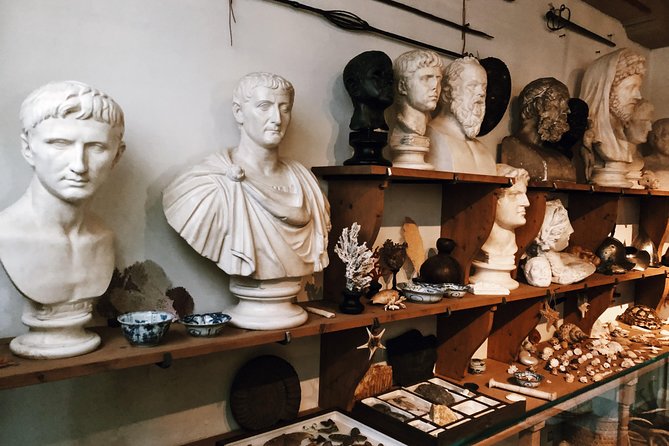
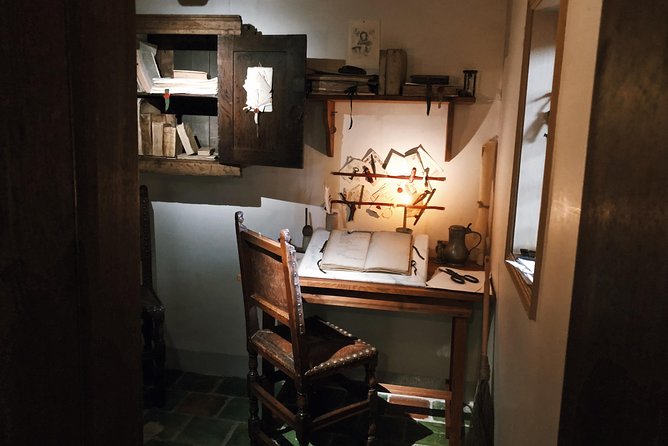
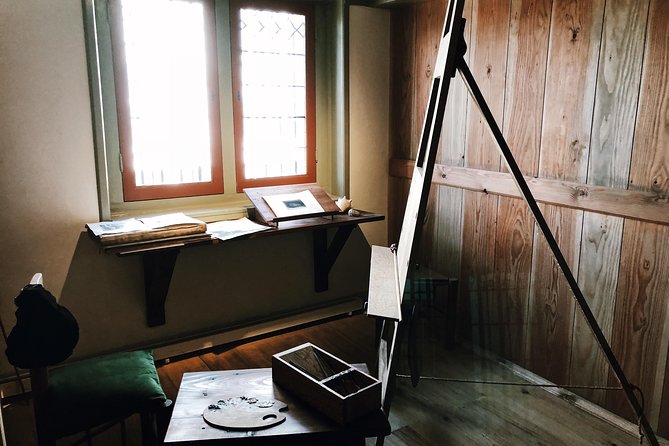
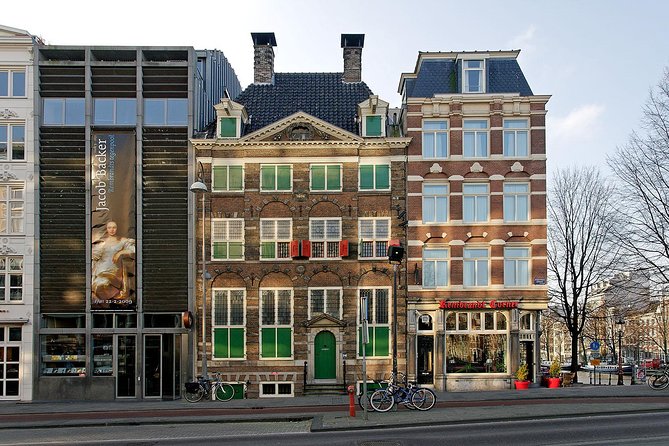
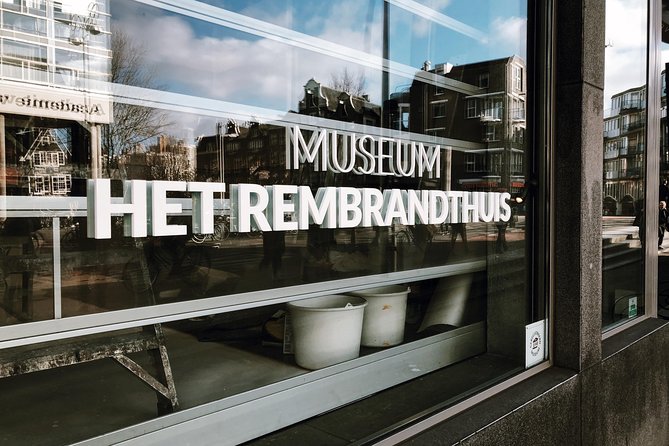
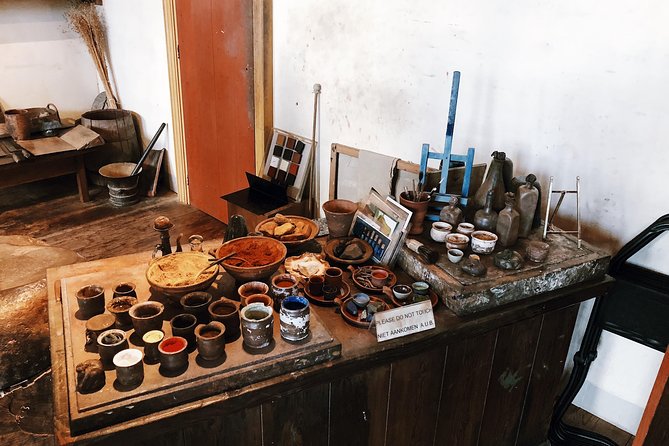
The tour culminates with Museum Het Rembrandthuis on Jodenbreestraat 4, where you’ll spend about 1 hour. The house is described as the home and work space Rembrandt used between 1639 and 1656.
What’s included here is not just access. The museum collection highlights Rembrandt’s etchings and paintings of his contemporaries. That matters because it changes how you interpret Rembrandt the artist. Instead of only viewing him as the name behind famous works, you’re looking at how he interacted with art-making around him.
Practical notes to plan for:
- Dress is required for entry into some sites. Keep it sensible.
- No large bags or suitcases are allowed inside; only handbags or small thin bag packs go through security.
- Some rooms can be quiet or restricted for speech, and your guide will tell you before entering those spaces.
- Rembrandt House may have occasional closures. If closures delay opening by more than 1 hour from tour start time, you’ll receive an alternative, but refunds or discounts aren’t offered.
I also like that this museum time is built into the tour duration rather than tacked on. One hour is enough to see the key parts without turning the day into a marathon, and it fits well after the neighborhood walk that sets up your “what am I looking for?” mindset.
Guide impact: when your tour turns from facts into understanding
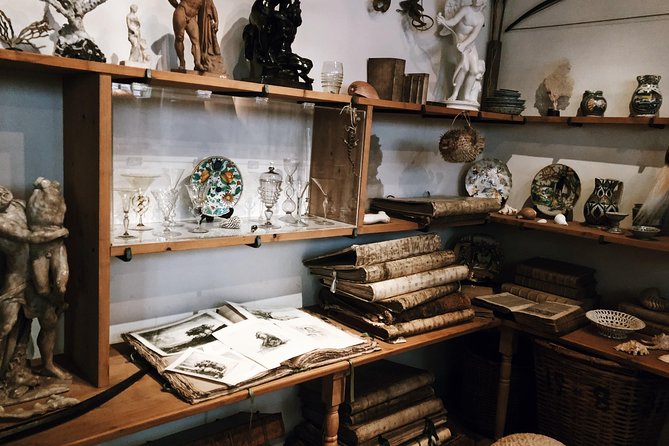
The guide is a big part of why the experience scores so high. In the sample feedback I saw, Haas stood out as pleasant and knowledgeable, and the overall impression was that the tour explains lifestyle—how people lived and how Rembrandt’s environment connected to his artistic development.
This is the difference between reading a museum label and having a human map the connections. In a private setting, you can ask for clarity when something doesn’t click. And because the walk builds context step-by-step, the museum portion lands more naturally.
If you care about craft—etching, painting, work habits—this style of guiding helps. Even if you’re more casual about art history, the house is still the emotional anchor of the day, and the neighborhood walk is what makes it feel like a real place, not a stage set.
Value check: is $159.21 worth it for your time?
At $159.21 per person, you’re paying for a mix of things:
- a private walking experience (your group only),
- a 2.5-hour program length,
- all entrance fees (including Rembrandthuis),
- and a structured route through canal areas and landmark zones.
Whether it feels “worth it” depends on what you’re comparing against. If you were going to do a canal stroll and visit Rembrandt House on your own, you’d still spend time figuring out an efficient route and what to prioritize. This tour saves that thinking and trades it for guided flow.
It also helps that the itinerary doesn’t only cover one famous stop. You get several short, meaningful segments: canals with UNESCO context, Rembrandtplein, river bridges, and the shift toward Jodenbuurt. Those pieces are easy to miss if you plan separately.
My practical take: if you’re traveling as a couple or small group, the private element can be the biggest value lever. If you’re solo, it may still be worth it, especially if you really want a guide-led museum experience at the end.
Who this tour suits (and who should think twice)
This tour is a strong fit if:
- you want a Rembrandt-focused day that includes city context (not just a museum),
- you like walking routes that feel logical,
- you value a guide who can connect art to place,
- you’re comfortable with about 2 miles of walking at a moderate level.
Think twice if:
- you dislike museums with security bag limits and the possibility of delays due to occasional closures,
- you want a lot of indoor time beyond the included museum hour,
- you’re expecting a fully ticketed second museum stop (Museum Van Loon is not included).
Should you book Rembrandt House & Neighborhood Exclusive?
If you want Rembrandt in a way that feels grounded—canals first, neighborhood context second, house third—book it. The day’s structure does real work for you: it helps you see the city like it’s connected to the man who lived here, not just like a list of sights.
I’d especially recommend it if you’re the type who likes to understand how places function. The canals aren’t just scenery here, and the museum visit isn’t just browsing. It’s a guided line from Amsterdam’s waterways to Rembrandt’s working life.
If you’re flexible with timing and you can handle a moderate walking pace, this is one of those “do it with a guide” experiences that actually improves what you get from the main museum stop.
FAQ
How long is the Rembrandt House & Neighborhood Exclusive Guided Walking Tour?
It runs for about 2 hours 30 minutes.
Is this a private tour?
Yes. It’s described as private, and only your group participates.
What time does the tour start, and where do we meet?
You meet at Cobra Café at 1:30 pm (address: Hobbemastraat 18, 1071 ZB Amsterdam). The tour ends at Rembrandt House Museum (Jodenbreestraat 4, 1011 NK Amsterdam).
Is the Rembrandt House Museum entry included?
Yes. The Rembrandt House Museum portion (about 1 hour) lists the admission ticket included.
Are there any other museum admissions included besides Rembrandt House?
The tour notes Museum Van Loon and the National Opera & Ballet (Stopera) as admission not included, so you shouldn’t count on entry there during the walk.
Does the tour run in bad weather?
Yes. It’s listed as rain or shine.
What should I know about bags and security for the museum?
The notes say no large bags or suitcases are allowed inside the museum. Only handbags or small thin bag packs should go through security.
Is there anything I need to provide before the tour?
Yes. You’re asked to provide a mobile phone number (including country code).
What happens if Rembrandt House has a closure?
The notes say closures can happen without warning. If the museum opening is delayed by more than 1 hour from the tour starting time, the operator provides an appropriate alternative, but refunds or discounts aren’t available.