
REVIEW · AMSTERDAM
Rembrandt House & Neighborhood Guided Tour Semi-Private 8ppl Max
Book on Viator →Operated by Babylon Tours Amsterdam · Bookable on Viator
Rembrandt’s Amsterdam feels personal fast. This semi-private tour links canal landmarks to the life of the artist, then finishes with a timed visit to the Rembrandt House Museum. I like that you get a true walking tour feel without the chaos of a big bus crowd, and I also like how the guide keeps the story moving from street to studio. One thing to consider: you’ll cover a good chunk on foot, so it’s not a great fit if you have trouble walking for long stretches.
The best part for me is the guide-to-group ratio. A guide named Jo comes up for a reason—small group attention, clear explanations, and a friendly, personable pace that keeps everyone in the conversation (not just watching from the back). If you like having questions answered on the spot, this setup is a strong match.
The itinerary is packed with viewpoints and quick stops. That’s fun if you enjoy seeing a lot in a short time, but it also means you won’t linger for deep, slow museum wandering beyond the Rembrandt House portion.
In This Review
- Key takeaways before you go
- A small-group Rembrandt House tour that actually feels human
- Cobra Café to the UNESCO canals: where the walking tour starts
- Keizersgracht and Museum Van Loon: spotting Rembrandt’s wider circle
- Bloemenmarkt, Munttoren, and Rembrandtplein: a fast hit of street-level Amsterdam
- Along the Amstel and the Stopera: bridges, city life, and opera territory
- Jodenbuurt walk to the Rembrandt House: from public streets to private work
- Inside Rembrandt House Museum: a studio visit with real constraints
- Price and timing: does $159.21 feel worth it?
- Who this tour suits best (and who should skip it)
- Should you book this Rembrandt House & neighborhood tour?
- FAQ
- How long is the Rembrandt House & Neighborhood guided tour?
- What’s the group size limit?
- Is the tour in English?
- Where do we meet and where does the tour end?
- Is entrance to Rembrandt House included?
- Do I need to bring anything or follow rules for the museum?
- Is hotel pickup included?
- What if Rembrandt House has an unexpected closure?
- What’s the cancellation window for a full refund?
Key takeaways before you go
- Max 8 people means you’re not fighting for sound or elbow room.
- Canal walk first, museum last helps you make sense of the city as you go.
- Rembrandt House entry is included and you’ll have about 1 hour inside.
- Quick look at landmarks like Keizersgracht and Rembrandtplein keeps the tour moving.
- You need a mobile phone number for the day of the tour.
- A moderate walking level is required, and it’s not set up for wheelchair users.
A small-group Rembrandt House tour that actually feels human
Amsterdam has no shortage of Rembrandt-themed experiences, but the difference here is the size. With a maximum of 8 travelers, you’re more likely to hear details clearly and get guidance on what to notice as you walk. The tour is also described as semi-private, which usually means the guide can tailor pacing and questions without constantly herding a large group.
Price-wise, $159.21 for about 2.5 hours might look steep at first glance. The value math gets better when you factor in the included museum visit, the guide’s time, and the fact that entrance fees are covered where they apply. You’re paying for convenience and direction, not just for “being in a place with Rembrandt’s name on it.”
Language is English, and the tour runs rain or shine, so you’re not stuck waiting for perfect weather.
You can also read our reviews of more tours and experiences in Amsterdam.



Cobra Café to the UNESCO canals: where the walking tour starts
Your tour begins at Cobra Café, Hobbemastraat 18, at 1:30 pm. You then head toward the canals that frame Amsterdam’s center. If you’ve never walked here before, this is a good use of your time. Instead of wandering randomly, you get a short guided route that helps you understand how the waterways shape neighborhoods.
Stop number one focuses on the Spiegelkwartier area and two key canal segments: the Singelgracht and the Spiegelgracht. The Singelgracht is described as bordering the entire centre and once formed outer defenses for the city. That’s the kind of detail that changes how you look at the water—suddenly it’s not just a pretty canal scene, it’s part of how the city protected itself.
The Spiegelgracht ties into the Canals of Amsterdam UNESCO World Heritage designation. You’ll also see the area’s art-gallery and antique energy. Even if you don’t plan to shop, it’s useful context: this is the kind of place where Amsterdam’s trade routes and cultural life overlap.
Practical note: these canal stops are quick—around 10 minutes each—so treat them like high-value orientation moments. If you pause for photos, keep it brief so the group stays on schedule.
Keizersgracht and Museum Van Loon: spotting Rembrandt’s wider circle
Next comes the Emperor’s Canal, known as Keizersgracht. It’s the middle of the three main canals in the inner city and is named after Emperor Maximillian of Austria. The tour also points out that it’s the widest canal in the inner city, which makes an immediate visual difference. The canal width changes how bridges, buildings, and even the street traffic feel along the route.
Then you’ll be taken to Museum Van Loon, in a canalside house on the Keizersgracht. Here’s what matters for your Rembrandt understanding: the museum is known for being the house of Ferdinand Bol, Rembrandt’s favorite pupil. That connection helps you see Rembrandt not as a lone genius behind a curtain, but as part of a teaching network that carried his influence forward.
One drawback of this stop: you’re not entering additional sites for long here. The time is short, and one location is marked as admission not included. In plain terms, you’re getting context and a viewpoint, not a long detour.
If you’re the type who enjoys art genealogy—who learned from whom and where those artists ended up—this quick link adds real value.
Bloemenmarkt, Munttoren, and Rembrandtplein: a fast hit of street-level Amsterdam
After the canals, the tour shifts toward the flower market and the medieval city-wall remnants.
You’ll walk through the Bloemenmarkt, and see the Munttoren, also called the Mind Tower. The tour frames it as originally part of a main gate in Amsterdam’s medieval city wall. That’s a neat trick: you get to connect today’s shopping street to the city’s older defensive layout. It makes the area feel layered, not just seasonal.
Then you move to Rembrandtplein—one of the busiest squares in the city—and meet bronze-cast monuments connected to Rembrandt’s most famous painting, The Night Watch. The bronze representation is tied to the painting’s 400th birthday celebration in 2006. Standing there, it’s easier to understand why Rembrandtplein is named the way it is: it’s a public square built around memory and art, not a quiet museum lane.
If you’re thinking about photography, this is your moment. The monument and the open square make it simple to get a good shot without sprinting between attractions.
Small caution: because it’s a busy square, expect more movement and more distractions. Keep your focus on the guide’s cue points, not the first photo angle that catches your eye.
Along the Amstel and the Stopera: bridges, city life, and opera territory
Next you’ll walk along the Amstel River, where the tour highlights two bridges: the Skinny Bridge and the Blue Bridge. The Skinny Bridge is called Amsterdam’s most famous bridge, and the tour notes it spans the Amstel from 1934. The bridge details are quick, but they give you a mental landmark for orienting yourself later in the city.
Then there’s the Blue Bridge—which isn’t blue at all. The tour’s explanation is that it’s named after a wooden blue bridge that existed in the 17th century. That kind of naming detail is one of the reasons a guided walk beats a self-guided stroll. You learn the story behind a label, not just the label itself.
After that, you’ll see the Stopera, a building complex that houses both the city hall and the Dutch National Opera and Ballet. The tour emphasizes that the construction took at least 60 years. Even without going inside, this is a useful viewpoint because it shows how Amsterdam packs civic life and culture into a single architectural presence.
This portion is more about atmosphere than museum content. If you like mixing art with regular city life, you’ll appreciate it. If you’re hoping for lots of indoor time, this is not that tour’s style.





Jodenbuurt walk to the Rembrandt House: from public streets to private work
The tour then heads toward Jodenbuurt, the former Jewish neighborhood. The tour frames it as an area with historically important buildings that are preserved and managed by the Jewish Cultural Quarter. That matters because it shifts the tone: you’re moving from major art landmarks and market scenes into a district that holds memory.
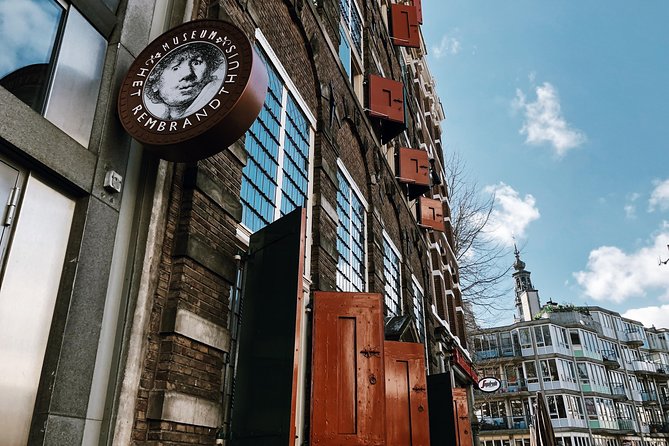
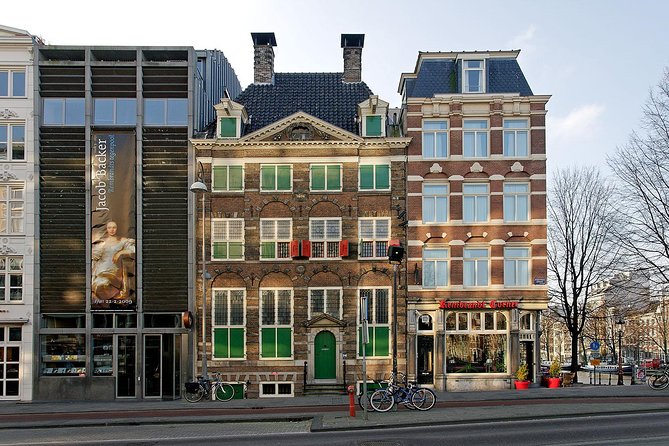
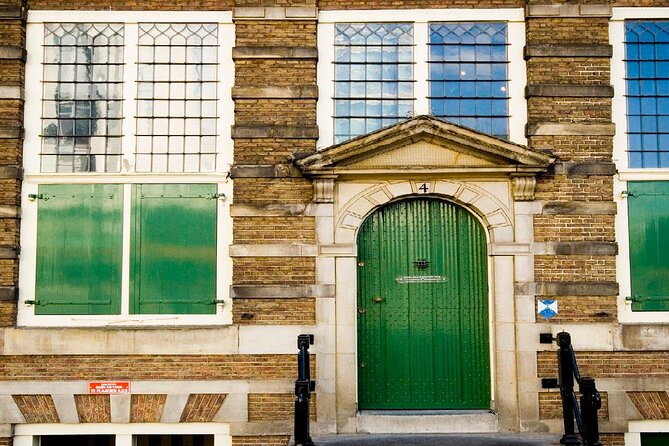
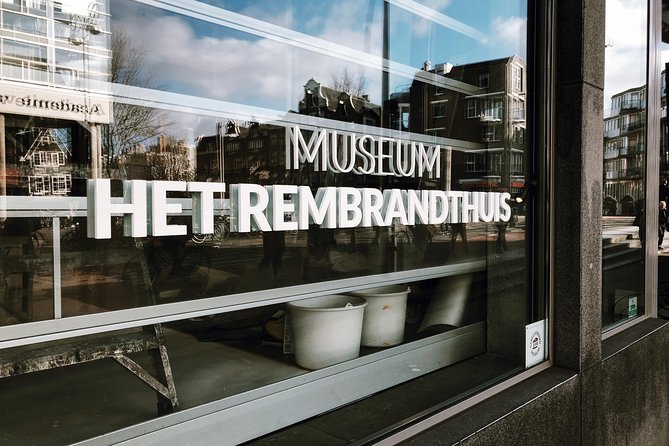
You’ll then arrive at the Rembrandt House Museum on Jodenbreestraat 4. This is where the tour turns from overview mode to deeper focus.
The museum portion is about 1 hour, and entrance is included. That’s a solid chunk of time for seeing the essentials, especially since security measures and quiet rules can slow things down.
Inside Rembrandt House Museum: a studio visit with real constraints
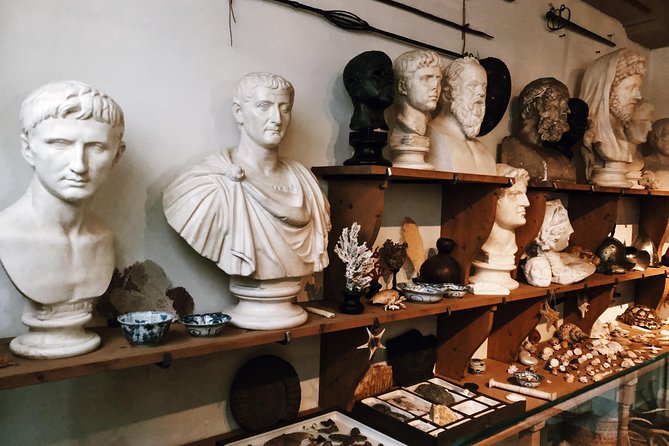
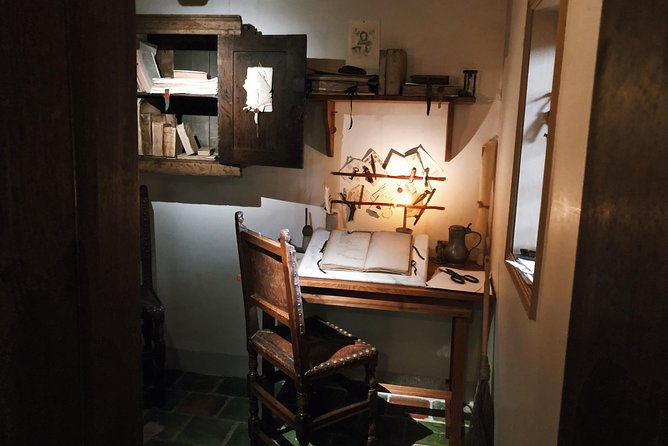
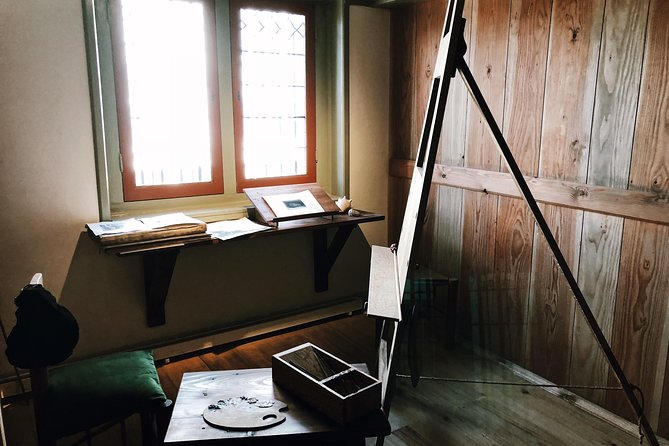
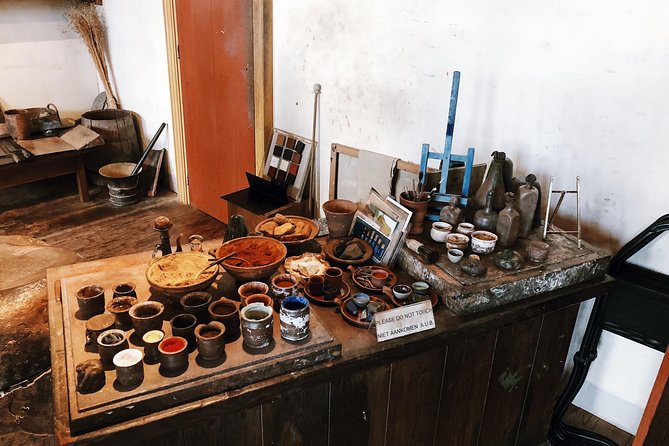
Rembrandt lived and worked in this house from 1639 to 1656, and the museum’s collection focuses on Rembrandt’s etchings and paintings of his contemporaries. In other words, you’re not just looking at “a guy’s house.” You’re seeing the work environment and the artistic output tied to that period.
The museum also comes with very practical rules that you should plan for:
- No large bags or suitcases inside. Only handbags or small, thin bag packs go through security.
- You’ll need appropriate dress for entry into some sites during the visit.
- Security can create lines at many attractions, so even with a well-run tour, timing can feel tight.
A helpful detail: the tour notes that some rooms inside the museum have quiet or restricted right to speak rules. In cases like that, your guide will explain what you need to know before you enter the spaces where speaking is limited. That keeps the experience respectful and still informative, even if you feel the museum “tighten up” around you.
One more thing to be aware of: occasional closures can happen at Rembrandt’s House without prior warning from museum management. If the museum opening time is delayed more than 1 hour from the tour starting time, the tour will provide an appropriate alternative. In those cases, refunds or discounts are not offered. It’s not meant to scare you off—just be realistic. Amsterdam museums are busy, and schedules sometimes shift.
Price and timing: does $159.21 feel worth it?
For $159.21 per person, you’re buying three things:
1) a professional guide for about 2 hours 30 minutes,
2) a structured route across meaningful parts of central Amsterdam,
3) included entry fees, including the Rembrandt House portion.
If you’re traveling in a small group (up to 8), the value improves because the guide can keep attention on you. This is the kind of tour where a good guide can prevent wasted time—like knowing which landmarks are worth your camera seconds, or understanding why a canal, bridge, or tower name matters.
You should also think about where the tour ends: at the Rembrandt House Museum. You’re not finishing back where you started at Cobra Café. That can be a plus if you plan to stay in the area after, or a small inconvenience if you’re trying to connect elsewhere fast.
Hotel pickup isn’t included. The tour explicitly suggests using Uber or taxi for getting to the meeting point, and that’s honestly practical. Public transit is nearby, but for a timed 1:30 pm start, a door-to-door option often reduces stress.
Who this tour suits best (and who should skip it)
This works especially well if you:
- want Rembrandt without spending all day jumping between tickets,
- like canal context and street-level landmarks,
- prefer small-group attention (not a loud herd),
- can handle a moderate walking pace.
It’s also better if you enjoy short segments at each viewpoint rather than long sittings. The tour is built for motion: quick stops for major landmarks, then a longer museum window at the end.
It’s not recommended if you have walking disabilities or use a wheelchair. The walking is substantial, and the tour notes this clearly.
Should you book this Rembrandt House & neighborhood tour?
Yes, if you want a focused, small-group way to understand Rembrandt and Amsterdam at the same time. The combination of canal landmarks, the Jodenbuurt context, and the 1-hour Rembrandt House visit gives you a satisfying arc: city structure → public art → neighborhood memory → personal studio.
I’d hesitate if you need long breaks, have limited mobility, or you want a museum day where you control the pace hour by hour. This tour is timed. It moves.
If you’re the type who likes to leave with names, connections, and a mental map that actually sticks, this one is a good bet.
FAQ
How long is the Rembrandt House & Neighborhood guided tour?
The tour runs for about 2 hours 30 minutes, with the Rembrandt House Museum visit lasting about 1 hour.
What’s the group size limit?
This experience allows a maximum of 8 travelers.
Is the tour in English?
Yes, it’s offered in English.
Where do we meet and where does the tour end?
You meet at Cobra Café, Hobbemastraat 18, 1071 ZB Amsterdam. The tour ends at Rembrandt House Museum, Jodenbreestraat 4, 1011 NK Amsterdam.
Is entrance to Rembrandt House included?
Yes. The Rembrandt House Museum admission is included in the tour.
Do I need to bring anything or follow rules for the museum?
You should plan to use a small bag only. The tour notes no large bags or suitcases inside the museum—only handbags or small thin bag packs are allowed through security. Appropriate dress is also required for entry into some sites.
Is hotel pickup included?
No. Hotel pickup or drop-off is not included, and Uber or taxi is recommended.
What if Rembrandt House has an unexpected closure?
The tour notes that Rembrandt’s House may occasionally close without previous warning. If opening is delayed more than 1 hour from the tour starting time, the guide will provide an appropriate alternative, but refunds or discounts are not offered in those cases.
What’s the cancellation window for a full refund?
You can cancel up to 24 hours in advance of the experience for a full refund. Cancellation less than 24 hours before start time isn’t refunded.