REVIEW · GOUDA
Self-Guided Walking Tour of Gouda: Canals, Colonies, and Cheese
Book on Viator →Operated by VoiceMap Audio Tours · Bookable on Viator
Cheese and canals, guided on your phone. This self-guided walking tour of Gouda blends big-name landmarks with quieter corners, all paired with English audio that you can control as you go. You start in the market square area at De Goudse Waag and work your way toward the Weeshuis Gouda, passing canals, churches, trade streets, and a few thoughtful remembrance stops.
Two things I really like: first, the way the route mixes practical Gouda sights with story-driven stops, so you understand what you’re looking at instead of just seeing it. Second, the audio setup is built for real walking—offline access means you can keep going even if your signal gets shaky, and you can pause to step into shops when you want.
One thing to consider: this is self-guided GPS, so you need your smartphone and headphones. If you’re the type who hates fiddling with an app, plan a moment at the start to get oriented at the De Goudse Waag address.
In This Review
- Key highlights you’ll feel right away
- How the VoiceMap GPS walk really works in Gouda
- De Goudse Waag: the market square start that sets the tone
- Kaaswinkel Gouda co-op: understanding Gouda cheese beyond the label
- Stadhuis van Gouda: Gothic architecture with a fire-smart reason
- Saint-John Church and Museum Gouda: stained glass and a calmer courtyard pause
- Turfmarkt and Vissteeg: canals that trace how people made money
- Lage Gouwe stumbling stones and Park Houtmansplantsoen: remembering built into the walk
- Brewing history and Peperstraat: why Gouda sold sips and spices
- ’t Slot windmill and tulip-season photos
- Vissteeg, Visbank, and the quiet commercial past
- Park-to-finish: ending at Relais & Châteaux Weeshuis Gouda
- Price and value: is $9.99 worth your time?
- Who should take this walk, and who might not love it
- The final decision: should you book this Gouda self-guided tour?
- FAQ
- How long is the Gouda walking tour?
- Where does the tour start?
- Where does the tour end?
- Is the tour offered in English?
- Do I need an internet connection?
- Does the tour include a live guide?
- What do I need to bring?
- Can I listen like an audiobook from anywhere?
- Is it free to cancel?
Key highlights you’ll feel right away
- De Goudse Waag market square start: a strong launching point for the whole cheese and trade theme
- Kaaswinkel Gouda co-op stop: a focused look at why Gouda cheese matters far beyond the town
- Gothic Stadhuis van Gouda detail: built in a field to reduce fire risk, plus strong photo angles
- Lage Gouwe stumbling stones + Park Houtmansplantsoen: sobering reminders built into the route
- Brewing and spices in the streets: learn why Gouda once had over 200 breweries and why Peperstraat is named for pepper
- ’t Slot windmill timing: especially photogenic in tulip season
How the VoiceMap GPS walk really works in Gouda
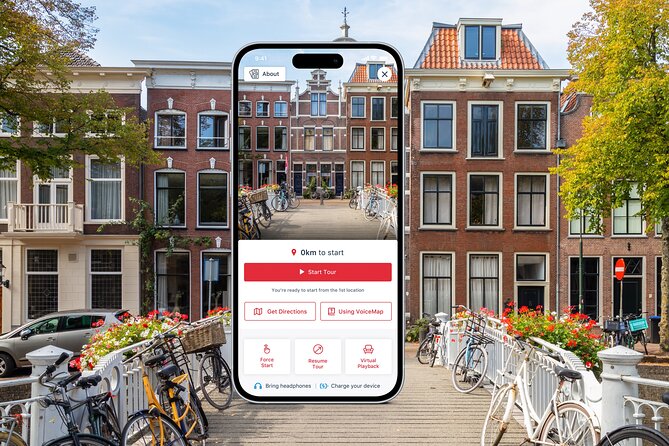
This is a self-guided audio tour through central Gouda. Instead of following a group, you follow the map and audio prompts on your own schedule, which is handy in a compact city where you can duck into a shop or pause for a photo whenever you want.
What makes it practical is the phone-friendly package: you get offline maps and geodata, plus offline audio. That matters in older city centers where reception can be inconsistent, and it also helps you save phone battery. The tour also includes a virtual playback option, so you can listen like an audiobook from anywhere later—nice if you want to review the stories without standing in the rain or under a too-hot sun.
Plan to bring your smartphone and headphones. The tour itself is not a headset-free “watch on a screen” experience. It’s audio-led, so good headphones make it feel smooth rather than stressful. And yes, you’ll likely spend a few minutes at the start getting your bearings on where De Goudse Waag sits in the market square area.
You can also read our reviews of more tours and experiences in Gouda.


De Goudse Waag: the market square start that sets the tone
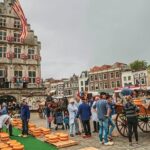
Your walk begins at De Goudse Waag (Markt 35), a historic goods weighing house on the market square. It’s a smart starting point because it instantly connects Gouda’s economy to what you’ll see next: trading, measuring, and moving valuable products.
Even if you’re not a “history person,” this stop works because it’s physical. A weighing house is a clear clue about how commerce ran. When the audio shifts to cheese later, you’ll understand why a town like Gouda became known for something that had to be counted, standardized, and shipped.
Practical tip: arrive a bit early if you can. In a city center, finding the exact start point can take longer than you expect, especially if you’re relying on coordinates. Once you’re in place, the tour flows naturally from there.
Kaaswinkel Gouda co-op: understanding Gouda cheese beyond the label
Next up is Kaaswinkel Gouda, the Cheese Farmers Co-op. This stop is the heart of the tour’s theme. You’re not just told Gouda cheese exists—you learn how Gouda cheese is produced and why it grew into a global name.
I like this kind of stop because it answers a question you may not realize you’re asking. When you know the production basics, you start noticing details when you see cheese displays, shops, and signage. It’s the difference between seeing a product and understanding the system that made it.
A small bonus here is how easy this stop is to enjoy at your own pace. If you want to linger, you can. If you’d rather keep walking and save your shop time for later, you can.
Stadhuis van Gouda: Gothic architecture with a fire-smart reason
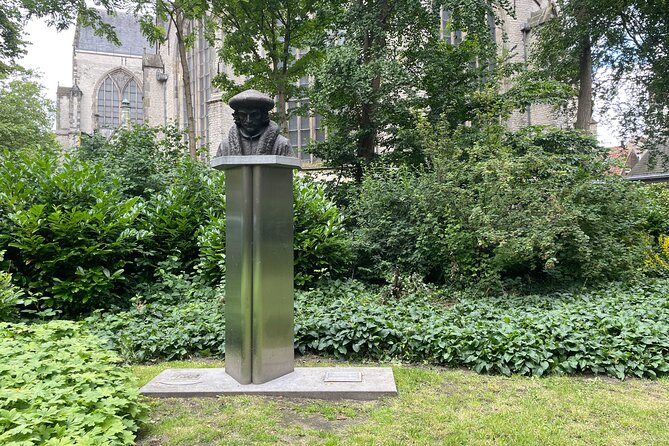
Then you’ll reach Stadhuis van Gouda, the city hall built in the middle of a field to help prevent fire. It’s one of those details that makes you look twice, because it’s not just pretty stone. It’s practical design shaped by the realities of older cities.
Gothic architecture always gives you visual rewards—height, structure, and strong lines. But the fire-prevention story adds an extra layer. You’ll walk past it and realize the architecture wasn’t only about style. It was about survival and risk management.
If you’re into photos, this is a solid moment. You’ll get a classic city hall look without needing to rush. Take a minute, then keep moving—Gouda rewards slow steps, but you also want time for the later canal and trade areas.
Saint-John Church and Museum Gouda: stained glass and a calmer courtyard pause
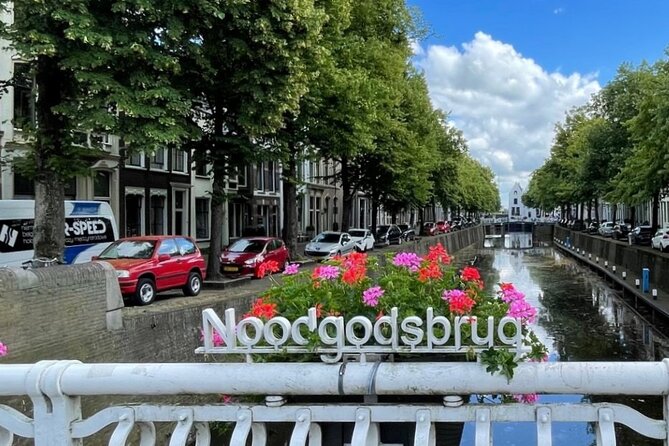
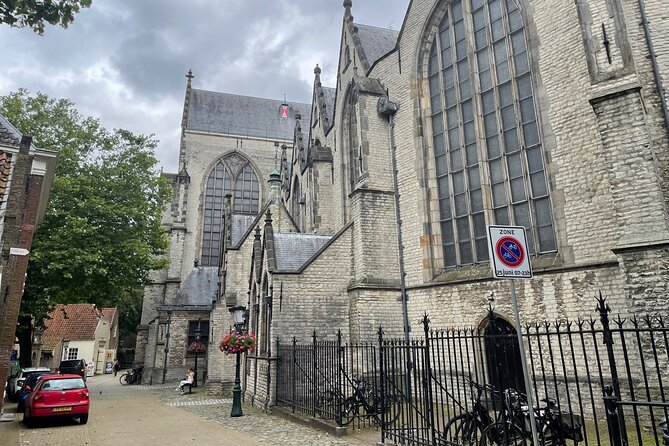
The route passes Saint-John Church, known for stunning stained glass windows and its remarkable history. Even if you only glimpse the outside, the audio framing helps you know what to look for when you’re near those windows.
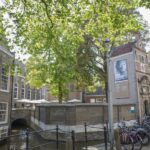
After that, you’ll find Museum Gouda, including its beautiful courtyard. I like adding a museum stop because it gives your brain a breather. You’re not just walking for the next photo—you’re switching gears into art, art-adjacent details, and city context.
In a self-guided format, you can also use this as a timing tool. If you arrived early and your feet need a rest, a courtyard stop helps. If you’re on a tighter schedule, you can keep it brief and still absorb the key points from the audio.
Turfmarkt and Vissteeg: canals that trace how people made money
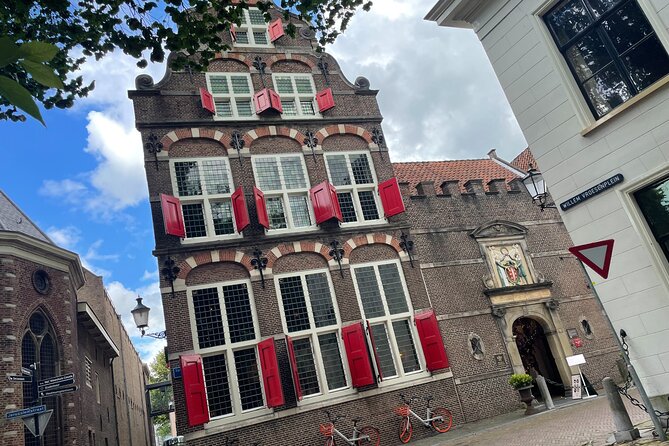
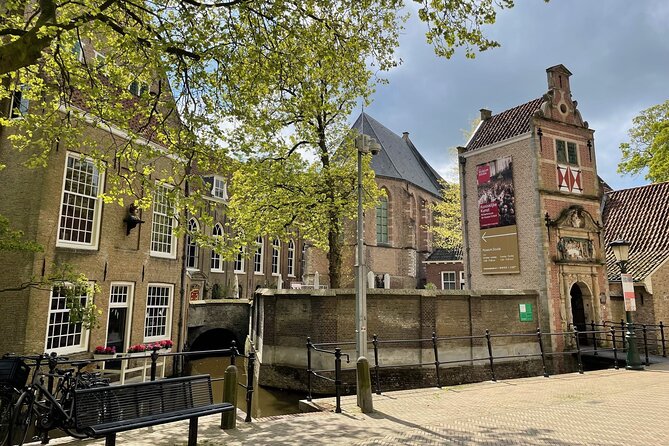
From there, the tour shifts to the canal side of Gouda. You’ll walk along Turfmarkt, a long canal that was once the central marketplace for peat. This is a great example of how the route ties everyday geography to historical trade.
Peat isn’t a modern buzzword, but it makes a lot of sense here. If you understand what fueled homes and businesses in earlier centuries, the canal’s importance becomes clearer. You stop seeing water as scenery and start seeing it as infrastructure.
Later, you’ll pass through Vissteeg and see the Visbank, tied to Gouda’s fish trade. This is the trade-think pattern continuing: one stop explains one major economic thread, and the next shows a different one. The result is a route that feels like a guided lesson, not a scavenger hunt.
Lage Gouwe stumbling stones and Park Houtmansplantsoen: remembering built into the walk
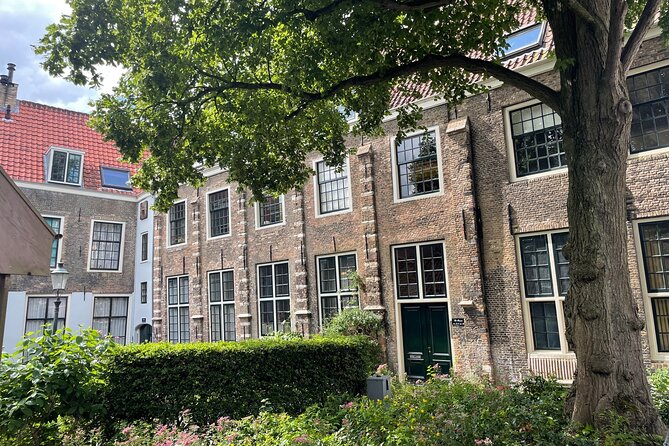
One of the most moving parts of the tour is how it handles darker chapters. The route includes stories of Gouda’s Jewish families during the Holocaust, marked by stumbling stones on the pavements of Lage Gouwe. It’s a respectful kind of learning stop because it’s tied to place, not just dates.
Then the walk offers a stop in Park Houtmansplantsoen, described as hiding the city’s dark colonial and slavery past. Parks can feel light and safe, so the audio context matters. It nudges you to look at what you’re standing in and recognize that history can sit in plain sight.
I appreciate tours that don’t skip this kind of content. The challenge is doing it well, and here the placement along an otherwise scenic route makes the stories feel grounded. You don’t have to seek out a separate exhibit. The city itself becomes part of the lesson.
Brewing history and Peperstraat: why Gouda sold sips and spices
The tour then swings into drinks and trade names. You’ll stop at a liquor store to learn about Gouda’s brewing history, including that the city once hosted over 200 breweries and numerous monasteries. That’s a striking fact, and it helps explain why beer culture and brewing heritage show up in the city’s story.
I like how this stop turns a shopfront into a clue. You’re not just walking past a storefront; you’re hearing why alcohol production was a major local industry. It also sets up the next trade street.
You’ll also walk down Peperstraat (Pepper Street). The audio connects its name and origins to Gouda’s spice trade during its prosperous trading years. This is the kind of stop that gives you an “aha” moment. Street names become mini maps of past commerce.
’t Slot windmill and tulip-season photos
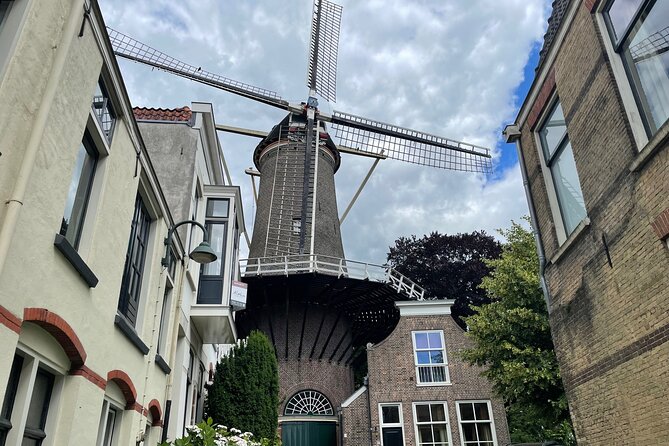
No Gouda walk feels complete without the classic Dutch windmill photo. Here, you’ll take a quintessential shot at ’t Slot windmill, which is especially beautiful in spring when tulips are around.
Even if you’re visiting outside tulip season, a windmill still reads as a visual reset. You’ve been talking trade, churches, and canals. This moment gives you open sky and a clean focal point.
Tip: hold back your phone camera reflexes for a second. Look around first, then frame the photo so the windmill and surroundings make sense as a scene, not just a close-up object.
Vissteeg, Visbank, and the quiet commercial past
After the windmill photo moment, you’ll continue through the Vissteeg area and see the Visbank again in context with the fish trade story. This part of the route can feel like you’re walking the city’s work lanes, not just tourist lanes.
I think this is one of the strengths of a self-guided route: you can spend extra time here if it clicks for you. If trade history is your thing, you’ll enjoy how all these pieces connect. If you prefer scenery, you can keep the pauses short and still get the meaning from the audio.
Park-to-finish: ending at Relais & Châteaux Weeshuis Gouda
Your tour ends at Relais & Châteaux Weeshuis Gouda (Spieringstraat 1). Ending at a place like this gives you a natural finish line: you can slow down, step into a calmer mood, and think about everything you just walked through.
It’s also practical. If you want a coffee or a sit-down moment after the last audio story, you’re not stranded with nowhere to go. You simply walk out of the route and into a real endpoint.
Price and value: is $9.99 worth your time?
At $9.99 per person, the big value isn’t only the low price. It’s what you get around it: lifetime use before your booking date and after it, offline audio and maps, plus the virtual playback option.
For a self-guided format, that turns the tour into a reusable tool. You’re not paying only for one hour-and-change of walking. You’re paying for an audio guide you can revisit later, and for a route you can replay if you want to focus on different themes like cheese, trade, architecture, or the remembrance stops.
Compared with paying for a standard guided option, the cost is lower, and the control is higher. You set your pace. That matters in a compact city where one extra stop can easily stretch your day.
Who should take this walk, and who might not love it
This tour fits best if you like structure without rigidity. If you want a guided arc but hate the pressure of keeping up with a group, a GPS audio walk is a strong match.
It’s also a good fit for solo walks. One of the most practical benefits is that you can pause the audio and handle your own side quests, like stepping into shops or taking a longer look at a building detail.
The main mismatch is simple: if you hate smartphone-based tours, you might find the start-up moment annoying. You’ll need your phone and headphones, and you should expect a quick orientation step around De Goudse Waag.
The final decision: should you book this Gouda self-guided tour?
I’d book it if you want Gouda in layers: cheese and co-ops, architecture, canals tied to peat and fish trade, street names that explain spice commerce, and honesty about Holocaust and colonial-era suffering. The mix is the point, and it doesn’t feel random. It feels like Gouda telling its own story through places you can actually walk to.
I’d skip it only if you want a live human guide to answer questions on the spot. This is an audio-led walk, so the learning is scripted through the app. If you enjoy that style, it’s a great use of time for the price.
If you can do one self-guided audio experience in your trip, this is a smart place to start. It’s easy to follow, packed with small discoveries, and it makes the city feel bigger than its size.
FAQ
How long is the Gouda walking tour?
It’s listed as about 1 hour 15 minutes to 1 hour 30 minutes.
Where does the tour start?
The start point is De Goudse Waag, Markt 35, 2801 JK Gouda, Netherlands.
Where does the tour end?
The tour ends at Relais & Châteaux Weeshuis Gouda, Spieringstraat 1, 2801 ZH Gouda, Netherlands.
Is the tour offered in English?
Yes. Audio is English, and written support is also listed as English.
Do I need an internet connection?
The tour includes offline access to audio, maps, and geodata, so you don’t have to rely on internet while walking.
Does the tour include a live guide?
No. It’s a self-guided GPS tour with audio.
What do I need to bring?
Bring your own smartphone and headphones.
Can I listen like an audiobook from anywhere?
Yes. There’s a virtual playback option.
Is it free to cancel?
Cancellation is free. You can cancel up to 24 hours in advance for a full refund.