REVIEW · AMSTERDAM
The Red Light District Now & during the Dutch Golden Age
Book on Viator →Operated by Aarre Safari City Tours · Bookable on Viator
Amsterdam has a lot going on. This walk explains why.
I love the way history drives the whole story, not just the streets you see, and I really like that the guide, Aarre Safari City Tours’ Aarre, brings a Master’s degree in history to a topic most people feel awkward about. One thing to consider: the Red Light District part is candid about sex work and current issues, so if that topic makes you uncomfortable, plan for a respectful-but-straightforward conversation rather than a “soft” version.
You start near the NH Collection Amsterdam Barbizon Palace, then you walk, talk, and connect dots between trading wealth, Dutch prison reform ideas, art, and modern street life. It runs about 2 hours, uses a mobile ticket, and ends back where you began—simple, low-fuss, and easy to fit into a sightseeing day.
In This Review
- Key things to know before you go
- Why this Red Light District walk feels different from the usual
- Price, timing, and how the value adds up
- From Centraal Station to the Golden Age: the Amsterdam port story
- Int Aepjen and the VOC reality check
- The Weeping Tower: water control and an Amsterdam-to-New York link
- Spinhuissteeg: prostitution, prisons, and Golden Age reform attempts
- Zeedijk: Chinese community origins, a 70s–80s crime wave, and today’s experiments
- Nieuwmarkt and De Waag: where Rembrandt created The Anatomy Lesson of Dr Tulip
- De Wallen now (De Wallen): Dutch attitudes, safer alternatives, and future questions
- How to get the most from Aarre’s style
- Who should book this tour—and who may want a different option
- Should you book The Red Light District Now & during the Dutch Golden Age?
- FAQ
- How long is the tour?
- Where does the tour start and end?
- Is this a private tour?
- Do I need to print a ticket?
- Who will guide the tour?
- Is the Red Light District portion handled respectfully?
- Can I cancel for a refund?
Key things to know before you go
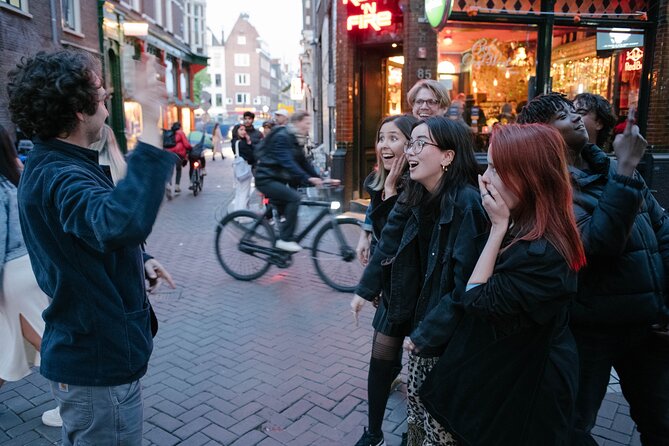
- A history-minded guide (Aarre): He brings a Master’s degree in history and a sense of humor.
- A respectful introduction to De Wallen: Sex work is discussed thoughtfully, with attention to safety and real-world problems.
- Golden Age stories everywhere: VOC sailors, port growth, prisons, and Amsterdam-New York connections show up as you walk.
- Short stops with clear takeaways: Each viewpoint is brief, but every one adds a piece to the bigger puzzle.
- Private group pacing: Only your group participates, so you can ask questions without feeling rushed.
- Easy day plan: About 2 hours, near public transportation, and it loops back to the meeting point.
Why this Red Light District walk feels different from the usual
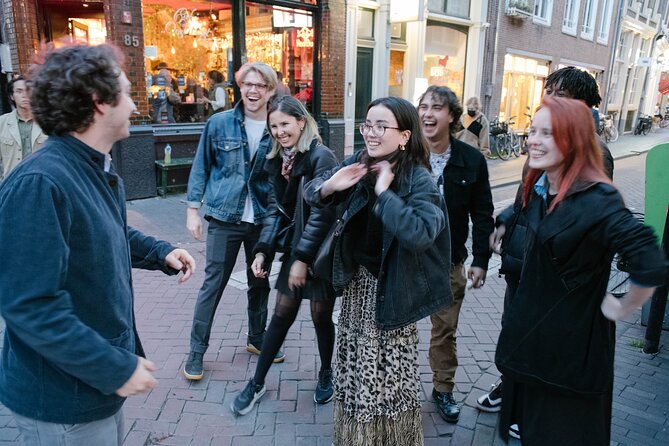
Most Amsterdam tours either ignore De Wallen or skim it like it’s just a spectacle. This one treats the Red Light District as a real neighborhood with roots. That matters because Amsterdam didn’t become Amsterdam by being simple. It built wealth on trade, controlled water with engineering, argued about morality with policy, and experimented with how to manage complicated social issues.
What I like here is the sequence. You’re not dumped into the glow of the windows without context. You’re led through the city’s big themes first—port growth, overseas shipping, water management, and Golden Age institutions—so by the time you reach De Wallen, you can understand why the Dutch approach is so structured, and why today’s debates are so tangled.
And yes, the tone stays respectful. Aarre doesn’t turn it into shock tourism. He frames the subject as people, systems, and choices, then he explains how Amsterdam tried to build a safer alternative to the sex trade while still facing serious problems.
You can also read our reviews of more tours and experiences in Amsterdam.
Price, timing, and how the value adds up
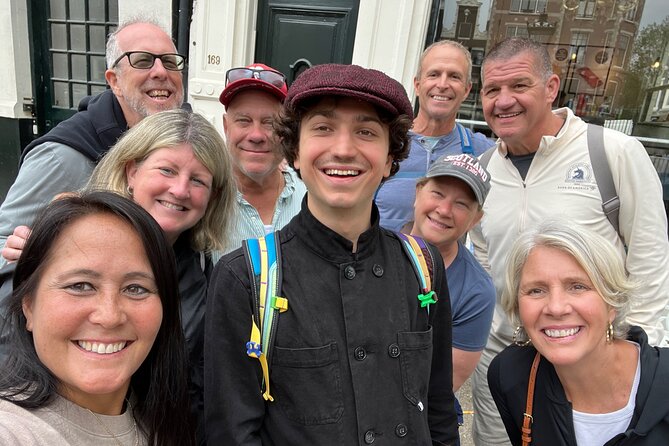
At $70.98 per person for about 2 hours, you’re paying for more than a walk. You’re paying for a guide who can connect street corners to the long story of the city—especially if you’re the type who likes understanding how the world got its shape.
This tour is also built around efficiency. Stops are short (often around 5 to 10 minutes), which keeps the pace lively and helps you cover multiple layers of Amsterdam without sitting through long monologues at each spot. If you’re trying to use limited vacation time well, that format is a win.
One practical note: tips for the guide aren’t included. If you liked Aarre’s humor, clarity, and balance, set aside a little extra in your budget.
From Centraal Station to the Golden Age: the Amsterdam port story
You start at Centraal Station and focus on how Amsterdam went from small beginnings to a global trading power. Aarre frames it as a transformation story: early settlers working through a challenging, swampy landscape, then the rise of a port-driven city that could ship goods far beyond Europe.
Even if you’ve seen Centraal Station a hundred times in photos, this stop gives you a new lens. The goal isn’t to admire architecture for its own sake. It’s to understand how the city’s geography and ambition created the conditions for the Dutch Golden Age—and why that same mindset shows up in later topics, including trade, law, and social policy.
What to watch for here: listen for the chain of cause-and-effect—how port development supports overseas ventures, and how overseas ventures bring wealth that later affects everything from institutions to neighborhoods.
Potential drawback: this opening can feel a bit “big picture,” especially if you’re hoping for immediate De Wallen context. The payoff comes later.
Int Aepjen and the VOC reality check
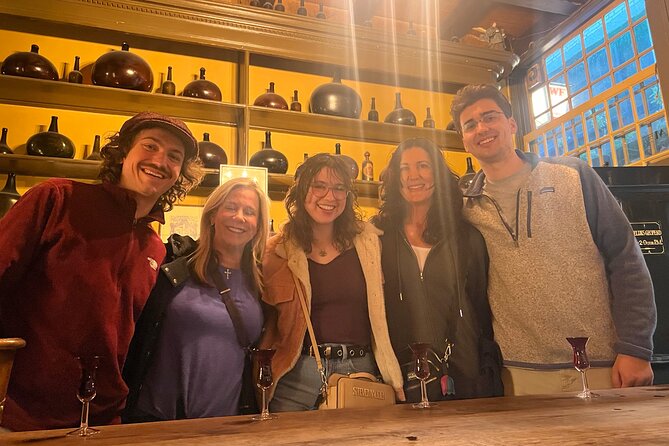
Next you’ll learn about sailors’ lives and what travel and trade really cost. This stop centers on the VOC—the Dutch trading company—and the harrowing conditions aboard VOC ships. The story includes how spoils of trade started arriving in Amsterdam in the 17th century, changing the city’s economy and, eventually, its social landscape.
This is one of those parts where a history lesson turns human. Instead of only hearing about wealth and famous ships, you get reminded that the system ran on hard labor and risk. That matters because Amsterdam’s later experiments—about managing morality, managing public order, and managing social tensions—don’t appear out of nowhere. They grow out of how the city functioned.
Why this stop is valuable: it grounds later social discussions in real trade history. When you understand the logistics of empire, the rest of the city’s choices feel less arbitrary.
How long it lasts: about 10 minutes, so you won’t get stuck in one place.
The Weeping Tower: water control and an Amsterdam-to-New York link
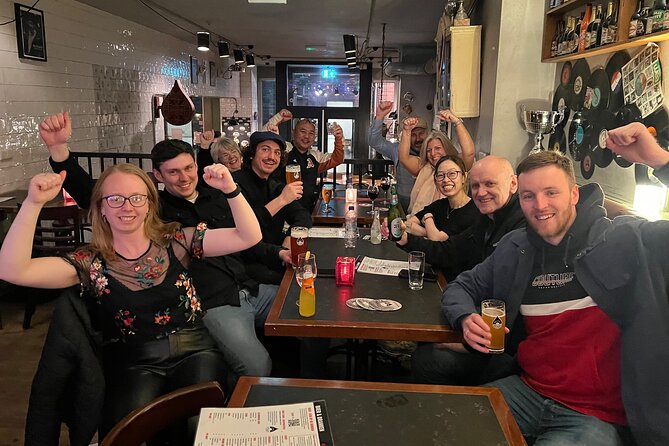
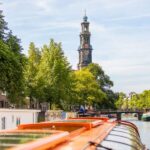
Amsterdam’s greatest superpower has always been water management. From the lookout at the Weeping Tower, Aarre discusses Dutch ability to manipulate water—practical, engineered control that made life and commerce possible where it otherwise wouldn’t be.
Then the story widens: Amsterdam’s water knowledge ties to a connection with New York. The tour doesn’t treat this as random trivia. It uses the Amsterdam-New York link to show how Dutch systems traveled—how ideas, techniques, and even city-building approaches can cross the Atlantic.
What I like about this stop: it’s visual and makes you look at the city differently. You start thinking, Why does Amsterdam look the way it does? The answer often comes back to water and engineering.
Watch for: this is still a viewpoint stop, not a museum experience. Come ready to listen, not expecting a long “hands-on” explanation.


Spinhuissteeg: prostitution, prisons, and Golden Age reform attempts

This is where the tour starts walking closer to De Wallen’s core themes—without rushing. At Spinhuissteeg, you’ll learn about the development of prostitution as one of the oldest professions practiced in Amsterdam. Then Aarre connects that to what Golden Age prisons looked like and why officials tried to reform prostitutes and people he describes more broadly as sinners.
Here’s the balance point: the tour treats sex work history as part of social regulation, not as a tabloid topic. You’re shown that moral debates and law enforcement were tangled, and that attempts at reform were never simple or universally effective.
Why the prison angle matters: it helps you understand that Amsterdam’s approach to sex work wasn’t only about tolerance or only about punishment. It was also about institutional control and the belief that systems could change behavior.
Possible consideration: if you’re sensitive to discussions of punishment, institutional life, or moral reform language, just know the tour brings it up directly (but still respectfully).
Zeedijk: Chinese community origins, a 70s–80s crime wave, and today’s experiments
Zeedijk is a street with layers. Here you’ll hear about origins of the Chinese community in Amsterdam, and you’ll also get a look at a terrible crime wave in the 70s and 80s. After that comes the modern angle: experiments with tolerating drugs and prostitution.
This stop gives you one of the hardest parts of the Red Light District story: that policies often respond to crises, not ideals. The tour doesn’t pretend everything became better just because Amsterdam had rules. It shows how changing public order challenges reshaped how the city handled street-level realities.
What to listen for: how the tour ties immigration history, crime, and modern tolerance experiments into the bigger question of how a city balances harm reduction with safety and fairness.
A small drawback: the topics move quickly. If you like stopping to take photos, you may want to do that after the explanation, since the discussion is doing the heavy lifting here.
Nieuwmarkt and De Waag: where Rembrandt created The Anatomy Lesson of Dr Tulip
You shift gears at Nieuwmarkt with a stop at De Waag, where Rembrandt created one of his major works, The Anatomy Lesson of Dr Tulip. That detail sounds like it belongs to a museum tour, but it fits here.
The tour uses art and science-adjacent curiosity to widen your understanding of the Dutch Golden Age mindset. It’s not just trade and law. It’s also observation, learning, and display—what people wanted to know, and how they wanted to view it. That helps you see De Wallen’s existence as part of a larger culture of public life, spectacle, and regulated boundaries.
Why this stop is a smart pivot: it keeps the walk from becoming only about social policy and vice. You get a reminder that Amsterdam’s Golden Age was also about culture and intellectual appetite.
What you can do in the moment: take a second to look around the square and think about how public spaces in the city served many purposes at once.
De Wallen now (De Wallen): Dutch attitudes, safer alternatives, and future questions
Finally, you reach the Red Light District itself—De Wallen. This is the moment most people expect, but the tour has prepared you for it. Aarre explains the Dutch attitude to sex work and how Amsterdam attempted to create a safe alternative to the sex trade.
Then the tour turns to the present. You’ll hear about current problems in the RLD and talk through the future of this unique residential neighborhood.
This is the part I think you should pay attention to most. It’s easy to treat De Wallen as a single story: good tolerance versus bad exploitation. The tour pushes past that. It’s about competing goals—harm reduction, safety, public order, and the reality that policy can’t erase human vulnerability.
How it stays respectful: instead of sensational descriptions, the emphasis is on the Dutch approach, the intent behind it, and the messy complications that come with any system involving people and money.
If you’re worried about the tone: the tour is designed as a sensitively-handled introduction to the Red Light District, so you won’t get a crude focus on shock value.
How to get the most from Aarre’s style
From the way Aarre runs the walk, you can tell he likes teaching in a way that feels human, not robotic. The humor helps you keep your grip on heavy topics, and the history background keeps the facts from feeling like vague talking points.
Here are a few ways you can make the tour click fast:
- Come with one question ready about Amsterdam’s “why.” For example: why did the Dutch try reform systems, not just punishment?
- Listen for how each stop connects to the next. The port story explains wealth; wealth and institutions shape policy; policy shapes neighborhoods.
- If you feel uncomfortable at any moment, give yourself permission to still listen. The tour’s whole aim is respectful understanding, not judgment.
And if you’re the type who loves practical follow-ups, Aarre tends to offer helpful ideas after the tour—like where you might want to eat and how to keep enjoying the city once you’re done walking.
Who should book this tour—and who may want a different option
This tour is a strong match if:
- You’re a history buff and want the Red Light District explained through Amsterdam’s bigger story.
- You like walking tours that cover multiple parts of the city while keeping a clear narrative thread.
- You want a guide with serious academic grounding plus the ability to keep the tone respectful and approachable.
You might want to skip or choose something else if:
- Sex work topics will make you too uncomfortable for a straightforward, sensitive discussion of current problems and policy.
- You’re only looking for entertainment or nightlife curiosity and don’t care about history context.
Should you book The Red Light District Now & during the Dutch Golden Age?
If you want a De Wallen experience that feels thoughtful and anchored in how Amsterdam works, I’d book it. The value is in the combination: Golden Age trade, water engineering, prisons and reform ideas, and then a careful look at the present-day Red Light District. You leave with more than photos. You leave with a framework for understanding why this neighborhood exists and why the debates around it are still alive.
If you’re worried about the subject matter, it’s still handled with care. Just go in expecting a real-world conversation, not a sanitized postcard.
FAQ
How long is the tour?
It runs for about 2 hours.
Where does the tour start and end?
It starts at Hotel NH Collection Amsterdam Barbizon Palace, Prins Hendrikkade 59-72, 1012 AD Amsterdam. It ends back at the meeting point.
Is this a private tour?
Yes. Only your group participates.
Do I need to print a ticket?
No. It uses a mobile ticket.
Who will guide the tour?
A professional local guide leads the experience, with a Master’s degree in history. The guide for this tour is Aarre Safari City Tours’ Aarre.
Is the Red Light District portion handled respectfully?
The tour is described as a respectful, sensitively-handled introduction to the Red Light District, including discussion of Dutch attitudes toward sex work and current problems in the area.
Can I cancel for a refund?
Yes. You can cancel up to 24 hours in advance for a full refund. Free cancellation is based on local time, and if it’s canceled because the minimum number of travelers isn’t met, you’ll be offered another date or a full refund.