REVIEW · AMSTERDAM
Van Gogh Museum Private Tour
Book on Viator →Operated by 360 Amsterdam Tours · Bookable on Viator
Vincent van Gogh in two focused hours. This private tour is a smart way to see the museum’s biggest hits without wandering for ages, and you get help interpreting what you’re looking at as you go. I especially like the private guide approach, and how the plan ties together Van Gogh’s moves from Dutch roots to Paris, Arles, Saint-Rémy, and Auvers. The main thing to consider is that it’s not a long, slow stroll, so if you love lingering, you may wish you had more time (and there are museum limits on staying after the visit).
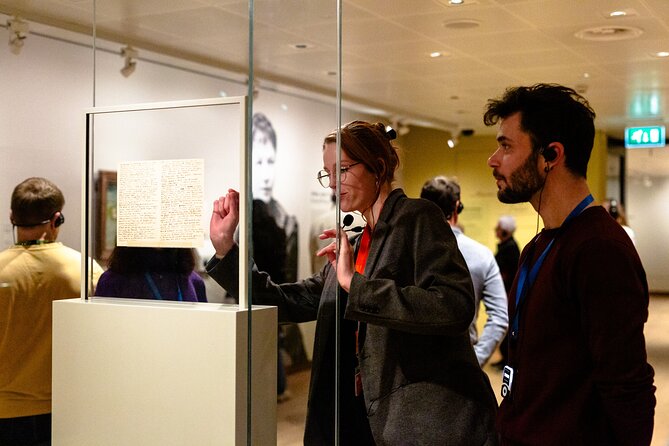
One of my favorite parts is the whisper system. In plain terms: you hear your guide clearly as you walk through rooms, and it keeps the tour feeling like a conversation instead of a shouting match. The reviews also point to guides like Sylvia, Giulia, and Kiran keeping a fun pace, making it interactive, and still answering questions without dragging the schedule.
The other practical plus is that admission tickets are included and each stop is timed, so you’re not burning time figuring out where to go next. If you’re traveling with a heavy winter jacket, large bags, or lots of liquids, plan around the museum’s rule that you generally can’t stay inside after the tour.
In This Review
- Key highlights you will feel right away
- Why this Van Gogh Museum private tour fits a tight Amsterdam day
- Meeting point by Cobra Café and what the route actually helps with
- Stop 1: Self-portraits that set the tone for everything else
- Stop 2: The Dutch room—peasants, portraits, and everyday life
- Stop 3: Paris years (1886–1888) and a shift you can actually compare
- Stop 4: Arles and the South—Sunflowers, the Yellow House, and more
- Stop 5: Saint-Rémy-de-Provence—late landscapes and symbolic subjects
- Stop 6: The Auvers Room and the closing set of works
- Private guide vs museum audio: what you gain in real time
- Price and value: what $263.20 per person buys you
- After the tour: the museum stay rule that matters
- Who should book this Van Gogh Museum private tour
- FAQ
- How long is the Van Gogh Museum private tour?
- What’s included in the price?
- Is the tour private?
- Where do you meet, and where does the tour end?
- Do I need my own headphones?
- Is this tour only for adults?
- Can I cancel for free?
- Should you book this Van Gogh Museum Private Tour?
Key highlights you will feel right away
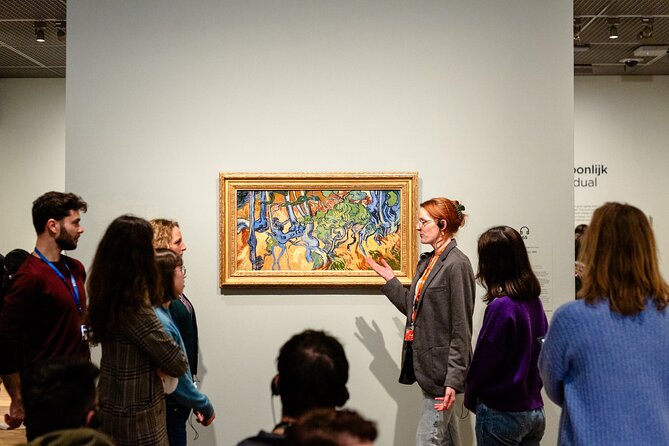
- Private guide, not just a self-guided route, with time to ask questions during the walkthrough
- Whisper system included, with ear pieces that make it easier to hear in busy galleries
- Admission tickets built in, so you can start the museum experience without extra steps
- A period-by-period route, moving from self-portraits to Paris, then Arles, then Saint-Rémy and Auvers
- A pace designed for a 2-hour break in a sightseeing-heavy day
- Small group feel, since the tour is only for your group
Why this Van Gogh Museum private tour fits a tight Amsterdam day
The Van Gogh Museum is one of those places where it’s easy to get “stuck reading labels.” With a private tour, you still look at the art, but the guide helps you connect what you’re seeing to the bigger timeline. You’re also moving through the museum with purpose, which is great when you’ve already done canals, museums, and walking all morning.
This is also a good match for people who want something focused but not intense. The itinerary is laid out in short blocks (mostly about 15 to 20 minutes per stop), which keeps the tour from feeling like a marathon lecture. You’ll see a range of works rather than just one room, and that’s the quickest way to understand how broad Van Gogh’s output can feel.
One more subtle benefit: because it’s private, you can shape the experience as you go. In the reviews, guides like Giulia and Kiran were described as patient and available, with time to ask questions while still keeping the group moving. That balance matters in a museum setting where delays can ripple into lost time.
You can also read our reviews of more tours and experiences in Amsterdam.



Meeting point by Cobra Café and what the route actually helps with
You start at Cobra Café, Hobbemastraat 18, 1071 ZB Amsterdam, and you finish near Museumplein 6, 1071 DJ Amsterdam. That end point is useful because Museumplein is a natural “hub” zone, so you can roll into other sights nearby without backtracking.
The tour is 2 hours (approx.) and is offered in English. It’s also only for adults 18+, which is worth noting if you’re traveling as a family.
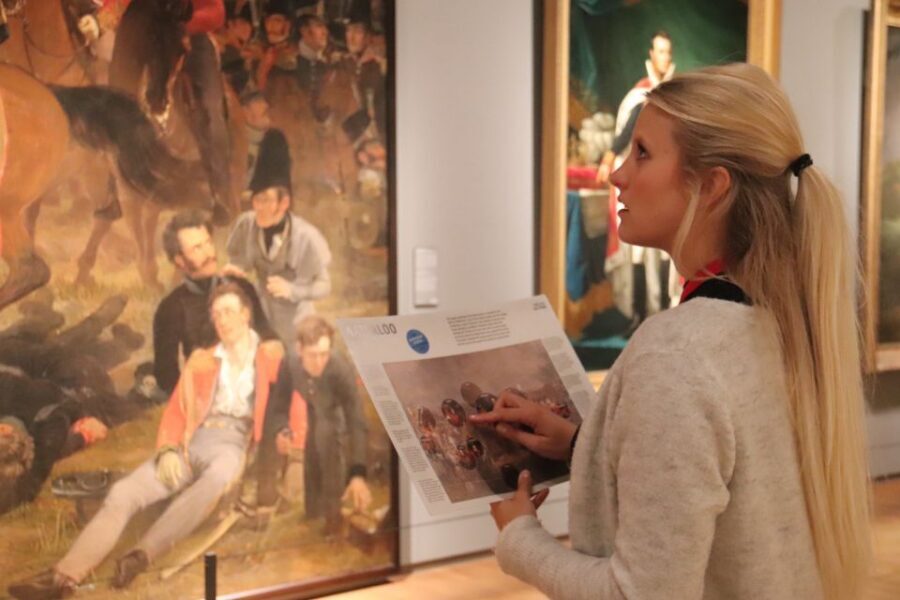
The whisper setup is where a lot of the value becomes practical. A museum can be noisy, and it’s not easy to hear a guide from across a room. The included ear pieces help you stay in the moment while you look at paintings, instead of constantly refocusing on sound quality. In at least one review, the ear pieces were specifically praised for working well, which is exactly what you hope for.
Stop 1: Self-portraits that set the tone for everything else
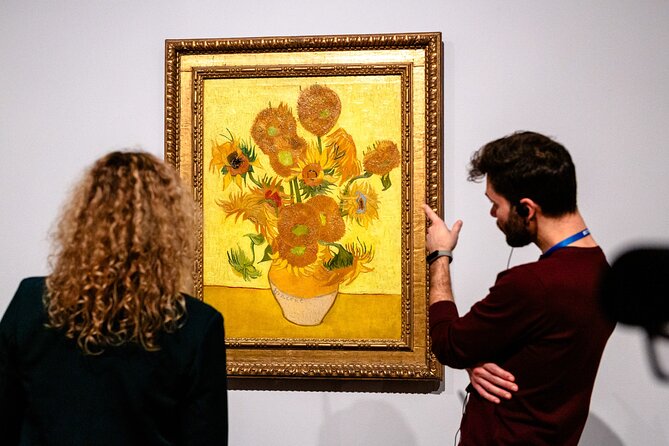
Your first museum stop is all about Van Gogh’s self-portraits, with about 20 minutes and the admission ticket included. This is a smart opening because it gives you a personal thread to hold onto. Once you’ve seen how he returns to his own image, the rest of the tour feels more connected, not random.
Self-portraits also work as a warm-up. Even if you’re not an art-history person, you can usually look closely and notice changes in style and mood. A guide can point out what to compare, which speeds up your understanding without making you feel like you need a textbook.
A tour like this is also a good way to avoid decision fatigue. Instead of asking yourself which room to hit first, you start with a curated anchor that leads into the rest of the journey.
Stop 2: The Dutch room—peasants, portraits, and everyday life
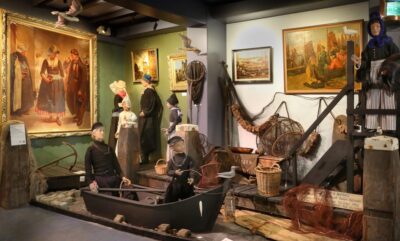
Next comes the First Floor Foyer for about 20 minutes (admission included). This part focuses on works connected to Dutch art circles and everyday subjects, including paintings by Millet and Jules Breton. You’ll also see titles such as Woman Lifting Potatoes, Head of a Peasant Woman, and The Potato Eaters.
What I like about this stop is that it gives you contrast. If your mental image of Van Gogh is only the famous later colors and dramatic scenes, this section reminds you he was working on different themes and ways of seeing earlier on. It’s also a chance to look at faces and gestures up close—exactly the kind of detail you miss when you rush.
One consideration: because the foyer includes multiple works and visual groupings, it can feel busy. A private guide helps you sort what’s important to notice in each piece, and the pace prevents the room from turning into a blur.
Stop 3: Paris years (1886–1888) and a shift you can actually compare
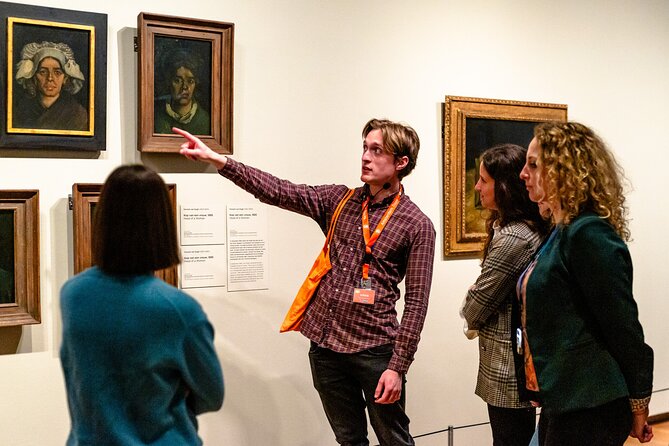
Then the itinerary moves into Van Gogh’s Paris period between 1886 and 1888, again with about 20 minutes per stop and admission included. Here you’ll look at works such as Self Portrait with Felt Hat, Still Life with Absinthe, In the Café: Agostina Segatori in Le Tambourin, and Garden with Courting Couples.
This segment matters because it’s where many people start to feel the change in subject and atmosphere. Even without needing heavy art theory, you can compare how different scenes feel: the intimacy of a portrait, the staged calm of a still life, the energy implied by café life, and the social scene suggested by couples in a garden.
The guided part really helps here. If you’re looking on your own, you may just notice the obvious subjects. With a guide, you’re nudged toward comparisons that make the museum feel like a narrative instead of a collection of separate masterpieces.


Stop 4: Arles and the South—Sunflowers, the Yellow House, and more
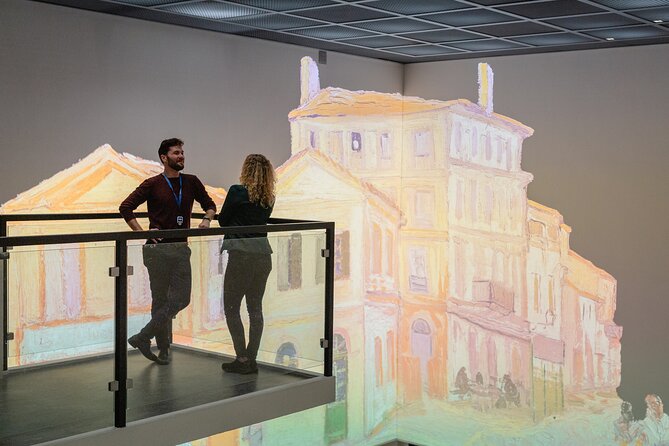
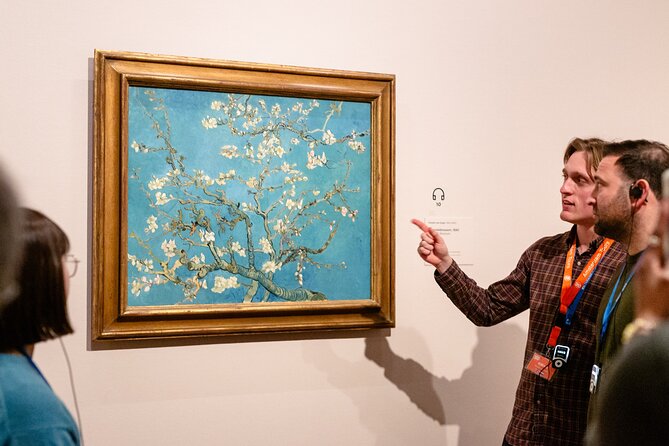
After Paris, the tour heads to Arles and the South of France, with a stop focused on Van Gogh’s move to Arles in 1888. Expect another about 20 minutes with admission included, and titles including Sunflowers, Almond Blossoms, The Bedroom, and The Yellow House.
You’ll also see Japanese Paintings – copies from prints. Even though they’re described as copies from prints, that detail is actually interesting: it reminds you that Van Gogh wasn’t only producing work from direct observation. He was also engaging with influences and translating them into his own visual language.
Why this stop is so satisfying is the mix of recognizable themes. You get big visual icons like sunflowers, plus quieter spaces like The Bedroom, plus the sense of a home environment suggested by The Yellow House. This is also where you’ll likely feel the tour’s “fast overview” format working well. You’re not stuck in one theme; you’re moving through multiple moods.
Possible drawback: if you’re already convinced about Van Gogh’s Arles period, you may want extra time in these galleries. The tour keeps it efficient, which is great for a 2-hour window, but it won’t give you long, independent sitting time.
Stop 5: Saint-Rémy-de-Provence—late landscapes and symbolic subjects
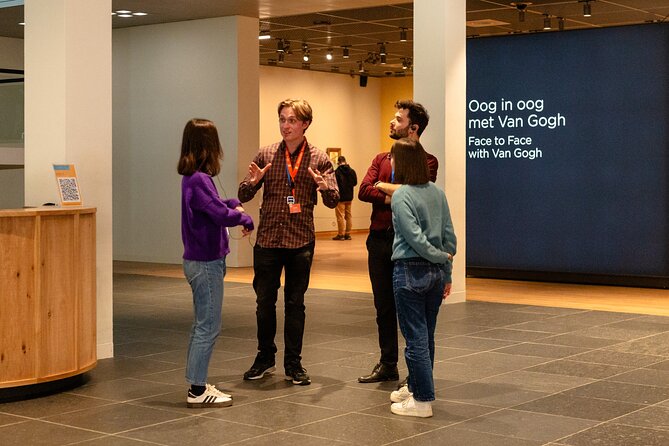
Level 3 is where the tour becomes more emotionally intense. This stop covers Saint-Rémy-de-Provence, with about 20 minutes and admission included. Works listed include Almond Blossoms, Wheatfield with a Reaper, Iris, and Pieta (After Delacroix).
This is one of the best segments for people who want to understand why audiences remember the late works so strongly. Even if you don’t know the full background, the titles alone point to shifts in subject: fields, seasons, specific flowering imagery, and religious reference in Pieta (After Delacroix). A good guide can help you see how these pieces talk to each other without you getting lost in facts.
In the reviews, the guides were repeatedly praised for being patient and for keeping the pace appropriate while still allowing questions. That matters most in a later-works section, because it’s where you’ll want time to ask what a title choice might suggest or how to think about what you’re viewing.
Stop 6: The Auvers Room and the closing set of works
Finally, you move to the Level 3 Auvers Room for about 15 minutes with admission included. This last stretch focuses on Tree Roots and Wheatfield with Crows.
Ending here is a smart way to land. You finish with works that feel like a strong final note rather than a random pick at the end of a route. Since the last stop is shorter, it also keeps the energy up, and it helps you avoid fatigue. If you’re sightseeing all day, this “finish strong” approach can be the difference between appreciating the last room and feeling done before it’s over.
Private guide vs museum audio: what you gain in real time
A big theme in the reviews is that the guided format makes a noticeable difference compared with listening to audio alone. One review specifically highlighted the guide vs just using an audio listening device from the museum, saying it improved understanding and appreciation.
Here’s what that means for you: audio can be great for self-paced listening, but a private guide can react to what you’re looking at and how you respond. If you pause on a work, you can ask a question and get an answer tied to that exact moment. If you look unsure, the guide can redirect you quickly so you don’t lose the thread.
The reviews also mention guides who made the tour feel interactive and fun. Sylvia was described as sweet, knowledgeable, and interactive, with visible excitement about welcoming visitors. Giulia was praised for keeping things relaxed and easy to follow. Kiran was called informative and patient, and the small-group pace was balanced with time for questions. That combination is what you want from a private tour: structure plus human flexibility.
Price and value: what $263.20 per person buys you
At $263.20 per person for about two hours, this is not a budget option. But it’s also not just paying for a walk-through. You’re paying for a guide, a curated route through timed sections, and admission tickets included.
So the best way to think about value is this: the tour buys you clarity and efficiency. If you’re the kind of visitor who hates getting lost in museum decision-making, you’ll likely feel the savings of not spending time figuring out what to see next. If you prefer questions and conversation, you’re paying for that real-time explanation—something audio can’t do as well.
It can also be a strong buy if you’re traveling as two people or a small group, since the tour notes group discounts (though the exact discount isn’t spelled out here). In other words, if you’re sharing the cost, the per-person value tends to feel better than when you book solo.
Just be honest with your expectations. This is a guided highlight route, not unlimited gallery time. If you want to sit alone with one painting for a long stretch, you may find the timed stops feel like a nudge rather than a pause.
After the tour: the museum stay rule that matters
Your visit ends at Museumplein 6. The tour notes an important museum rule: after the visit, you generally aren’t allowed to stay in the museum unless you’re not carrying thick (winter) jackets, suitcases, or large bags and liquids. If you come lightly, you may be able to stay until closing time.
That’s a practical heads-up for planning your day. If you’re planning to tack on extra museum time, pack with that in mind. If you’re traveling with lots of stuff, expect to step out when the tour finishes.
Also, since food and beverages aren’t included, you’ll want to plan a snack stop elsewhere in the area if you’re hungry after two hours of focused looking.
Who should book this Van Gogh Museum private tour
You’ll probably love this if you:
- Want a structured Van Gogh timeline across multiple periods, without spending your whole day inside
- Appreciate questions and conversation more than reading labels
- Like guided pacing with a whisper system so you don’t strain to hear
You might want to skip or reconsider if you:
- Need a long, quiet visit where you can linger for long stretches in one room
- Are traveling with bulky items and you don’t want to deal with museum staying restrictions afterward
- Are under 18, since it’s listed as adult-only (18+)
If you’re a first-time Van Gogh Museum visitor, this tour is also a solid foundation. It gives you the big works and the period structure so that any later self-guided revisit feels more meaningful.
FAQ
How long is the Van Gogh Museum private tour?
It’s approximately 2 hours.
What’s included in the price?
The tour includes a 2-hour guided visit of the permanent collection, a private guide in the chosen language, a whisper system, and admission tickets at each stop.
Is the tour private?
Yes. Only your group participates.
Where do you meet, and where does the tour end?
You start at Cobra Café, Hobbemastraat 18, 1071 ZB Amsterdam, and you end at Museumplein 6, 1071 DJ Amsterdam.
Do I need my own headphones?
No. A whisper system is included.
Is this tour only for adults?
Yes. It is only available for adults aged 18 or older.
Can I cancel for free?
Yes. Free cancellation is available if you cancel up to 24 hours in advance for a full refund.
Should you book this Van Gogh Museum Private Tour?
If you want Van Gogh in a clean, timed storyline—with a guide you can actually hear—this is a strong choice. The biggest selling points are admission included, the whisper system, and guides who keep the experience interactive without losing the plot (the praised approaches from Sylvia, Giulia, and Kiran line up with that goal).
Book it if your time is limited and you want value through clarity. Skip it if you mainly want to drift slowly and sit with a single painting for a long while, because the format is designed for a fast, focused museum win.