REVIEW · AMSTERDAM
Amsterdam Anne Frank and Jewish History E Bike Tour
Book on Viator →Operated by Yellow Bike Tours & Rental · Bookable on Viator
A bike tour with real meaning beats random sights. This Amsterdam Anne Frank and Jewish history e-bike ride links Jewish Quarter streets with WWII places, guided by people like Lucas and Willem who keep the story clear and human.
I love the short stops and steady pace, which helps you cover a lot without feeling rushed. I also like how the route pairs big moments, like the National Holocaust Names Monument, with place-based details such as Bookstore Jimmink.
One thing to plan for: Anne Frank House and the Portuguese Synagogue entrance fees are not included, so you’ll want to budget time and tickets separately if you want to go inside.
In This Review
- Key highlights you’ll feel right away
- How a 3-hour e-bike ride makes Amsterdam’s Jewish story connect
- Nieuwezijds Kolk: starting at an old Amsterdam meeting point
- Nieuwmarkt: the Jewish Quarter begins, and WWII enters the conversation
- Portuguese Synagogue (outside): a major landmark you can see fast
- Waterlooplein market area: everyday life and a city changed by war
- Dokwerker: the February Strike and resistance in the streets
- National Holocaust Names Monument: the long pause that matters
- Leendert Pop and Berlagebrug: from personal story to wartime infrastructure
- Bookstore Jimmink and Merwedeplein: Anne Frank’s diary connects the route
- 6th Montessorischool Anne Frank: education before hiding
- Anne Frank House: what to do since the entrance isn’t included
- Price and value: what $63.22 buys you (and what it doesn’t)
- Who should book this, and who should think twice
- Final call: should you book this Anne Frank e-bike tour?
- FAQ
- What is the duration of the Amsterdam Anne Frank and Jewish History E Bike Tour?
- What time does the tour start?
- Where is the meeting point?
- Is the e-bike included?
- Is the Anne Frank House entrance fee included?
- Is Portuguese Synagogue admission included?
- What language is the tour offered in?
- What price should I expect per person?
- Is the tour suitable for everyone in terms of height?
- How many travelers can be in the group?
Key highlights you’ll feel right away
- E-bike makes the route easy: less strain, more focus on the story and street-level details
- Jewish Quarter landmarks in 3 hours: a tight loop that still covers major WWII-linked sites
- National Holocaust Names Monument: a long pause for remembering and reflecting
- Anne Frank House context first: you learn the background before you (optionally) enter
- Guides who handle questions well: people like Lucas and Willem are praised for being engaging and responsive
How a 3-hour e-bike ride makes Amsterdam’s Jewish story connect
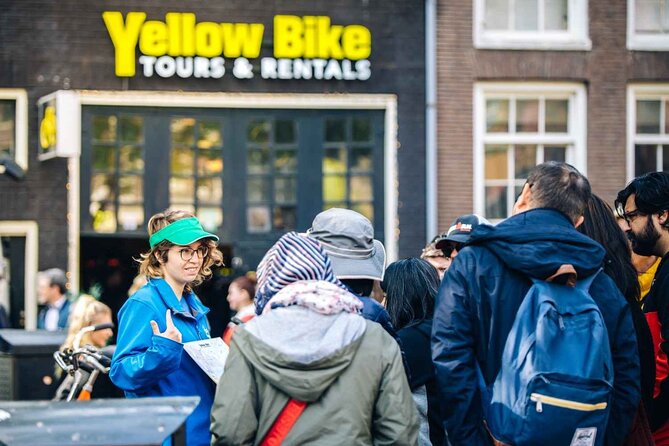
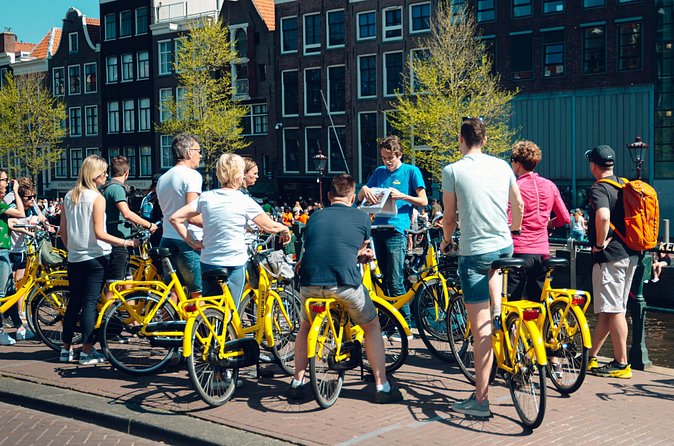
This tour is built for people who want meaning without turning the day into a history marathon. In about three hours, you’ll move through the heart of Amsterdam’s Jewish Quarter area with an e-bike, hitting memorials, neighborhoods, and specific Anne Frank–related locations.
The best part is the way the route feels like a timeline you can actually ride through. You start at central gathering spots, move into Jewish Quarter streets, then reach memorial sites where the mood shifts to remembrance. And because most stops are short (often 10–20 minutes), you get structure without feeling trapped.
Group size is capped high (up to 99), but the tour still works because you stop frequently and the guide leads the talking at each stop. You’re not just passed along on a bike; you get brief guided context at each location.
Finally, the tour runs in English, which matters here because so much of the power is in how the guide explains what you’re seeing.
You can also read our reviews of more tours and experiences in Amsterdam.
Nieuwezijds Kolk: starting at an old Amsterdam meeting point
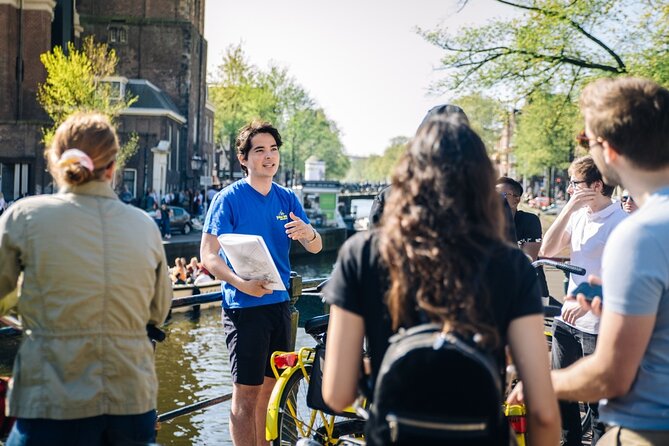
You meet at Nieuwezijds Kolk, address 29, 1012 PV. It’s a central square-like spot, and the tour frames it as one of Amsterdam’s oldest locations, which helps you understand how old city streets shaped everyday life long before WWII.
At this first stop, the guide sets expectations: you’re not just doing a sightseeing loop. You’re getting the story of Anne Frank and Amsterdam’s Jewish history as a lived, local experience, with names, places, and reasons things mattered. If you like history that feels grounded in geography, this opening works.
This is also a practical benefit. When you begin in a central place and the guide handles the “what to notice” part early, the rest of the ride becomes easier to follow. You’ll know what you’re looking for instead of trying to translate the city on the fly.
Nieuwmarkt: the Jewish Quarter begins, and WWII enters the conversation
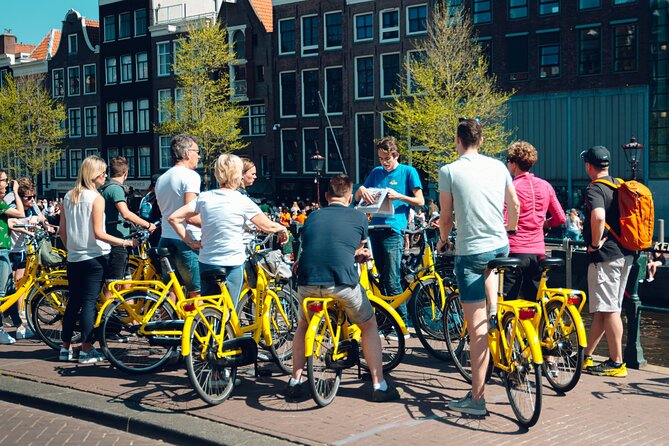
After a short bike ride, you reach Nieuwmarkt, described as the start of the Jewish Quarter. This stop is where the tour starts feeling more like a neighborhood story than a list of monuments.
The guide connects Jewish life in Amsterdam with Second World War history. That matters, because the rest of the tour keeps returning to the same theme: how ordinary streets became part of an extraordinary tragedy. If your brain wants connections, you’ll get them here.
Nieuwmarkt also helps you pace the day. You’ve already adjusted to biking, and now you’re ready for a deeper chunk of explanation. The stop is about 20 minutes, long enough to take notes or just let the timeline settle.
Portuguese Synagogue (outside): a major landmark you can see fast
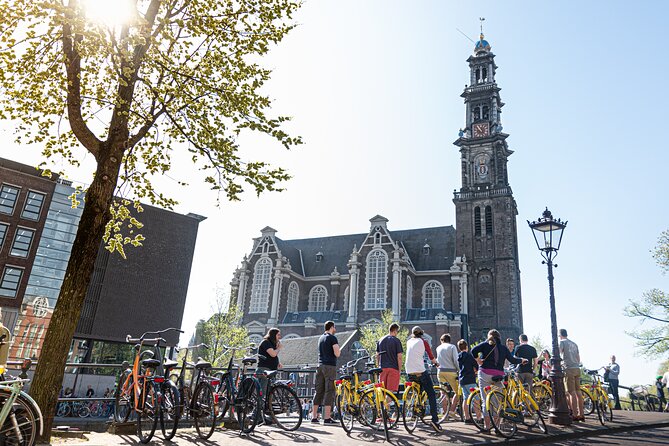
Next comes the Portuguese Synagogue of Amsterdam. You admire the biggest synagogue in the city from the outside, with no entrance included on this tour.
That approach is good if you want to keep the ride moving. You still get the sense of scale and importance, without paying extra right away. It’s also a good “window view” for people who prefer seeing architecture first, then deciding later whether they want the inside visit.
If you do want to go inside, remember the ticket is not included. So treat this stop as orientation. You’ll likely feel more prepared for what you’re looking at because the guide will have set the historical context before you arrive.
Waterlooplein market area: everyday life and a city changed by war
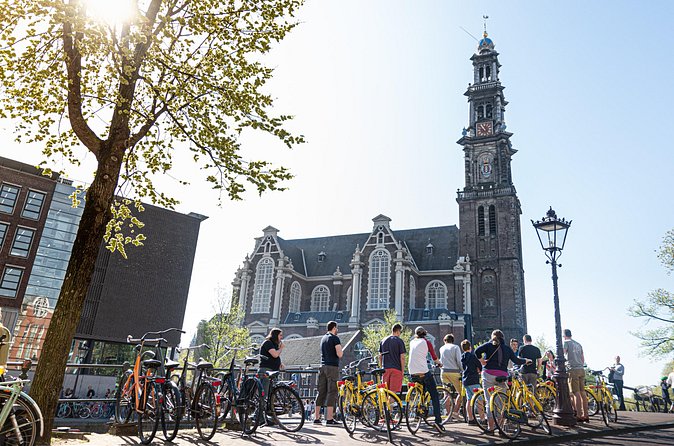
A short walk around the Jewish cultural district brings you near the Waterlooplein market area. This part is more about how the neighborhood functioned, not only about tragedy.
Seeing an active market zone during a tour about WWII might sound strange at first, but it actually helps you understand the contrast. Jewish Amsterdam wasn’t only a chapter in history books. It was daily life with shops, streets, and community spaces.
This is also where the tour stays human-sized. Instead of long lectures, you get guided attention as you move through the area. The stop is about 10 minutes, which keeps it from becoming heavy without preparation.

Dokwerker: the February Strike and resistance in the streets
From there you reach Dokwerker, where the guide explains the historic and unique February Strike during WWII. This is a standout kind of stop because it adds something beyond the usual timeline of occupation and persecution.
The February Strike isn’t just a date; it’s part of how people pushed back and organized under impossible pressure. Hearing it here, in a real Amsterdam setting, makes the story feel less abstract than a classroom timeline.
It’s only about 10 minutes, but the impact depends on how the guide frames it. If you like history with cause-and-effect, this stop is a good bridge between neighborhood life and broader wartime events.
National Holocaust Names Monument: the long pause that matters
Then comes the National Holocaust Names Monument. This is the tour’s most emotionally significant stop, with about 30 minutes built in for walking around, hearing about it, and experiencing the memorial.
Here, the tour focuses on commemoration: the names of Jewish people, Sinti and Roma murdered in the Second World War. That detail matters. It prevents the story from narrowing into a single family or a single narrative, and it reinforces that the system of persecution was wider than most people initially assume.
This is the stop where you should slow your own thinking down. Don’t rush for photos. If you take in the names and the idea behind them, the earlier stops start clicking into place. The whole ride feels less like “a tour” and more like a guided act of remembering.
Leendert Pop and Berlagebrug: from personal story to wartime infrastructure
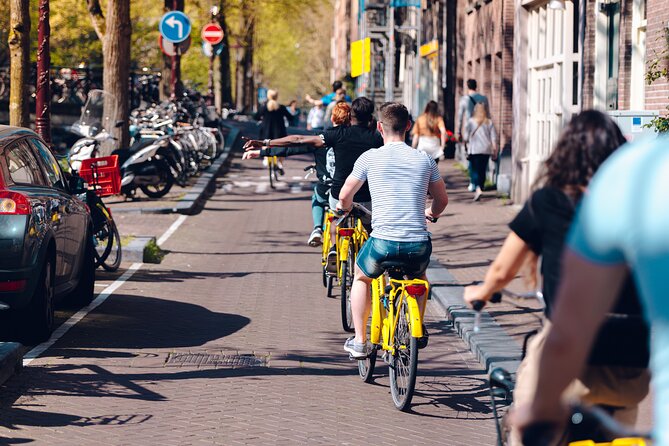
After the monument, you move to Leendert Pop, described as the story of an elderly Jewish Amsterdammer during WWII. This stop adds personal scale to what you’ve just seen. Instead of only focusing on big events, the guide brings you toward individual experience.
It’s about 10 minutes, but short stops can work well when the guide clearly explains why the story is relevant to the streets around you.
Next is Berlagebrug, where you stop and discover the bridge’s history in WWII. A bridge sounds like a small detail until you remember what infrastructure means during wartime: movement, access, and how cities function under strain.
Together, these two stops balance the emotional weight: one is personal memory, the other is the physical city that carried the consequences of the era.
Bookstore Jimmink and Merwedeplein: Anne Frank’s diary connects the route
Now the tour starts pulling even more tightly toward Anne Frank herself.
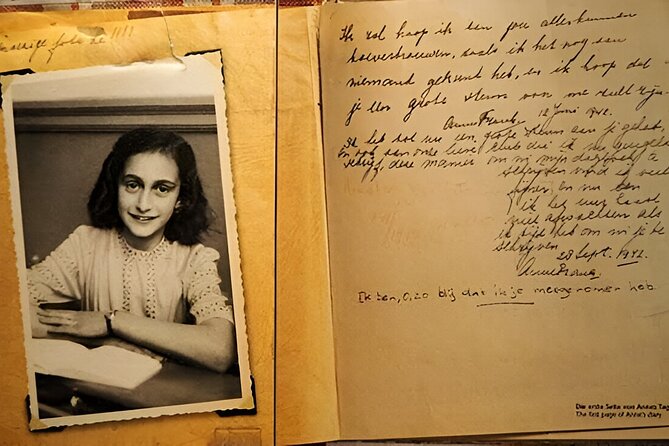
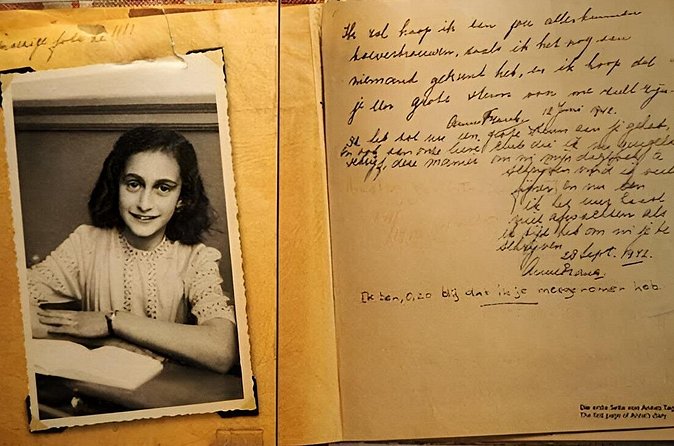
At Bookstore Jimmink, you come by the bookstore where Anne Frank bought her famous diary. That detail turns the story from “history somewhere else” into something tied to a place you can point at on a street map.
Then you see the Sculpture of Anne Frank on the square where she grew up as a Jewish girl before and during part of the war. The point here isn’t only aesthetics. It’s how Amsterdam marks memory in public space, right where daily life continues.
After that, you walk around the Merwedeplein area and view the house where Anne Frank grew up before going into hiding. These pauses are about location and meaning. You’re not asked to imagine; you’re guided to connect the story to exact settings.
6th Montessorischool Anne Frank: education before hiding
Next, you come by the 6ᵗʰ Montessorischool Anne Frank, the school where Anne Frank went. This stop is short, about 10 minutes, but it adds a crucial layer: childhood routines.
For a lot of people, the Anne Frank story is mostly about the hiding period and the diary. This school stop helps you remember that life didn’t begin in crisis. It began in normal rhythms—classes, learning, growing up—until history ripped those routines apart.
If you’re traveling with teens, this kind of stop usually lands well. It gives the story a human beginning again, not only a tragic ending.
Anne Frank House: what to do since the entrance isn’t included
The ride ends with Anne Frank House as the final stop, with about 20 minutes spent learning about the family’s history in hiding by the original house.
Important: the tour notes that entrance fees are not included here. That means you have two options.
1) If you want to go inside, you’ll need to arrange your own ticket separately.
2) If you’re satisfied with the guided context outside, you can still leave with a strong grasp of why the place matters.
Either way, I suggest you treat this final stop as a “decision moment.” After hearing the surrounding context and seeing the locations around it, you’ll be better positioned to choose whether the inside visit is worth the extra time for your day.
Also, be realistic about timing. The tour itself is about 3 hours, and if you add an inside visit, you’ll likely extend your afternoon.
Price and value: what $63.22 buys you (and what it doesn’t)
At $63.22 per person, this tour sits in a mid-range category for Amsterdam guided experiences. The value is strongest if you want both context and mobility.
Here’s the math that makes sense for most people:
- The e-bike is included, which is a real cost saver compared to renting on your own.
- Many stops do not require paid admission, because the tour is built around outdoor views and short walks.
- The guide work is the core value: they connect places to story, and they keep the route readable.
What’s not included is equally important:
- Anne Frank House entrance fees
- Portuguese Synagogue entrance fees
- Food and drinks
So if you plan to do both indoor sites, the total cost will rise. If you only want the outside orientation and the guided route, this price can feel like a very efficient way to cover a lot of ground in a short time.
In other words: this is a strong buy for the “story + motion” part. It’s a less complete package if your main goal is only indoor tickets.
Who should book this, and who should think twice
This tour is a good fit if:
- You want Anne Frank and Amsterdam’s Jewish history in a single, manageable afternoon
- You like guided explanations at each stop rather than reading signs alone
- You prefer seeing neighborhoods with fewer walking demands thanks to the e-bike
It’s also a solid choice for families with older kids. The route is structured, and the stops are short enough that most teens can handle it without melting down. Guides like Lucas and Willem are praised for being engaging and supportive with questions, which helps younger travelers.
Think twice if:
- You want entrances to be fully included. Two of the biggest indoor sites are not part of the paid package.
- You’re short or have bike sizing needs. The tour notes it’s not accessible to people under 152 cm / 5 ft, which matters for comfort and safe control of the e-bike.
- You don’t want to cycle at all. This is an e-bike tour, not a walking tour.
Final call: should you book this Anne Frank e-bike tour?
I’d book it if you want a route that links places together with enough guidance to make Amsterdam’s Jewish history feel real, not abstract. The mix of outdoor landmarks, memorial sites, and Anne Frank–related locations is efficient and thoughtful, and the e-bike keeps the experience from becoming physically draining.
Book it with two expectations in mind: you’ll remember the quiet impact of the Holocaust Names Monument, and you’ll likely want to plan separately if you’re aiming for Anne Frank House or the Portuguese Synagogue inside visit. If that fits your day, this tour is a very strong use of three hours in Amsterdam.
FAQ
What is the duration of the Amsterdam Anne Frank and Jewish History E Bike Tour?
The tour lasts about 3 hours.
What time does the tour start?
It starts at 2:00 pm.
Where is the meeting point?
The meeting point is Nieuwezijds Kolk 29, 1012 PV Amsterdam, Netherlands.
Is the e-bike included?
Yes. Use of the e-bike is included.
Is the Anne Frank House entrance fee included?
No. Entrance fees to the Anne Frank House are not included.
Is Portuguese Synagogue admission included?
No. Entrance fees to the Portuguese Synagogue are not included.
What language is the tour offered in?
The tour is offered in English.
What price should I expect per person?
The price listed is $63.22 per person.
Is the tour suitable for everyone in terms of height?
The tour is not accessible to people under 152 cm / 5 ft.
How many travelers can be in the group?
The tour has a maximum of 99 travelers.