REVIEW · AMSTERDAM
Amsterdam Central Walking Tour
Book on GetYourGuide →Operated by Yellow Bike Tours & Rental · Bookable on GetYourGuide
Amsterdam’s streets have a way of teaching you fast.
This small-group walk packs big sights into a smart pace, and I especially liked the way the local guide turns everyday corners into real stories (I’ve heard names like Sid, Willem, and Willen come up often). The only real catch: it runs rain or shine, so you need to dress for cold cobblestones and wet streets.
You start at Nieuwezijds Kolk 29, meet the Yellow Bike team at their counter, and get free luggage storage so you can walk lighter. There’s also a café stop for a proper Dutch break, but drinks aren’t included, so bring a few euros for your warm-up.
Expect the classic Amsterdam hits and a few sharper angles, from the tilted houses to Westertoren, plus the areas around Anne Frank and Jordaan. One more consideration: the activity is marked as wheelchair accessible, but it also says it’s not suitable for people with mobility impairments—so you’ll want to confirm with the operator before you book.
In This Review
- Key things worth knowing before you go
- Starting at Nieuwezijds Kolk 29: how the walk gets you oriented
- Why the guide experience changes everything (Sid, Willem, Willen)
- Tilted houses, wooden poles, and Amsterdam’s engineering brain
- Negen Straatjes and Jordaan edges: from makers to modern strolling
- Westerlijke Wallen: Red Light District etiquette that you actually need
- Spui and Spuistraat: Provo energy and squatting history
- Anne Frank House area: a powerful walk with the right tone
- Koepelkerk, Westertoren, and the church-tower skyline
- Brouwersgracht, grain, herring, and why Amsterdam earned nickname energy
- Bridges, defense walls, and the secret spaces under stone
- Bartolotti House and the Gay Monument: elegance and change in one route
- Brown Cafe Pitstop: how to plan the warm-up without going over budget
- Finishing at Dam Square: turning your 2 hours into a plan
- Price and value: why $26 can make sense for what you get
- Who this Amsterdam Central walk suits best
- Should you book Yellow Bike’s Amsterdam Central walking tour?
- FAQ
- How long is the Amsterdam Central Walking Tour?
- Where is the meeting point?
- Is the group size small?
- What is included in the ticket price?
- Are drinks at the café included?
- What languages is the guide available in?
- Will the tour run in bad weather, and what should I bring?
- Is it wheelchair accessible?
Key things worth knowing before you go
- Max 12 people: the walk stays interactive and not like a school field trip.
- Guides with strong English: multiple guide names show up in bookings, with praise for how well they explain things.
- A winter-focused break: you stop at a traditional Dutch café, just note drinks aren’t included.
- Red Light District rules: you’ll get specific guidance to keep it respectful (no photos, no lingering).
- Spui brings the politics: you learn about Provo-style civil resistance and the student-era energy around it.
- You’ll see icons in a tight route: Anne Frank-area streets, Negen Straatjes, Westertoren, and Dam Square are all part of the same 2-hour loop.
Starting at Nieuwezijds Kolk 29: how the walk gets you oriented
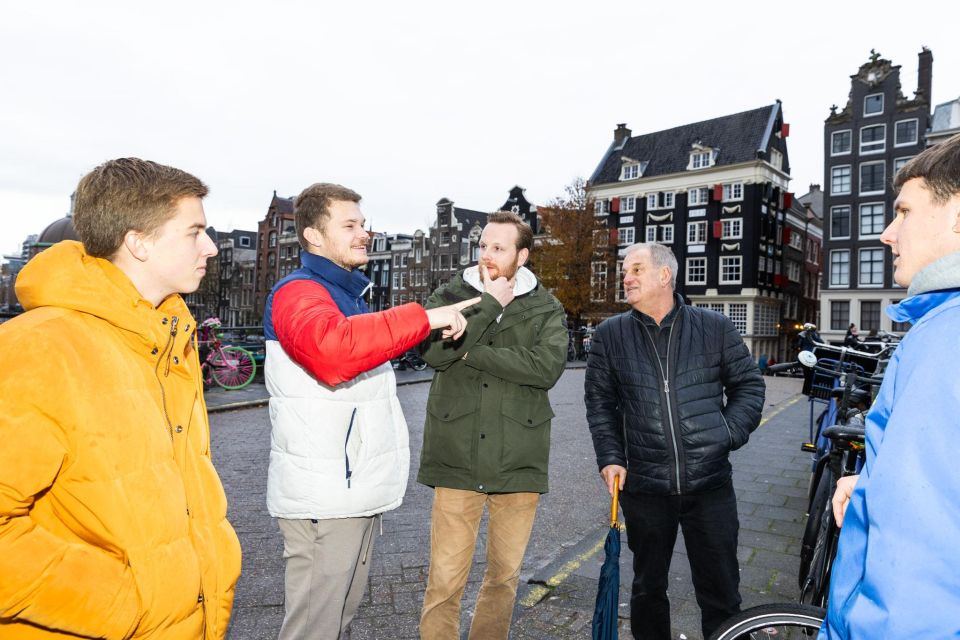
I like a good first-day walk because it saves you time later. Here, you begin at Nieuwezijds Kolk 29 and keep moving through central Amsterdam on foot, with the guide setting the tone from the start. If your arrival day includes jet lag and a heavy bag, the included free luggage storage is an easy win.
The route is built for getting your bearings fast. You’ll cross canals, notice how streets curve and narrow, and start understanding why certain neighborhoods feel so different from block to block. The whole point is that Amsterdam is not one uniform “city look.” It’s a patchwork of older layers.
The pace is also friendly for a 2-hour format. You’re not sprinting between stops, but you’re also not stuck listening for long stretches without moving. That matters more than you’d think in winter, when your hands and feet already want to quit.
You can also read our reviews of more tours and experiences in Amsterdam.
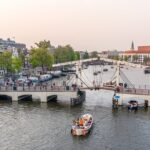
Why the guide experience changes everything (Sid, Willem, Willen)
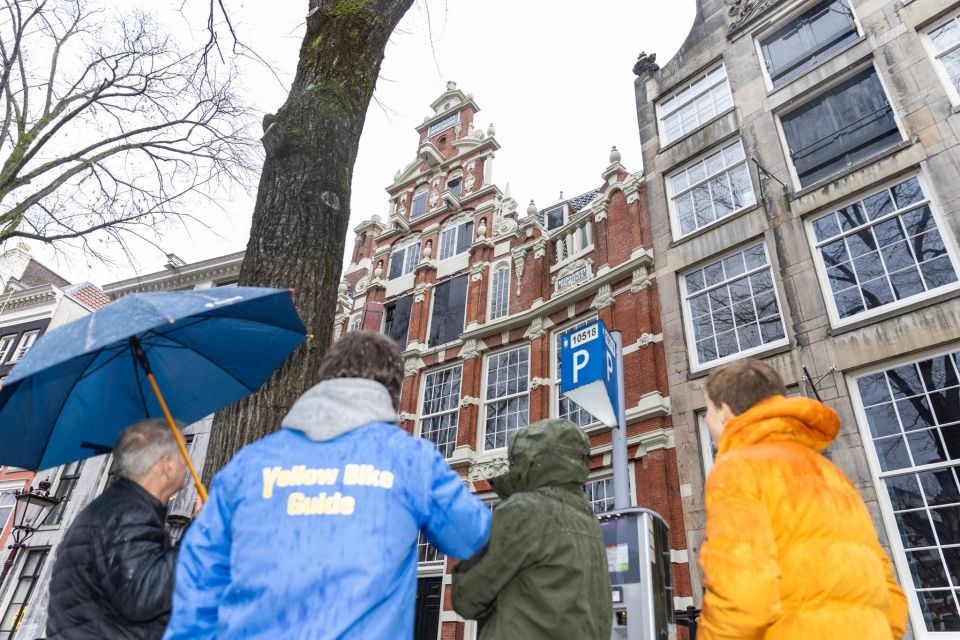
This tour’s biggest strength is the guide. Several bookings highlight guides named Sid, Willem, and Willen, and the common thread is how well they connect past and present. You can tell when a guide is repeating a script versus reading the street as they go.
What you’ll get is not only “what this building is,” but why these places mattered to real people. In conversation terms, the guide helps you connect culture, politics, and religion to the way Amsterdam looks today. That approach makes the city feel less like a photo album and more like a living place with arguments, reforms, and all.
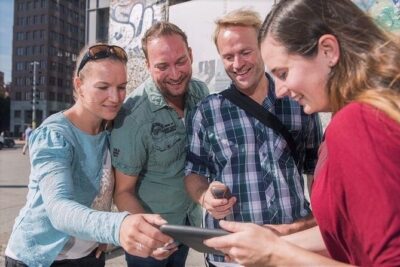
It also helps that you’ll be walking with a small group (up to 12, and on quieter days it can end up even smaller). When you have fewer people, it’s easier to ask questions and hear the answers clearly, especially in English.
Tilted houses, wooden poles, and Amsterdam’s engineering brain
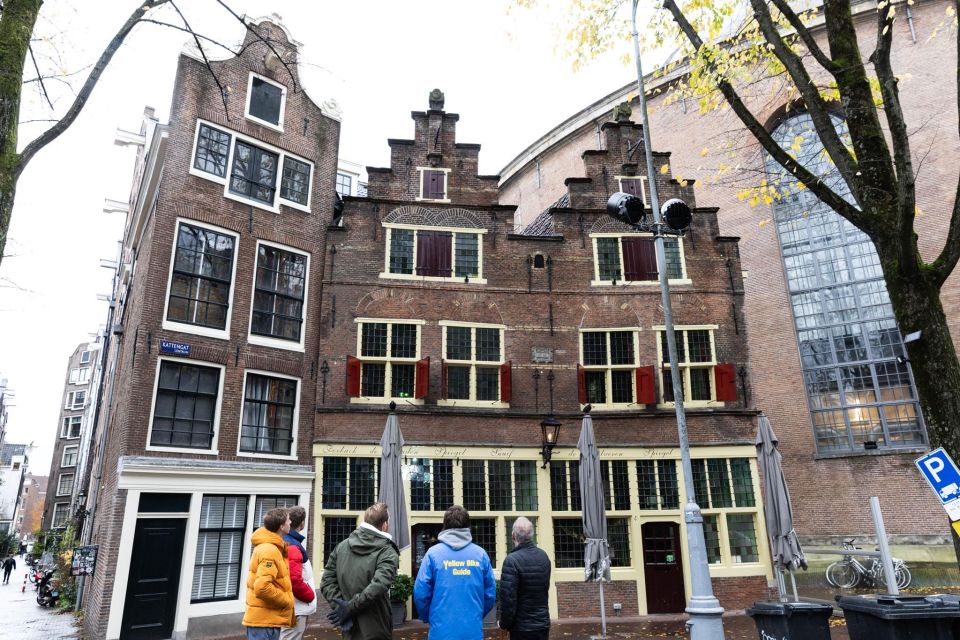
One of the first things you’ll notice is Amsterdam’s signature curve and tilt. You’ll admire the crooked or tilted houses and hear the practical reason behind it: Amsterdam rests on wooden poles, and that old foundation story affects how buildings sit over time. It’s a reminder that the city’s beauty is tied to problem-solving, not just aesthetics.
You also get canal-area context that helps you understand why Amsterdam looks the way it does beyond postcards. For example, you’ll explore how the city deals with seawater intrusion through historic canal infrastructure at Nieuwe Haarlemmersluis. Even if you only remember one thing, it’ll be this: water management is not optional in the Netherlands.
If you’ve ever wondered why Amsterdam feels both delicate and durable, these stops answer it. They show how the city keeps living in a place where the ground and water have their own agenda.
Negen Straatjes and Jordaan edges: from makers to modern strolling
You’ll spend time in the Negen Straatjes, a set of picturesque streets that used to be tied to artisans and work life, and now pull in shoppers, cafés, and boutiques. I like this part because it’s a reality check: Amsterdam still has small streets that people actually use for daily life, not only for sightseeing.
You’ll also touch the Jordaan area, known historically as a working-class enclave. The value here is perspective. It’s easy to view Amsterdam as all museums and canal cruises. But once you hear how neighborhoods developed around livelihoods, the trendy side starts to feel like part of a longer human story rather than a brand-new scene.
This stretch is also where you can adjust your pace. If you’re the kind of person who wants to look at doorways, shop windows, and street corners, this is your time. If you’re cold, it’s also where you can tuck back into the group and keep moving.
Westerlijke Wallen: Red Light District etiquette that you actually need
You’ll learn about the culture of the Westerlijke Wallen, the Red Light District. The tour isn’t trying to shock you. It focuses on respect and understanding—and you’re told there are rules, including that no photos are taken and no lingering is allowed.
That’s practical info, and it matters. In this area, the street has a different rhythm and a different expectation for behavior than the rest of central Amsterdam. Following the guidance helps keep things comfortable for everyone.
Also, you’ll hear the framing around how this district functions socially, not just what it looks like. If your trip includes the Red Light District, a structured explanation can make it feel less confusing and more grounded.

Spui and Spuistraat: Provo energy and squatting history
Spui is where the tour shifts from postcard Amsterdam into Amsterdam with opinions. You’ll learn about the Provo statue and the role it connects to student protests and cultural movements. The idea is civil resistance—how people tried to push social change through street-level action rather than polite distance.
From there, you’ll hear about squatting history along Spuistraat. This isn’t just a trivia stop. It helps explain why Amsterdam has such strong debates about space, housing, youth culture, and who gets to shape the city.
I find this part useful because it changes how you interpret what you’re seeing. A public square or a street isn’t just a location; it’s a stage where people argued about the future.
Anne Frank House area: a powerful walk with the right tone
No matter how many photos you’ve seen, the Anne Frank area can hit you differently when you’re walking there. You’ll reflect on the World War II history connected to Anne Frank and her diary, and the guided tone keeps it respectful rather than sensational.
If you’re visiting Amsterdam for the first time, this stop works as an anchor. It gives weight to the other neighborhoods you’ll see that day. You start to recognize how Amsterdam’s modern identity is shaped by what happened here—and by how the city remembers.
It’s also a good moment for slowing down. Even if you don’t go inside any museum during this walk, you’ll come away with a clearer sense of what the area represents.
Koepelkerk, Westertoren, and the church-tower skyline
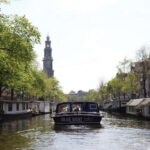
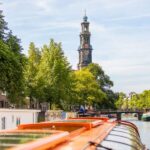
Amsterdam’s skyline tells a story too. You’ll see and learn about Westertoren, the city’s tallest church tower, and hear its historical significance. Even without climbing, the tower presence gives the city scale in a way flat streets can’t.
You’ll also visit Koepelkerk, connected to an intriguing story about a copper-clad Lutheran church and the city’s resilience after a massive fire. I like stops like this because they remind you that survival is part of the architecture. Places get rebuilt, re-used, and reinterpreted.
The tour helps you understand that Amsterdam’s landmark buildings weren’t always famous. Many became important because they endured disruptions and still stood when life restarted.
Brouwersgracht, grain, herring, and why Amsterdam earned nickname energy
Some tours stop at “this is old.” This one keeps moving and gives you economic context. Along Brouwersgracht, you’ll hear how grain was supplied to breweries, and why Amsterdam gained the nickname Booze Capital. It’s a fun line, but the real value is connecting industry to geography.
You’ll also learn about herring trade history, another thread tied to everyday food and trade routes. When you hear how a city ate and sold, you start to see the past in the places where people worked—not only in what survived.
Even if you’re not a beer-history person, this section adds logic to the city. Amsterdam didn’t grow by accident. It grew because trade, shipping, and production made it pay the bills.
Bridges, defense walls, and the secret spaces under stone
You’ll pass by Torensluis, described as the oldest bridge in Amsterdam and once part of the city’s defensive wall. That’s a great kind of stop: it takes something simple you can see from the street and links it to defense and planning.
Then there’s Jan Roodenpoortstoren, where you’ll discover secrets beneath the bridge, including historic prison cells. This is one of those “how did they even do that here?” moments. The tour helps you imagine older Amsterdam below street level, where life didn’t always look like it does now.
I like that this walk doesn’t only celebrate beauty. It also shows how the city controlled people and protected itself. That balance makes the route feel more honest.
Bartolotti House and the Gay Monument: elegance and change in one route
Bartolotti House gets your attention for its elegance as one of Amsterdam’s finest mansions, plus the history tied to it. It’s a contrast stop that keeps the walk from becoming a nonstop parade of similar-looking buildings.
You’ll also learn about a Gay Monument, connected to the Dutch LGBTQ+ community’s struggles and victories, marking the site of the world’s first gay marriage. That inclusion matters because it broadens the story of Amsterdam beyond what’s most often highlighted.
These stops give you a sense of how personal rights and social identity moved through the city, not just across countries.
Brown Cafe Pitstop: how to plan the warm-up without going over budget
You’ll take a break at a traditional Dutch café, and this is where winter walking becomes manageable. The stop is called Brown Cafe Pitstop, and it’s a smart rhythm break in the day, especially when rain or wind starts doing its own thing.
The one budgeting note: café drinks are not included. So it’s wise to set aside a bit for a hot drink. If you tend to run cold, I’d prioritize warmth here instead of trying to power through and pay for it with tired legs later.
Finishing at Dam Square: turning your 2 hours into a plan
The tour ends at Dam Square, and from there you can keep walking or switch to other plans. I like finishing at a central hub because it makes the rest of your day easier to design.
By the time you reach Dam Square, you should feel like you understand why Amsterdam shifts so quickly from neighborhood to neighborhood. The route pulls together canals, commerce, dissent, and memory—so you’re not just seeing landmarks, you’re seeing relationships.
Also, don’t ignore your legs. Cobblestones plus winter weather can be tougher than expected. Use the finish point to reset, warm up, and decide if you want more sightseeing nearby.
Price and value: why $26 can make sense for what you get
At about $26 per person for a 2-hour walking tour, you’re paying for three things: a local guide, a structured route, and that inclusion of free luggage storage. In a city where you can spend all day getting oriented the hard way, paying for someone to guide you is often cheaper than wandering aimlessly in the cold.
The small group size (max 12) also supports the value. It’s not only about comfort—it’s about listening time. When the group is small, explanations land better, and you’re more likely to get your questions answered.
One tradeoff: drinks at the café aren’t included, so factor that in. But compared to many guided experiences, this one keeps costs fairly simple.
Who this Amsterdam Central walk suits best
I’d point you to this tour if you want:
- a first-time Amsterdam orientation that doesn’t ignore the complicated parts
- a guide-led experience focused on culture, politics, and city evolution
- an efficient route that hits both iconic landmarks and street-level storytelling
You might choose something else if:
- you need more mobility support than a rain-or-shine city-walking route can provide
- you dislike learning through walking (some people prefer fewer stops and longer time inside)
- you don’t want any Red Light District context at all, even with the stated etiquette rules
One more note to be careful about: the provided details include both wheelchair accessibility and a statement that it’s not suitable for people with mobility impairments. If you’re in that category, contact Yellow Bike Tours & Rental directly and ask what the route looks like in practice.
Should you book Yellow Bike’s Amsterdam Central walking tour?
Book it if you like your Amsterdam with a guide who can connect buildings to ideas, and if you want a small-group walk that mixes big landmarks with street-level context. The combination of tilted-house engineering, Spui’s Provo story, Red Light District etiquette, and an Anne Frank-area reflection is a strong mix for a short, 2-hour day.
Skip or re-check your fit if winter weather and cold walking won’t work for you, or if the mobility info doesn’t match your needs. If that’s you, ask questions before paying—because with winter tours, comfort is the deal.
If you’re ready to see Amsterdam as more than scenery, this is a good bet.
FAQ
How long is the Amsterdam Central Walking Tour?
It lasts 2 hours.
Where is the meeting point?
You meet at Nieuwezijds Kolk 29. Look for Yellow Bike and check in at the counter.
Is the group size small?
Yes. The tour caps participants at a maximum of 12, and it’s often smaller.
What is included in the ticket price?
You get a friendly local guide and free luggage storage.
Are drinks at the café included?
No. The café stop is included, but beverages are not included.
What languages is the guide available in?
The live guide is available in Dutch and English.
Will the tour run in bad weather, and what should I bring?
It runs rain or shine. Bring comfortable shoes, warm clothing, and winter items like a hat, gloves, and a scarf.
Is it wheelchair accessible?
The activity info lists wheelchair accessibility, but it also says it is not suitable for people with mobility impairments. You should confirm details with the operator before booking.