REVIEW · ROTTERDAM
Rotterdam Walk: Hilights, Gems, Architecture & WWII | 2 or 3hrs
Book on Viator →Operated by Rottourdam · Bookable on Viator
Rotterdam is easier to love after walking it. This small-group highlights-and-WWII route pairs big architecture with a clear story of how the city was rebuilt, all at a comfortable 2–3 hour pace. I especially love the blend of modern Rotterdam icons with the human-scale details, and I like ending inside the Markthal with practical food and sightseeing suggestions. One drawback to plan for: it’s a lot of outdoor walking across multiple neighborhoods, so you’ll want comfy shoes and some weather flexibility.
The walk is run in English and capped at 15 people, so you can actually ask questions and keep up with the timeline. If you want a quick first pass at Rotterdam that also explains why the city looks the way it does now, this is a smart move. If you’re hoping for long museum time at every stop, you’ll still enjoy the sites, but you’ll likely want to come back for deeper visits afterward.
In This Review
- Key points at a glance
- Rotterdam rebuilt: what makes this walk feel different
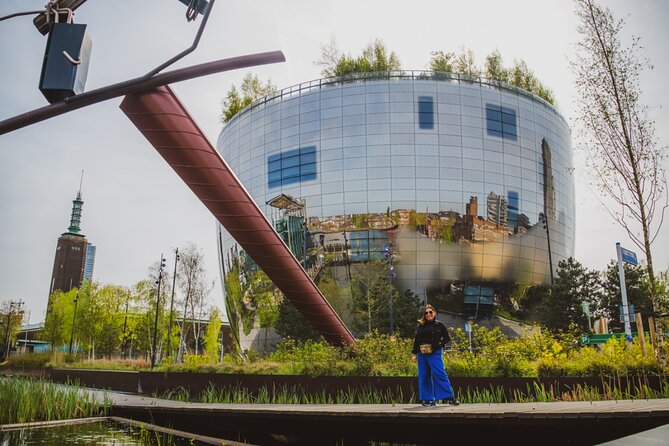
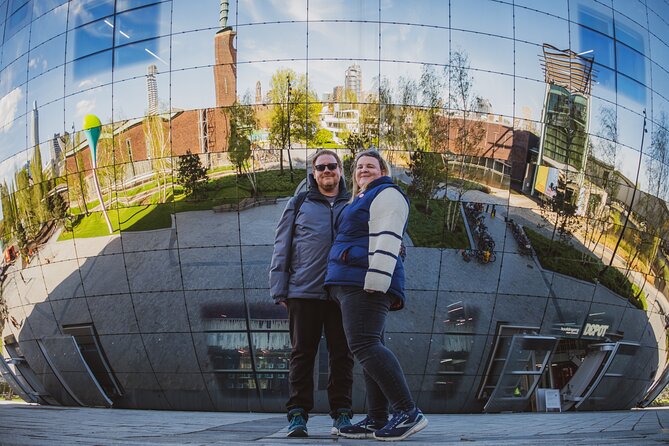
- Depot Boymans Van Beuningen: the mirrored art depot and museum district context
- Nieuwe Werk on the Maas: the shipping quarter feeling most visitors miss
- Erasmusbrug: the big white bridge and the WWII story it carries
- Maritiem Museum Rotterdam: an outside-boat museum vibe
- Ossip Zadkine’s Destroyed City at Square 1940: a memorial you can’t forget
- Witte Huis and Oude Haven: old-and-new contrasts along the riverfront
- Cube houses (Kubuswoningen) on Overblaak: walking through the concrete forest
- Markthal inside: the modern indoor market finish and what to do next
- Price and value: what $49.60 buys in real time
- Who this tour suits best (and who might want a different plan)
- Practical tips so the walk feels easy
- Should you book Rotterdam Walk: Hilights, Gems, Architecture & WWII?
- FAQ
- FAQ
- How long is the Rotterdam walk?
- How much does the tour cost?
- Where does the tour start and end?
- Is the tour in English?
- How big is the group?
- Do you need to pay for admission at the stops?
- What’s the focus of the walking route?
- Will I get a place to continue exploring after the tour?
- Are tickets mobile?
- What about cancellation or weather?
Key points at a glance
- WWII narrative with real landmarks: You’ll connect major Rotterdam sites to the war and the city’s recovery.
- Architecture walk-through, not just photos: You’ll understand what you’re seeing at places like the Erasmusbrug and cube houses.
- Frequent “wait, what is that?” moments: Shipping-quarter views and older ports that many people miss.
- Ending inside Markthal: A modern indoor market finish that makes it easy to continue exploring right away.
- Small group energy: Max 15 travelers means the pace stays lively without feeling rushed.
- Most stops list free admission: You’re paying mainly for the guide and the guided route, not entry fees.
Rotterdam rebuilt: what makes this walk feel different

Rotterdam can look like a city that grew in layers. That’s exactly what this tour helps you see. In a short time, you’ll stitch together the skyline, the waterfront, and the “why” behind the modern design. The guide uses visuals like photos to explain what changed after WWII, so the story lands as something you can point to, not just something you read.
I like that the route doesn’t treat history as a separate topic. WWII isn’t just one stop in the middle; it shows up in the bridge, the memorial statue, and the way the city is shaped afterward. It also stays fun. Even if you’re not a history buff, the pacing and storytelling keep things moving.
Best of all, you end in the Markthal, which feels like a reward and a reset. After the walking, you can pause, snack, and decide where to go next based on the tips you get.
You can also read our reviews of more tours and experiences in Rotterdam.


Depot Boymans Van Beuningen: the mirrored art depot and museum district context
The tour begins at the Depot Boymans Van Beuningen, described as a mirrored art depot in the Museum District. Even if you’re not an art expert, this is a strong first stop because it sets a theme: Rotterdam isn’t just ships and bridges. It also invests in culture, design, and the way museums function beyond their public galleries.
You’ll also get context for what’s around you in the Museum District. That matters because Rotterdam is built on redevelopment and rethinking spaces. Starting here helps you spot patterns later during the walk.
Practical note: it’s listed as about 15 minutes. If you normally like to linger in art spaces, use this time to orient yourself, then plan an extra museum visit on your own later.
Nieuwe Werk on the Maas: the shipping quarter feeling most visitors miss
Next comes Nieuwe Werk in the Scheepvaartkwartier, the Shipping Quarter on the edge of the city center. What I like about this stop is the open and wide feeling by the Maas. Rotterdam is a harbor city, and this is where that identity becomes visible fast.
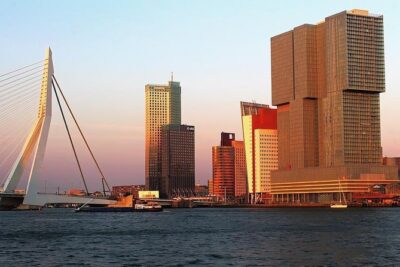
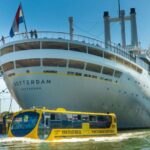
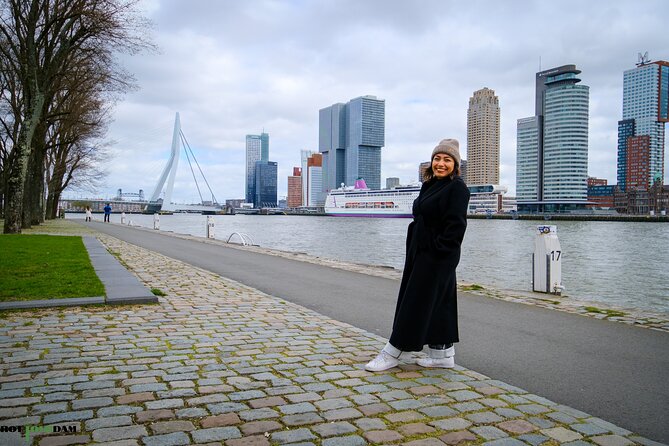
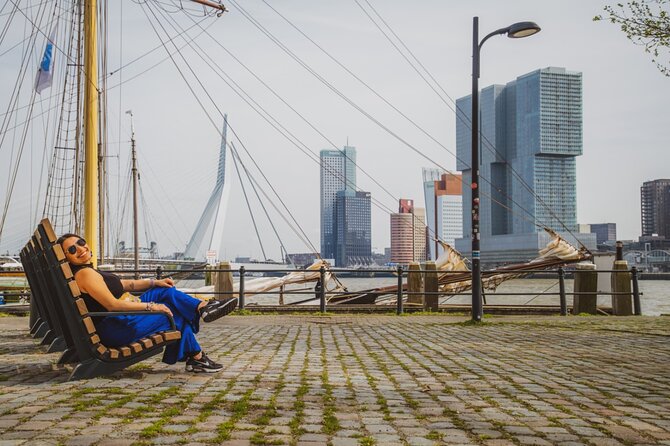
From the river side, you’ll be able to see landmarks like Hotel New York, the Steam Ship Rotterdam, and the Erasmusbrug. That sightline makes the tour feel cohesive. You’re not just hopping between random points; you’re watching the story unfold across the water.
This is also one of the easier stops to enjoy visually, even if you’re tired from the start of your day. You’ll get roughly 30 minutes here, and the focus is on how the area works as a harbor space.
Erasmusbrug: the big white bridge and the WWII story it carries
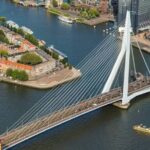
The Erasmusbrug is the big white bridge crossing the Meuse (Maas), connecting north and south. It’s an icon in the skyline, but during this tour, it becomes a timeline marker.
Here’s where the WWII explanation becomes central. You’ll hear about the invasion and the bombardment of Rotterdam and how that period shaped the city you see today. I like how the guide ties the dramatic story to something physical you can locate on a map.
Expect about 20 minutes at this stop. It’s long enough to get the narrative and orient your eyes, but short enough that the walk doesn’t stall. Bring your curiosity and look up as much as you look forward.
Maritiem Museum Rotterdam: an outside-boat museum vibe
After the bridge, the walk shifts toward maritime history at Maritiem Museum Rotterdam. This is described as an open-air museum in the Maritime District, where you can see boats that are aging over 100 years.
I like this stop because it slows things down without stopping the tour. It’s outdoor, but more grounded. You’ll get a feel for how long Rotterdam has lived with the sea and how that history isn’t only behind glass.
You’ll spend about 10 minutes here. That means you’re getting the main impression, not a full museum visit. If boats are your thing, you’ll likely want to come back later with more time.



Ossip Zadkine’s Destroyed City at Square 1940: a memorial you can’t forget
One of the most powerful visual moments is the statue The Destroyed City by Ossip Zadkine, at Square 1940. The tour frames it as one of Rotterdam’s most important WWII-related monuments, with meaning that’s worth understanding before you walk past it.
This is the kind of stop where the guide’s explanation changes how you see the sculptural form. You’re not just looking at art; you’re learning why this memorial exists and what it represents for the city.
Plan on about 10 minutes here. If you’re sensitive to war memorials, you might want an extra moment after the explanation so it can sit with you before moving on.
Witte Huis and Oude Haven: old-and-new contrasts along the riverfront
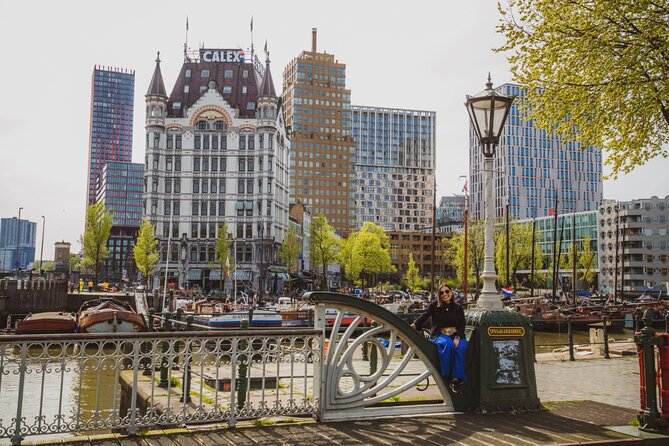
Then you’ll head to the Witte Huis (the White House), described as a historical icon and once the tallest office tower in Europe. Even if you’ve seen tall buildings before, this one helps you understand Rotterdam’s identity as a design-forward city that rebuilt and reimagined its core.
After that, the tour visits Oude Haven, the old harbor, described as one of the oldest harbors in the Netherlands and also a cozy area. This stop gives you a different kind of atmosphere: water, historic quay space, and a strong sense of place.
From Oude Haven, you’ll get a great view of the cube houses, so you’re not just hearing about them next. You’re seeing the destination ahead.
Together, these stops are about 30 minutes total (15 minutes for Witte Huis and 15 for Oude Haven). The key is contrast: memorial and office tower, old harbor and future-looking architecture.
Cube houses (Kubuswoningen) on Overblaak: walking through the concrete forest
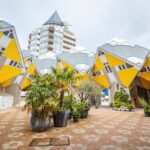
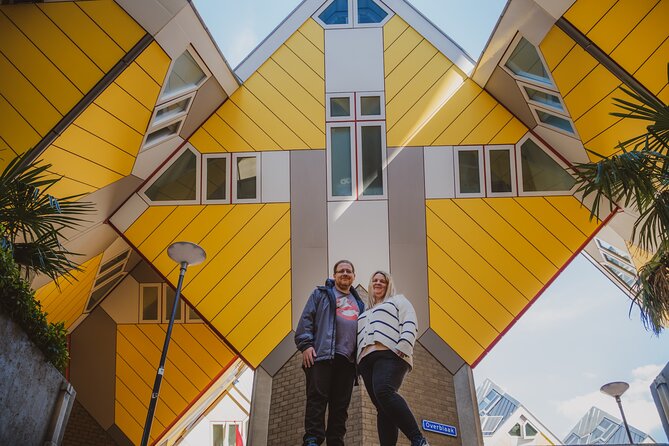
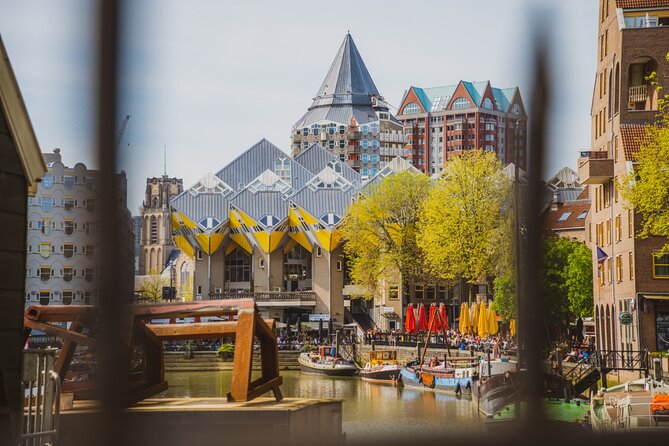
The cube houses might be Rotterdam’s most famous visual twist. On this part of the walk, you’ll go through the street of cube houses on Overblaak and learn why the design exists, how it works, and what it means architecturally.
I like that the tour doesn’t treat the cube houses as a photo spot only. You’ll walk through the area described as a concrete forest on the way to the market square. That language matters, because the cubes aren’t just individual buildings. They change the feel of the street.
You’ll also get the architectural explanation while you’re physically moving through it, which makes the geometry easier to understand. You’ll spend about 10 minutes on this walk-through, so it’s a guided overview rather than a deep architectural seminar.
Markthal inside: the modern indoor market finish and what to do next
The tour ends in the Markthal inside the modern indoor market on Verlengde Nieuwstraat. You’ll get a full explanation about the market and why it’s often compared to a modern Sistine Chapel, with its food, colors, and dramatic indoor atmosphere.
If you love grabbing a snack and then wandering, this ending is a big plus. The guide will give tips on what to visit next, and you can continue at your own pace once the tour finishes.
There’s also a practical bonus: you’ll be able to visit the Markthal and enter the demo cube house on your own after the guided portion. That’s a smart way to turn the tour into a real plan for the rest of your time in Rotterdam, instead of ending with a generic drop-off.
Plan around 15 minutes at this stage. Even so, it gives you a clear finish line and a nice change from the outdoor walking.
Price and value: what $49.60 buys in real time
At $49.60 per person for about 2 to 3 hours, the value comes from three things that add up quickly.
First, you’re getting a guided route through multiple city zones: Museum District, Shipping Quarter, river icons, maritime history, a WWII memorial, and modern architecture. That’s hard to replicate well on your own without spending time figuring out what to look for and what to connect.
Second, the tour lists free admission at each stop. That means your money is mainly for interpretation and guided pacing rather than paying separate entrance fees every time you turn a corner.
Third, the group limit of 15 travelers changes the feel. In a small group, the guide can keep the flow while still answering questions. That’s how you end up leaving with a stronger understanding of why Rotterdam looks the way it does, not just a checklist of sights.
You’ll also get a mobile ticket and the tour runs in English, so you’re not juggling a paper voucher while you’re trying to follow the group.
Who this tour suits best (and who might want a different plan)
This tour is a great fit if you want:
- A first or second day in Rotterdam that helps you understand the city’s layout
- A clear WWII context tied to places you can see
- Architecture and urban design in a walking format
- A guide who uses visuals to make before-and-after changes easier to grasp
It’s also ideal if you’re traveling with mixed interests. You get maritime flavor, memorial meaning, and the modern punch of Markthal and cube houses in one route.
If you’re the type who wants to spend long hours inside museums or you prefer slow, stop-and-stare photography sessions, you might find the time tight. The walk is packed by design. Treat it as the orientation layer, then add extra time where your curiosity pulls you.
Practical tips so the walk feels easy
A few things can make your experience smoother.
Wear shoes built for sidewalks and a bit of uneven ground. This is a multi-stop stroll across the city and you’ll be outside for most of it.
Bring a rain layer even if the forecast looks okay. The tour notes it requires good weather, and outdoor walking can shift with conditions.
If you’re planning your day, schedule this earlier so the tour recommendations can shape your later choices. Ending inside the Markthal helps, but you’ll also want to keep exploring after the walking part.
Finally, come ready with questions. That’s when a small group tour really pays off, especially with the WWII storytelling and the architecture explanations.
Should you book Rotterdam Walk: Hilights, Gems, Architecture & WWII?
I’d book this if you want Rotterdam in one clean storyline: modern icons plus the WWII context that explains the city’s rebuild choices. It’s efficient, it ends in a fun place to eat and linger, and the small group size keeps the guide’s explanations practical.
I wouldn’t book it as your only Rotterdam plan if you know you want deep museum time. Think of it as your best “get your bearings fast” move, then follow up with extra hours where the city hooks you most.
If you’re excited by architecture, harbor views, and a human-scale WWII story tied to real locations, this walk is a strong value at $49.60.
FAQ
FAQ
How long is the Rotterdam walk?
It runs about 2 to 3 hours.
How much does the tour cost?
The price is $49.60 per person.
Where does the tour start and end?
You start at Vaimoo deelfietsstation MelkkoppadMuseumpark 20, Rotterdam, and you end inside Markthal at Verlengde Nieuwstraat, Rotterdam.
Is the tour in English?
Yes, it’s offered in English.
How big is the group?
The tour has a maximum of 15 travelers.
Do you need to pay for admission at the stops?
Each stop is listed with admission ticket free, so you’re mainly paying for the guided experience.
What’s the focus of the walking route?
It focuses on Rotterdam highlights, architecture, and WWII history, linking the story across key landmarks.
Will I get a place to continue exploring after the tour?
Yes. The tour ends inside Markthal, and you can visit Markthal and enter the demo cube house on your own afterward.
Are tickets mobile?
Yes, you’ll receive a mobile ticket.
What about cancellation or weather?
You can cancel for a full refund if you cancel at least 24 hours before the start time. The experience requires good weather, and if it’s canceled due to poor weather, you’ll be offered a different date or a full refund.