REVIEW · AMSTERDAM
Amsterdam Open Boat Cruise in Old City Centre with Drinks Options
Book on Viator →Operated by Boat Amsterdam · Bookable on Viator
Fresh canals, fresh air, and a one-hour plan.
This Amsterdam Open Boat Cruise is a smart way to see the Old City without sitting stuck inside a cramped boat. I like that it’s a small open electric boat with a restroom onboard, so you can enjoy the whole route (including drink options) without doing awkward planning. I also love the flexibility: lots of departures from morning through night means you can fit it around your day. The main thing to consider is that the exact sights you pass are examples, so if you’re chasing a very specific photo spot, you’ll want to keep your expectations flexible.
The vibe can run from relaxed sightseeing to “let’s celebrate,” depending on the drink option you pick. In summer you’re in open air; in colder months you’ll shift to covered or heated seating. Either way, it’s a straightforward outing that works well for first-timers and people who want a classic Amsterdam canal picture in minimal time.
In This Review
- Key highlights at a glance
- Why the Old City on an open boat feels different
- Price and value for $24.08 in about one hour
- Getting on board at Amstel 51F (and why timing matters)
- What you’ll see: the canal loop, UNESCO areas, and the city’s real texture
- Starting on the Amstel and reading the canal layout
- UNESCO canal belt classics: Herengracht and Prinsengracht
- The bridges you remember: Magere Brug and more
- Red Light District: seen from the water, not from street corners
- Coffee culture and the Jordaan afterglow
- Food history: the cheese stops
- Museum of the Canals and canal-house context
- Big-house landmarks on the Herengracht
- Westerkerk, Anne Frank references, and what’s not guaranteed
- Houseboats and a look inside the city’s water-living side
- More city texture: Spiegelkwartier, NEMO, and the science + architecture mix
- Icebar cool-down option and a practical neighborhood follow-up
- Gates, markets, botany, and the Old City defensive layers
- Rembrandt, memorials, and money details
- Drinks options: two drinks or free-flow, and how to plan your time
- The crew and onboard comfort: clean, small, and funny
- Seasonal comfort: open in summer, covered or heated when it’s colder
- Who should book this open-boat cruise (and who might skip it)
- Practical tips to make your hour better
- Should you book this Amsterdam Open Boat Cruise?
- FAQ
- How long is the Amsterdam open boat cruise?
- Where does the cruise depart from?
- Is the boat open or covered?
- Are drinks included with the ticket?
- Is there a restroom onboard?
- What is the minimum age for the drink options?
- Do I need to arrive early?
- Can I cancel for a full refund?
Key highlights at a glance
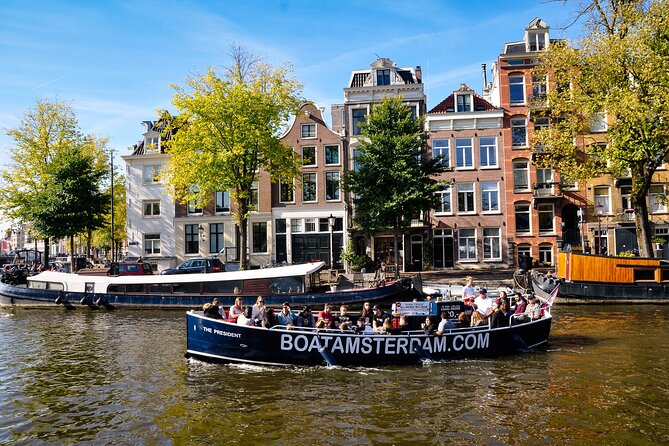
- Open-air views in summer: you’ll get clear sightlines along the canal ring
- Onboard toilet: easier for longer enjoyment, especially if you choose drinks
- Drink upgrades: add two drinks or go with a free-flow option (age 18+)
- Departures from morning through night: you can slot it into your schedule
- Route through UNESCO canal belt areas: Herengracht and Prinsengracht are on the mix
- Stops shaped for variety: canals, bridges, coffee culture, museums, and city icons
Why the Old City on an open boat feels different
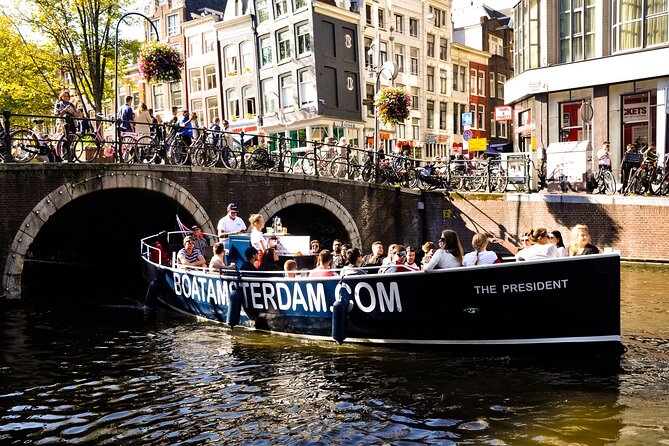
There’s a reason open boats are the go-to for many Amsterdam visits. You’re lower to the water, closer to the buildings, and you get that street-level feeling even while you’re gliding along the canals. With this open electric boat, the views stay unobstructed, so you can actually see details on the canal houses instead of just watching through tinted windows.
The other practical win is the restroom onboard. It sounds small, but it changes the whole experience. You’re not spending the hour thinking about timing your bathroom break around crowds and doors. If you’re doing the drinks upgrade, it also makes the whole thing less stressful.
One more thing I appreciate: the ride is designed to be easy to join. The cruise runs with a maximum of 35 travelers, so it doesn’t feel like a cattle line, even though it’s popular. You’ll hear the story of the city while passing the canals that shape Amsterdam’s look—then you can continue exploring on foot after.
You can also read our reviews of more tours and experiences in Amsterdam.
Price and value for $24.08 in about one hour
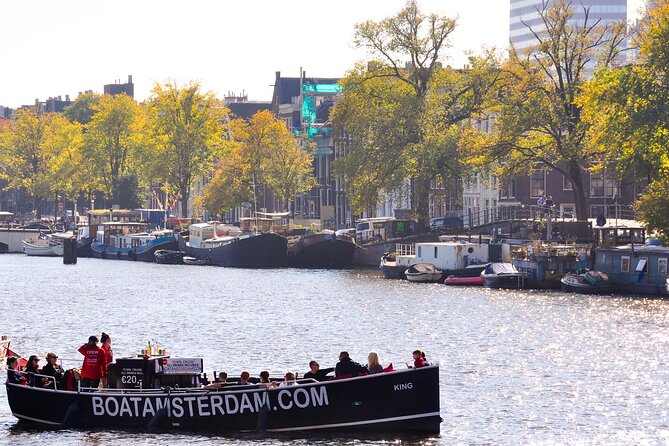
At $24.08 per person for about an hour, this is priced like a “do it early, do it right” Amsterdam activity. The value isn’t just the duration—it’s what you cover in that time window. You’re not trying to cram in multiple neighborhoods; instead, you get a guided loop through major canal districts and landmarks, with time-efficient pacing.
The tour keeps the base ticket simple: the cruise itself and the sightseeing commentary. Drinks aren’t included unless you upgrade. If you want the party element, you can add two drinks or choose a free-flow drinks package. That upgrade is the real pricing lever, so I’d think about your day first: are you pairing this with dinner and museums, or are you treating it as your main social moment?
A smart middle-ground approach is to book the cruise and then decide once you see your schedule. With departures from morning through night, you can pick a time that matches your energy level. And because the route can vary with traffic and construction, the experience is more about the overall canal storytelling than a strict checklist of exact monuments.
Getting on board at Amstel 51F (and why timing matters)
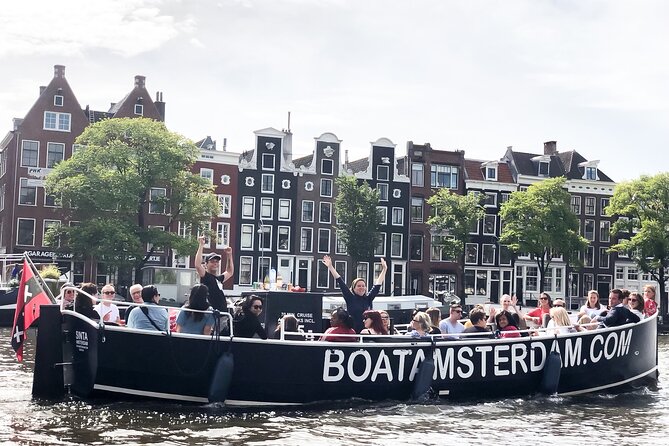
The meeting point is Amstel 51F, 1018 EJ Amsterdam. The cruise departs in front of the Hermitage Museum, and you should plan to be at the dock 10 minutes early. That buffer matters more than you’d think, especially in summer when canal-side areas can be busy.
You’ll use a mobile ticket, and you’ll get confirmation at booking time. The crew speaks Dutch and English, which helps if you’re traveling in a mixed-language group. The boat is also described as having a toilet onboard, and that’s a big deal for comfort, especially on an hour-long cruise when you want to stay relaxed.
The group size cap (up to 35 people) is also relevant here. Smaller groups tend to feel more human. Even if you’re not chatting with the crew, you’ll usually get better audio clarity and more attentive narration than on huge boats.
What you’ll see: the canal loop, UNESCO areas, and the city’s real texture
The best way to think about this cruise is as a curated walk through Amsterdam’s most iconic canal geography—without you needing to navigate streets or crossings. The route is described as an example, so what you pass depends on traffic, construction, and weather. Still, the landmarks named cover the heart of the city’s canal story.
Here’s how the sights tend to work, and what they’re good for:
Starting on the Amstel and reading the canal layout
You’ll spend time on the Amstel, Amsterdam’s main river and the base of the city’s growth. From there, the narration usually shifts toward how Amsterdam’s canal ring system works—often explained as layers, kind of like an onion. That concept is handy because it helps you connect what you see on the water to what you’ll notice later on foot.

UNESCO canal belt classics: Herengracht and Prinsengracht
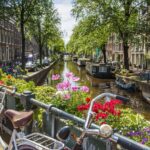
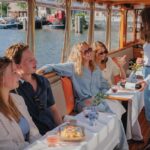
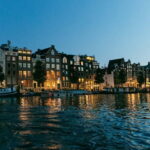
Two of the big named canal lines are Herengracht and Prinsengracht, both tied to the UNESCO canal belt. Herengracht is described as the inner canal of the heritage area, while Prinsengracht is the third canal in that UNESCO zone. If you’re hoping to photograph the classic canal-house look, this is where you’ll get it: long frontages, orderly façades, and those signature Dutch bridge angles.
The bridges you remember: Magere Brug and more
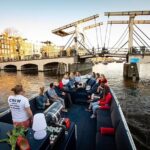
You may also pass the Magere Brug, a national monument and one of Amsterdam’s most famous icons. Bridges are where open boats really score, because you can get a full view of the structure, not just a partial glimpse between bodies and rails. The cruise also mentions other canal crossings like Westertoren in the broader route mix.
Red Light District: seen from the water, not from street corners
One of the most commonly recognized sections is the Red Light District. The important detail is how the tour frames it: you’ll be sailing at a safe distance, and the tour notes this option can still work for children with adult accompaniment. Even if you’re not interested in that neighborhood specifically, it gives you a sense of how close different parts of the city sit to each other—because Amsterdam does that constantly.
You may also see waterside venues connected to the area, like Brouwerij de Prael, described as a brewer located on the waterside in the Red Light District.
Coffee culture and the Jordaan afterglow
The route includes a stop-by area for Boerejongens Coffeeshop Center, plus the Jordaan, described as a traditional Dutch neighborhood with small shops and bars. Even if you don’t plan to enter a venue, watching the canal-side flow here helps you understand why the Jordaan feels lived-in rather than staged.
Food history: the cheese stops
The cruise lists both an Amsterdam Cheese Museum and an Amsterdam Cheese Company. That combo gives the experience a food-history angle, not just architecture. It also works as a “remember later” list: if cheese is your thing, you’ll know where to look next when you want a shop or a museum stop after the boat.
Museum of the Canals and canal-house context
You may pass by the Museum of the Canals. If you want more than surface sightseeing, that museum connection is useful because the canal ring makes more sense once you see how it’s been interpreted on land.
Big-house landmarks on the Herengracht
The route mentions Cromhout House and Museumhuis Bartolotti (built in 1617). These names matter because they hint at the era of prosperity that shaped the canal houses you see today. Even from water level, you can spot how much attention was put into façades and front steps.
Westerkerk, Anne Frank references, and what’s not guaranteed
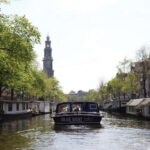
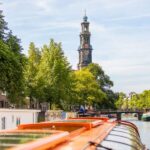
The tour includes Westerkerk, described as the tower Anne Frank watched and wrote about in her diary. It also notes you might pass by the Anne Frank House, but it can’t guarantee it. If Anne Frank is a top priority for you, plan to treat this cruise as helpful context, not a replacement for a museum visit.
Houseboats and a look inside the city’s water-living side
The route highlights the Houseboat Museum, described as the only way to see a houseboat inside without renting one to sleep on. That’s a good “Amsterdam is more than museums” reminder, because it points to real life on the canals, not just historic postcards.
More city texture: Spiegelkwartier, NEMO, and the science + architecture mix
The route also mentions Spiegelkwartier (an upscale antique area), NEMO Science Museum for kids and teens, and Scheepvaartmuseum for nautical history. If you’re traveling with different interests—architecture for one person, science for another—this mix makes the cruise more satisfying for everyone.
For design lovers, Arcam is mentioned as modern architecture paired with history. It’s a cue that Amsterdam isn’t only old brick and gabled roofs—it keeps building.
Icebar cool-down option and a practical neighborhood follow-up
Not all stops are “you’ll get off here,” but the cruise route names places like Xtracold Icebar as a way to cool down. If you pick a warm day (or you’re doing open-boat summer), having a nearby cold-weather-style plan for later can make the whole itinerary feel smoother.
Gates, markets, botany, and the Old City defensive layers
The route includes Waterlooplein Market (a world-famous flee market in the Old Jewish quarter), Hortus Botanicus (a botanical garden older than 300 years, tied to students learning about healing plants), Montelbaanstoren (remaining defense system), and Leprozenpoort (a small characteristic entrance). These named pieces are a bonus if you like to connect the dots on foot after.
Rembrandt, memorials, and money details
The list mentions Museum Het Rembrandthuis (Rembrandt’s former residence), plus a memorial to Koningin Wilhemina next to the water. It also includes Munt Tower, described as the place where Dutch coin was made for a few years. These aren’t random names—they’re small clues that Amsterdam’s canals tie directly into power, money, art, and daily life.
Drinks options: two drinks or free-flow, and how to plan your time
Here’s the clear fork in the road: the base ticket is just the cruise; the drinks are added through an upgrade. The upgrade options include two drinks or a free-flow package. There’s also a rule: the minimum drinking age is 18.
Why this matters: drinks change the vibe. With free-flow, you’re more likely to treat the hour as a celebration. With the two-drinks option, you get the fun without turning the cruise into a party that pushes your next stop into the late-night zone.
Also remember: since there’s a toilet onboard, you won’t lose time to searching and queuing. That’s a comfort feature that makes the drinks upgrade feel more doable—especially if you’re on a tight schedule.
If you’re worried about keeping control of your day, I’d stick to the two-drink option or even just the base ticket, then plan a calm meal afterward. Amsterdam is perfect for that kind of shift: you can do lively water time, then fall into quiet walking afterward.
The crew and onboard comfort: clean, small, and funny
The experience is described as working best when the narration lands. The good news is that the crew is clearly a strong point. In particular, captains and crew like Thomas and Michel are called out for making the tour fun, with a style that combines storytelling and humor while still keeping the route easy to follow.
On comfort, the boat is described as clean and comfy. And with a maximum group size of 35, the open-boat layout doesn’t turn into a crowded shuffle. You’ll still want to dress for the day—Amsterdam weather has opinions—but the boat itself is set up for the hour you’re on it.
Seasonal comfort: open in summer, covered or heated when it’s colder
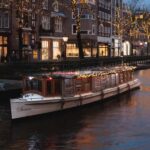
One of the smartest practical points is how they handle weather. The boats are open in summer. In spring and fall, boats can be open or covered depending on conditions. In winter, you’ll get covered boats with heated seats.
Bad weather doesn’t automatically mean cancellation. Umbrellas are provided, and if conditions are tough enough, you might use a covered boat. If the operator cancels, you’re offered a different date or a full refund.
For you, the lesson is simple: check the forecast, but don’t stress yourself into a worst-case mindset. The cruise is built to keep moving even when Amsterdam decides to be damp.
Who should book this open-boat cruise (and who might skip it)
This cruise is a good fit if you:
- want a classic canal overview without spending half a day on transit and walking
- like the idea of open-air views and photos
- want an option to add drinks and still keep it time-efficient
- have mixed ages or interests (the route names both family-friendly areas like NEMO and more adult-known neighborhoods like the Red Light District)
It may be less ideal if:
- you need a strict, never-changing itinerary with guaranteed exact stops
- you’re extremely sensitive to weather and prefer fully indoor sightseeing year-round (since it’s open in summer and may be partially open depending on season)
If you love the idea of leaving this cruise with a mental map of Amsterdam’s canal ring, you’ll do well here. It’s a “get your bearings fast” type of outing—then you can choose what to explore more deeply after.
Practical tips to make your hour better
- Dress in layers. Even in nice weather, an open boat can cool you off quickly.
- Arrive early at Amstel 51F. Ten minutes gives you time to find your spot without rushing.
- If drinks are a big part of your plan, decide whether you want two drinks or free-flow based on what’s next on your schedule.
- Bring your sense of humor. The best cruises feel like a conversation, and this one is set up that way.
Should you book this Amsterdam Open Boat Cruise?
I think this is a strong book for most first-time or second-time Amsterdam visits—especially if you want a guided canal experience that doesn’t steal your whole day. The open boat factor, the onboard toilet, and the clear structure of seeing major canal areas in about one hour make it feel like good value at $24.08.
Book it if you want variety: UNESCO canal belt streets like Herengracht and Prinsengracht, famous bridges like Magere Brug, and a mix of neighborhoods and museums along the way. Consider booking a drinks upgrade if it fits your day and you’re 18+. Skip the upgrade if you want this to be a photo-and-sightseeing hour you can enjoy fully and then walk it off afterward.
If you’re chasing one single must-see stop, treat the cruise as helpful context, not a guaranteed ticket to that exact location. Otherwise, this is a simple, fun way to see Amsterdam’s canals like they belong to the city—not just to a postcard.
FAQ
How long is the Amsterdam open boat cruise?
The cruise runs for about 1 hour.
Where does the cruise depart from?
It departs from in front of the Hermitage Museum. The meeting point is Amstel 51F, 1018 EJ Amsterdam, Netherlands.
Is the boat open or covered?
In summer, the boats are open. In spring and fall, they may be open or covered depending on weather. In winter, the boats are covered with heated seats.
Are drinks included with the ticket?
Drinks are not included with the base ticket. You can upgrade to add two drinks or choose a free-flow drinks package.
Is there a restroom onboard?
Yes. The boat is described as having a toilet on board.
What is the minimum age for the drink options?
The minimum drinking age is 18 years.
Do I need to arrive early?
Yes. You should be at the dock 10 minutes before the scheduled departure time.
Can I cancel for a full refund?
Yes, you can cancel up to 24 hours in advance for a full refund. If you cancel within 24 hours of the start time, the amount paid is not refunded.