REVIEW · AMSTERDAM
Amsterdam: Red Light District & City Tour (Private tour)
Book on Viator →Operated by Amsterdamliebe · Bookable on Viator
Street facts beat guesswork in Amsterdam. This private Red Light District and city tour turns a confusing patch of streets into a clear story, mixing two-hour walks from Dam Square landmarks into the neighborhoods where sex work, LGBTQ+ nightlife, and coffee-shop policy meet. I love how it starts with context at Dam Square, before you’re staring at anything controversial, with stops at the National Monument and the Royal Palace.
I also like the plain-spoken Q&A angle, especially the Damrak stop where your guide answers real questions people usually have but feel awkward asking. One possible drawback: the schedule moves briskly, with short time at each stop, and it ends at Nieuwmarkt—so plan on extending your evening if you want to linger.
In This Review
- Key things you’ll notice on this tour
- Why a private Red Light District tour beats winging it
- Dam Square landmarks you should understand first (National Monument and Royal Palace)
- Oude Kerk to Warmoesstraat: churches, neighborhoods, and LGBTQ+ streets
- Beurs van Berlage and the Golden Age mindset
- Damrak Q&A: legality, windows, and what services cost
- Amsterdam Centraal photos, plus a more honest perspective
- Chinatown and Jolly Joker: multicultural streets and coffee-shop rules
- Nieuwmarkt and De Waag: ending with history and an optional 70s peep show
- Price and value for a private group up to 4
- What you’ll be able to do after the tour
- Who this tour suits best
- Should you book this Amsterdam Red Light District private tour?
- FAQ
- How long is the Amsterdam Red Light District & City Tour?
- What is the price and how many people is it for?
- Is this a private tour?
- What language is the tour offered in?
- Where does the tour start and end?
- Are there admission tickets included for the stops?
- Do I need a physical ticket?
- Can I get a refund if I change my mind?
- How far in advance is this tour usually booked?
Key things you’ll notice on this tour
- Dam Square first: National Monument and Royal Palace set the city’s story before the Red Light District.
- Oude Kerk and Warmoesstraat: Faith, neighborhood identity, and LGBTQ+ nightlife all appear in one walking flow.
- Damrak explanations: Clear answers on legality, regulation, and what services cost.
- Coffee-shop politics at Jolly Joker: History and rules, plus a take on mass tourism pressure.
- End at De Waag on Nieuwmarkt: A strong finish point with one last slice of Amsterdam history—and an optional peep-show visit.
Why a private Red Light District tour beats winging it
Amsterdam’s Red Light District is famous, but also easy to misunderstand. People arrive with stereotypes, then leave either rattled, bored, or both. This private tour is designed to do something different: give you street-level context fast, then help you make sense of what you’re seeing.
You’ll cover a loop of well-known spots and connect them with practical answers. That matters, because the Red Light District isn’t just a set of windows and neon signs. It’s tied to the city’s laws, its long history of trade and immigrant neighborhoods, and a whole culture of rules around sex work and coffee shops.
Because it’s private (up to 4 people), the pace can stay human. If your questions come fast, your guide can respond. If you need a moment before walking into the more sensitive streets, you can slow down without holding up a bigger group.
You can also read our reviews of more tours and experiences in Amsterdam.
Dam Square landmarks you should understand first (National Monument and Royal Palace)
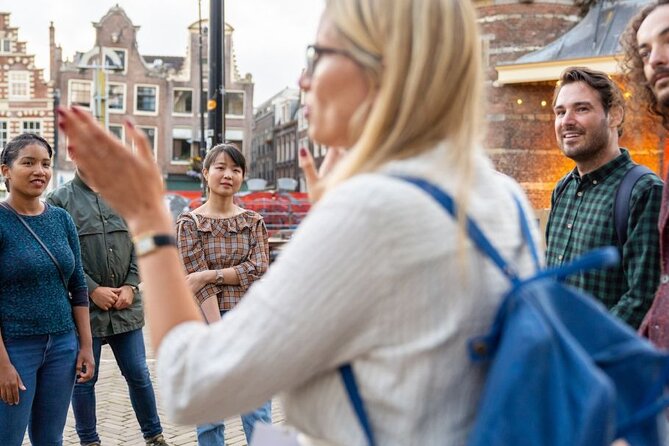
Most first-time visitors treat Dam Square like a photo stop. This tour treats it like a starting chapter. You begin at Dam, right at the National Monument, where the city’s origin story gets a grounded place in front of you. It’s a quick stop, but it sets tone: Amsterdam didn’t appear fully formed out of canals and capitalism. It grew.
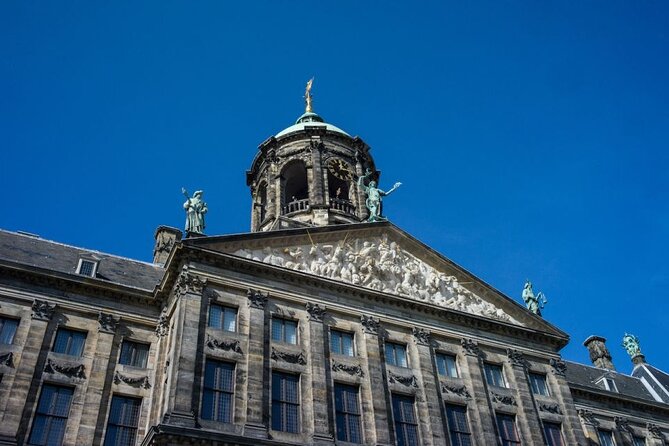
From there, you head to Royal Palace Amsterdam. The point here isn’t to turn the Red Light District into a history lecture. It’s to remind you that the Netherlands has a monarchy, and the monarchy’s role still shapes how people think about governance and public life. That becomes relevant later when your guide explains how regulations work in practice—because laws don’t float in the air. They come from institutions.
This opening sequence is one of the best ways to keep your head clear. You’re not just reacting to sights; you’re building a framework.
Oude Kerk to Warmoesstraat: churches, neighborhoods, and LGBTQ+ streets
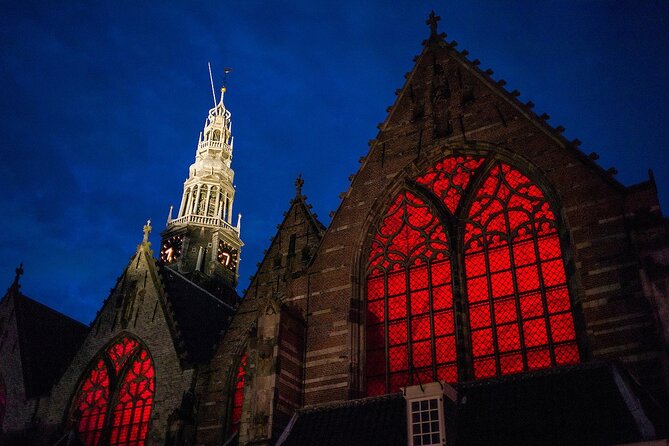
After Dam Square, you move into older Amsterdam fabric at Oude Kerk. This is the oldest church in the city, and it’s connected in the tour narrative to how the Red Light District developed. The takeaway is simple: the city’s past isn’t separate from its more modern controversies. It’s connected.
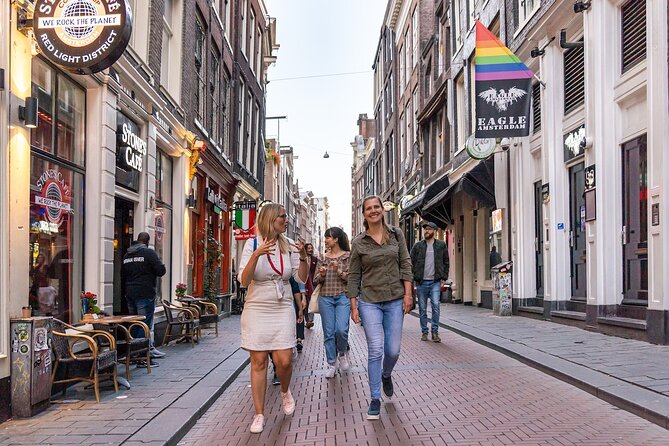
From there, you walk to Warmoesstraat, one of the key streets associated with the LGBTQ+ part of the Red Light District area. You’ll pass some of the most infamous gay bars, but the tour handles it in a way that keeps the focus on place and meaning, not just shock value. You’re seeing how Amsterdam’s identity has always included communities that felt different from the mainstream.
If you’re the kind of traveler who appreciates respectful street context, this portion is worth paying attention to. It helps you notice how the neighborhood is more than one topic. It’s overlapping cultures in a tight space.
Beurs van Berlage and the Golden Age mindset
Next up: Beurs van Berlage. This stop reframes the area around sex work by pointing to Amsterdam’s trade and wealth-building history. During the Golden Age, commerce helped make the city one of the richest places in the world, and that economic power shaped everything that came after—street layouts, institutions, and where different kinds of people could afford to live and work.
Even though the church and the gay bar streets are dramatic, they’re not random. Amsterdam grew because it traded. That’s the logic your guide is likely connecting for you as you walk.
One practical benefit: when you understand Amsterdam as a trading city, you’re less likely to view the Red Light District as an isolated spectacle. You’ll see it as another chapter in how this city organized itself.
Damrak Q&A: legality, windows, and what services cost
Damrak is where the tour gets most directly useful for people who want facts without rumors. This is also where you’ll get answers to the questions many travelers carry in their heads, like:
- Is sex work in the Red Light District legal?
- How is the window system regulated?
- How do different services work in terms of pricing?
- How are the windows managed in a way that protects order (while still keeping it human-scale)?
You’ll also get guide explanations that help you interpret what you’re seeing as you continue walking—so you don’t just stare at windows and wonder what’s true.
This stop is the reason to book a guide at all. Amsterdam is full of plaques and museum signs, but the Red Light District is not a tidy display. It’s active and regulated. A good guide helps you translate the street scene into an understanding you can actually use.

Amsterdam Centraal photos, plus a more honest perspective
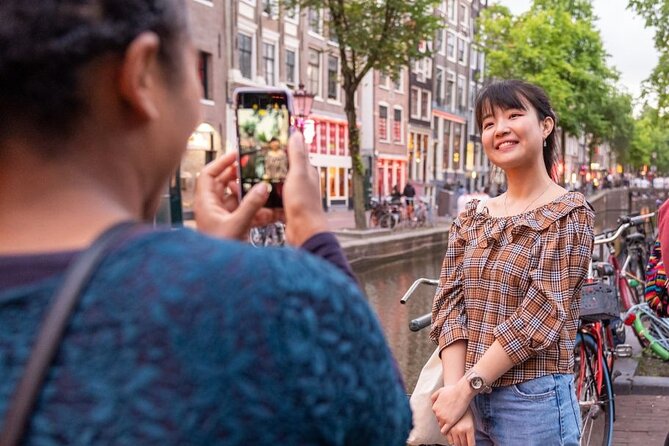
You’ll reach Amsterdam Centraal, one of the most photogenic spots in the city. So yes, there will be a chance for a picture. But the tour also pushes you to keep a critical perspective while you take it in.
The key idea is balance: it’s possible to recognize the human reality behind sex work while also understanding why Amsterdam has developed a particular approach to it. Your guide’s job is to keep the tone from turning into either pure sensationalism or total denial.
This portion helps you walk with your eyes open. You’ll be able to notice more than lights and signage. You’ll likely start picking up how the city tries to manage something complicated in public view.
Tip for your own timing: one of the best pieces of advice you’ll hear about this area is about how long you give yourself. If you want more time to stand back and absorb details on your own after the guide points things out, consider choosing a later slot. The tour is short at each stop, and you’ll feel it if you rush.
Chinatown and Jolly Joker: multicultural streets and coffee-shop rules
The walk shifts away from sex-work focus and into broader Amsterdam life.
First, you’ll stroll through Chinatown, described as the oldest Chinatown in Europe. That sets a broader lens on the city: Amsterdam isn’t just the Red Light District and canals. It’s also a patchwork of immigrant communities that kept shaping the city’s culture as it grew.
Then comes Jolly Joker, where you’ll learn about the history and politics of coffee shops in Amsterdam. This is an important note for anyone trying to understand why Amsterdam’s reputation is so strong internationally. Coffee shops are not just a quirky feature. They have a history, and they exist inside a policy debate that touches tourism, local life, and public order.
The tour also adds a critical perspective about mass tourism. That piece matters because the Red Light District and coffee-shop culture are both heavily affected by visitors. You’ll walk away better able to see the difference between how locals experience the city versus how it’s marketed.
Nieuwmarkt and De Waag: ending with history and an optional 70s peep show
The final stop is at Nieuwmarkt, including De Waag. This building is highlighted as one of the most historical and important in the area, which helps anchor the ending back in real city heritage rather than only the spectacle that first brings people here.
You’ll also receive personal tips from your guide for how to explore the district at your own pace after the tour. That’s a big deal because the guided part is only a starting point. Once you’re standing in the neighborhood without someone holding the narrative for you, your own observations should feel clearer—and less like you’re guessing.
Finally, the tour includes a 70s peep show visit and then time to enjoy the district on your own afterward. If that sounds like your kind of kitsch, it fits the theme: Amsterdam doesn’t erase its past. It keeps it in public view, sometimes in ways that feel playful, sometimes in ways that feel blunt.
Price and value for a private group up to 4
The price is $264.35 per group for up to 4 people, with an overall duration of about 2 hours. For a private tour, that’s the real value equation: you’re paying less than the cost of hiring four separate guides, but you still get the flexibility of a small group.
Also note what’s included. The stops are listed as having free admission tickets, and there’s a 1.50€ tourist tax included as part of the tour.
So how do you decide if it’s worth it for you? I’d use this rule of thumb:
- If you’re a first-timer who wants facts and context without getting lost in the noise, a guided loop like this can save you hours of confusion.
- If you’re only here for a quick photo run and you don’t want to ask uncomfortable questions, you might feel the pace is too structured.
For most people who want to understand Amsterdam rather than just collect snapshots, this fits well.
What you’ll be able to do after the tour
By the time you finish near Nieuwmarkt, you should have more than a set of landmarks in your phone. You’ll have a way to interpret the neighborhood.
Here’s what tends to matter most on your own after:
- You’ll know which questions to ask yourself when you see the windows.
- You’ll better understand how coffee-shop culture became part of Amsterdam’s public identity.
- You’ll spot how the LGBTQ+ area and Chinatown show the city’s layered identity.
- You’ll have a sense of where the major landmarks connect to the neighborhood story.
And because your guide encourages you to explore at your own pace afterward, you’re not stuck in a rigid museum mindset. You can slow down for the streets that pull you in and skip the ones that don’t.
Who this tour suits best
This is a good match if you:
- want a guided walk through the Red Light District with a factual, critical lens
- prefer a structured route that still leaves room to roam after
- like mixing major city sights (Dam Square, Royal Palace, Amsterdam Centraal) with neighborhood-level stories
- are traveling in a small group and want the private format
It may be less ideal if you’re easily unsettled by topics involving sex work, or if you hate short stops and prefer long lingering at a smaller number of sites.
Good news on practical comfort: it’s offered in English, uses a mobile ticket, and is near public transportation. Service animals are allowed, and most travelers can participate.
Should you book this Amsterdam Red Light District private tour?
I’d book it if you want clarity and balance. The strongest reason is the mix of city history and street-level explanations, especially the Damrak Q&A that covers legality, regulation, and pricing. That turns the Red Light District from a confusing spectacle into something you can actually understand.
Skip it only if you want a long, slow walk or you’re hoping to avoid the topic altogether. This tour is built to cover a lot in a short time, then hand you the neighborhood back with better questions and better context.
If you’re visiting Amsterdam for the first time, and you want the story to make sense, this is one of the more practical ways to do it.
FAQ
How long is the Amsterdam Red Light District & City Tour?
The tour lasts about 2 hours.
What is the price and how many people is it for?
It costs $264.35 per group, for up to 4 people.
Is this a private tour?
Yes. It’s a private tour/activity, and only your group participates.
What language is the tour offered in?
The tour is offered in English.
Where does the tour start and end?
It starts at National Monument, Dam, 1012 JS Amsterdam. It ends at Restaurant-Café In de Waag, Nieuwmarkt 4, 1012 CR Amsterdam. If you want to end back at Dam square, you can walk back with your tour guide.
Are there admission tickets included for the stops?
Admission tickets are listed as free for each stop. The tour also includes a 1.50€ tourist tax.
Do I need a physical ticket?
No. You’ll have a mobile ticket.
Can I get a refund if I change my mind?
Free cancellation is available up to 24 hours in advance for a full refund.
How far in advance is this tour usually booked?
On average, it’s booked about 53 days in advance.