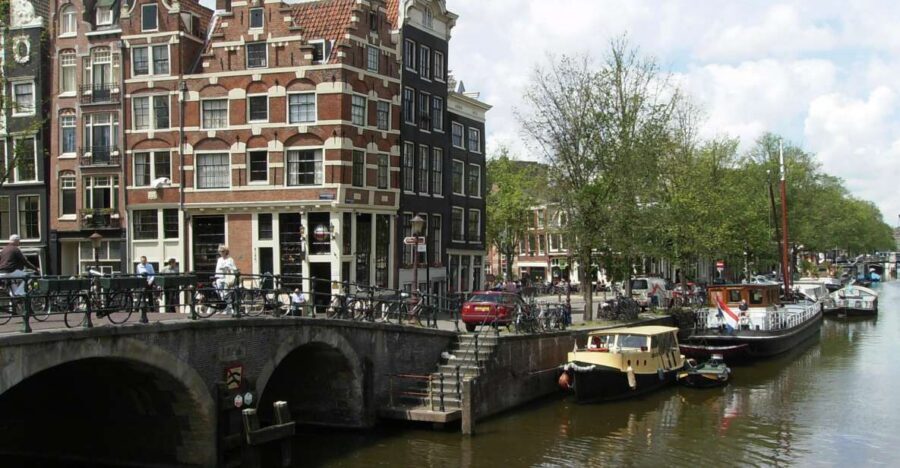
Amsterdam has quiet corners most people miss. This 2.5-hour walk uses a local guide to connect city origins, historic squares, and the Jordaan’s side streets. You’ll get your bearings fast, then peel away from the main routes.
I like that the tour keeps things conversational instead of lecture mode. I also like the mix of big-picture landmarks (like the world’s first stock market) with small, calm places you’d never aim for on your own. One thing to consider: it’s still a walking tour—about 2.5 miles on foot—so plan for steady pace time and expect cobblestones and weather.
In This Review
- Key things you’ll love on this Amsterdam hidden-streets walk
- Meeting Beursplein and getting your bearings the practical way
- Dam Square, the town hall building, and why the center still matters
- Crossing the Canal Ring: more than a pretty walk
- De Nine Straatjes: shopping lanes with a quieter heartbeat
- Jordaan hidden streets and squares that feel like the real Amsterdam
- A quick Anne Frank House sight moment (no extra ticket needed)
- The church for the poor: a local story written into the city
- Karthuizerhof: 1650 courtyard for widows and early social housing
- Westerkerk and Rembrandt’s burial: why this church looms in the story
- Pace, distance, and comfort: what to expect on foot
- Guides you might meet: the Christian and Michael difference
- Value for $52.81: when a paid tour is actually worth it
- Who this Amsterdam tour fits best
- Should you book it? My honest decision guide
- FAQ
- How long is the Amsterdam tour?
- What is the price per person?
- Is the tour offered in English?
- How many people are in the group?
- Where do I meet the guide, and where does the tour end?
- How much walking should I expect?
- Will I see the Anne Frank House?
- Is admission required for the stops?
- Can I cancel and get a refund?
- Are service animals allowed?
Key things you’ll love on this Amsterdam hidden-streets walk
- Small group size (max 10): more questions, less waiting around.
- Beursplein origins story: the world’s first stock market, plus why it mattered.
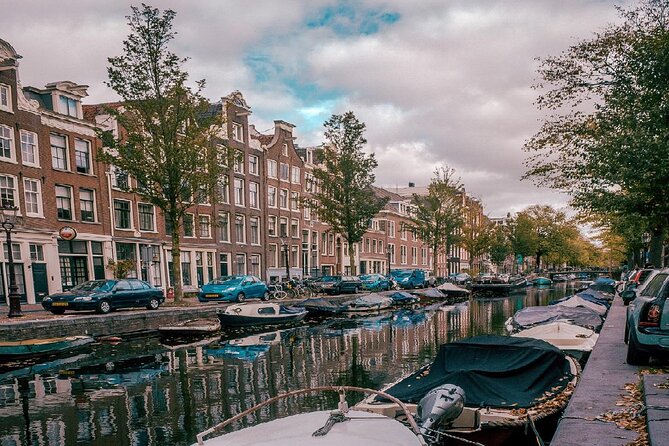
- Canal Ring context: how the medieval city grew and why the canals shape it today.
- Jordaan courtyards and squares: quieter blocks that feel like real neighborhood life.
- Karthuizerhof social housing: a 1650 courtyard for widows that hints at Amsterdam’s care system.
- De Negen Straatjes shopping lanes: nine streets for browsing away from the heaviest crowds.
Meeting Beursplein and getting your bearings the practical way
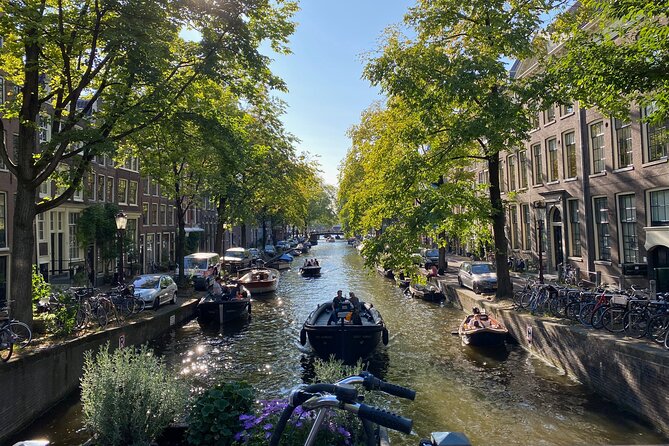
Most Amsterdam visits start with postcard views. This one starts with the logic behind the city—where it began and why it expanded the way it did. You’ll meet at Beursplein 1-3 (near central transit). Even if you’re only in town for a few days, this is a smart first step because it gives you a mental map before you wander on your own.
From the start, the guide frames Amsterdam as a trading-and-governance city, not just a canal photo set. You’ll learn about the origins of the city and, specifically, the world’s first stock market. That detail matters because it explains why Amsterdam became so organized, money-focused, and outward-looking so early. In other words: the canals and gabled buildings aren’t just pretty. They’re part of how the city functioned.
I also like how the tour moves from “why this place exists” to “what you can actually see.” That keeps you engaged even when you’re between major sites. And because the group is limited to 10 travelers, you don’t feel lost in a crowd.
You can also read our reviews of more tours and experiences in Amsterdam.



Dam Square, the town hall building, and why the center still matters
From Beursplein you’ll connect to Amsterdam’s core story. The tour explains the importance and history of the central square (Dam Square), and then talks about a key civic building that originally served as the town hall of Amsterdam.
This is the kind of stop that’s useful even if you already know the basics. You’ll get the context for what a town hall meant in an era when cities ran on permissions, trade rules, and civic power—not just modern government branding. It’s the difference between seeing a landmark and understanding why it sits where it does.
A small practical tip: if you’re the type who likes to ask questions, this is a good moment. The guides (Christian and Michael both lead groups) are the “ask us anything” style, and they’re ready to answer when your curiosity wanders.
Crossing the Canal Ring: more than a pretty walk
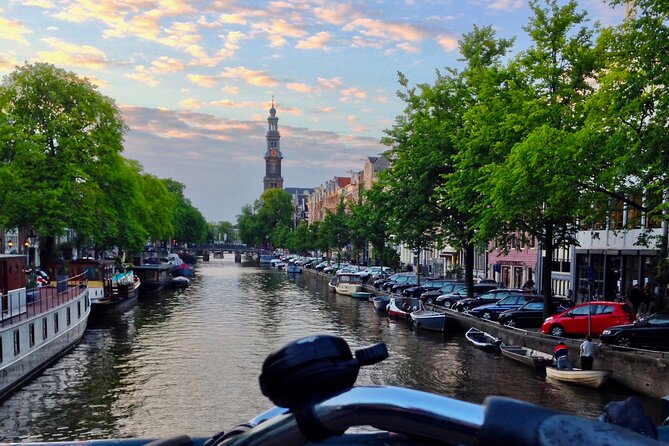
The tour crosses the Amsterdam Canal Ring, and it uses the canal layout to explain how the city extended during medieval times. You’re not just walking along water views. You’re getting a sense of how Amsterdam engineered growth, using canals as transport and space as the city expanded.
The route here is designed to make the canals feel less random. You’ll start noticing patterns: where the city stretched, how neighborhoods formed, and how the canal system helped commerce move. It’s a “look differently” stop, not a ticket-required stop. In the tour info, the canal-ring time is listed with admission free, which is great if you want history without adding more lines.
If you’re prone to tunnel vision on canal photos, slow down. This part is easier if you walk and listen. Afterward, you’ll spot the same features with new understanding.
De Nine Straatjes: shopping lanes with a quieter heartbeat
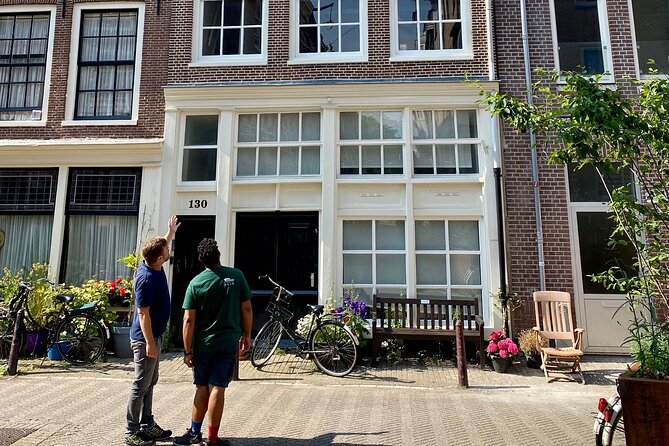
Next comes the shift away from the busiest center: the tour moves into an area known for cozy shopping streets away from the worst tourism crush—the nine streets.
This stretch is ideal for a reset. You’re still in the historic city, but the vibe changes. Think smaller lanes, side facades, and storefronts that feel more local than staged. You’ll learn the name and logic of the area, then walk through it at a comfortable pace.
Practical value: if you plan to browse shops after the tour, this is where you’ll get ideas for what to look for. And because you’ve already been oriented on the city’s layout, you won’t feel like you’re wandering in circles.
Jordaan hidden streets and squares that feel like the real Amsterdam
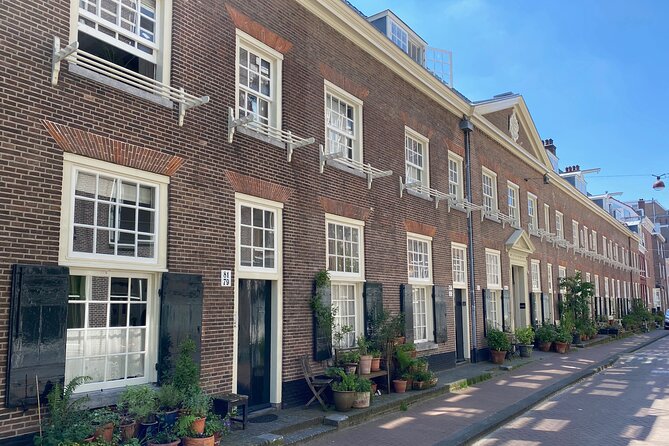
The heart of the tour is the Jordaan. This is where the “hidden streets with friends” idea actually shows up. The guide leads you through side streets and squares that feel like lived-in neighborhood space, with just enough structure to keep you from getting turned around.
Jordaan is often described as authentic, but what I like here is how the tour explains that authenticity. You learn about why the neighborhood endured and how it still functions as a community, not just a historic backdrop. That matters because Amsterdam’s best moments usually happen when you can read the neighborhood’s purpose.
This section is also where conversational guiding shines. In past experiences with Christian and Michael, they’ve been praised for answering questions and going off-topic when it genuinely helps you understand what you’re seeing. If you’re the kind of person who likes to compare impressions with facts, the Jordaan is a perfect match.





A quick Anne Frank House sight moment (no extra ticket needed)
During the Jordaan walk, you’ll pass by the Anne Frank House. The key detail: you see it during the stroll. The tour isn’t positioned as an entrance-and-museum experience based on the provided schedule, so don’t count on this as your ticketed visit if you want to go inside.
Still, it’s worth it for orientation. Seeing it from the street and then continuing into the quieter Jordaan lanes helps the area feel more connected and less isolated.
The church for the poor: a local story written into the city
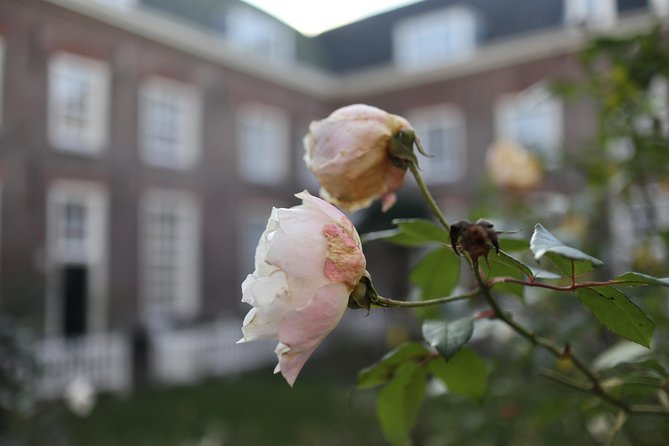
One of the stops in the Jordaan area focuses on a church constructed for the poor—explaining why it was built exactly here. This is the kind of stop that’s easy to miss if you only read headlines or chase the loudest landmarks.
Even without going inside, you get the sense that the city planned for everyday needs. Amsterdam didn’t build only for merchants and officials. It built for people with less power too. That’s part of why Amsterdam’s architecture feels practical and human, even when the facades look formal.
If you care about social history, this stop is a good reminder that the city’s past isn’t only about wealth. It’s also about housing, welfare, and community structures.
Karthuizerhof: 1650 courtyard for widows and early social housing
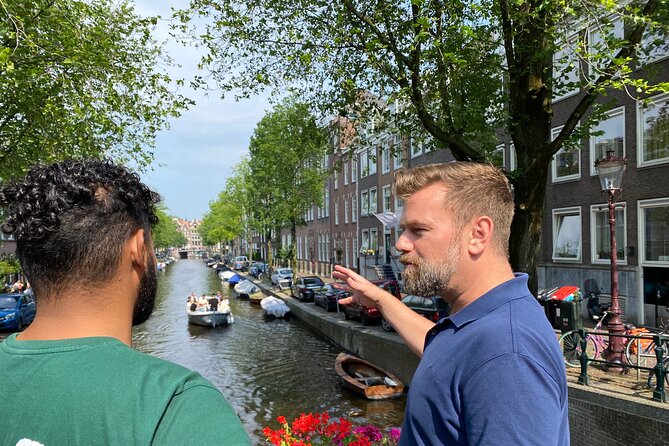
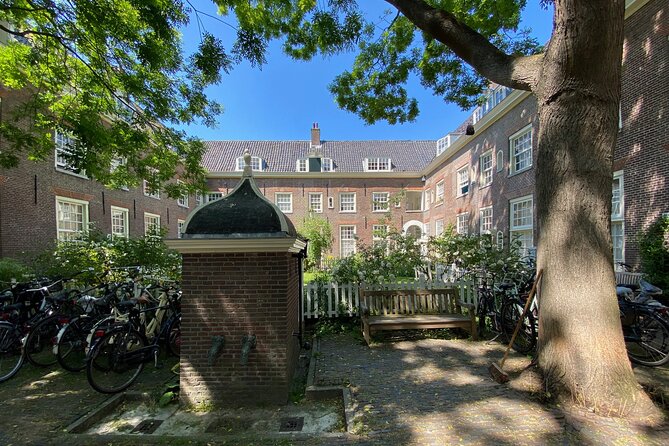
Then you reach Karthuizerhof, a courtyard constructed in 1650 for widows. The tour explains why it mattered and why it’s considered one of the first social housing projects of its kind.
Courtyard stops are underrated. You walk into a smaller, enclosed world and you can see how Amsterdam held community life together—sometimes with design that feels quiet, thoughtful, and surprisingly modern. Here the courtyard becomes a lesson: cities don’t just shelter residents; they build systems that shape who gets support and where.
It’s also a great photo moment, but more important, it breaks the walking rhythm. A 10-minute stop like this gives your brain time to absorb what you just heard. You’ll likely find yourself looking around more than you did at the big squares.
Westerkerk and Rembrandt’s burial: why this church looms in the story
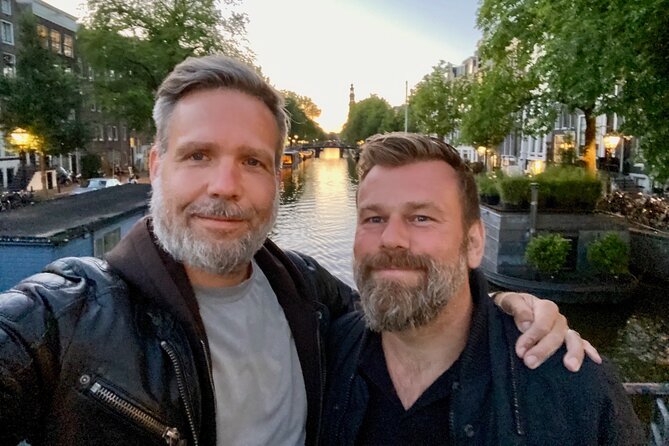
The tour also highlights the Westerkerk, described as a marvel built by rich merchants of Amsterdam. You’ll learn that Rembrandt was buried here.
This stop connects the economic story back to the city’s culture and institutions. Merchants funded grand buildings because it reinforced power, identity, and legitimacy. When you hear that the Westerkerk was made by those merchant communities, the size and presence of the church feel less accidental and more intentional.
Again, it’s presented as a learning moment during the walk, not as a ticketed attraction. So if you’re trying to manage time and money, this format works well. You get key facts, then you move on without losing your day to timed entries.
Pace, distance, and comfort: what to expect on foot
Plan for about 2.5 hours and roughly 2.5 miles / 4 km of walking. The tour is limited to a maximum of 10 travelers, which usually helps with pace control. Most people can participate, but you should still treat this as a real walk, not a casual stroller route.
Two practical considerations:
- Cobblestones and uneven sidewalks are part of Amsterdam life. Wear shoes you’d trust for steady walking.
- You’ll be outside most of the time, so bring a layer for wind or rain.
The good news is that the stops are spaced to keep energy up. Courtyards, squares, and canal views alternate with short stretches, so it doesn’t feel like one long straight line.
Guides you might meet: the Christian and Michael difference
This tour is led by local guides from The Amsterdam Feeling. Two guide names show up often: Christian and Michael.
Christian is repeatedly described as friendly, flexible, and strong on architecture-and-history details, especially in the Jordaan. Michael is described with a calm, conversational style—covering both broad Dutch context and small details that make the city feel readable. In both cases, the emphasis is on practical storytelling and answering questions without making you feel rushed.
That’s a big part of why the tour gets such high praise: it’s not only about where you go. It’s how the guide helps you notice what you’d otherwise walk past.
Value for $52.81: when a paid tour is actually worth it
At $52.81 per person, you’re paying for three things: a smart route, live interpretation, and small-group attention. For a 2.5-hour walking format, that can be a solid value in Amsterdam, where self-guided wandering can cost you time and confusion.
I think the best value here comes from the mix:
- City origins and the stock market story give you context.
- The canal-ring and civic stops help you read the city layout.
- The Jordaan and courtyards give you the calmer Amsterdam people search for after the main sights.
Also, several stops are listed with admission ticket free for the guided walk components. So you’re not paying extra just to see the basics.
If you want to save money, this tour still helps because it lowers the number of separate planning steps you need to do on your own.
Who this Amsterdam tour fits best
This one is a strong match if you:
- want a small group and room to ask questions
- like history but don’t want dry lectures
- enjoy neighborhoods like the Jordaan and want quiet streets, not just major landmarks
- plan to keep exploring after the walk and want direction on what to notice next
It’s also good for couples and solo travelers who want to feel connected without joining a huge group.
Should you book it? My honest decision guide
Book it if you want an efficient way to understand Amsterdam’s “why,” then walk into calmer parts of the city that still feel authentic. The strongest reasons are the small group size, the storytelling that connects civic life to canals and neighborhoods, and the mix of big landmarks with courtyard-level detail like Karthuizerhof.
Skip it (or at least adjust expectations) if you’re hoping for lots of inside-the-building time or ticketed museum stops. This tour is built around learning while walking and seeing from the street. If you want interiors, you’ll need separate plans.
If you’re the type who likes hidden streets, this tour delivers the feel of Amsterdam beyond the obvious photos—without wasting time.
FAQ
How long is the Amsterdam tour?
It lasts about 2 hours 30 minutes.
What is the price per person?
The price is $52.81 per person.
Is the tour offered in English?
Yes, it is offered in English.
How many people are in the group?
The tour has a maximum of 10 travelers.
Where do I meet the guide, and where does the tour end?
The meeting point is Beursplein 1-3, 1012 JW Amsterdam, Netherlands. The tour ends at Elandsgracht, Amsterdam.
How much walking should I expect?
You should be able to walk about 2.5 hours over a distance of 2.5 miles / 4 km.
Will I see the Anne Frank House?
You will pass by the Anne Frank house during the Jordaan portion of the stroll.
Is admission required for the stops?
Some parts are listed as admission ticket free (including the canal ring segment). You’ll use a mobile ticket for the tour itself.
Can I cancel and get a refund?
Yes, you can cancel for a full refund up to 24 hours before the experience’s start time.
Are service animals allowed?
Yes, service animals are allowed.