
REVIEW · AMSTERDAM
Amsterdam Walking Tour with Audioguide on Your Smartphone
Book on Viator →Operated by TouringBee · Bookable on Viator
Your phone becomes your Amsterdam guide. This smartphone audio tour uses GPS and 31 key stops to move you through classic sights at your own speed, with pause-and-go audio. I’m especially into the professional historian narration that gives each landmark context, not just names.
I also like that you’re not stuck with a group pace. The route comes with an offline GPS map, so you can keep your bearings even when your signal is spotty, and you can rewind if a detail catches your attention. The main consideration: it’s truly self-guided, so you’ll need a smartphone with the app (and you’ll want headphones), and paid museum entry is not included.
In This Review
- Key highlights to know before you go
- How the smartphone audio tour works with GPS and offline maps
- From Amsterdam Centraal to the Weeping Tower: starting with the city’s layers
- Heads-up on atmosphere around these stops
- Houten Huys area to the Oude Kerk: hidden faith, church miracles, and a changing city
- De Wallen and Dam Square: the city’s contradictions in walking order
- A nice detail: churches that frame ceremonies
- De Papegaai church, the Beguinage, and Amsterdams Lieverdje: quieter stops with meaning
- Singel and the Bloemenmarkt: the walk gets scenic and practical
- Munt Tower, Tuschinski, Rembrandtplein, and the City Archive
- Heineken, Paradiso, and the Museum Quarter: choosing how much to pay for
- Pace, timing, and how to make the 2.5 hours feel like yours
- Price and value: what $8.37 buys you in Amsterdam
- Who should book this and who should skip it
- Should you book this Amsterdam smartphone audio walking tour?
- FAQ
- How long is the Amsterdam Walking Tour with audioguide on your smartphone?
- Where does the tour start and where does it end?
- Is the audio guide self-guided or do I meet a person?
- Does it work offline?
- How many audio stops are included?
- Are museum entry tickets included?
- What’s the cancellation policy?
Key highlights to know before you go

- Offline GPS map helps you follow the route without constant phone-tapping or roaming anxiety
- 31 historian-narrated stops cover big landmarks and smaller, off-the-main-road facts
- Illustrations for recognition make it easier to match what you hear to what you see
- Many stops are free from the street, so your money goes to the experience, not ticket lines
- Mobile ticket with app access means you can use the audio at your preferred pace for up to a year
How the smartphone audio tour works with GPS and offline maps
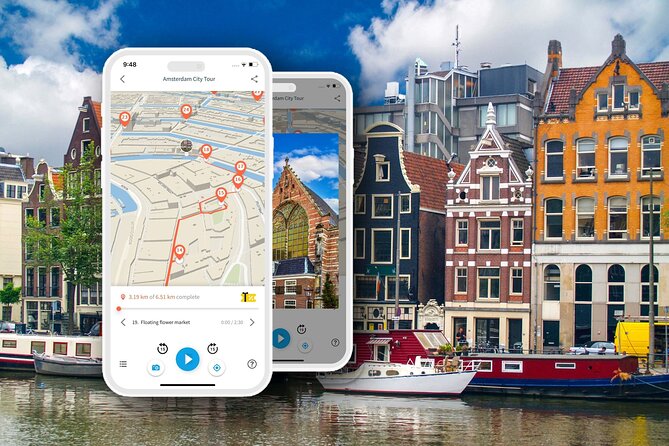
This is a self-guided Amsterdam Walking Tour with audioguide on your smartphone, built for walkers who want control. You buy once, download the app, activate your purchase, and then follow the route on the phone map. No human guide meets you, and there’s no fixed group meeting rhythm—your timing is the whole point.
The big practical win is GPS navigation paired with an offline map. Amsterdam is great for walking, but it can also be a little maze-like at street level. With an offline route, you can keep moving without relying on constant data. If you pause, you’re not “falling behind” anyone. If you get curious about a doorway, canal, church facade, or a sign, you can stay a bit longer and let the recording start again when you’re ready.
Each stop runs about 5–10 minutes (the full walk is around 2 hours 30 minutes). That means you get enough time to read the environment, glance at details, and still keep the day flowing. The audio includes illustrations meant to help you spot the exact landmark the moment you’re standing there.
One thing to plan for: the listing doesn’t include smartphones or headphones. Bring your own, charge your phone, and pack a simple pair of earbuds you’re comfortable using outside.
You can also read our reviews of more tours and experiences in Amsterdam.



From Amsterdam Centraal to the Weeping Tower: starting with the city’s layers
Your route begins at Amsterdam Centraal Stationsplein (right by Centraal Station). Starting here works because it anchors the trip in a modern transport hub while still pointing you toward older Amsterdam roots. You’ll hear the story of how the station sits where a harbor used to be, which is a nice “wait, Amsterdam changes shape” moment.
Next up is the Weeping Tower. The name is playful, and the audio focuses on the twist: the tower doesn’t cry the way people expect. You also get context around the East India Trading Company, including scale and power—information that helps you understand why so much of the city’s architecture and wealth tie back to trade.
After that, you’ll reach the Houten Huys (Wooden House), described as Amsterdam’s oldest surviving house. It’s located in the heart of the Red Light District, which makes the stop more than a trivia break. You’ll hear how a medieval-era structure can sit in a very modern, even controversial, neighborhood—Amsterdam’s “old and new in the same frame” theme, made real.
Heads-up on atmosphere around these stops
This part of the route goes through De Wallen. Even if you’re just passing through, you might feel like you’ve stepped into a different city mood. The audio is designed to keep you oriented by giving history and meaning, so you’re not just looking at neon. Use it as your grounding tool, and if the area feels overwhelming, keep moving to the next stop.
Houten Huys area to the Oude Kerk: hidden faith, church miracles, and a changing city
Right after the Wooden House, the audio brings you to Museum Ons’ Lieve Heer op Solder. This place is famous for a very particular kind of Amsterdam secrecy: a Catholic church tucked into a canal house attic. Even if you don’t go inside, hearing the background helps you notice the “why” behind a building that looks ordinary from the street.
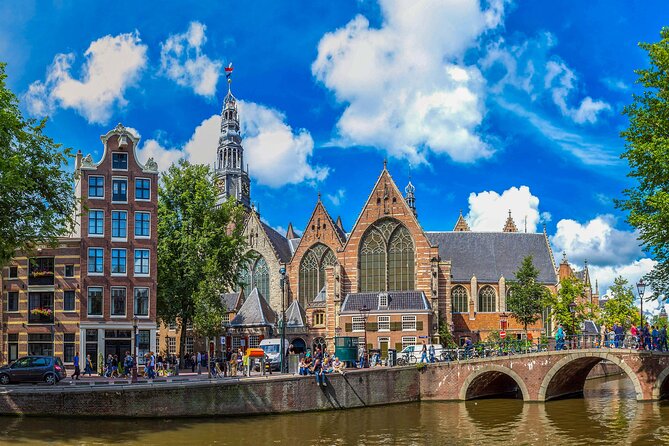
Then you’ll stand near Oude Kerk, Amsterdam’s ancient church. The audio theme here is transformation—how a miraculous healing story became part of why the city developed as a pilgrimage destination. That’s useful because it connects religion to movement and crowds, not just theology.
After the churches, you’ll hit The Waag. The recording talks about anatomical theaters, and it even mentions Rembrandt’s interest in visiting them for inspiration. This is one of those stops where you get a “culture and science weren’t separate” reminder. It also nudges you to see Amsterdam beyond canals and paintings.
De Wallen and Dam Square: the city’s contradictions in walking order
The route explicitly includes the Red Light District (De Wallen). The audio presentation leans into the idea that it’s more than the obvious visual surface: it’s tied to Amsterdam’s port life and long-running city history, with modern life layered on top. If you’re walking through and hoping for respectful context, this stop is built for that.
Then you swing to Dam Square and Damstraat, with Dam Square as the anchor. The audio covers what you’ll see around you—especially the Royal Palace and the New Church—and gives the Netherlands story in a way that ties symbols to power. It’s a good shift because it moves from trade and port life into state-building and national identity.
On the same general square area, you’ll also have a recording for Madame Tussauds Amsterdam. Even if you’re not a wax-museum person, it helps you understand why Dam Square is packed with attractions: it’s the stage where many visitors naturally end up, and the audio uses that reality to keep you from feeling lost.





A nice detail: churches that frame ceremonies
The audio has separate focus on De Nieuwe Kerk (New Church). You’ll hear it as a Gothic building with a role in royal ceremonies. Pairing that with the Royal Palace recording makes the architecture feel less random and more like a planned civic message.
De Papegaai church, the Beguinage, and Amsterdams Lieverdje: quieter stops with meaning
Next, the route brings you to H.H. Petrus en Pauluskerk (De Papegaai). This one’s known for a tall spire and detailed stonework, and the audio gives you the neo-Gothic story so you can see why it feels dramatic in the neighborhood.
After that, there’s a decision-type audio segment about whether you should visit the Amsterdam History Museum. That’s a helpful feature: instead of forcing your hand, it gives context so you can decide on the spot based on your interests and the time you have left.
Then you’ll go to the Beguinage area. The audio points you toward the inner courtyard of the former order and highlights the emergence of early feminists in Europe. The takeaway is simple: the story isn’t only about buildings—it’s about social change and who got space to live, organize, and influence society.
You’ll finish this quieter stretch with the Amsterdams Lieverdje statue at the edge of Vondelpark. The recording focuses on the working-class connection and the meaning behind a small bronze figure. I like this kind of stop because it makes Amsterdam feel less like a sightseeing checklist and more like a place with self-awareness.
Singel and the Bloemenmarkt: the walk gets scenic and practical
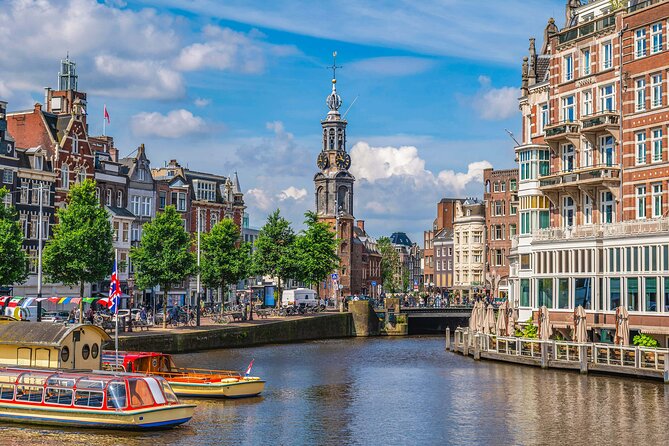
Now you move into canal territory with Singel. The audio calls it Amsterdam’s most ancient canal and links it to the larger story of how many canals the city has and why the system grew the way it did. That’s practical knowledge because canals aren’t just decoration here—they’re part of how neighborhoods formed and how the city worked.
Then comes Bloemenmarkt, the floating flower market along the Singel Canal. The audio frames it as an iconic color-and-fragrance stop that has existed since the 19th century, originally tied to the idea of a hub for flower trade and distribution. Even if you don’t buy anything, it’s a great place to pause, look at how the market sits on water, and enjoy Amsterdam’s “economy meets charm” vibe.
A smart approach here: if you’re short on time, treat Bloemenmarkt as a photo-and-sniff stop, not a long shopping session. The route can carry you onward fast.
Munt Tower, Tuschinski, Rembrandtplein, and the City Archive

From the flower market area, you’ll reach Munt Tower (Munttoren). The audio connects the tower to Amsterdam’s old defensive walls and its role as part of the city’s minting history. This is another stop where the “what you see” (a skyline marker) becomes the “what it meant” (money, defense, power).
Then you’ll get to Pathe Tuschinski, the Art Deco theater opened in 1921. The audio gives enough architectural and cinematic context that the building feels like more than a landmark for movie lovers. You’ll likely notice the ornate interiors more when you know why it matters.
Next is Rembrandtplein, anchored by a Rembrandt statue. The audio positions it as a place where art identity meets modern city life. It’s also a good mental breather after a long string of historic structures.
After that, you’ll visit Stadsarchief Amsterdam (City Archive). The audio describes it as a treasure trove of documents, photos, and maps. Since the listing doesn’t promise a specific visit inside, treat this stop as a “what the building represents” moment and decide later if you want any museum-time. The value is the context: the city keeps records, and you’re walking past institutions that preserve the stories you’re hearing in your headphones.
Heineken, Paradiso, and the Museum Quarter: choosing how much to pay for
The route then points you toward The Heineken Experience. The recording describes it as immersive and interactive, located in the brand’s former brewery. Even if you skip the ticketed experience, the stop can still help you understand why Amsterdam brands and neighborhoods mix so easily—factories become museums, and history becomes entertainment.
After that, you’ll reach Paradiso, described as a famous live music venue with eclectic programming. The audio also points out its origin as a 19th-century church and the presence of dramatic architecture like stained glass. This is a good stop because it shows a common Amsterdam theme: old building, new function.
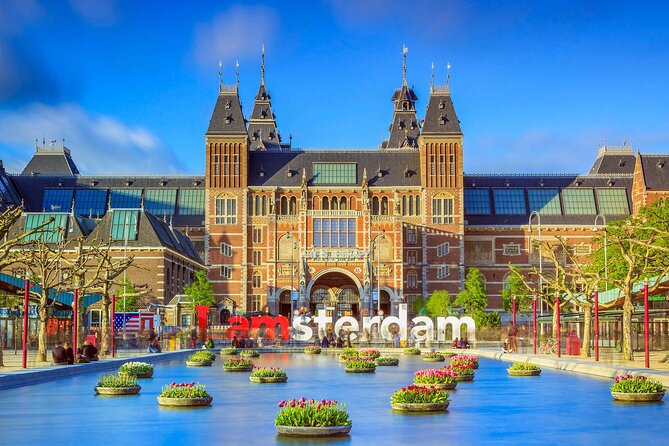
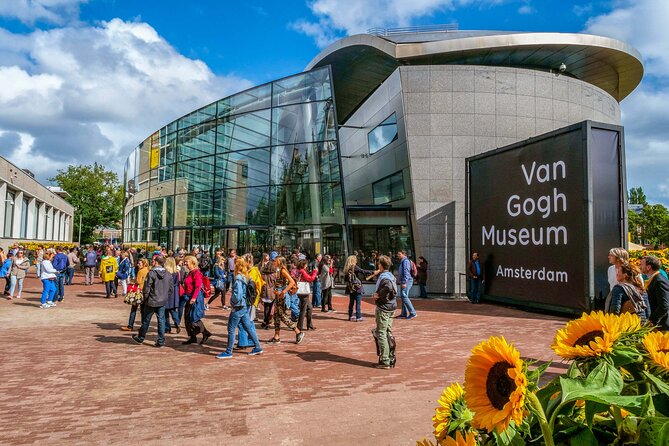
From here, the route shifts toward the major art stretch: Rijksmuseum, Diamant Museum, and Van Gogh Museum are included in the route area. Finally, you reach Museum Quarter (Museumkwartier) and Museumplein, described as the cultural heart that brings together the biggest museum names.
Here’s the key value-and-cost reality: the audio tour doesn’t include entry tickets for museums, and you’ll have to purchase those separately if you want to go inside. Since many earlier stops are listed as free from an admission-ticket standpoint, you can use this segment as your “choose your level” section:
- If you want only the exterior architecture and area vibe, you can keep costs down.
- If you want paintings and major exhibits, you’ll spend more, but you’ll do it with a route that sets context first.
Pace, timing, and how to make the 2.5 hours feel like yours
A roughly 2 hours 30 minutes walk is a good match for a half-day plan. It’s long enough to feel like you covered real ground, but short enough that you can still add dinner, a coffee stop, or a canal cruise afterward.
I’d suggest you start with the recording running while you walk the first few stops. After that, you can adapt:
- If you’re enjoying the stories, let every recording play.
- If you’re just trying to move between highlights, skip forward or pause less often.
The reason this matters is that Amsterdam rewards wandering, but it punishes rigid scheduling. This route gives you a backbone, then gets out of your way.
One more practical thought: because the audio is accessible at any time and your booking includes one-year access in your chosen language, you can also repeat the tour later or replay parts on a return visit. That makes the experience more than a one-and-done city tick.
Price and value: what $8.37 buys you in Amsterdam
At $8.37 per person, the price is mostly about access to the audio package and the route tooling (GPS, offline map, and the recorded historian content). In a city where paid attractions can add up fast, this is a low-commitment way to get smart context before you spend money on museum entries.
The value gets better because the route is built around free street-level sights in multiple parts: Amsterdam Centraal, Weeping Tower, Houten Huys, the Waag area, Dam Square landmarks, and several architectural stops are listed as having free admission tickets. You’re not paying for every step of the walk.
The main “cost consideration” is the same one you’ll feel in any Amsterdam museum day: if you choose to enter ticketed attractions like the major museums, you’ll pay extra. The tour itself still gives you value because it helps you decide what’s worth paying for later.
Who should book this and who should skip it
This works well for you if you like control. You’re the kind of person who stops for a view, checks a facade, then moves on. You also want a guide voice that explains why places exist, not just where they are.
It’s also a strong option for first-timers because it stitches together a lot of Amsterdam themes: station history, trade power, hidden faith, churches, canals, markets, architecture, and the big museum district.
You might skip it if you’re expecting an in-person guide to handle questions on the spot. This is not a Q&A tour. It’s a well-produced audio route that asks you to participate by following the app and staying aware of where you are.
Should you book this Amsterdam smartphone audio walking tour?
If you want a budget-friendly, self-guided Amsterdam walk with GPS help and historian storytelling, this is an easy yes. For $8.37, you’re buying time well used: 2.5 hours of context at street level, with offline navigation that keeps you moving. Add museum tickets only when you decide they’re worth it, and you’ll keep costs under control while still getting the city’s big ideas in your headphones.
FAQ
How long is the Amsterdam Walking Tour with audioguide on your smartphone?
The route runs about 2 hours 30 minutes (approx.).
Where does the tour start and where does it end?
It starts at Amsterdam Centraal on Stationsplein, 1012 AB Amsterdam, and it ends back at the meeting point.
Is the audio guide self-guided or do I meet a person?
It’s self-guided. You’ll download the app, activate your purchase, and follow the route on the app’s map without a human guide.
Does it work offline?
Yes. The tour includes an offline map with GPS navigation.
How many audio stops are included?
The app includes 31 key stops with audio recordings.
Are museum entry tickets included?
No. Entry tickets are not included and must be purchased separately in advance.
What’s the cancellation policy?
You can cancel for a full refund if you cancel at least 24 hours before the experience’s start time.