REVIEW · AMSTERDAM
Anne Frank Walking Tour Amsterdam Including Jewish Cultural Quarter
Book on Viator →Operated by 360 Amsterdam Tours · Bookable on Viator
Walking the Jewish quarter hits different. This experience ties together Jewish life and WWII history by foot, then connects it all to Anne Frank’s story around the neighborhood.
I love the way the tour blends museum admissions with real streets and landmarks, so you’re not just reading labels. I also like the guide-led context—people mention guides such as Manuel, Claire, Carlos, and David for making complicated history clear and respectful. One thing to consider: this tour does not include entry to the Anne Frank House, so plan that separately if you want to go inside.
In This Review
- Quick Take: Key things to know before you go
- Jewish Cultural Quarter: where the past turns into streets
- Getting started at Westermarkt and what your 4–5 hours will feel like
- Jewish Museum: rituals, community life, and the Pesach thread
- Portuguese Synagogue: 17th-century candles and a living house of worship
- Hollandsche Schouwburg: where deportations began
- National Holocaust Museum: the Netherlands-centered story
- The Anne Frank walking portion near Waterlooplein: connecting people to streets
- Price and value: is $75.58 actually a good deal?
- Who should book this tour
- Tips to make the day smoother (and less stressful)
- Should you book? My take
- FAQ
- What language is the tour offered in?
- How long is the experience?
- What’s included besides the walking tour?
- Is entry to the Anne Frank House included?
- Where does the tour start and end?
- Do I need to buy museum tickets separately?
Quick Take: Key things to know before you go
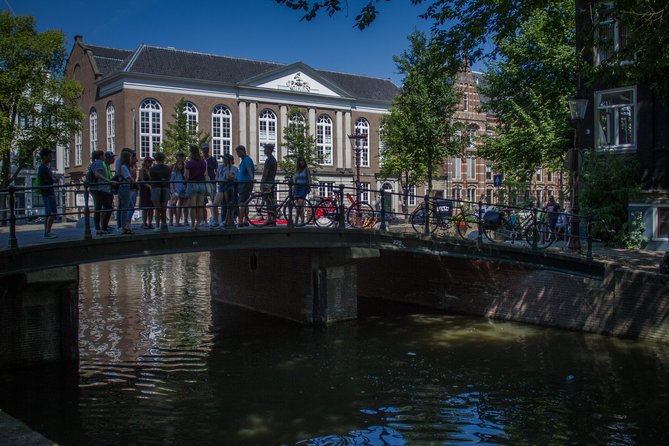
- Small-group size (up to 15) keeps questions possible and the pace manageable.
- Jewish Museum + Portuguese Synagogue gives you living culture before the WWII heartbreak starts.
- Hollandsche Schouwburg memorial and National Holocaust Museum focus tightly on the Netherlands’ persecution story.
- A dedicated Anne Frank walking segment helps you connect the Frank family to specific streets and sights.
- Mobile ticket + English guide availability makes it easier to arrive ready, not hunting for paper.
Jewish Cultural Quarter: where the past turns into streets
If you want the Anne Frank story in its real setting, the Jewish Cultural Quarter is the place. You’re moving through a part of Amsterdam that still carries identity—religion, community, architecture, and daily life—long before the Nazis turned everything upside down.
This tour is designed for a foot-level understanding. You get admissions to major sites, but you also get what those sites mean in context: who was living here, how traditions were practiced, and how persecution unfolded locally, not just as an abstract event.
And you’ll feel the tone shift as you go. The first stops are about culture and continuity; later stops are about deportation, murder, and national remembrance. It’s heavy subject matter, so I’d treat the walking route like a guided classroom rather than a casual stroll.
You can also read our reviews of more tours and experiences in Amsterdam.


Getting started at Westermarkt and what your 4–5 hours will feel like
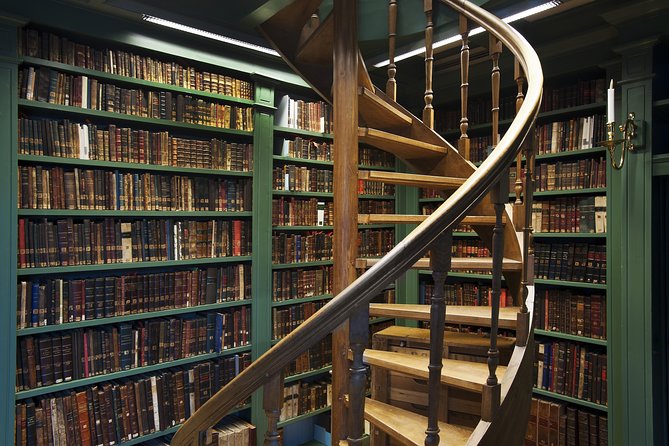
The tour starts at 2pm at Westermarkt (right by the Jewish Museum area). You’ll finish back at Westermarkt, so the structure makes sense even if you plan dinner afterward.
The timing is usually about 4 to 5 hours. The day is built like a sequence: one longer museum stop, a short synagogue visit, Holocaust museum/memorial time, then a longer Anne Frank-focused walking segment. That means you should block off a chunk of your afternoon and not stack big plans right after.
You’ll also want moderate walking stamina. This is a city-walking tour through the Jewish quarter, with several short stops along the way. If you’re used to exploring on foot, you’ll be fine.
One more practical thing: the tour includes admission tickets, but it’s still a walking experience. Plan to use the site entries as part of the flow rather than expecting a slow, guided museum walkthrough that takes over your whole schedule.
Jewish Museum: rituals, community life, and the Pesach thread
Your first major stop is the Jewish Museum. The goal here isn’t just dates—it’s the human “how” of Jewish life. You’ll get answers to questions like how Jewish settlement in the Netherlands began around 1600, what people do for Pesach, and why items like a kippah show up in everyday religious practice.
This is where the tour earns its emotional credibility. When you understand tradition and community first, the later WWII material doesn’t feel like a sudden jump into darkness. It feels like a tragedy that attacked something real and ongoing.
The Jewish Museum stop also includes the Jewish Museum Junior, which is a nice bonus if you’re traveling with kids or teens. Even if you’re traveling solo, it helps explain how the museum thinks about education and storytelling—not just artifacts behind glass.
Expect to spend about an hour here. If you’re the type who reads slowly, you’ll want to enter with a small plan: pick a few sections you care about most so you don’t run out of time.
Portuguese Synagogue: 17th-century candles and a living house of worship
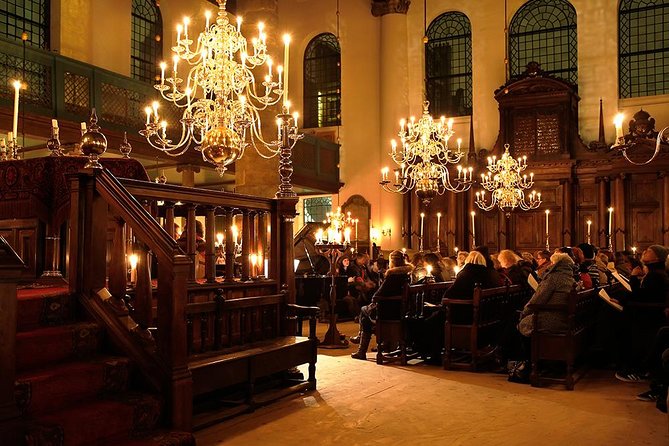
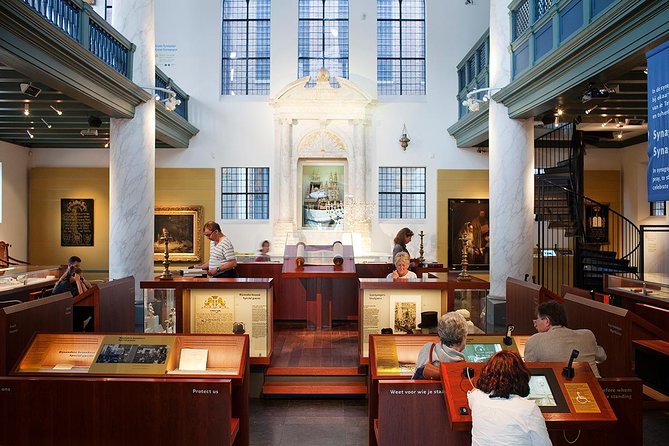
Next comes the Portuguese Synagogue, one of the most striking Jewish landmarks in Amsterdam. It sits in the old Jewish neighborhood, and it’s famous for being the biggest synagogue in the world when it was built in the 17th century.
You’ll see why people call it a time capsule. The building is lit by hundreds of candles rather than modern electric lighting when it’s open in a way that matches how the space is used. It’s not just pretty—it’s a reminder that worship here is still happening, not frozen in museum glass.
Here’s the practical caution: synagogue hours and access can shift because it’s a functioning place of worship. If you’re visiting on a day when services are happening (Saturday/Sabbath timing is a common issue), you might not be able to see everything inside.
The visit is short—around 20 minutes—so treat it like a focused look. You’ll get the main experience and then move on while the day’s energy stays cohesive.
Hollandsche Schouwburg: where deportations began

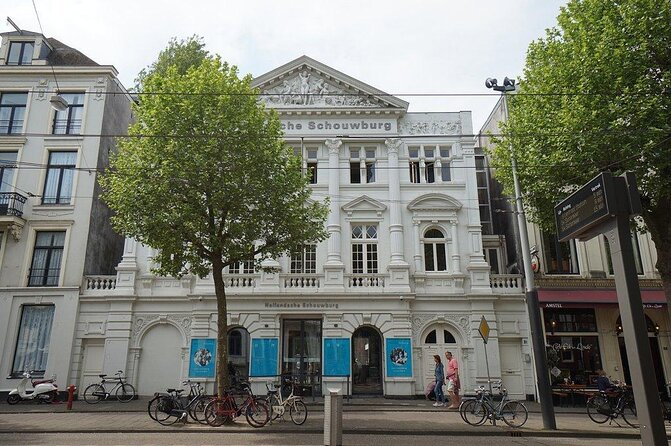
After the synagogue, the tone changes in a way you’ll feel in your body. You’ll visit Hollandsche Schouwburg, the National Holocaust Memorial connected to the theatre the Nazis seized during WWII.
This site matters because it was a holding point—people were assembled here for deportation starting in July 1942. Tens of thousands passed through those doors. Many were kept for hours, days, or even weeks before being sent onward.
In the memorial, the scale can be shocking. One of the details I loved seeing described by visitors is how the memorial uses 100,300 bricks with names of those murdered. It turns a number into an overwhelming list.
You might also notice the approach Amsterdam uses for remembrance in public space, where nameplates in the surrounding area reference stolen lives and where victims were sent. It makes the neighborhood itself part of the warning: history happened here, and it keeps being remembered here.
The stop is around 30 minutes, but give yourself permission to slow down. This isn’t the place for rushing photos and then moving on.





National Holocaust Museum: the Netherlands-centered story
Then you head to the National Holocaust Museum. This museum stands out because it focuses specifically on the persecution and murder of Jews across the Netherlands, not just a general Europe-wide overview.
You’ll see how life looked before the war—Jews and non-Jews sharing rights and neighborhoods—and then how Nazi policies and collaborators changed daily life step by step. The museum also covers liberation as Jews experienced it, plus how Holocaust remembrance is handled in national culture.
The visit time is about 30 minutes. That’s short for a museum, so your best move is to go in with curiosity, not expectations of reading everything. You’ll come away with the “why” and the “how,” which is what you need for the Anne Frank portion to land.
If you’re sensitive to intense content, it still tends to be structured and guided by the museum’s narrative pacing. You can usually take small breaks during the visit without derailing the group.
The Anne Frank walking portion near Waterlooplein: connecting people to streets
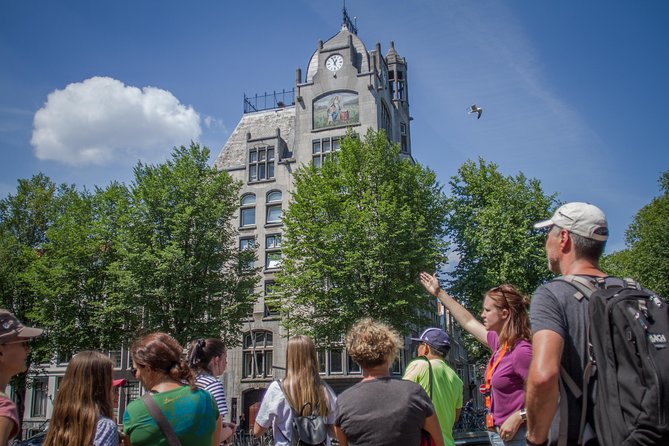
The heart of this experience is the Anne Frank walking segment. After the Holocaust sites, you’ll move through the neighborhood as a guided story—how the Frank family’s situation fits into the broader Dutch Jewish experience.
The Anne Frank portion is about 2 hours. That’s plenty of time for your guide to point out where people lived, how the neighborhood functioned, and how events in WWII shaped the Frank family’s reality.
This is also where guide personality shows up the most. People often mention guides such as Manuel and Arthur for keeping the pace humane and for connecting buildings to events you’ll remember. Others, like Claire and Giovanni, are praised for thoughtful, respectful explanations that help you ask questions without feeling rushed.
Important: this tour includes the walking and the related admissions listed, but it does not include entry to the Anne Frank House. If you want to go inside the annex, book that separately well in advance so your day doesn’t turn into a scramble.
Also, don’t expect a strict “museum tour” inside every stop as part of the walking segment. Some operators focus on giving you history on the sidewalk and then letting your included tickets handle the inside time.
Price and value: is $75.58 actually a good deal?
At about $75.58 per person, the value mostly comes from two things: (1) multiple included admissions and (2) having a guide connect them into one story.
You’re paying for the convenience of included entry to major sites like the Jewish Museum, Portuguese Synagogue, National Holocaust Museum, and the National Holocaust Memorial (Hollandsche Schouwburg). If you bought tickets one by one and then tried to stitch the story together yourself, you’d spend time and effort—and you might miss the connections a strong guide makes.
The guide component matters here. Names that come up often include Manuel, David, Carlos, and Claire, with praise for historical context and a respectful tone. When the guide is good, the tour becomes less like “checklist sightseeing” and more like understanding what you’re looking at.
Where value can wobble is logistics. A few people reported problems like museum tickets not being available when expected, or confusion about what was included in the schedule. My advice is simple: save your confirmation details, arrive early enough to sort any ticket/email issues, and treat the day as guided walking plus included admissions—not an automatic guarantee of extra museum time.
Who should book this tour
This tour fits best if:
- you want context for Anne Frank beyond just the house
- you care about the Jewish Cultural Quarter as a living place and not only a WWII backdrop
- you prefer a structured route with a guide to keep the story coherent
- you’re okay with a heavy Holocaust focus as part of the day
It may be less ideal if you’re hoping for a long, guided walkthrough inside every building. The structure is designed for a walking experience with admissions and time windows, so if you’re a slow museum reader who wants hours inside each site, you might feel rushed.
For families, the Jewish Museum Junior inclusion can help, and the guided route keeps everyone moving. For history buffs new to Amsterdam’s Jewish story, it’s a strong introduction because it starts with culture and ends with persecution and remembrance.
Tips to make the day smoother (and less stressful)
- Arrive ready at 2pm. This route depends on keeping the timeline together.
- Wear comfortable shoes. You’ll be moving between sites and standing during explanations.
- If you plan to see the Anne Frank House afterward, book it separately and aim for a time that doesn’t depend on the walking tour running late.
- Save your mobile ticket info and confirmation details so ticket access is painless when you reach each site.
- Take a slower pace on the memorial stop. This is the moment to pause and let the meaning land.
A good guide makes a big difference. When you get someone like Manuel, Claire, or Carlos, you leave with the “why” behind the buildings, not just a list of what they are.
Should you book? My take
If you want an Anne Frank experience that explains what was happening around the Frank family before the hiding story—Jewish community, traditions, and local persecution—this is a solid choice. The included admissions make it efficient, and the guide-led route helps you connect the dots without doing homework at home first.
I’d book it if you’re comfortable with WWII and Holocaust remembrance being a central part of the afternoon. I’d also book it if you like learning by walking and seeing how a neighborhood tells a story.
I would not book it as your only plan for Anne Frank. Since the Anne Frank House entry isn’t included, you’ll need separate tickets if you want to go inside. If you handle that in advance, this tour becomes a strong way to understand the story with real place-based context.
FAQ
What language is the tour offered in?
It’s offered in English.
How long is the experience?
It runs about 4 to 5 hours.
What’s included besides the walking tour?
Admission tickets are included for the Jewish Museum (and Jewish Museum Junior), the Portuguese Synagogue, the National Holocaust Museum, and the National Holocaust Memorial (Hollandsche Schouwburg).
Is entry to the Anne Frank House included?
No. Entry/Admission to the Anne Frank House is not included.
Where does the tour start and end?
It starts and ends at Westermarkt, 1016 Amsterdam, Netherlands.
Do I need to buy museum tickets separately?
No for the sites listed as included (Jewish Museum, Portuguese Synagogue, National Holocaust Museum, and Hollandsche Schouwburg). You should still plan your Anne Frank House visit separately if you want to go inside.