REVIEW · AMSTERDAM
Amsterdam Canal Cruise with Cheese and Wine
Book on Viator →Operated by Voyage Amsterdam · Bookable on Viator
Amsterdam’s canal story hits fast—then it drifts into cheese and wine. This 1-hour cruise is built for first-timers who want quick orientation, with live guided commentary you can actually ask questions about. I like the small, traditional wooden boat feel, and I like that the cheese-and-wine add-on makes the whole thing feel more like a relaxed evening than a rushed sightseeing checklist.
There’s one catch: this is short, and the vibe can swing toward jokes and social flow. If you’re the type who wants long, careful history stops at every famous spot, plan for the fact that you might not get every detail you hoped for in just one hour.
Still, the payoff is real. When the host is in a good rhythm (I’ve seen names like Dean, Kevin, and Sam pop up as guides who keep people smiling), you’ll leave with a clearer sense of where the big canals, bridges, and neighborhoods fit together.
In This Review
- Key Things You’ll Notice on This Cruise
- Entering the Canal Ring from the Jordaan in Just One Hour
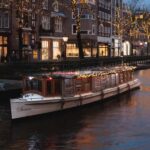
- Wooden Boat, Small Crowd, and the Best Seat Strategy
- Cheese and Wine: Good Add-On, Not a Detailed Tasting Class
- The Route You’ll Likely Follow: Prinsengracht and the Jordaan Map in Motion
- UNESCO Canal-Belt Landmarks: What You Learn Without Needing a Lecture
- Anne Frank Context Along the Canal Drive
- Bridge Spotting: Blauwbrug and Magere Brug (Skinny Bridge)
- The Amstel and the “How Amsterdam Began” Story
- Singel, Munttoren, and the Medieval Moat-to-Inner-Ring Shift
- Floating Flower Market and the Canal-Belt View You Can’t Copy
- Service Style: When It Works, It’s a Fun Show
- Timing Matters: Day vs Night and Busy-Day Effects
- Price and Value: Is $43.39 Worth It?
- Who This Cruise Fits Best (and Who Should Skip)
- Should You Book This Amsterdam Canal Cruise with Cheese and Wine?
- FAQ
- How long is the Amsterdam Canal Cruise?
- How much does the tour cost?
- Is the tour offered in English?
- What kind of boat will I be on?
- How many people are on the boat?
- What do I get with the cheese and wine option?
- Do I need a printed ticket?
- Is the tour dependent on weather?
- Is there free cancellation?
- Are service animals allowed?
Key Things You’ll Notice on This Cruise
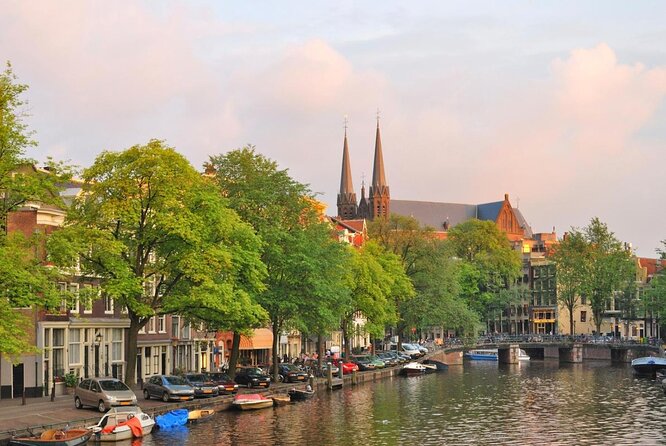
- A fast 1-hour loop built for getting your bearings in Amsterdam
- Live English narration with a real chance to ask questions
- Cheese and wine included in an intimate setting (up to 25 people on the boat)
- Prinsengracht and Jordaan focus, with stops for major canal-belt landmarks
- Multiple departure points and times, so you can match your schedule
Entering the Canal Ring from the Jordaan in Just One Hour
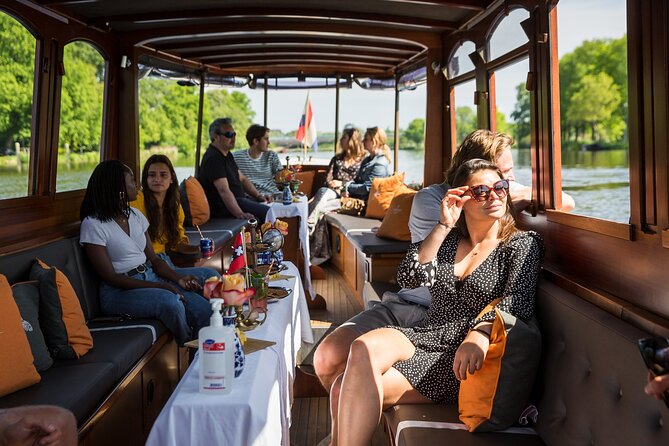
This tour is designed like a city orientation tool. You start and end in the Jordaan area, so the cruise gives you a loop that feels efficient rather than exhausting. In about an hour, you’ll pick up the big geography: how Amsterdam’s canal ring works, what the names mean, and how neighborhoods connect across water.
The guided talk is live, not a prerecorded playlist. That matters in Amsterdam, where the “why this canal exists” and “what this bridge connects” details can turn random views into something you can remember. You’re also not trapped—if you have a question, you can ask during the ride.
And yes, the cheese-and-wine part changes the feel. It turns a basic canal cruise into an easy, pleasant way to slow down without spending hours on a long itinerary.
You can also read our reviews of more tours and experiences in Amsterdam.
Wooden Boat, Small Crowd, and the Best Seat Strategy
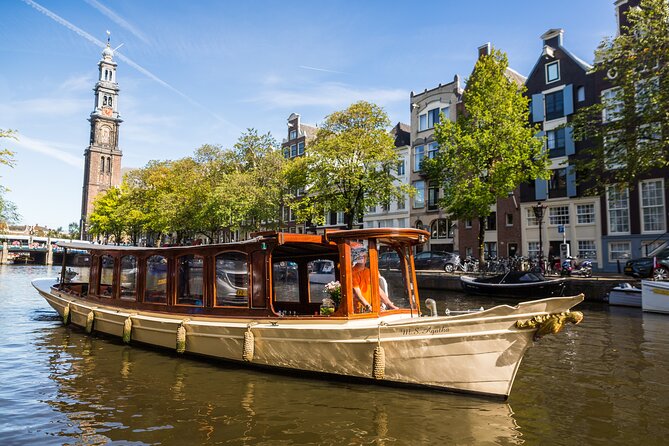
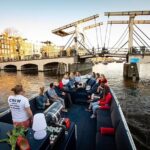
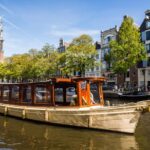
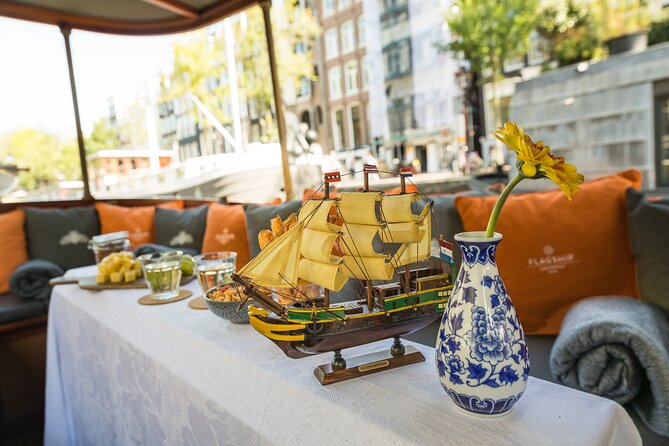
You’ll be on a traditional wooden boat, with up to 25 passengers. That size is a big deal. It’s small enough to feel personal, but still practical for a lively group atmosphere.
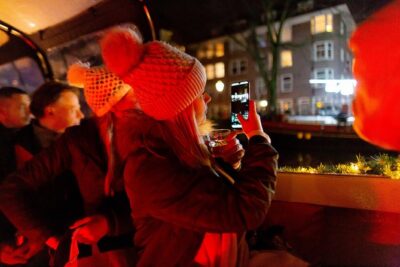
Here’s the simple seating tip: if your boat has sight lines that open toward the back, choose the back area. One review specifically called out that sitting toward the rear can mean fewer visual distractions (like windows) and a better view of the passing canals and buildings. If you want the best photos, arriving a few minutes early to choose your spot helps.
The overall tour cap is 48 travelers, which usually suggests multiple time slots or boats operating around the same experience. Either way, you’re unlikely to feel swallowed by a crowd the way you might on a massive canal bus-boat.
Cheese and Wine: Good Add-On, Not a Detailed Tasting Class
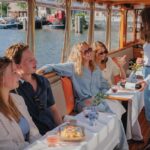
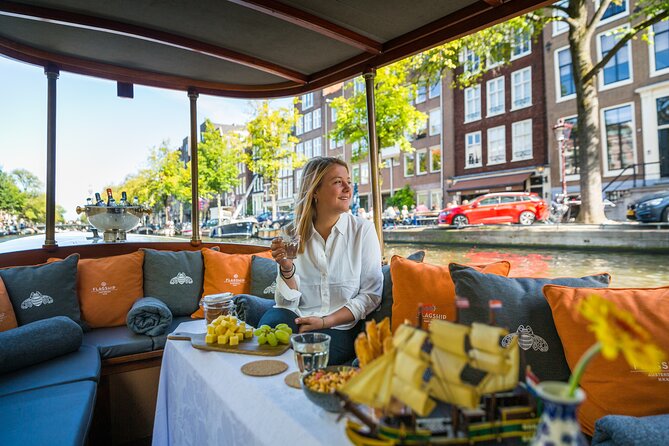
You get cheese and wine as part of the experience, plus the cruise atmosphere encourages you to snack while you look around. This is not described as a deep cheese tasting lesson or a winery-style flight. So if your main goal is to learn every crumb of why a cheese is made a certain way, set expectations accordingly.
From what’s been shared, portions and service can vary by timing and how the boarding flow goes. That means you should arrive with the mindset that it’s a fun pairing, not a guaranteed gourmet presentation. You might see cheese shared on boards, and wine service usually comes with a handful of choices rather than a long menu.
The upside is that the pairing works. Cheese plus a guided canal ride makes the experience feel rounded—Amsterdam’s canal belt looks better when you’re not scanning your watch every five minutes.
The Route You’ll Likely Follow: Prinsengracht and the Jordaan Map in Motion
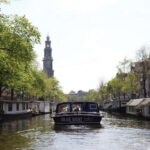
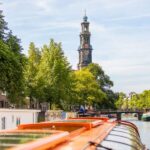
The cruise centers on the Prinsengracht, one of Amsterdam’s key canals, and it weaves through the areas that make the canal belt feel like a real neighborhood system. If you’re new to Amsterdam, Prinsengracht gives you a strong visual anchor: canal houses, bridges, and the “three-canals ring” idea start to click.
You’ll get commentary about the Prinsengracht and nearby streets and canals, including the Jordaan connection. There are also two common stories about the name’s origin—one ties it to the French word Jardin (garden), and another links it to naming ideas related to the Jordaan neighborhood. Even if you don’t care about etymology, it helps you understand why certain street patterns and neighborhood names feel like they share a theme.
You’ll also cruise past a houseboat museum on the Prinsengracht. Seeing a houseboat setting from the canal is one of those Amsterdam moments that can’t be fully replaced by photos—water-level views change what “home” means here.
And yes, the tour name and the neighborhood connection matter: the Jordaan shows up again through the route concept and the way the ride is planned to start and end there.
UNESCO Canal-Belt Landmarks: What You Learn Without Needing a Lecture
Amsterdam’s famous canal belt—the Grachtengordel—is a 17th-century urban project. You’ll hear how the main canals (Herengracht, Prinsengracht, and Keizersgracht) form concentric belts around the city. Alongside them sit a huge number of monumental buildings, and the area (including the Jordaan) was listed as a UNESCO World Heritage Site in 2010.
The value of this on a boat is practical. You’re not reading a plaque on land and hoping it sticks. You’re watching the spatial layout unfold in front of you. In one hour, the idea of “this is a ring” becomes visible, and the names stop sounding random.
A key part of the conversation includes bridges and canal crossings—because in Amsterdam, bridges are not just transport. They’re connections between communities, streets, and viewpoints. When the guide points out where a bridge leads, the city starts behaving like a map you can navigate.

Anne Frank Context Along the Canal Drive
One of the stop topics includes Annelies Marie Frank—known for the diary she wrote while in hiding in Amsterdam during the Second World War. She later died in Bergen-Belsen, and the guide’s narration includes the context of exhaustion and/or typhus fever.
You should treat this as an interpretive stop. It’s not a museum visit where you can linger. But it’s still meaningful: hearing her story in the place that shaped her hiding period helps ground the canal views in something real and human, not just architecture.
There’s also a practical note. Some cruises sometimes focus more on the general canal-belt loop than a strict, pass-every-single-site route. So if seeing a specific Anne Frank House location is your top priority, keep your expectations flexible on a 1-hour canal format.
Bridge Spotting: Blauwbrug and Magere Brug (Skinny Bridge)
Two bridge topics pop up that make Amsterdam easy to recognize.
Blauwbrug (Blue Bridge) connects the Rembrandtplein area with the Waterlooplein area and sits south of the Stopera. Hearing the connection between those zones can help you mentally place yourself. It’s the kind of detail that turns “I see a lot of bridges” into “I know what this bridge connects.”
Then there’s Magere Brug, often called the Skinny Bridge. It’s a wooden drawbridge on the Amstel, and it’s known for being narrow—once so narrow that two pedestrians had trouble passing each other. A wider bridge replaced the old version in 1871, which gives you a small lesson in how Amsterdam changes while keeping old-world silhouettes.
When you’re on the water, drawbridges also feel different. You’re not looking up at them from a sidewalk; you’re at their level. That makes the scale and design easier to read.
The Amstel and the “How Amsterdam Began” Story
You’ll also hear the basic origin story tied to the Amstel. The Amstel is described as the biggest canal, and the idea goes back to Amsterdam’s founding: fishermen built a “dam” there, and the city took shape around that point.
Why this matters on this cruise: it gives a cause-and-effect behind the canals. It’s not just pretty water and buildings. It’s a city built around how you control and use water.
If you like city origins, this is a quick way to get the framework without buying a guidebook and hoping you’ll read it later.
Singel, Munttoren, and the Medieval Moat-to-Inner-Ring Shift
Another stop topic is the Singel. This canal once encircled Amsterdam in the Middle Ages and served as a moat until 1585, when the city expanded beyond it. The Singel runs from the IJ bay near Central Station to Muntplein, where it meets the Amstel river.
That detail helps you understand why Amsterdam’s “inner” feels different from the outer neighborhoods: the city didn’t grow in a straight line. It expanded outward from water defenses, then repurposed the canals into something new—still water, but now woven into everyday life.
You’ll also hear about Munttoren (Mint Tower). It was part of Regulierspoort—medieval city wall gates with a tower on each side—built between 1480 and 1487. In the 17th century, the tower was used to mint coins. Again, you’re getting the sense of function: these landmarks weren’t only for looks. They served the city.
Floating Flower Market and the Canal-Belt View You Can’t Copy
The Amsterdam Flower Market is included as a standout stop topic. It’s described as the only floating flower market in the world, operating since 1862. The stalls sit on houseboats, and it’s one of those places where the canal view becomes part of the product.
If you’re walking Amsterdam later, this stop gives you a mental anchor. You’ll recognize the vibe immediately: the canal-level market feel, the boats, and the fact that commerce in Amsterdam often happens right on the water.
There’s also mention of museums and canal storytelling nearby in the route conversation, including the Grachtenhuis, a museum on Herengracht dedicated to the 17th-century canal belt. On the cruise, you’re mainly absorbing the location and concept, not touring inside.
Service Style: When It Works, It’s a Fun Show
The narration style can vary by guide. Some hosts mix humor with facts, in a way that keeps the boat lively. Names like Kevin and Dean have been shared as guides who bring energy, while others have been described as more comedian-and-bartender than strict lecturer.
That can be a big plus. If you like a light, playful tone, you’ll probably enjoy the experience more than you expected. You’ll also have a chance to ask questions, which can turn a joke into a real city answer.
But if your goal is heavy history, you may find the pacing too quick. In a 1-hour format, the guide has to pick a lane: comedy, drinks, or facts. Most of the time, you’ll get a mix, just not equal weight for everything.
Timing Matters: Day vs Night and Busy-Day Effects
This cruise is offered at multiple times, and it depends on good weather. You’ll also feel the pressure of schedules: the dock area can be crowded on busy port days, and boarding can get messy when there are lots of people and multiple groups arriving together.
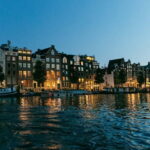
Daytime usually helps photos and clarity, but nighttime is hit-or-miss depending on the overall city traffic and the way the boat is routed. If you’re booking specifically for dramatic night views, choose a time with good visibility and reasonable expectations for a short loop.
My practical advice: arrive early enough to settle in. Bring patience for the first few minutes at the dock. Once you’re underway, the cruise settles into its real rhythm.
Price and Value: Is $43.39 Worth It?
At $43.39 per person for about 1 hour, you’re paying for three things: canal orientation, live English narration, and a cheese-and-wine experience. For many people, that’s the right trade.
If you’ve only got one “must-do” that gives you views and meaning without stretching your whole day, this fits. You’re not just drinking while sitting still. You’re getting context for what you’re seeing—UNESCO canal ring basics, bridge connections, and why the neighborhood names make sense.
Where the value can feel weaker is if you wanted more. For example, if you’re hunting for a strict, long list of major stops in a single departure, a 1-hour cruise can feel short—even when the route is good.
So I’d frame it like this: buy it to get grounded in the canal belt and enjoy a snack-and-sip experience. Don’t buy it expecting a full, deep museum-style history tour.
Who This Cruise Fits Best (and Who Should Skip)
This is best for:
- First-timers who want fast orientation on Amsterdam’s canal belt
- People who like a light guide style with room for questions
- Anyone who wants wine and cheese without building a full night plan
You might want another option if:
- You want a long, quiet history lecture with lots of stops
- You’re very food-specific and want exact tasting variety and presentation
- You’re traveling on a very tight schedule where a dock delay would be a real problem
Also keep in mind: it’s offered in English, and it’s described as suitable for most people. Service animals are allowed, and the meeting area is near public transportation.
Should You Book This Amsterdam Canal Cruise with Cheese and Wine?
I’d book it if you want a one-hour, practical Amsterdam hit: canals you recognize, bridge names you can repeat, and a glass of wine that makes the ride feel special. It’s also a strong choice when you want your evening plan to be simple and not overthought.
I’d pause before booking if your priority is deep, site-by-site history or a guaranteed pass-by of every single famous location you’ve pinned. In a short cruise, the experience depends on the guide’s style and the route pacing.
If you do book, my best advice is straightforward: pick a departure that fits your energy level, arrive early for boarding comfort, and sit where you’ll get the cleanest sight lines. Then relax into the ride. Amsterdam’s canals work best when you stop trying to capture everything—and let the city teach you its layout one bridge at a time.
FAQ
How long is the Amsterdam Canal Cruise?
The cruise is listed at about 1 hour.
How much does the tour cost?
The price is $43.39 per person.
Is the tour offered in English?
Yes, the live guided commentary is offered in English.
What kind of boat will I be on?
You’ll travel on a traditional wooden boat.
How many people are on the boat?
The tour is described as up to 25 passengers on the boat, and the overall experience has a maximum of 48 travelers.
What do I get with the cheese and wine option?
The experience includes cheese and wine, and the tour is designed to be enjoyed while cruising.
Do I need a printed ticket?
No. The tour offers a mobile ticket.
Is the tour dependent on weather?
Yes. It requires good weather, and if it’s canceled due to poor weather, you’ll be offered a different date or a full refund.
Is there free cancellation?
Yes. You can cancel up to 24 hours in advance for a full refund. If you cancel less than 24 hours before the start time, it won’t be refunded.
Are service animals allowed?
Yes, service animals are allowed.