REVIEW · NIJMEGEN
e-Scavenger hunt Nijmegen: Explore the city at your own pace
Book on Viator →Operated by Qula · Bookable on Viator
If you like exploring under your own rhythm, this one clicks. The e-Scavenger hunt Nijmegen is a smartphone city game that turns landmarks into puzzle stops, with GPS helping you find each place. It’s self-guided, family-friendly, and built for groups from 2 up to 6 people.
What I like most is the freedom: you can start when you want, pause mid-walk, and keep going later without feeling rushed. I also like that the game mixes navigation with brainwork—solve riddles and location challenges as you move from square to street to monument. One thing to keep in mind: the experience can feel a bit clunky on the phone (for some groups you’ll be switching between map and questions a lot), and a handful of questions may feel more general than tightly tied to the exact spot.
You’re not signing up for a lecture. You’re signing up for a low-cost way to explore Nijmegen like you’re in charge of the day.
In This Review
- Key things to know before you start
- How the e-Scavenger hunt app turns Nijmegen into a game
- Price and group size: what $37.35 gets you
- Your route in Nijmegen: how the 18-stop loop plays out
- Stop-by-stop: what each location contributes to the story
- Stop 1: Marienburgkapel
- Stop 2: Latijnse School Nijmegen
- Stop 3: Stadsschouwburg & Philharmonie Haarlem
- Stop 4: Stevenskerk
- Stop 5: Grote Markt
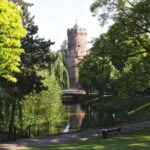
- Stop 6: Valkhof Park
- Stop 7: Valkhof Museum
- Stop 8: Rijksmonument Valkhofkapel of Sint-Nicolaaskapel
- Stop 9: De Waal
- Stop 10: Museum Van Lymborch Brothers House
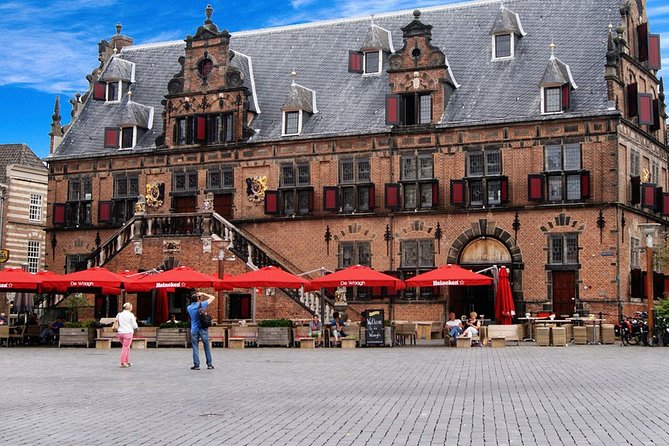
- Stop 11: De Waagh
- Stop 12: Waalbrug
- Stop 13: Stadhuis
- Stop 14: Rijksmonument Barbarossa-ruine of ruine apsis Sint-Maartenskapel
- Stop 15: muZIEum
- Stop 16: Velorama National Bicycle Museum
- Stop 17: Lange Hezelstraat
- Stop 18: Nijmegen
- Pacing, food breaks, and getting through rain
- What might not work as smoothly (and how to fix it)
- Who this e-Scavenger hunt suits best
- Should you book the e-Scavenger hunt in Nijmegen?
- FAQ
- What is the e-Scavenger hunt Nijmegen?
- How long does the experience take?
- What does it cost?
- Where does the hunt start and end?
- Do I need a smartphone and data?
- Can I start and stop whenever I want?
- How is the hunt designed for groups?
- Are service animals allowed?
- Is it near public transportation?
- Is there a cancellation option?
Key things to know before you start
- Self-guided with GPS so you’re not stuck following a rigid route
- Riddles and search assignments that reward curiosity, not speed
- Works for groups (up to 6) and you can play in smaller teams too
- No strict time pressure—ideal if you want photo stops and snacks
- A long-ish walk loop across lots of recognizable Nijmegen landmarks
- Smartphone + data needed since it’s played on your device
How the e-Scavenger hunt app turns Nijmegen into a game
This is a city trail you play through an online app (you’ll log in in the free city game app). You use your smartphone to follow the next clue, then answer questions tied to that stop—or at least tied to the broader context of where you are. The game is designed to feel like a scavenger hunt: you move, you look, and you solve.
You’re also in control of pacing. The experience is built so you can stop and pause when you want, then resume later. That matters in a city walk, because real life happens: lunch lines, weather, kids needing a bathroom break, or you just wanting one more look at a church facade or square.
Gameplay is also structured for points. You’ll solve riddles and challenges and aim for high scores, which helps keep it fun when you’re walking longer than you first planned. And because it’s family-friendly, the tone is more “playful discovery” than “test your trivia facts.”
The practical downside is the interface style. If you’re expecting a slick dedicated app experience where the next clue floats naturally on-screen, some people may find the setup more like switching between views while you walk. That’s not a dealbreaker, but it’s worth knowing so you can bring patience—and a phone battery you can trust.
You can also read our reviews of more tours and experiences in Nijmegen.


Price and group size: what $37.35 gets you
The price is $37.35 per group, up to 6 people, for about 3 hours (approx.). That’s the key value math: if you’re visiting Nijmegen with friends or family, you’re not paying per person for a guided service. Instead, you’re splitting a group cost for an activity that keeps everyone engaged.
Here’s how I’d think about it:
- If you’re 2 people: you still get the game structure, but your per-person cost is higher.
- If you’re 4 to 6 people: it becomes one of the more affordable ways to turn a walk into a shared challenge.
- If you’re a mixed-age group: the “puzzle plus place” format gives different people different ways to contribute—one person reads, another searches, another navigates.
Also, the game is available whenever you want once you’re set up. The schedule listed is 00:00 to 23:59, Monday through Sunday, so it’s built for flexible planning rather than slotting your day around a guide’s arrival time.
Your route in Nijmegen: how the 18-stop loop plays out
The trail is laid out as a sequence of stops that you work through in order, starting and ending at the same place. The walk begins at Kelfkensbos, 6511 Nijmegen, and ends back at the meeting point.
Time-wise, think of it as around 3 hours if you’re moving steadily and not lingering too long at every clue. In real life, it can run longer, especially if:
- you pause for a relaxed lunch,
- you stop to read things slowly,
- you’re working hard on answers,
- the weather isn’t cooperating and you take cover between segments.
The big planning tip: bring the mindset of a scavenger hunt, not a guided sightseeing route. You’ll cover a lot of ground and many famous Nijmegen areas appear in the stop list. The upside is variety; the downside is that if you’re expecting a clearly marked walking route on your screen, you might have to do a bit more “find our way” work.
Stop-by-stop: what each location contributes to the story
Below is what your app sequence includes. I’ll explain what each stop represents in the walk and the kind of moment it creates, based on the location names and typical city-trail logic.
Stop 1: Marienburgkapel
This is a strong opening stop if you want atmosphere right away. A chapel name like Marienburgkapel usually signals a quieter, more detailed spot—perfect for a first puzzle where the game trains you on how to look.


Stop 2: Latijnse School Nijmegen
The Latin School stop is your “culture and learning” beat. Expect questions that lean historical or educational, even if the clues feel more about the theme than one single object.
Stop 3: Stadsschouwburg & Philharmonie Haarlem
This is the one odd item in the stop list. Stadsschouwburg & Philharmonie Haarlem belongs to Haarlem, not Nijmegen. Practically, treat this as a “follow what the app shows” moment. If your map view in the game doesn’t match where you physically are, pause and re-check the next clue in the app before walking onward.
Stop 4: Stevenskerk
Stevenskerk (a church) is a classic type of scavenger-hunt stop: big exterior details, a clear landmark, and enough space around it to stop, read, and answer.
Stop 5: Grote Markt
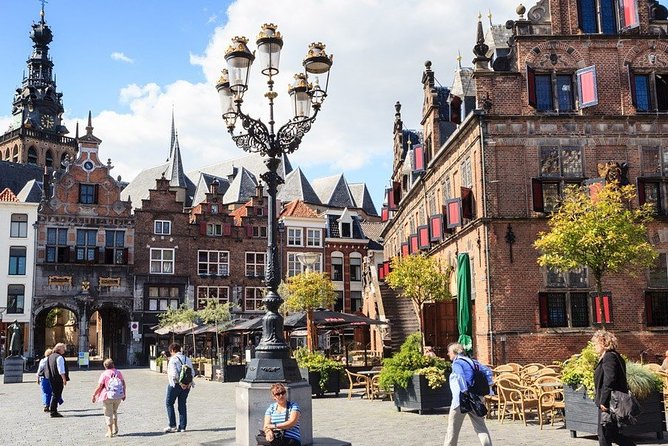
Grote Markt is your main-square kind of stop. This is where city trail games shine because squares let you regroup, compare answers, and take a quick break without losing the thread.
Stop 6: Valkhof Park
Valkhof Park adds a green-spacer feel to the route. If the game includes a question that requires scanning nearby surroundings, parks are ideal for that—look for signs, features, or views rather than only street-level text.
Stop 7: Valkhof Museum
A museum stop usually means the clues may connect to collections, architecture, or what you can observe around the venue. Even without going inside (if you choose not to), the building and surrounding area can provide enough visual context for puzzle answers.
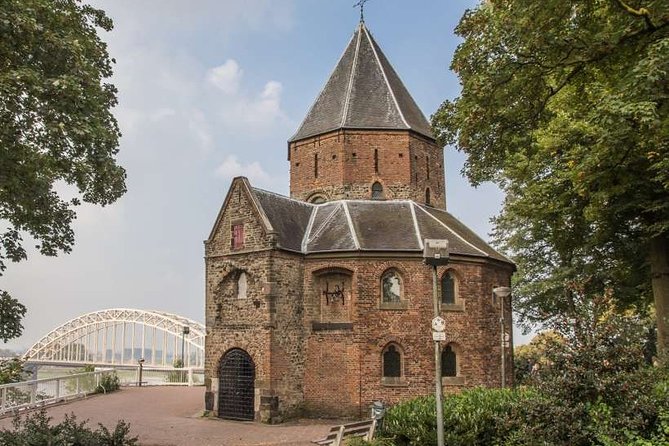
Stop 8: Rijksmonument Valkhofkapel of Sint-Nicolaaskapel
This stop is more specific: a Rijksmonument tied to Valkhofkapel or Sint-Nicolaaskapel. That suggests the game may ask you to focus on protected heritage details. It’s a good place for slow-down thinking—read carefully, then decide on your answer.
Stop 9: De Waal
De Waal is the river segment. River stops are great for scavenger hunts because the landscape offers obvious reference points. It’s also where you’ll likely feel the walk shift—water views make the route feel less like pure “urban hopping” and more like a real stroll.
Stop 10: Museum Van Lymborch Brothers House
Another museum/heritage-style stop. Names like this usually bring strong identity. For your team, this is a good “work together” location: one person can scan surroundings while another works through the questions.
Stop 11: De Waagh
Waagh implies a historic weighing house or related civic function (again, the name points you toward a heritage building). This is where the game can get a bit more concept-based, not only visual.
Stop 12: Waalbrug
Waalbrug (bridge) is a natural checkpoint in many city trail games. Bridges also help with navigation because they’re unmistakable. If your team is stuck on a clue, a bridge segment can reset your bearings.
Stop 13: Stadhuis
Stadhuis means city hall. This stop is usually about civic spaces, symmetry, and landmark recognition—exactly the kind of place where a riddle can be answered by noticing details.
Stop 14: Rijksmonument Barbarossa-ruine of ruine apsis Sint-Maartenskapel
This is a heavy-hitting heritage stop with a specific reference to Barbarossa-ruine and/or the ruine apsis Sint-Maartenskapel. Expect the app to ask something that encourages careful reading or observation. If you’re walking with mixed ages, this is where splitting roles helps: one person reads the prompt out loud; another focuses on the physical surroundings.
Stop 15: muZIEum
A museum stop with a distinctive name. This kind of venue can also make the game feel playful rather than purely academic, since the name itself is memorable.
Stop 16: Velorama National Bicycle Museum
Velorama is a huge practical win for families and cycling fans. If the puzzle choices connect to bicycles or the museum identity, this stop can turn into a fun, easy win.
Stop 17: Lange Hezelstraat
Lange Hezelstraat is a long street segment—often a place for clues that require patience and reading rather than only spotting one landmark. It’s a good time to regroup if your team has momentum or if you’ve been stuck on earlier riddles.
Stop 18: Nijmegen
The final stop simply says Nijmegen. That typically means a wrap-up location or final checkpoint that guides you back toward the finish. Treat it as your “last answers, final points” moment before returning to Kelfkensbos.
Pacing, food breaks, and getting through rain
The experience is designed so you’re not on a stopwatch. That makes it much easier to build in real breaks. If you want lunch, plan to stop mid-route and take the game with you. The game flow is built around pausing and resuming, so you don’t lose everything when you step into a café.
If the weather turns wet (and Nijmegen can do that), keep two things in mind:
- Your phone screen becomes more annoying in rain. Bring a simple phone cover or handle with care.
- Answering riddles slows down when you’re cold or distracted. In that case, it can help to split tasks: one person navigates; another concentrates on reading and typing.
Also, some people end up walking longer than the advertised 3 hours, especially if you like to linger or keep solving even after you feel “close.” My advice: treat it as a half-day activity and don’t schedule a tight train connection immediately after.
What might not work as smoothly (and how to fix it)
This is where I try to be honest for your planning.
1) Interface switching
If the app experience requires bouncing between a map screen and the question screen a lot, you’ll want a strategy. Assign one person as the “map checker” while another person reads aloud the clue prompt.
2) Questions that feel only loosely tied
Sometimes an assignment may be about the surrounding theme rather than a single detail at that exact spot. When that happens, you’ll do best by answering with the context the app offers instead of obsessing over one tiny feature you can’t find.
3) Walking route clarity
If you expect a clearly marked path on-screen, you might feel some extra “finding” effort. Wear shoes that can handle city unevenness, and keep your team together near each stop.
The good news: none of these are fatal. They’re the kind of friction you can manage with simple team roles and a relaxed mindset.
Who this e-Scavenger hunt suits best
This activity fits best if you want:
- A shared game instead of a traditional guided tour
- Flexibility to start when you want and pause when you need
- A city walk that’s interactive and not purely sightseeing
- A low-cost group option for up to 6 people
It can also work well for larger groups in practice, because the format is designed for teams within the wider group (smaller teams of 2 to 6 can play together).
If you hate puzzles, or you want every minute handled by a guide, you’ll probably feel more frustrated than excited. This is a “you drive the day” type of activity.
Should you book the e-Scavenger hunt in Nijmegen?
Book it if you and your group like discovery with a little competition. The pricing for groups, the freedom to pause, and the mix of Nijmegen highlights makes it a smart choice when you want value without giving up fun.
Skip or reconsider if:
- your group wants an ultra-smooth, all-in-one phone app experience with no switching,
- you prefer a clearly guided walking route with minimal “figure it out” moments,
- you’re traveling with limited phone battery options.
If you’re somewhere in the middle—curious, active, and okay with a few navigation and clue-reading challenges—this is a great way to see Nijmegen like a team mission, not a checklist.
FAQ
What is the e-Scavenger hunt Nijmegen?
It’s a self-guided city trail in Nijmegen that you play on your smartphone. You follow GPS to find stops, then solve riddles and challenges at each location.
How long does the experience take?
The duration is listed as about 3 hours.
What does it cost?
It’s $37.35 per group, up to 6 people.
Where does the hunt start and end?
It starts at Kelfkensbos, 6511 Nijmegen, Netherlands, and ends back at the same meeting point.
Do I need a smartphone and data?
Yes. Smartphone & data are not included, so you’ll need your own device and an internet connection.
Can I start and stop whenever I want?
Yes. You can play whenever you wish, and you can stop or pause during the experience.
How is the hunt designed for groups?
It can be played with groups of two up to six people, and it’s set up as a private activity for your group.
Are service animals allowed?
Yes, service animals are allowed.
Is it near public transportation?
Yes, it’s listed as near public transportation.
Is there a cancellation option?
You can cancel for a full refund if you cancel at least 24 hours in advance. If you cancel less than 24 hours before start time, the amount paid will not be refunded.