REVIEW · AMSTERDAM
Anne Frank’s Amsterdam Jewish History WWII Exclusive Guided Tour
Book on Viator →Operated by Babylon Tours Amsterdam · Bookable on Viator
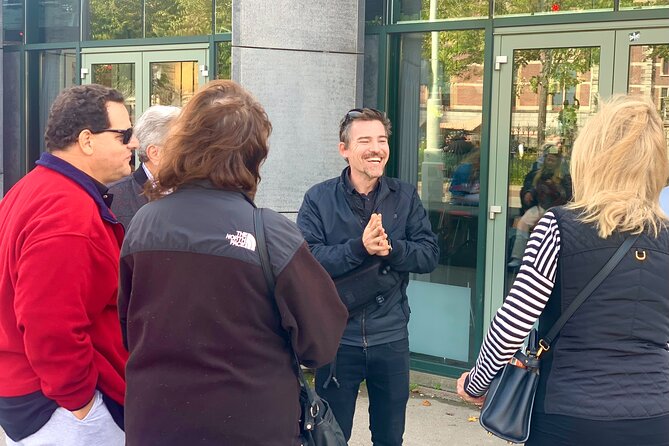
Memorials map the city after dark. This 2.5-hour walk is interesting because it links Anne Frank–era history to a full set of WWII persecution memorials, not just one famous address, and the local guide brings the facts to life right at street level. I also like that the pace stays human (and the guide checks in with the group), which matters when you’re moving between sites for a long stretch. One thing to consider: you only see the Anne Frank House exterior, and a couple of other sights on the route are admire-outside only since entry isn’t included.
You start at Westermarkt 60 and end at the National Holocaust Names Monument, with a mobile ticket and a guide leading the full route in English. It’s designed for moderate walking, and it’s a private outing for your group, so you’re not squeezed into a crowd for every stop.
In This Review
- Key points to know before you go
- Why this Anne Frank Jewish History walk beats a quick checklist
- Where you meet, where you end, and how to plan your timing
- Anne Frank House exterior, then the Westerkerk area
- Homomonument and Dam Square: remembering other Nazi victims
- Spinoza Monument and Joods Verzetsmonument: resistance as part of the story
- Deportation traces: the Megadlé Jethomiem sidewalk stones
- Portuguese Synagogue (outside only) and the Jewish Museum area
- The Dokwerker and the February Strike: protest you can picture
- Deaf Memorial, Auschwitz mirror memorial, and a name-driven approach
- National Holocaust Museum: names monument and the Stumbling Stones
- Price and value: what $59.28 gets you (and what it doesn’t)
- Practical tips so you get the most from each stop
- Who this tour suits best
- Should you book this Anne Frank Amsterdam Jewish History tour?
- FAQ
- Is entry to the Anne Frank House included?
- How long is the tour?
- Is the tour offered in English?
- Does the tour include entry to the Portuguese Synagogue?
- Where do you meet and where does the tour end?
- What’s included in the price?
- What’s not included?
- Is the tour private?
- What should I do if it’s raining?
Key points to know before you go

- Anne Frank House, exterior only: still powerful, especially when you can’t get tickets inside.
- More than one victim story: you’ll see memorials for LGBTQ+ people, Jewish victims, deaf victims, and more.
- WWII resistance and deportation traces: the route includes symbols that point to protest, deportation, and loss.
- A name-focused finale: the National Holocaust Names Monument turns history into real individuals.
- Short site pauses, big meaning: most stops are brief, so plan to listen closely and absorb.
Why this Anne Frank Jewish History walk beats a quick checklist
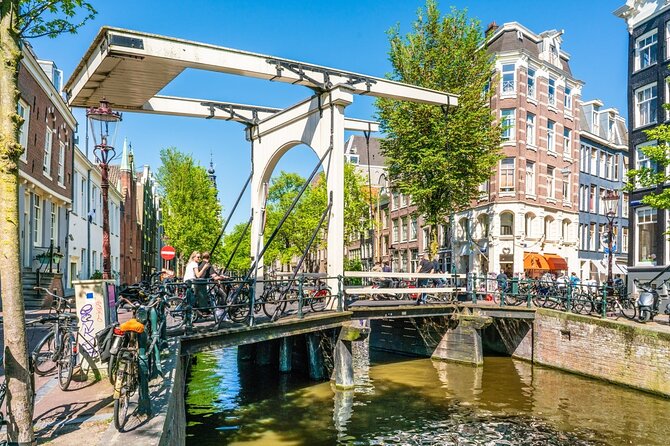
Amsterdam can feel like a museum you can wander without thinking. This tour gives you a street-level script, so you don’t just see monuments—you understand why they’re there and how they connect to Nazi occupation and Amsterdam’s Jewish community.
I like the balance here. Yes, you start with Anne Frank’s orbit, but you don’t stay trapped in one story. You move through places honoring multiple persecuted groups, plus reminders of resistance and protest. That makes it harder to reduce WWII to a single image, and easier to remember how occupation affected real daily life.
One practical note: the tour is timed for walking and brief pauses. If you’re the type who wants to linger forever in one place, you’ll still learn a lot—but you may want to schedule extra time later at whichever stop hits you hardest.
You can also read our reviews of more tours and experiences in Amsterdam.


Where you meet, where you end, and how to plan your timing
The meeting point is Westermarkt 60 (1016 DL Amsterdam). The tour ends at the National Holocaust Names Monument (1018 DP Amsterdam), so you’ll finish near the center of remembrance rather than back at where you started.
Why this matters: your afternoon is easier to organize. Instead of doing an out-and-back route, you end at a major memorial where you can carry the experience into a quieter visit to nearby sites or continue on to other Amsterdam plans.
The tour doesn’t include hotel pickup or drop-off. If you’re staying a bit outside the central area, I’d plan on using Uber or a taxi or arranging public transport that gets you to Westermarkt.
Anne Frank House exterior, then the Westerkerk area
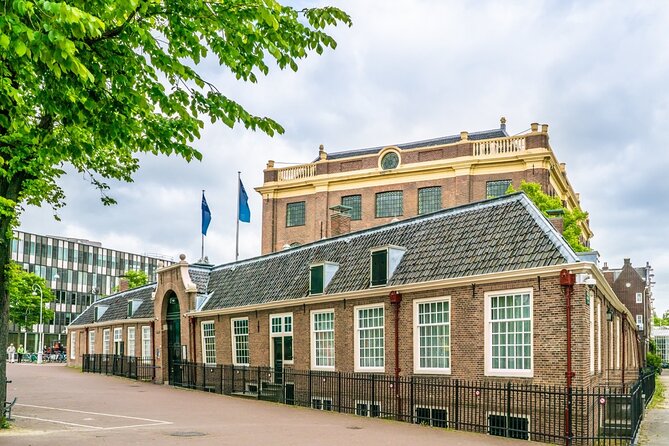
You begin with the Anne Frank House (exterior only). Two years in hiding shaped Anne Frank’s story, and even without entering the building, the location anchors the whole walk. I like this approach because it forces you to focus on the city around the house—streets, surroundings, and the reality that ordinary neighborhoods can hold extraordinary suffering.
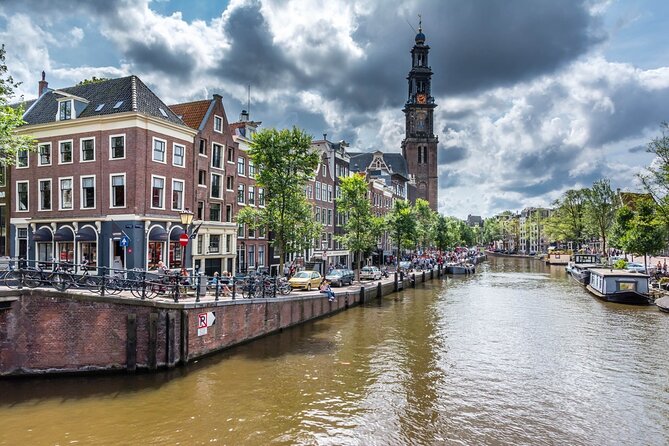
Right nearby, you see the Statue of Anne Frank, set against the Westerkerk church backdrop. It’s a small moment that helps you picture Anne Frank in her broader Amsterdam setting: faith, daily life, and the sound of bells as both comfort and reminder that the world beyond the attic existed—and continued.
This section is also a good time to set your mindset. The early stops are recognizable, but the tour doesn’t treat them like photo ops. It’s built to move you into the deeper memorial stops without skipping the emotional groundwork.
Homomonument and Dam Square: remembering other Nazi victims
Then the walk widens in scope. The Homomonument is the first memorial in the world dedicated to persecuted LGBTQ+ people, honoring those who were murdered under the Nazi regime. This stop is short, but it adds an essential layer: you’re seeing occupation harm extend beyond a single community.
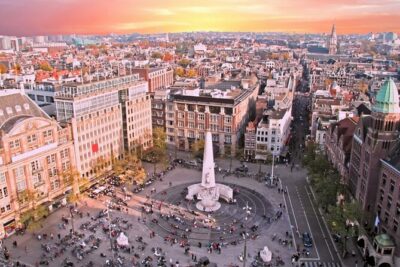
From there, you move toward Dam Square, Amsterdam’s historic main square. You visit the National Monument, a cenotaph honoring victims of World War II and later conflicts. I find this kind of site grounding because it places remembrance inside a place locals know well, not only in “memorial districts.”
Tip for this stretch: keep your phone away for the first minute after you arrive. The meanings land faster when you let the guide’s framing do the work.
Spinoza Monument and Joods Verzetsmonument: resistance as part of the story
A quick stop at the Spinoza Monument shifts the tone from suffering to ideas. You learn about the Dutch Jewish philosopher Baruch Spinoza—how rationalist ideas about religion and politics were seen as radical, and how his thinking later influenced the Enlightenment. It’s a reminder that Jewish life in Amsterdam wasn’t only defined by persecution. It also produced thinkers whose ideas traveled far beyond the city.
Next is the Jewish Resistance Monument (Joods Verzetsmonument), erected in 1988. It honors Jewish resistance fighters who lost their lives during WWII. The stop also marks the first mass protest against Nazi occupation, which is a detail I appreciate because it counters the common misconception that victims only passively endured.
This is one of the better sections for active listening. You’re standing in public space, hearing about courage and defiance—two words that often get treated like abstract concepts instead of lived choices.




Deportation traces: the Megadlé Jethomiem sidewalk stones
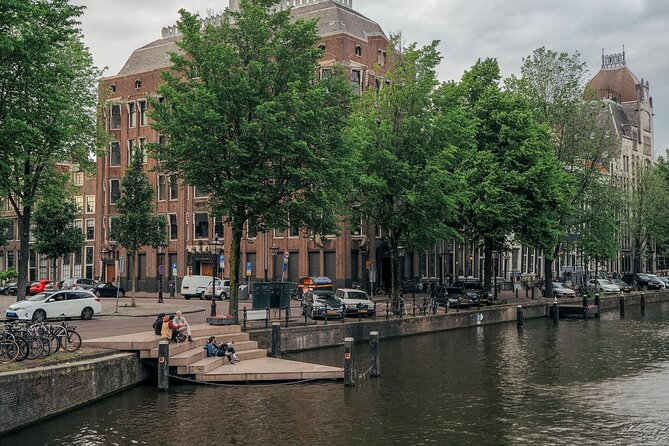
At the Monument Megadlé Jethomiem, you pause at a subtle monument that uses the ground itself. Stones trace the outline connected to an orphanage, and the story ties to Jewish children and caretakers deported to Sobibor in 1943.
This is the kind of memorial that rewards slower attention. The form is quiet; the implication isn’t. You’ll see how physical outlines can keep a place’s purpose from vanishing when buildings are gone and people are erased.
If you’re visiting in rain or wind, watch your footing. The point here is to take in what you’re reading with your eyes, not to rush because the weather is annoying.
Portuguese Synagogue (outside only) and the Jewish Museum area
Next comes the Portuguese Synagogue, once described as the world’s largest synagogue, serving as a symbol of Amsterdam’s Jewish community. The tour experience here is admiration rather than entry, since synagogue entry isn’t included.
What I like: even outside, the building signals continuity. Amsterdam’s Jewish history didn’t start with WWII, and it didn’t end there either. That continuity matters, and it sets you up for the next memorial stops with context instead of shock-only storytelling.
You may also pass the area linked with the Jewish Museum across the street. Entry there isn’t part of this tour, but if any of the themes strike you, it can be a helpful follow-up.
The Dokwerker and the February Strike: protest you can picture
The Dokwerker (Memories of the February strike) statue marks the February Strike of 1941, when thousands of workers staged the first public protest in occupied Europe against Nazi persecution. Even with a short visit, the name and meaning give you a concrete example of collective action.
This is another place where the tour does something smart: it isn’t only about Holocaust sites. It’s about how resistance and protest showed up in the city’s daily networks—work, strikes, public pressure.
Practical thought: if you like photos, take them after a minute of quiet listening. The statue’s message works better when you’ve heard the guide’s framing first.
Deaf Memorial, Auschwitz mirror memorial, and a name-driven approach
Next you encounter smaller memorials that hit hard precisely because they aren’t huge. The Deaf Memorial honors deaf Jewish victims of the Nazi regime between 1940 and 1945. It points to how Nazis labeled deaf people as “Untermenschen” and how they were systematically murdered. The subject is specific, and that specificity makes it feel real.
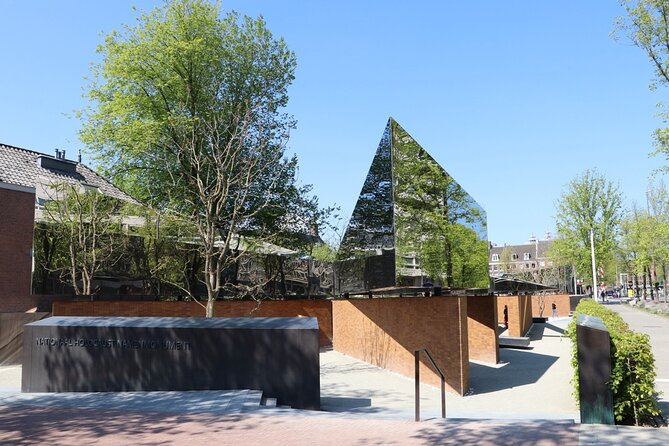
Then you reach the Auschwitz Monument in Wertheimpark. It’s designed with a shattered-mirror concept reflecting the sky, symbolizing how even the heavens were broken by Auschwitz and other concentration camps. It’s visual and restrained, and that restraint helps you avoid turning it into a spectacle.
The tour then transitions into the big emotional shift: moving from symbols and stories to individual names and last known residences.
National Holocaust Museum: names monument and the Stumbling Stones
The finale is the National Holocaust Names Monument and Stumbling Stones. Here you see engraved names of 102,000 Jewish victims and 220 Roma and Sinti murdered by the Nazis. Seeing numbers can feel abstract. Seeing a list of names is different. It puts the loss into human scale.
Right alongside, the Stumbling Stones are small brass plaques embedded in the pavement. Each one marks a last known residence of a deported Holocaust victim. This choice matters because it turns Amsterdam into the map of a crime, not only the setting for history after the fact.
If you’re prone to information overload, this is your sign to slow down. Take your time at the name monument. You’ll remember far more than you think.
Price and value: what $59.28 gets you (and what it doesn’t)
At $59.28 per person for about 2 hours 30 minutes, the value comes from the guide and the structure. You’re not paying for entry tickets included in the price; you’re paying for expert local interpretation across a whole chain of sites that would be easy to miss—or misread—on your own.
What you should budget separately:
- Anne Frank House entry is not included. You’ll only see the exterior.
- Portuguese Synagogue entry is not included.
- Food and drinks aren’t included.
- Luggage or coat storage isn’t included.
- Gratuities aren’t included.
This can still be a smart buy if you’re locked out of Anne Frank House tickets. You get context, orientation, and a larger picture of WWII persecution across groups, plus the emotional payoff of the names monument at the end.
Practical tips so you get the most from each stop
A few small choices can make this tour feel easier and more meaningful.
Wear comfortable shoes for a lot of pavement. Even when each stop is brief (often around 5–10 minutes), the route adds up to a full walking experience.
Bring a light umbrella or rain jacket. Some guided days are wet in Amsterdam, and a thoughtful pace depends on you staying comfortable.
Plan your schedule so you’re not rushing dinner right after. The names monument deserves time. If you run off immediately, the tour will still educate you, but it won’t have the time to land.
If you’re visiting Anne Frank House separately later, treat this walk as your preface. You’ll read the city around the story with better context, so inside can feel more grounded instead of just moving from room to room.
Who this tour suits best
This experience fits best if you want history with place-based meaning. You enjoy learning from exact locations, not only from a museum screen.
It’s also a strong match if you can’t get entry to Anne Frank House. You still get the Anne Frank origin point and then you go further into Amsterdam’s WWII memorial landscape, ending with the names-focused experience.
You might prefer a different setup if you’re expecting long indoor time at major attractions. The schedule is built around walking and multiple stops, so it’s not designed as a stay-in-one-place deep sit-down.
Should you book this Anne Frank Amsterdam Jewish History tour?
If your goal is to understand WWII Amsterdam beyond a single headline address, I’d book it. The route makes smart use of what the city has: a chain of memorials that broadens the story across persecuted groups, then ends with names that bring the tragedy into sharp focus.
If you want only Anne Frank House itself, then you’ll be disappointed because entry isn’t included. But if you’re open to a memorial walking experience that gives you context before you tackle other sites, this tour is a practical, high-impact way to spend a half day in Amsterdam.
FAQ
Is entry to the Anne Frank House included?
No. The tour includes an Anne Frank House exterior visit, but it does not include entry.
How long is the tour?
It lasts about 2 hours 30 minutes.
Is the tour offered in English?
Yes, the tour is offered in English.
Does the tour include entry to the Portuguese Synagogue?
No. Portuguese Synagogue entry is not included, though you will visit the area and admire what you can see.
Where do you meet and where does the tour end?
You meet at Westermarkt 60, 1016 DL Amsterdam, and the tour ends at the National Holocaust Names Monument, 1018 DP Amsterdam.
What’s included in the price?
The tour includes an expert local guide and a satisfaction guarantee or your money back.
What’s not included?
The price does not include food and drinks, entry to Anne Frank House, entry to the Portuguese Synagogue and Jewish Museum, luggage or coat storage, gratuities, or hotel pickup/drop-off.
Is the tour private?
Yes. It’s listed as private, meaning only your group will participate.
What should I do if it’s raining?
The tour is a walking experience, and you should dress for weather. The tour information indicates the tour goes outdoors between memorial stops, so plan accordingly.