REVIEW · LEIDEN
Leiden: Historical and Fun City Tour in German, English, or Dutch
Book on GetYourGuide →Operated by Hooymans Business Development · Bookable on GetYourGuide
Leiden tells stories in every canal turn. In just 2 hours, this guided walk threads together Rembrandt’s birthplace and Einstein at Leiden University with real, street-level details (pink houses, refugee churches, and canal twists) that make the city feel less like a textbook and more like a living place. I also like that guides keep it light while still covering big ideas, and the overall experience earns a strong 4.9 rating.
The tour is a serious stroll through the old center, from the Morspoort city gate area down to the Oude Rijn harbor and back up to views from Burcht van Leiden. One possible drawback: it is not designed for people with mobility impairments, since it’s mainly walking on historic streets and uneven old-town ground.
In This Review
- Key highlights you should not miss
- From the Morspoort gate to the Oude Rijn: getting your bearings fast
- Rembrandt’s Leiden: Oude Rijn, a pink house, and birthplace context
- Rapenburg canal walk: the city’s science, collectors, and garden connections
- Royal Leiden, old pubs, and the university that shaped ideas
- Pieterskerk and refugee churches: Huguenots and Pilgrim Fathers in Leiden
- Latin school from the 1600s and a free painted portrait chance
- Rembrandt studio: where he learned to paint
- Einstein in Leiden: discoveries, guest professorship, and big historical shocks
- Town hall and Burcht van Leiden: the long façade and the view payoff
- Price and time value: $24 for two hours that actually pack meaning
- Who this Leiden walk suits best (and who should choose something else)
- Should you book this Leiden historical and fun city tour?
- FAQ
- How long is the Leiden city tour?
- What languages are the guides available in?
- Where does the tour start?
- What are the main places you’ll see?
- Is museum or botanical garden admission included?
- Is the tour suitable for mobility impairments?
- Do I get tips for what to do after the tour?
Key highlights you should not miss
- Rapenburg canal views: you’ll walk (and look) at the kind of postcard canal the Netherlands loves.
- Oude Rijn + Rembrandt’s origins: the harbor area comes with clear stories tied to his birth here.
- Why a house is painted pink: it’s the kind of detail that suddenly makes an old neighborhood feel personal.
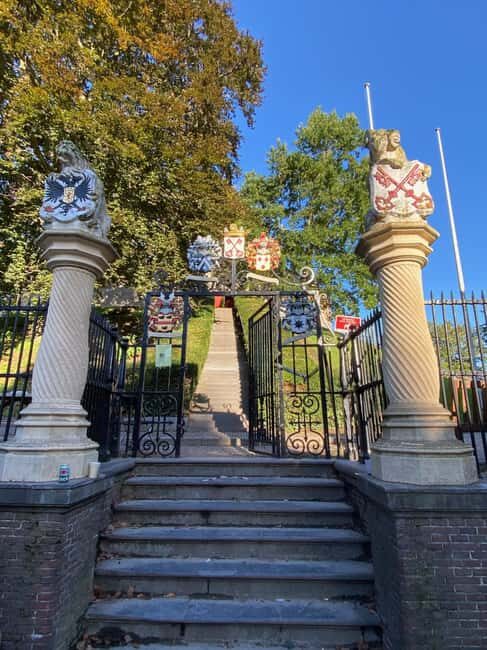
- Pieterskerk and refugee history: you’ll connect Leiden to the Huguenots and the Pilgrim Fathers.
- Latin school photo + Rembrandt studio time: you get a free painted portrait chance and see where Rembrandt learned.
- Town hall façade to Burcht tower: the walk finishes with a view you’ll remember when you’re deciding what to do next in Leiden.
From the Morspoort gate to the Oude Rijn: getting your bearings fast
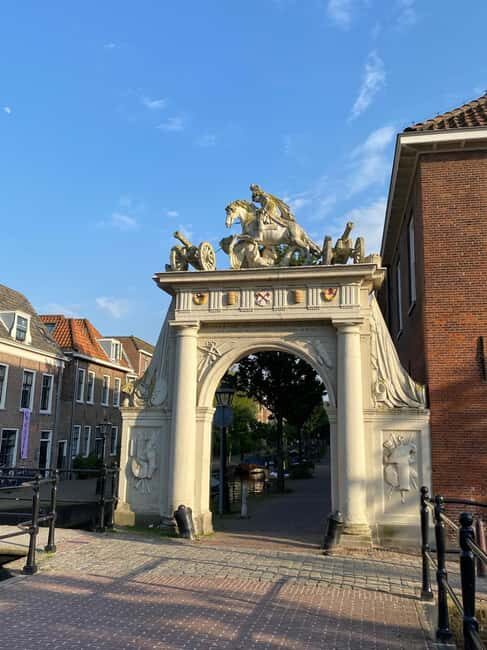
The tour starts right where it makes sense: on the edge of Leiden’s old town near the Morspoortgarage parking area and the historic Morspoort city gate. Even if you’ve only got a short time in Leiden, this beginning helps you orient your day. You’re not just marching from one attraction to another—you’re getting the layout of the city’s historic core in a logical sequence.
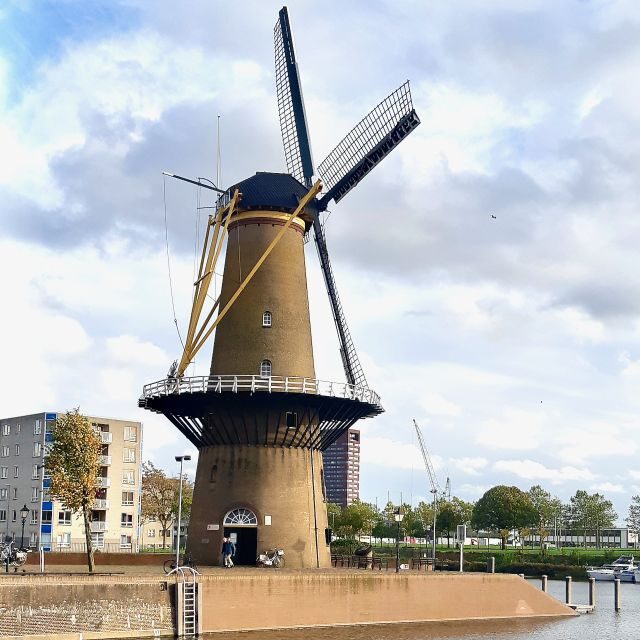
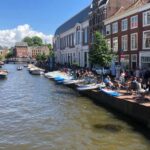
Soon, you pass the Weltmuseum (World Museum) along the way. From there, you head toward the Oude Rijn, Leiden’s Old Rhine. This is where the tour shifts from “pretty streets” to “why Leiden mattered.” You get a nice view over the water, and your guide ties the canals and the harbor to major figures and events that shaped the city.
If you like your history explained in plain language—plus a little humor—this start usually hits the sweet spot. It’s also a good moment to ask questions, because the guide is still building the map of the story for you.
You can also read our reviews of more city tours in Leiden
Rembrandt’s Leiden: Oude Rijn, a pink house, and birthplace context
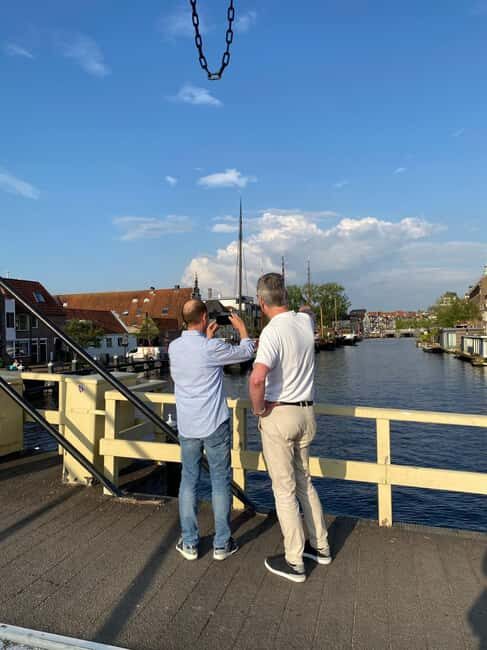
Rembrandt van Rijn isn’t treated like a distant museum name here. The tour slows down enough for the guide to connect Rembrandt’s life to the streets around you, beginning from the Oude Rijn area where he was born.
One of the smartest parts of this walking route is how it uses small visual cues. Instead of only pointing at monuments, your guide uses neighborhood details. That includes the reason a cute old Dutch house is painted pink. It sounds like a throwaway fact, but it’s actually useful: it trains your eyes to notice the personality of the town, not just its famous names.
Rembrandt in Leiden also sets up the rest of the tour. Once you’ve anchored yourself in his origin story, the later stops—like where he learned to paint—feel less like separate highlights and more like a timeline moving forward.
Rapenburg canal walk: the city’s science, collectors, and garden connections
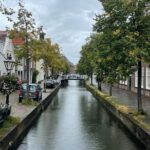
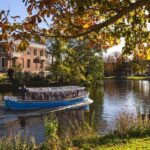
After the harbor area, you move to Rapenburg, and yes: it’s widely regarded as one of the most beautiful canals in the Netherlands. Walking the Rapenburg stretch works because it’s slow enough to look, but structured enough that you’re not left guessing what to notice.
This is also where the tour starts stitching together Leiden’s reputation as a center for learning. The guide brings in Philip Franz von Siebold, a German doctor and collector, and explains his link to the Leiden Japan Museum. The tour doesn’t stop at the museum name. You also get the answer to what influence he had on your garden—an example of how global curiosity and scientific collecting can translate into the plants and gardening knowledge people care about today.
If you’re the type of traveler who likes connections—how one person’s story leads to something you can see or experience—this section delivers. It’s not just “a famous canal.” You start understanding why Leiden was the kind of place that attracted scholars, collectors, and political attention.
Royal Leiden, old pubs, and the university that shaped ideas
The Rapenburg area isn’t only aesthetic. Your guide also explains the role the Dutch royal family played in Leiden—especially how the university (the oldest in the Netherlands) fits into the story of the city and Rapenburg.
You’ll hear where royals lived and details about meetings and personal life that sound almost too human for a historic setting. There’s even an old pub story tied to the reputation of Prince Pils. Whether or not you care about royal gossip, these anecdotes help you remember the bigger context: power, patronage, and education were closely linked in Leiden.
This section is a strong example of what makes the tour worth your time. You’re not learning history as dates on a line. You’re learning it as people in places, with institutions and neighborhoods shaping their behavior.
Pieterskerk and refugee churches: Huguenots and Pilgrim Fathers in Leiden
Next comes a very meaningful pivot: the Academie Quarter and Leiden’s former main church, Pieterskerk. This is where the tour balances art and science with the human side of Europe’s religious conflict.
Your guide explains two special groups of refugees tied to the church and to Leiden’s religious life: the Huguenots from France and the Pilgrim Fathers from England. You also learn how the two stories connect to the church environment and why Leiden mattered for communities seeking safety and continuity.
And then the tour makes an extra leap across the Atlantic. You’ll learn about the connection between 7 American presidents and Leiden. Even if you don’t know that connection already, the tour makes it understandable by placing it in Leiden’s wider role as a place of ideas that traveled.
This is one of the stops that works best if you’re traveling with curiosity but not a history degree. The guide keeps it clear, and the church setting makes the story feel grounded in real space.
You can also read our reviews of more historical tours in Leiden

Latin school from the 1600s and a free painted portrait chance
Right after Pieterskerk, you’ll head to the Latin school from the 1600s. This is an especially fun stop if you like history that you can see and photograph without needing extra tickets.
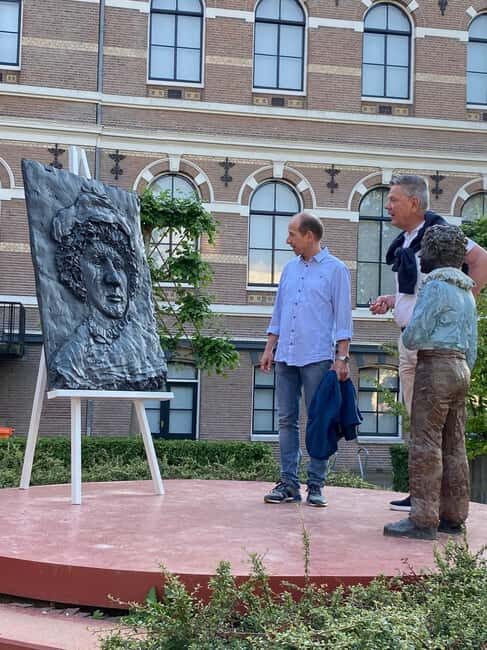
The tour includes an option to have a picture of yourself painted for free. That detail is worth paying attention to because it turns the tour from passive sightseeing into something more personal. Even if you just go for the story, it’s the kind of add-on that makes your afternoon feel unique.
The Latin school section also reinforces the university and education theme in a tangible way. You see the kind of environment that trained people who later spread ideas through Europe—and sometimes much farther.
Rembrandt studio: where he learned to paint
Then you’ll visit the studio where Rembrandt learned to paint. This is one of the most logical moments in the whole itinerary. After hearing about his birthplace and seeing Leiden’s broader educational atmosphere, you finally get a place tied directly to his training.
It’s also a strong choice for pacing. After the more conceptual refugee and university parts of the tour, the Rembrandt studio gives your brain something concrete. You can look at what’s in front of you and connect it back to the earlier stories.
If you’re a first-time visitor to Leiden, this stop makes the city feel more than just “pretty canals and old stones.” It becomes a place of making—art as work, not just fame.
Einstein in Leiden: discoveries, guest professorship, and big historical shocks
From Rembrandt’s training, the tour moves to a university building area where famous professors made important discoveries. Here, you also learn how Albert Einstein was often a guest professor.
This can be a surprisingly effective moment on a walking tour. It gives you a modern anchor in a city with deep historical roots. Instead of treating Leiden as purely medieval or Renaissance, the tour shows how its academic culture continued into modern times.
Your guide also covers the Eighty Years’ War and major catastrophes in Leiden. This part matters because it explains why the city’s architecture, institutions, and identity look the way they do. Catastrophes change cities. The tour gives those changes a story, which makes the old streets feel like they have scars—not just charm.
If you like a tour that connects art, science, and politics in one continuous route, this is where it all clicks.
Town hall and Burcht van Leiden: the long façade and the view payoff
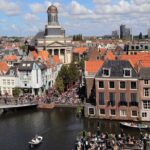
The walk then reaches the historic town hall, known for the longest Renaissance façade in the Netherlands. Even if you don’t consider yourself an architecture person, this is one of those facts that makes you look longer and notice details you’d otherwise skip.
From the town hall, you head to the old castle tower, Burcht van Leiden. This is the visual reward of the afternoon: a beautiful view over the city. The payoff is more than “nice pictures.” Seeing the city from up there helps you understand how canals, streets, and neighborhoods fit together.
Then the tour ends in the middle of the city, where there are lots of shops, cafés, restaurants, and terraces. You finish with the kind of practical freedom I like—now you can walk around on your own with your bearings set.
Price and time value: $24 for two hours that actually pack meaning
At about $24 per person for a 2-hour walking tour, the value comes from concentration. You’re not paying for one highlight. You’re paying for a guided path that touches art, science, religion, and city identity—while still giving you time to see canals and courtyards at normal walking speed.
What you get for this price is also shaped by the guide style. Guides are described as taking time, telling lively Leiden stories, and keeping the group engaged. One guide, Gert-Jan, stands out in praise for being attentive and making the history feel alive. Another similarly named guide appears in praise for interesting, entertaining explanations. Either way, the two-hour format works because the storytelling stays moving.
Two practical notes so you can plan smarter:
- Museums or the botanical garden admissions are not included, so you’ll want to add those separately if you’re interested.
- Expect mostly walking. It’s not an easy stroll if you rely on mobility supports.
Who this Leiden walk suits best (and who should choose something else)
This is a great fit if you want a fast, structured way to understand Leiden, especially if you care about Rembrandt, the university tradition, and the way the city links Europe to wider world stories. It also suits travelers who appreciate details like canals, courtyards, and small local quirks.
Choose another option if you need a very low-walking experience, since the tour is described as not suitable for people with mobility impairments.
For everyone else, it’s an ideal first or second day activity. You’ll learn enough to decide what to revisit later—especially if you like to return to places you’ve already understood.
Should you book this Leiden historical and fun city tour?
I’d book it if you’re short on time and want Leiden to make sense. The route gives you the canal beauty (Rapenburg and Oude Rijn), the big names (Rembrandt and Einstein), and the human history (Huguenots and the Pilgrim Fathers) without turning the afternoon into a lecture.
The biggest reason to pick it: you leave with context. You don’t just see where things are—you understand why Leiden looks like Leiden. And because the guide includes tips for sightseeing at the end, it works as both entertainment and planning help for the rest of your trip.
If you want to pair it with independent museum time, just remember admissions aren’t included. But as a foundation for your day in South Holland’s old university city, this is a strong use of 2 hours.
FAQ
How long is the Leiden city tour?
The tour lasts about 2 hours.
What languages are the guides available in?
The live guide offers Dutch, English, or German.
Where does the tour start?
The meeting point may vary by option, but the walk begins at the edge of the old town near the Morspoortgarage parking lot and the historic Morspoort city gate.
What are the main places you’ll see?
You’ll walk past highlights including the Oude Rijn harbor area, Rapenburg canal, Pieterskerk, the Latin school from the 1600s, Rembrandt’s learning studio, university buildings connected to major discoveries and Einstein, the town hall, and Burcht van Leiden tower.
Is museum or botanical garden admission included?
No. Admission to museums or the botanical garden is not included.
Is the tour suitable for mobility impairments?
No, it is not suitable for people with mobility impairments.
Do I get tips for what to do after the tour?
Yes. The tour ends in the city center and includes tips for sightseeing so you can keep exploring afterward.