REVIEW · LEIDEN
e-Scavenger hunt Leiden: Explore the city at your own pace
Book on Viator →Operated by Qula · Bookable on Viator
Leiden turns into a living puzzle when you follow the e-Scavenger hunt trail on your phone, using GPS to move between top sights at your own speed. What makes it fun is the mix of riddles, quick search assignments, and the freedom to start, pause, or stop whenever you want.
What I really like is the self-guided format for groups up to 6. You get to explore the historic center in a way that feels active, not like standing in a line waiting for a talking-head tour. I also like that the app nudges you toward big-name places like Pieterskerk, Hortus Botanicus, and Naturalis, while still rewarding you with points as you solve challenges.
One drawback to consider: you’ll need your own smartphone and data, and if you’re sensitive to language or very current details, you should know one feedback note called out questions that felt outdated or not fully consistent in English.
In This Review
- Key things to know before you start
- How the Leiden e-Scavenger hunt works on your phone
- Price and value: $37 for a group, not a seat
- Starting in Leiden: Morsstraat as your anchor point
- Pieterskerk, Hortus Botanicus, and the museum trio in the old center
- Canals, windmills, and the Wall Poems: Leiden’s walkable twists
- Street Market, 1596 Town Hall, and the museum stretch
- CORPUS and Naturalis: the route’s science-focused finish
- Who this Leiden city game suits best
- A few smart ways to score more points (and waste less time)
- Should you book the e-Scavenger hunt Leiden?
- FAQ
- How long is the e-Scavenger hunt in Leiden?
- How many people can play in one group?
- What is the price?
- Do I need my own smartphone and data?
- Where does the hunt start and end?
- Is it a guided tour with a live host?
- Can I start the hunt whenever I want?
- Which major stops are included?
- Is it accessible for hearing-impaired guests?
- Are service animals allowed?
Key things to know before you start

- Smartphone + GPS trail: you follow directions on your phone and move spot to spot using location cues
- Family-friendly, point-scoring game: solve tasks together and aim for a high score
- Designed for 2 to 6 people: a sweet spot for friends or a family pod
- 3 hours is a solid target: enough time to cover the main route without turning it into an all-day project
- You pick the pace: pause for photos, breaks, or slower reading when kids (or adults) get curious
How the Leiden e-Scavenger hunt works on your phone
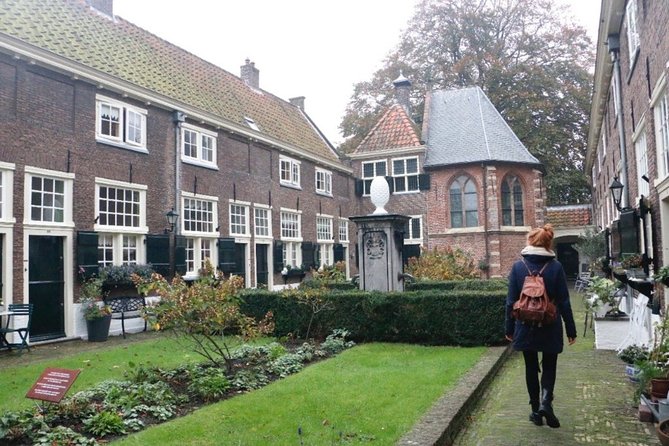
This is a self-guided city trail built around a free city game app. After you book, you’ll get start instructions, then you can do the hunt anytime during the stated opening window. The experience itself runs from a start point on Morsstraat and ends back there, which is handy if you’re planning the rest of your day in Leiden.
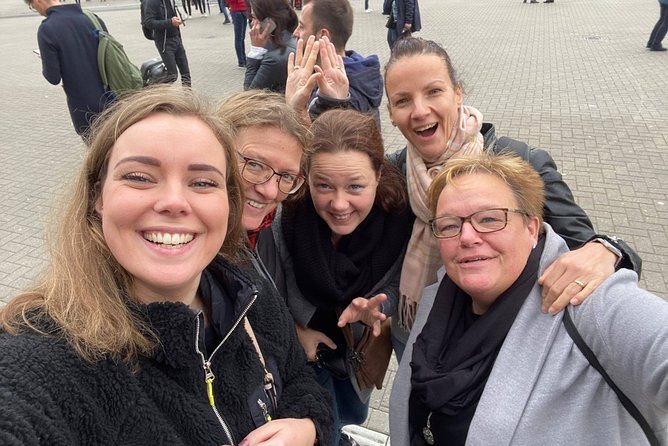
Once you’re in the game, you’ll use your smartphone to follow the route. GPS helps you find squares, streets, and monuments, and then you answer questions or complete little search-style tasks. The app is where the real action happens: you’re not just walking, you’re solving.
A practical note: the tour listing says the smartphone and data are not included. If you don’t want to burn battery or worry about connectivity, bring a phone charger or power bank. Since you’re depending on GPS for navigation between stops, weak signal can slow you down.
You can also read our reviews of more tours and experiences in Leiden.



Price and value: $37 for a group, not a seat

The price is listed at $37.33 per group, up to 6 people. That matters, because a guided tour usually charges per person, and it also usually gives you less control over timing. Here, your group shares one cost and you can spread out across the route without feeling like you’re tied to a schedule.
If you do the math, the cost per person is roughly $6.22 when you have a full group of 6. Even at fewer people, it often still works out as good value for a few hours of entertainment and sightseeing—especially if you’re traveling with kids, teens, or anyone who likes games more than lectures.
The best value comes when your group actually enjoys reading questions and working together. If you want a passive sightseeing day with zero concentration, this might feel like homework. If you want a playful way to see Leiden’s highlights, it’s a good deal.
Starting in Leiden: Morsstraat as your anchor point

The meeting point is at Morsstraat 66, 2312 BN Leiden. That location is useful because it gives you a clear starting anchor for the hunt, and you’re not left wondering where you ended up at the end. Since the trail returns to the same point, it also plays well with other plans after the game—coffee, a museum you didn’t reach, or simply wandering the city without worrying about a long walk back.
Because it’s described as near public transportation, you can treat the hunt as a flexible block of time rather than a strict itinerary tied to a car. It also helps if you’re hopping between museums anyway, since several of the stops are in the core area.
Pieterskerk, Hortus Botanicus, and the museum trio in the old center

The early phase is where the game starts earning its keep. You begin with Pieterskerk Leiden, a major church that gives you a strong first landmark. In a self-guided format, the value of a stop like this is orientation: you’re not guessing where the historic core begins, and the game tasks you to look closely instead of rushing past.
Next comes Hortus Botanicus Leiden. A botanic garden is an excellent fit for this type of game because it’s full of small visual details—signage, plant shapes, and pathways—that make search assignments more natural. Even if you don’t spend long inside any one spot, the hunt keeps you moving at a steady rhythm.
Then you head toward Leiden American Pilgrim Museum. This is a clever inclusion for a scavenger hunt style tour because it turns a museum stop into an active task. Instead of just looking at exhibits, you’re solving a question tied to the location, which can help you remember what you see rather than letting it blur into background.
After that, you’ll reach Hooglandse Kerk. In cities like Leiden, churches often act like visual anchors—towers, facades, and old-world scale. For the game, that means clear photo-worthy points and a strong feeling that you’re moving through real historic space, not just walking from one generic street corner to the next.
A fun pacing moment follows at Grand Café de Burcht. Even if you’re not stopping for a full meal, it’s a good mid-route break point. For families, cafes are where kids can reset. For adults, it’s a chance to recharge your phone and your brain before you keep solving.
How this section can trip you up: the experience depends on your ability to read prompts carefully. One piece of feedback mentioned that some questions use photos and that the photo may relate to the question location rather than the story subject. In practice, this means you should treat every photo like a clue to the exact place you’re standing—not an illustration for something you read earlier.
Canals, windmills, and the Wall Poems: Leiden’s walkable twists

After the museum-and-church cluster, the route starts leaning into character: waterways, old city gateways, and the kind of Dutch sights that look best when you walk slowly.
You’ll pass Leiden as a route marker before moving to Molen de Put. A windmill stop changes the energy of the hunt. It’s not just another photo stop; it gives you a sense of geography and skyline. The game format helps here because windmills can be easy to miss if you only do quick sightseeing.
Then comes Molenmuseum de Valk. A windmill museum is an ideal scavenger-hunt target because it gives you lots to look at—structure, setting, and any interpretive displays you notice on site. Just remember: since your time is limited by the overall hunt duration, you may want to skim and focus on the game clues rather than trying to read everything at once.
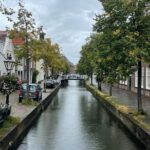
Next, you’ll reach Rijn (Rhine). Waterfronts are one of the easiest places to make a game feel rewarding. GPS often locks more cleanly near major landmarks, and the river gives you obvious points for photos and for tasks that need you to notice something specific in the environment.
From there, the trail leads to Morspoort, an old city gate. Gates are great for riddles because they’re high-contrast landmarks—built to be seen. In a self-guided hunt, that reduces the stress of navigation and makes it easier to stay on track.
Then you’ll encounter Wall Poems of Leiden. This is the sort of stop that makes a scavenger hunt feel local. Instead of only hitting famous museums, you’re asked to connect with a city tradition you might never find if you were doing a typical checklist tour. It also works well at a walking pace: you can pause, read, and let the area sink in.



Street Market, 1596 Town Hall, and the museum stretch

The hunt continues into the civic and public-life side of Leiden.
You’ll visit Leiden Street Market next. Even if you’re not there during peak hours for shopping, a market area is an easy win for a scavenger hunt because it’s naturally full of activity cues and signage. For families, it’s also a mentally relaxing stop: people can snack, regroup, or just wander for a minute while the game keeps you honest.
Then comes het Stadhuis van Leiden uit 1596—Leiden’s Town Hall from 1596. A historic civic building gives you a strong sense of time depth. In the context of the game, it also tends to create good photo opportunities, which helps you solve tasks faster when you can look back at an image prompt or compare details.
After the town hall, you move into the museum corridor with National Museum of Antiquities (Rijksmuseum van Oudheden) and Wereldmuseum Leiden. These are excellent choices for a phone-driven scavenger hunt because the tasks can be tied directly to what you can see at the location. You’re not just collecting stamps; you’re trying to answer something that connects the spot to a fact or story.
Next is Rijksmuseum Boerhaave. This place adds variety. In a normal tour, museums can all blur together. In a scavenger hunt, the stopping-and-solving rhythm can help each museum feel distinct, because you’re treating each stop as its own puzzle rather than part of a single long museum block.
Then you’ll hit Museum De Lakenhal. Again, the structure matters: the game pushes you to notice what’s relevant to that specific stop. That makes it easier to appreciate different types of collections without feeling like you’re trapped in one long session.
Finally in this museum stretch, you’ll reach Japanmuseum SieboldHuis. Including a focused, specific museum like this helps the trail feel more surprising. If you’re the type of traveler who likes one or two themed stops, this is where the route can feel especially memorable.
A practical pacing tip: the itinerary list is long. Even though it’s described as about 3 hours, you’ll still want to keep your group moving between tasks. If you pause to read everything in one museum, you may feel rushed later. Think of this trail as an active preview that you can expand with a return visit.
CORPUS and Naturalis: the route’s science-focused finish
The last stretch shifts into science and bodies—an ending that fits the puzzle format.
You’ll reach CORPUS ‘journey through the human body’. A body-themed stop is a clever counterbalance after churches, markets, and architecture. The game format can also help you engage without needing a deep prior knowledge—your prompt is the guide.
Then the hunt ends at Naturalis Biodiversity Center. This is a strong final stop because biodiversity tends to make people pause and look around. Even if you’re not reading every display detail, the environment is visually rich, and a scavenger hunt ending here feels naturally satisfying: you’re closing with something that makes you notice the world.
At the end, you return to the start point on Morsstraat, which keeps the logistics simple. You can finish with a slow wander, grab a snack, or continue exploring without needing to navigate back from a far-off location.
Who this Leiden city game suits best
I think this works best for groups that like movement and interaction. The format is especially friendly for families because it turns time outdoors into a shared challenge, with built-in breaks between major landmarks.
It’s also a good option for multi-generational travel. Adults get the satisfaction of solving clues and seeing a lot of major sights. Kids get the motivation of points and the novelty of doing it on a phone. And if you’re with friends, it can become an easy competition—without needing anyone to lead.
If your group hates reading prompts or wants strictly guided commentary, you may find it too game-like. This trail gives you the route and the tasks, but it doesn’t replace the value of a live guide who can explain everything in real time.
A few smart ways to score more points (and waste less time)
Since you’ll be solving riddles and search tasks, small habits can make the hunt smoother:
- Read each prompt twice before you hunt for the answer
- Use the photo cues literally—if a question includes an image, treat it as tied to what you’re meant to identify at your current stop
- Keep an eye on time and transitions so you don’t get stuck polishing one answer while the group falls behind
- Assign one phone reader for your team if you have mixed ages—then others can concentrate on spotting visual clues
Should you book the e-Scavenger hunt Leiden?
I’d book it if you want an affordable, self-guided way to cover a lot of Leiden’s key sights in a single half-day and you’re traveling with people who enjoy games. The price per group is a big advantage, and the route choices—Pieterskerk, Hortus Botanicus, major churches, windmills, river views, and science museums—give you variety without needing constant decisions.
I’d hesitate only if you’re expecting flawless, up-to-the-minute content in a specific language, or if your group doesn’t want to spend a good chunk of time reading and searching. One note flagged that some questions can feel outdated and that English may not always match the local information on plaques, so it’s smart to keep your expectations flexible.
FAQ
How long is the e-Scavenger hunt in Leiden?
The duration is listed as about 3 hours.
How many people can play in one group?
The game is designed for teams of up to 6 people, and it can be played between groups of two and six.
What is the price?
It’s $37.33 per group (up to 6 people).
Do I need my own smartphone and data?
Yes. The tour does not include a smartphone or data.
Where does the hunt start and end?
It starts at Morsstraat 66, 2312 BN Leiden, Netherlands, and it ends back at the same meeting point.
Is it a guided tour with a live host?
No. It’s a private, self-guided city trail using a mobile app, with only your group participating.
Can I start the hunt whenever I want?
You can do the tour anytime you choose, and the opening hours listed run all day.
Which major stops are included?
The trail includes places such as Pieterskerk Leiden, Hortus Botanicus Leiden, Hooglandse Kerk, Grand Café de Burcht, windmills like Molen de Put and Molenmuseum de Valk, the Rhine area, Wall Poems of Leiden, Leiden’s Town Hall (1596), multiple museums including Naturalis and CORPUS.
Is it accessible for hearing-impaired guests?
The experience is described as user-friendly for hearing impaired travelers.
Are service animals allowed?
Yes, service animals are allowed.
If you tell me your group makeup (ages, how much you like museums, and whether you’ll have one charged phone vs two), I can suggest a pacing strategy to finish within about 3 hours without feeling rushed.