REVIEW · NIJMEGEN
Nijmegen: City Walk with Audio Guide in 7 Languages on your Phone
Book on Viator →Operated by City App Tour · Bookable on Viator
Nijmegen is great on foot. This phone-based audio walk turns a 4.6 km loop into a story-filled stroll, with GPS help and audio in 7 languages. I love the way it strings major sights together at your pace, and I like the mix of big landmarks with quieter spots like Kronenburgerpark. The main thing to consider is that you’re relying on internet + GPS, and the audio quality can vary by language choice.
This is also a private experience in the practical sense: your group goes through the route together, without joining a large group shuffle. Expect around 32–34 stops/stories, with themed stops that cover Roman-era leftovers, WWII memory, parks, and fortifications.
Possible drawback: audio depends on your phone setup, and at least one language track has been reported as sounding machine-made. If you’re picky about narration, you’ll want to choose your language carefully and test your headphones before you start.
In This Review
- Key highlights you should know before you go
- Why Nijmegen’s audio walk is a smart way to sightsee
- Price and what you get for $8.87 per person
- Getting set up at Grote Markt: GPS, headphones, and phone battery
- The city walk flow: Waag to Sint Stevenskerk
- Sint Stevenskerk: what to watch for on the Gothic stop
- Plein 1944: WWII memory in a very normal city square
- Kronenburgerpark and the hunt for Kruittoren
- Bastei on the Waal River: fortification views with context
- Language quality: choose carefully and plan for imperfect audio
- How to use the app well (so the tour doesn’t feel like tech support)
- Who this walking audio tour suits best
- Should you book this Nijmegen city walk?
- FAQ
- FAQ
- Where does the audio walk start in Nijmegen?
- How long does the tour take?
- What’s the walking distance?
- How does the audio guide work?
- Do I need my own smartphone?
- Do I need headphones?
- Does it require internet connection?
- How many languages are included?
- Is admission to attractions included?
- Is this experience private?
- Is there free cancellation?
Key highlights you should know before you go
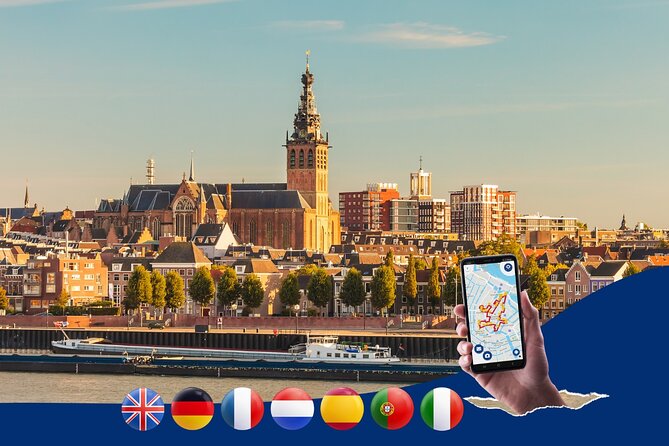
- GPS guidance on your phone helps you follow the route without constant checking.
- About 32–34 audio stories guide you through Roman-era traces, war memorials, and viewpoints.
- Manual POI activation lets you tap points on the map if you’re not exactly on top of them.
- A realistic walking loop (about 4.6 km) that fits into 2–3 hours.
- Smart setup tips matter: charge your phone, and bring headphones since they’re not included.
Why Nijmegen’s audio walk is a smart way to sightsee
Nijmegen has two sides that live side by side. You get the older layers—Roman remains and centuries of building—then you also get a student-town feel with shops and everyday city life. Doing it with audio on your own schedule makes that contrast easier to catch.
I like that the route isn’t just a straight line of monuments. It’s built like a guided conversation. You’re walking past places such as the Waag, then to the Sint Stevenskerk (St. Stephen’s Church), and onward into Kronenburgerpark. Along the way, you’ll also hear about things like the city’s connection to the Nijmegen Four Days Marches, plus references to the Latin School and the story of Moenen.
For most people, this kind of format is ideal when you want context but don’t want to lock yourself to a group’s timing. You can pause, take a photo, and move on when you feel ready. The “private” setup means you’re not stuck waiting for slow walkers or rushed by fast ones.
The biggest value isn’t that you get more facts. It’s that you get a route you can actually follow.
You can also read our reviews of more tours and experiences in Nijmegen.



Price and what you get for $8.87 per person
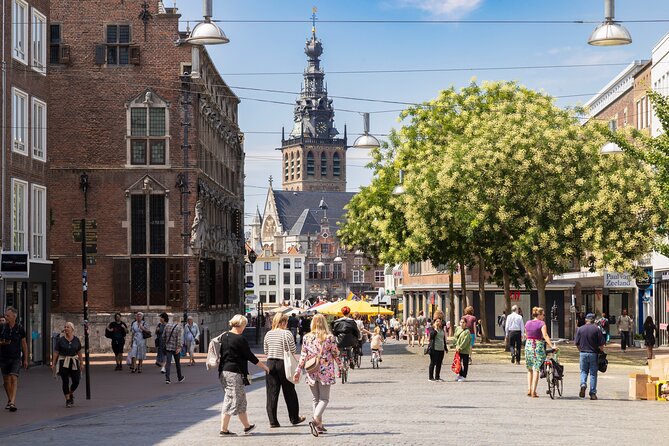
At $8.87 per person, you’re basically paying for three things: the audio app, GPS support, and a preplanned walking route. Admission to attractions is not included, so think of this as a walking tour with commentary, not a museum-ticket deal.
Where it becomes good value is in control. For 2–3 hours, you’re getting a guided feel without paying for a live guide’s time and without having to travel between different locations on a strict schedule. The app covers a lot of ground for the time you’ll spend, with many stories/stops (around the low 30s).
If you’ve ever tried to “wing it” in a new city, you know the frustration: you stand in front of something great and wonder what you’re actually looking at. This tour fixes that. You’re still outside, but you’re not guessing.
And if you’re going as a group, there’s also mention of group discounts. Even if you don’t know the exact math ahead of time, it’s worth asking when you book, because Nijmegen is a place you’ll enjoy seeing with friends.
Getting set up at Grote Markt: GPS, headphones, and phone battery
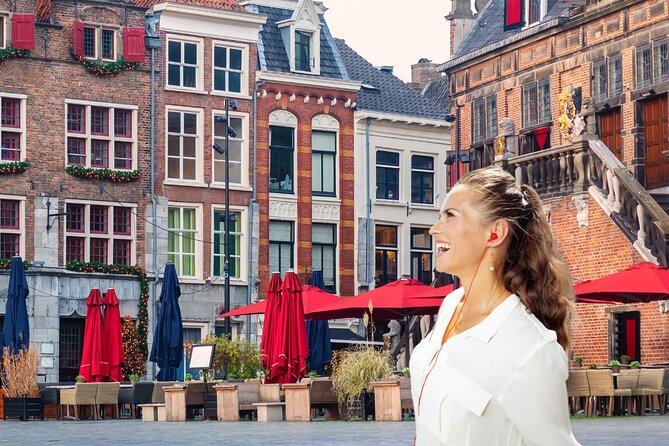
Start is Grote Markt (6511 Nijmegen), and you end back near the same starting area. That matters because you’re not planning a complicated route change after your tour finishes.
Before you leave, make sure your phone can handle the whole walk. This experience requires internet connection and a phone with GPS. Also, the app is on your smartphone, but a phone is not included. You’ll need to bring your own device and charge it to the max, or bring a power bank.
Headphones are also a must. The instructions explicitly tell you to bring them, and they’re not included. If you forget, you’ll lose the whole point of the audio guidance.
One more practical tip: the app has a manual activation option. If GPS accuracy is a little off, you can click the POI on the map to trigger the story, instead of standing in one exact spot. That’s a lifesaver when you’re taking photos, crossing streets, or just moving naturally.
The city walk flow: Waag to Sint Stevenskerk
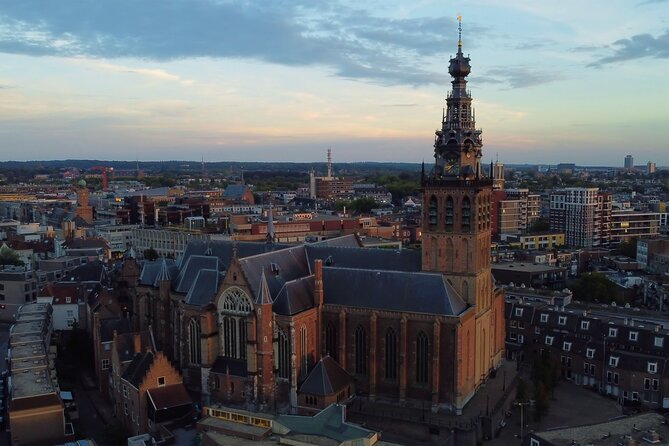
Most people will “feel” the tour instantly because the walking route is built around recognizable places. You’ll start by moving through the city center atmosphere. Early on, you’ll pass the Waag—a landmark that quickly gives the walk a historical backbone.
Then you head toward Sint Stevenskerk, known as St. Stephen’s Church. This is one of those stops where you’re not just looking at an old building; you’re getting oriented to the city’s long timeline. The church is described as Gothic and tied to a history reaching back to the 13th century, and it’s still a working place of worship.
Here’s why I think this stop works well in an audio format: churches like this can be visually impressive but a little vague without context. When you hear what you’re looking at, you start noticing details you would otherwise miss—shape, style cues, and the sense of what lasted.
If you’re a fan of architecture, plan a minute or two extra here. Even though the experience is designed for movement, you’ll enjoy taking a slow look while the story finishes.
Sint Stevenskerk: what to watch for on the Gothic stop
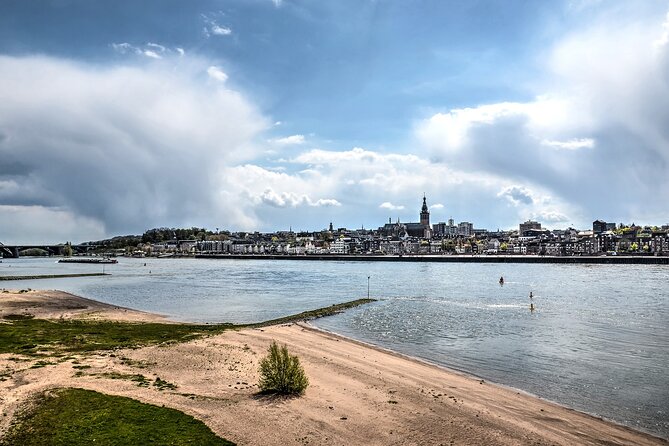
At Sint Stevenskerk, focus on two things: the building’s style and the way it sits in the everyday city scene. The tour frames it as a historic Gothic landmark dating back to the 13th century, but it’s also a cultural and religious presence today. That blend—old stone with real life around it—is what makes the stop feel “alive,” even when you’re on a self-guided route.
If you’re the type who likes to test your own attention, here’s a good method. Walk slower than you think you need to. Let the audio finish at least a key segment before you move on. Then do a quick visual check: does your eye catch the shapes and structure the audio pointed you toward? If yes, you’ve found the sweet spot for how to use the app.
One caution: this kind of audio walk is only as smooth as your phone experience. If your audio cuts out mid-sentence, don’t stress—use the POI tap option and keep going. The manual POI activation helps prevent the tour from turning into a frustrating game of hopscotch.


Plein 1944: WWII memory in a very normal city square
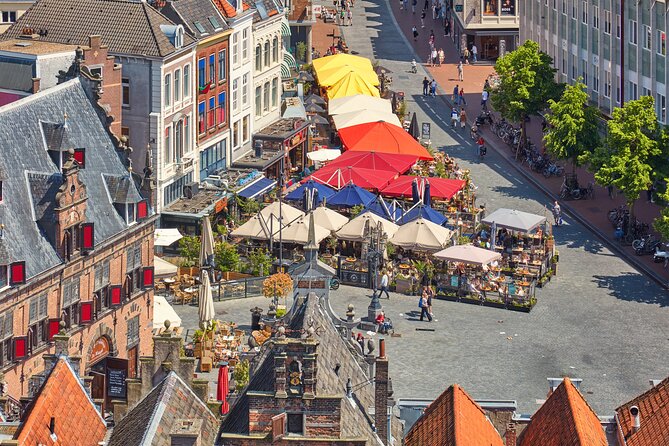
Next up is Plein 1944, a central square with heavy weight. The story here is about intense fighting during World War II. After that, the space has been redeveloped into a modern city area with shops and restaurants, plus a memorial dedicated to the events.
This stop is a good example of why I like audio tours in cities like Nijmegen. A normal-looking square can carry real history, but only if someone connects the dots. With the audio guidance, you’re not just passing through. You’re understanding why the place has meaning.
Practical tip: take a moment before you rush into cafés or store windows. The audio is guiding you to respect the location. Even if you don’t linger long, pause and let the memorial part land.
This is also where the “student city” contrast shows up. You’ll see everyday life continue—but you’ll understand it sits on top of something difficult.
Kronenburgerpark and the hunt for Kruittoren

Then you shift from squares and churches to softer scenery: Kronenburgerpark. This is described as a peaceful city park with greenery, walking paths, and ponds. It’s the kind of break that helps your legs reset halfway through the walk.
Inside the park, the tour points you toward something specific: the Kruittoren (the story highlights it as a special tower you’re meant to search for). This is where self-guided works better than a live group tour. You can wander slowly and actually look for the feature rather than being pushed onward at someone else’s speed.
Why this matters: parks are easy to treat as “just a break,” but when the audio gives you a target, you end up paying attention. Suddenly the paths and viewpoints become part of the story, not just background.
And if you’re the type who likes to roam, this is your spot. Kronenburgerpark gives you permission to slow down. Just keep an eye on your phone so you don’t lose the next POI activation.
Bastei on the Waal River: fortification views with context
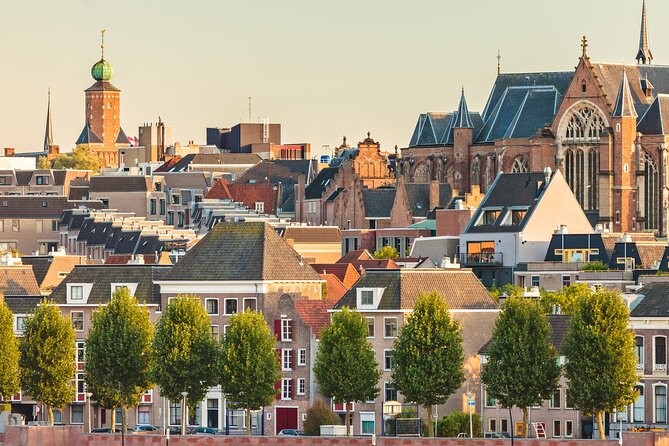
The walk culminates in a strong outdoors moment at the Bastei, a historic fortification on the Waal River. It’s described as dating back to the 16th century, and it’s positioned for panoramic views of the river and surrounding landscape.
This stop hits because the audio gives you the why behind the scenery. A riverfront viewpoint could feel like a generic photo stop. With the fortification context, it becomes something else: a reminder that defense and geography shaped city life long before today’s footpaths and cafes.
If you’re taking photos, this is also a practical place to do it without rushing. The audio format typically gives you enough time to enjoy the view, then move on when it’s done.
Language quality: choose carefully and plan for imperfect audio
The experience includes an app with audio in 7 languages. That’s a big plus because it can make the walk feel accessible no matter where you’re traveling from.
Still, there’s one real consideration. Audio quality may vary by language track. One reported issue was that a language version sounded like a translation, with computer-generated voice characteristics and wording that felt unnatural. That kind of quality problem can make a tour less enjoyable, especially if you’re sensitive to narration.
My advice: if you’re offered English in the experience details, use English unless you know you prefer another language track. Before you commit to a long walk, play a short segment early on. If it feels off, switch languages if the app allows it.
Also, keep headphones volume reasonable. Audio on a phone can be a little uneven when you’re walking outdoors with city noise, and you’ll want the words to stay clear.
How to use the app well (so the tour doesn’t feel like tech support)
This is where you can make or break the experience, even if you’re not a “tech person.”
Do this:
- Keep the phone in a stable place (arm’s length is fine) so GPS is tracking you.
- Use the GPS guidance as your main route tool, but remember you can trigger points manually.
- Expect to walk 2–3 hours total, covering about 4.6 km, so don’t plan to spend forever at each photo spot.
If the audio doesn’t register right away, don’t panic. The app has that manual activation function via the map and POI tapping. That flexibility came up as a helpful feature because you don’t need to be perfectly on top of the location to get it going.
And because it runs on internet/GPS, consider what your phone might do in different conditions. Strong battery and a stable signal help keep the audio smooth.
Who this walking audio tour suits best
This is a strong fit if you:
- Want a self-guided experience with context, not a live group lecture.
- Prefer going at your own pace through a compact city center.
- Like mixing architecture stops (like Sint Stevenskerk) with quieter breaks (Kronenburgerpark) and scenic river viewpoints (Bastei).
- Are comfortable using a smartphone outdoors and bringing headphones.
It’s also good for couples, friends, and small groups because the experience is private for your group. And if you’re traveling with people who all have different interests—history, architecture, WWII memory, scenic river views—audio helps meet those different moods.
It might be less ideal if you:
- Hate being dependent on your phone for a key part of the experience.
- Have poor data connectivity or unreliable GPS indoors/outdoors.
- Are highly sensitive to narration quality and don’t have a preferred language option.
Should you book this Nijmegen city walk?
If you want an affordable way to turn Nijmegen into an actual story while you walk, I’d book it. The price is low for the amount of on-route guidance you get, and the route makes sense: central landmarks, a park break, and a river viewpoint at the end.
I’d only hesitate if you know your phone struggles with internet or GPS, because this experience depends on both. Also, if you’re picky about voice acting or translations, stick with English (or test early and switch if the app lets you).
For me, the decision comes down to this: you’re not paying for a seat on a bus. You’re paying for a route that helps you notice Nijmegen properly, including the WWII weight at Plein 1944 and the 16th-century fortification mood at the Bastei.
FAQ
FAQ
Where does the audio walk start in Nijmegen?
It starts at Grote Markt, 6511 Nijmegen, Netherlands.
How long does the tour take?
Plan for about 2 to 3 hours.
What’s the walking distance?
The walking distance is about 4.6 km.
How does the audio guide work?
You use an app on your smartphone with GPS guidance and audio stories that trigger as you reach points along the route.
Do I need my own smartphone?
Yes. A smartphone is not included, but the tour requires using your phone for the audio guide.
Do I need headphones?
Yes. You should bring headphones, since they are not included.
Does it require internet connection?
Yes. This experience requires an internet connection and GPS function on your phone.
How many languages are included?
The audio guide is available in 7 languages.
Is admission to attractions included?
No. Admission fees for attractions are not included.
Is this experience private?
Yes. This is a private activity, meaning only your group participates.
Is there free cancellation?
Yes. Free cancellation is offered, and you can cancel up to 24 hours in advance for a full refund.