
REVIEW · AMSTERDAM
Amsterdam: Houseboat Museum Entry Ticket
Book on GetYourGuide →Operated by Boat Boys · Bookable on GetYourGuide
A tiny ship with big stories. The Amsterdam Houseboat Museum lets you step aboard the Hendrika Maria, a 1914 cargo vessel turned into a home in 1967, and you really feel what everyday life on board looked like. I love the original 1970s interior (orange, yellow, and brown tones) because it makes the past feel close instead of behind glass, and I also like the way the museum explains how a family of four lived when the boat was still a freight barge. One thing to plan for: the space is tight, and the stairs are steep, so it may not be the easiest stop for everyone.
This is one of the only places in Amsterdam where the houseboat isn’t just an idea or a postcard. You’ll walk through practical features like the sailing mast and leeboard, and the visit is interactive, with plenty of commentary to connect ship work to household life. The main catch is time versus expectations: if you rush, it can feel short, and a few visitors felt the ticket price doesn’t match how quickly you can walk through it.
Key highlights you should care about
- Hendrika Maria (1914): a real cargo ship converted into a residential houseboat in 1967
- Original 1970s interior: built-in throwback colors and layouts that help you picture daily life
- Freight-ship details: a sailing mast and leeboard that explain how this boat once served routes to Scandinavia
- Interactive, story-led visit: you’re guided through how a family of four used the space
- Practical rules: photography is allowed, but no flash inside the museum
In This Review
- First Steps Aboard the Hendrika Maria Houseboat Museum
- The 1970s Interior: Why It Feels Like a Time Capsule
- Freight Barge to Family Home: The Story You Follow Through
- The Boat’s Practical Features: Mast, Leeboard, and Old-School Navigation
- How Long It Takes and What Determines Your Pace
- Space, Stairs, and Comfort: The Real-World Considerations
- Languages and On-Board Interpretation: Getting the Most From the Visit
- Price and Value: Is $12 Worth It?
- Who Should Book This Houseboat Museum Ticket
- Should You Book? My Straight Answer
- FAQ
- How long is the Houseboat Museum ticket valid for?
- What is the boat used for the museum?
- What’s the main theme of the visit?
- Is the interior modern or preserved?
- Are there any special photo rules?
- How much time should I plan for?
- Is the museum accessible for people with mobility issues?
- What does the museum include with the ticket?
- What languages are available during the visit?
- How much does it cost?
First Steps Aboard the Hendrika Maria Houseboat Museum
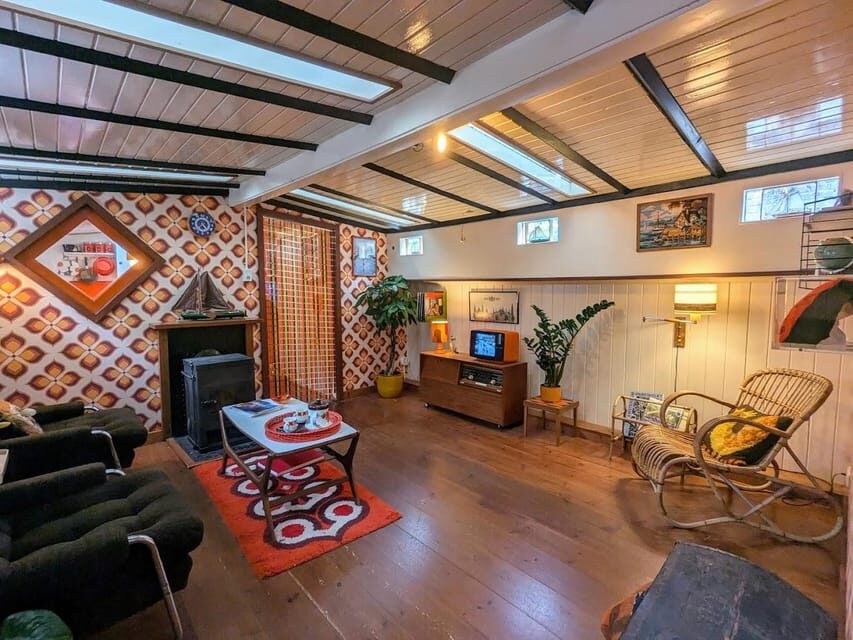
The fastest way to understand this place is to think like a ship. You’re not walking through a big exhibition room. You’re moving through a working vessel’s bones that later got repurposed into a home. The museum is set inside a real houseboat, so the whole experience is compact by design.
The entry gets you aboard the Hendrika Maria, a 1914 cargo ship. Later, in 1967, it was converted into a residential houseboat. That shift matters because you get two layers of context: the boat as transportation during its freight days, then the boat as someone’s everyday life.
Right away, you’ll see that the interior hasn’t been fully “modernized for museum comfort.” The layout feels lived-in in the way only an old home can. And if you’re a detail person, you’ll enjoy that the museum keeps bringing the focus back to how things were used, not just how they looked.
The 1970s Interior: Why It Feels Like a Time Capsule
One of the strongest reasons people come here is the original 1970s interior. Expect a classic color palette—orange, yellow, and brown—that immediately creates the right mood. It’s not a polished staged set. It’s closer to stepping into a period room that still has its own personality.
This is also where the museum’s size works in your favor. In a larger museum, color and layout can feel like decoration. Here, they help you understand space. Old houseboat life meant practical choices: where you could store things, where people could move, and how you’d live with a changing environment. In other words, the interior isn’t just aesthetic. It’s functional storytelling.
If you’re wondering whether the rooms feel dated in a frustrating way, here’s the balance: for many visitors, the “dated” feeling is exactly the point. It makes the place feel authentic instead of sanitized. The downside is simple—compact spaces can feel more noticeable when you’re moving slowly, taking photos, and reading details.
A few more Amsterdam tours and experiences worth a look



Freight Barge to Family Home: The Story You Follow Through
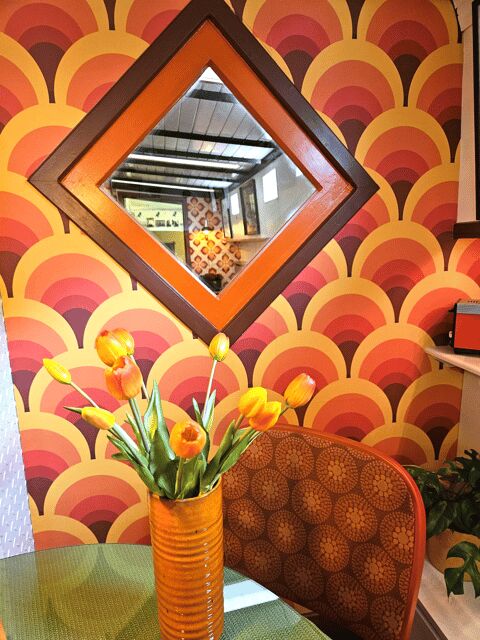
The museum’s core theme is the boat’s transformation. It doesn’t just say that the ship became a home—it explains what life looked like when it was used as a freight barge and then when it became a residence.
You’ll learn about a family of four and how they used the ship space when it was still tied to work on the water. That family angle is important. Boats can be fascinating as machines, but homes are about routines: where you eat, how you sleep, and how you handle storage on a space-limited vessel.
As you move along, the museum also connects the design to the boat’s historical purpose. You’ll come across a sailing mast and a leeboard, which were practical pieces for sailing routes in the past—especially when the boat traveled to Scandinavian countries for transportation. That detail helps you imagine the ship’s rhythm before it became a home.
If you like history that you can picture—workday to living room—this is where the visit really clicks.
The Boat’s Practical Features: Mast, Leeboard, and Old-School Navigation
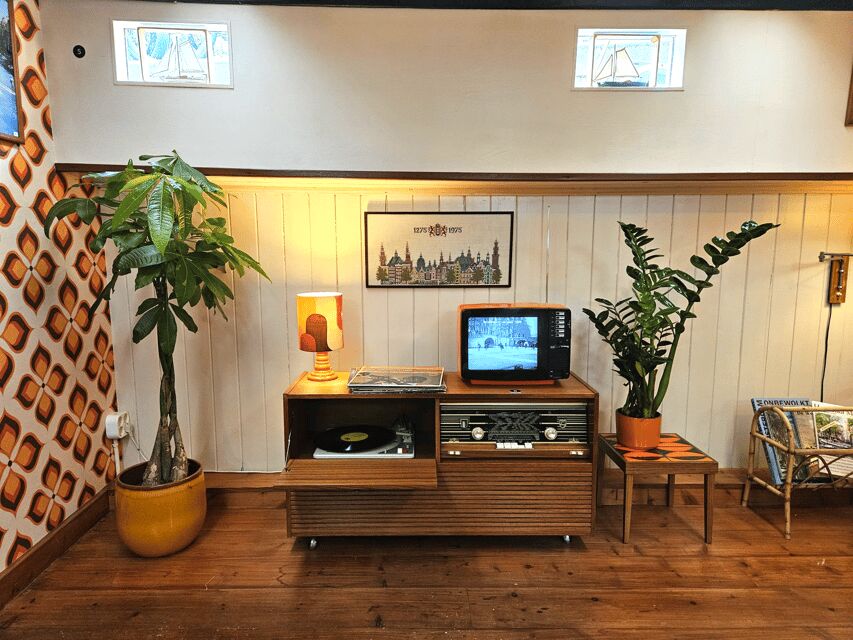
It’s easy to tour a place like this and only notice the living areas. The museum nudges you to look outward too, at the parts that explain how the boat operated.
The original sailing mast and leeboard aren’t there just as curiosities. They make the past feel mechanical and real. You can connect them to the idea that this wasn’t originally a leisure boat. It was built for movement and utility, then later adapted.
For me, the value here is perspective. When you see practical sailing equipment in a home setting, you stop thinking of a houseboat as a modern lifestyle choice. You start seeing it as a reuse of older technology—repurposed for life afloat.
You’ll also get that strong sense that residents lived with real constraints. A freight barge and a home do not run on the same assumptions. The museum’s job is to show you how those constraints shaped daily habits.
How Long It Takes and What Determines Your Pace
This is a one-day ticket, but the real question is how long you’ll spend inside the boat. Reviews suggest visits can be quick if you move fast. One review specifically mentioned that following the audio approach through about 80 square meters can take around 15 to 20 minutes.
So your pace matters more than the ticket category. If you’re the kind of person who reads every label, studies the layouts, and takes photos of details like the mast area, you’ll likely feel like it’s enough time. If you’re after a big, long museum experience, you may feel like you’re done sooner than expected.
Here’s the key: the museum is only as big as a houseboat. That’s not a flaw—it’s the format. Your enjoyment depends on whether you want a focused, room-by-room look at a living space, or a broader museum.
Space, Stairs, and Comfort: The Real-World Considerations
Because this is a real houseboat, don’t expect museum-style wide corridors. Space is limited. That’s part of the authenticity, but it’s also the main drawback for some people.
The stairs are steep. If you’re traveling with mobility limitations, you’ll want to think carefully before booking. Even for people without mobility issues, steep stairs can slow you down and make the visit feel more tiring than you expect.
The interior also uses a compact layout, so if you’re traveling with a group, you may not all move at the same pace. Plan on taking time to pause in doorways and smaller rooms rather than expecting a smooth line flow.
Good news: photography is allowed, so you can capture the look and feel, but flash photography isn’t permitted inside. That’s a simple rule that helps preserve the interior and the visitor experience.
You can also read our reviews of more museum experiences in Amsterdam






Languages and On-Board Interpretation: Getting the Most From the Visit
The museum experience is supported in multiple languages. You’ll find English, French, Traditional Chinese, German, Spanish, Portuguese, Italian, and Dutch available through the host or greeter team.
That matters because the tour is story-led. The museum shares knowledge about how the boat was used and how it became a home. When you can access the interpretation in your language, you’ll connect more quickly to the details like the freight-to-residential shift and the practical features used for older sailing routes.
Also, the visit is described as interactive. That tends to keep people from wandering aimlessly. Instead, you follow the “how it used to work” thread, then “how it got lived-in” thread. If you’re the kind of traveler who enjoys guidance that stays grounded in real life, you’ll likely feel satisfied faster than someone hunting for purely visual surprises.
Price and Value: Is $12 Worth It?
At about $12 per person, the Houseboat Museum sits in a reasonable range for a small, specialized attraction. But value here depends on how you experience small spaces.
One review criticized the ticket as expensive because the museum can feel visible in about five minutes if you rush. Another praised the experience for being interesting and for having a restored 1970s interior with commentary. That split tells you the real story: this isn’t a long, large-scale museum. It’s a compact, interpretive walk through a home-like environment.
So I’d frame it like this: if you enjoy understanding how real people lived in real space, the ticket is fair. If you want lots of rooms, big displays, and a slow half-day wandering vibe, you might feel shortchanged.
If you go with the right expectation—small, authentic, story-focused—you’ll usually walk away feeling like your money bought entry into something rare in Amsterdam: an actual houseboat museum setting.
Who Should Book This Houseboat Museum Ticket
This experience suits you best if:
- You like maritime history that connects to daily life, not just ship facts
- You enjoy period interiors and seeing how space was used
- You want an intimate, low-steps-in-a-small-space kind of stop
- You’re curious about how older freight technology got repurposed into housing
It may not be the best fit if:
- You want a long, multi-gallery museum day
- You’re sensitive to steep stairs and tight interiors
- You dislike tours where the value is in the details rather than the size
In short, this is a “look closely” kind of visit. If you do, you’ll likely find it far more rewarding than a quick pass-through.
Should You Book? My Straight Answer
I think this is worth booking if you’re the type of traveler who enjoys real places with constraints—tight rooms, steep stairs, practical design. The restored 1970s interior and the freight-to-home transformation make it feel specific, not generic. And the interactive storytelling helps you connect the ship’s machinery to human life.
If you’re deciding on a crowded day, I’d still say book with realistic expectations: expect a focused visit that can be short depending on your pace. For $12, that’s fine if you’re there for the intimate experience. If you’re expecting a large attraction, you’ll probably feel rushed.
FAQ
How long is the Houseboat Museum ticket valid for?
The experience is listed as lasting 1 day, with check availability for starting times.
What is the boat used for the museum?
The museum is on the Hendrika Maria, a 1914 cargo ship converted into a residential houseboat in 1967.
What’s the main theme of the visit?
You explore how life on board worked—especially how a family of four used the space when the vessel was a freight barge and later as a home.
Is the interior modern or preserved?
The interior is described as original from the 1970s, with a period look and colors.
Are there any special photo rules?
Photography is allowed, but flash photography is not permitted inside the museum.
How much time should I plan for?
People have described a relatively short visit when following an audio approach through the main interior space, around 15 to 20 minutes.
Is the museum accessible for people with mobility issues?
It’s a real houseboat with steep stairs, so it may not be suitable for everyone.
What does the museum include with the ticket?
Your ticket includes entrance to the Houseboat Museum.
What languages are available during the visit?
Support is listed in English, French, Traditional Chinese, German, Spanish, Portuguese, Italian, and Dutch.
How much does it cost?
The price is listed as $12 per person.