REVIEW · AMSTERDAM
Private Amsterdam Historical Walking Tour
Book on Viator →Operated by Through Amsterdam · Bookable on Viator
Two hours can show you a lot. This private Amsterdam walk mixes famous city-center sights with smaller stops that explain how people actually live, protest, read, and party here. You’ll see Dam Square, the canal ring (Grachtengordel), and a few spots most first-time itineraries miss.
What I like most is the way the route connects past and present—and my guide, Nikolai, was strong at linking history to what you see on the street now. I also like the balance: classic icons like Dam Square sit right next to cultural spaces like Vrankrijk and everyday hangouts around Spui.
One thing to consider: this experience depends on good weather, so if rain hits hard, the plan may shift or be rescheduled.
In This Review
- Key Highlights You’ll Notice Fast
- How This Private Route Makes Amsterdam Feel Understandable
- Dam Square: Royal Palace Context Without the Museum Detour
- De Beurspassage: A Short Walk With Big Ceiling Details
- UNESCO Canal Ring (Grachtengordel): What 17th-Century Planning Looks Like Today
- Vrankrijk: Counterculture History in a 10-Minute Reality Check
- Spui and the Book Market Area: A Calmer Slice of Local Life
- Reguliersdwarsstraat: LGBTQ+ Community Street-Level Energy
- Price and Group Value: When $189.44 Actually Works
- Practical Notes Before You Go
- Who This Tour Fits Best
- Should You Book This Private Amsterdam Historical Walking Tour?
- FAQ
- FAQ
- How long is the Private Amsterdam Historical Walking Tour?
- Is this tour private?
- What language is the tour offered in?
- Where do we meet and where does the tour end?
- Do I need a printed ticket?
- Is the price per person?
- What happens if the weather is poor?
- Can I cancel for a refund?
Key Highlights You’ll Notice Fast
- Dam Square at the center of it all: You’ll start where Amsterdam’s story feels most official, with the Royal Palace right there.
- De Beurspassage’s canal-themed ceiling: A short stop that rewards you with detailed architecture overhead.
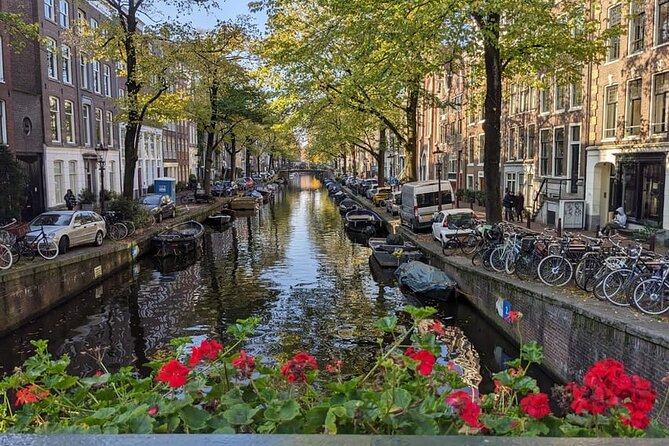
- UNESCO Canal Ring (Grachtengordel): You’ll look at 17th-century canal planning through the lens of growth and trade.
- Vrankrijk’s activist backstory: A quick visit to an alternative cultural space tied to the city’s squatting history.
- Spui and the book market area: You get a calmer, more local-feeling pause in the middle of the walk.
- Reguliersdwarsstraat’s LGBTQ+ nightlife: A street-level taste of Amsterdam’s inclusive scene.
How This Private Route Makes Amsterdam Feel Understandable
This isn’t one of those “see three things and hurry on” walks. Because it’s private, the guide can keep the pace aligned with your group, and you don’t have to compete with a big crowd moving in every direction. The total time runs about 2 to 3 hours, so it’s long enough to make sense of the geography, but short enough to fit into a busy Amsterdam schedule.
The plan also has a smart flow. You begin in the historic core, move through a passage that’s easy to overlook, then walk toward the UNESCO canal ring area. After that, the tour shifts from landmarks to culture and neighborhoods, ending on Reguliersdwarsstraat.
You’ll get a mobile ticket, and the tour is offered in English. That matters because the tour is built around explanation, not just pointing—so you can actually follow the story as you walk.
You can also read our reviews of more tours and experiences in Amsterdam.
Dam Square: Royal Palace Context Without the Museum Detour
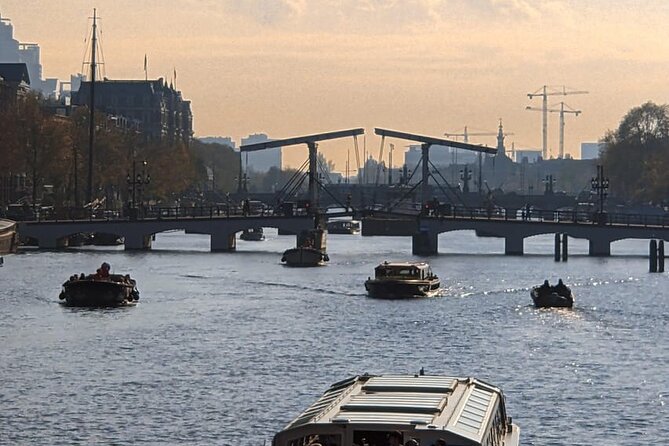
Dam Square is the city’s postcard center, but you don’t just stand there for photos. You’re at the historical heart of Amsterdam, in a plaza ringed with major landmarks, and you’ll spend about 15 minutes here.
At the center is the Royal Palace, originally built as a city hall and later repurposed as a grand residence used for official events. The value of this stop is that the guide frames what you’re seeing. It’s not only architecture; it’s how power and civic life showed up in public spaces.
The square itself is also a good reality-check point. Street performers, monuments, and constant motion help you understand Amsterdam’s “outdoor living” style. The stop includes a note of free admission for the time you’re there, so you’re not spending your limited hours waiting on entry lines.
Possible drawback: Dam Square is a magnet. If you’re sensitive to noise or crowds, you might want to go in with a calm mindset and let the guide steer your timing.
De Beurspassage: A Short Walk With Big Ceiling Details
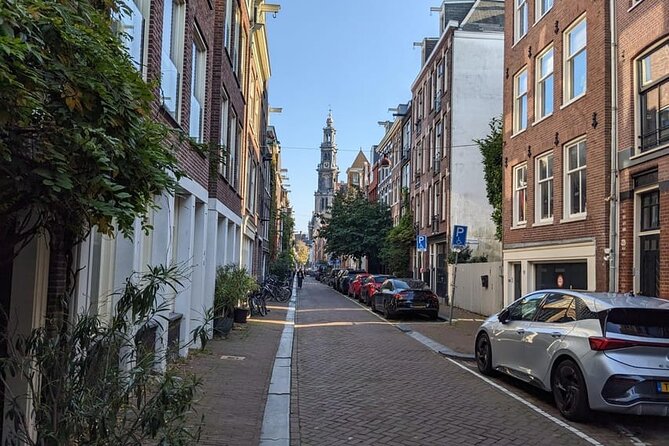
After the open space of Dam Square, you step into De Beurspassage, a covered passage connecting Damrak and Nieuwendijk. This is a great “pause your eyes upward” stop, and it lasts about 15 minutes.
What makes it worth your time is the design. The passage features a decorated ceiling with mosaics, glass, and mirrors inspired by Amsterdam’s canal world. The symbolism and the way the space evolved—from simple passageway to public art installation—adds meaning to what looks like pure decoration.
This stop is also a practical win. In many European cities, the best details are outdoors and exposed to wind or rain. Here, you’re indoors, so your break is functional. If the weather turns, this kind of covered architecture can save the day.
And because the stop is marked as free, you’re not trying to coordinate ticketing or timed entry as you shift from Dam Square into smaller spaces.
UNESCO Canal Ring (Grachtengordel): What 17th-Century Planning Looks Like Today
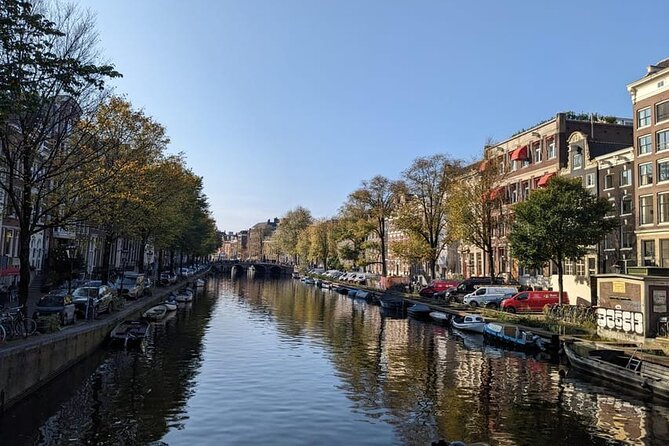
Next comes the Canal Ring, known as Grachtengordel and listed as a UNESCO World Heritage site. This portion is about walking the area and reading the city through its waterways rather than touring a single building.
You’ll learn that the canals were built in the 17th century as the city expanded. That’s the big idea: canal planning wasn’t random charm, it was infrastructure. The canals supported growth and trade, and their layout helped Amsterdam become what it was becoming fast.
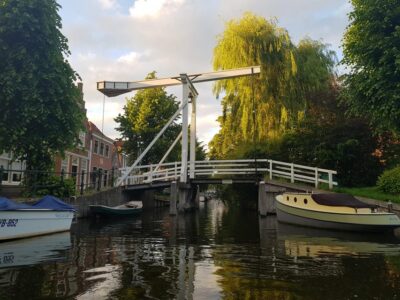
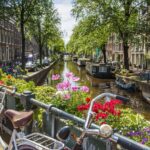
As you walk, you’ll see the visual results of that plan: waterways lined with elegant townhouses, bridges, and houseboats. The best way to enjoy this section is to slow down and look at how the bridges and edges guide movement. You’re not just collecting scenes; you’re mapping the city’s logic.
One tip the guide’s explanations help with: don’t treat the canals like a static backdrop. They’re still part of Amsterdam’s working relationship with water, traffic, and neighborhood life.
Vrankrijk: Counterculture History in a 10-Minute Reality Check
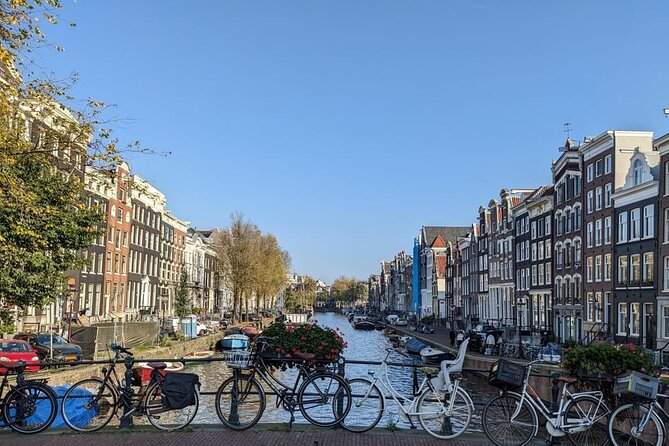
Then the tour takes a turn from classic landmarks to a space shaped by activism. Vrankrijk is described as an alternative cultural space and former squat, tied to activist roots and countercultural history.
You’ll spend about 10 minutes here, and the point isn’t to make this a long lecture. It’s to give you a quick, grounded understanding that Amsterdam’s identity isn’t only built on merchant wealth and royal palaces. People here have also fought for space, voice, and cultural independence.
The value of this stop is how it broadens your picture. You learn about the role of spaces like Vrankrijk in social movements, creative expression, and independent events. Even if you don’t know the squatting story before you arrive, the stop gives you enough context to understand why this kind of space matters to local activism and underground culture.
Practical consideration: this is a brief stop. If you’re very curious and want a deeper education, plan to follow up on your own after the walk.

Spui and the Book Market Area: A Calmer Slice of Local Life
After Vrankrijk, you reach Spui, a square in the heart of Amsterdam known for its cultural and literary atmosphere. You’ll get about 15 minutes here, and it’s a nice shift in tone.
Spui is associated with a weekly book market and independent bookstores, plus historic cafés nearby. That combo matters because it’s not only “culture,” it’s everyday culture—paper, conversation, and routine. For many visitors, this is where Amsterdam starts feeling less like a checklist and more like a place.
The tour also points you toward the nearby Begijnhof courtyard—described as a peaceful retreat from the city’s bustle. Even if you only glimpse the area briefly, it works as a reset. You step into quieter space after moving through busier streets.
One more practical benefit: this part of the route gives you a break from the most intense tourist zones without ending the tour. It’s the kind of pause that makes the last segment more enjoyable.
Reguliersdwarsstraat: LGBTQ+ Community Street-Level Energy
You finish at Reguliersdwarsstraat, a lively street known for its diverse nightlife and LGBTQ+ community history. It’s the kind of place that changes throughout the day, so the vibe can feel different depending on when you arrive.
The tour description frames it as inclusive and welcoming, with cafés, restaurants, and entertainment venues. Even in a short visit, you get the sense that Amsterdam’s progressive public culture isn’t only political speeches—it’s also built into where people gather and how the street operates socially.
Because this is your endpoint, it also works like a navigation tool. Finishing here means you’re ending in an area where you can keep exploring afterward with food, drinks, or just more walking.
Price and Group Value: When $189.44 Actually Works
The price is $189.44 per group, for up to 10 people. That’s an important distinction. If you’re traveling as a couple, it might feel like a “splurge.” If you’re traveling as a small family or group, it can become one of the better-value ways to get an English-speaking guide for a couple hours.
Here’s the simple math: with a full group of 10, you’re effectively paying about $19 per person. With fewer people, the per-person cost rises—but you’re still buying privacy and guided context, which is often what costs more when you go big-group.
Duration is listed as about 2 to 3 hours, which is another value factor. You’re not paying for a half-day commitment where you then fight crowds at every stop.
Also, the timing detail matters: this tour is often booked around 24 days in advance. If you’re traveling in peak periods, I’d treat that as a sign to lock in sooner, especially if you want a specific day.
Practical Notes Before You Go
You’ll start at Magna Plaza, Nieuwezijds Voorburgwal 182I, 1012 SJ Amsterdam. The endpoint is Reguliersdwarsstraat (1017 Amsterdam), and the map link is described as next to the Flower Market area—use that as your last anchor point for dinner plans.
The tour is marked as near public transportation. That’s helpful because Amsterdam walking plans can be easier when you can hop back to transit if someone needs a short break.
This experience notes that service animals are allowed, and most travelers can participate. It’s a good sign for comfort, though you should still plan for walking through streets and passageways.
One last thing: it requires good weather. If conditions are poor, you may be offered a different date or a full refund. That flexibility is especially useful in Amsterdam, where the forecast can change quickly.
Who This Tour Fits Best
This private walk is a strong fit if you want a guided Amsterdam that doesn’t stay stuck on only the big icons. You’ll like it if you care about context—why the canals were built, what Dam Square represented, and how alternative spaces like Vrankrijk shaped the city’s social story.
It’s also ideal for groups up to 10 who want flexibility. A private format works well for families, friends traveling together, and smaller tour groups who hate feeling rushed.
If you only want museum-level detail or long indoor stops, you might find the structure too “walking-forward.” The tour is built to move, so plan for quick stops rather than deep time in one location.
Should You Book This Private Amsterdam Historical Walking Tour?
I’d book it if your goal is smart orientation plus story-driven stops in a compact time window. The mix of Dam Square, De Beurspassage, the UNESCO canal ring, and culture spots like Vrankrijk gives you a fuller Amsterdam picture than a standard “photos-only” route.
I’d hesitate only if you’re traveling in heavy rain season with strict schedule constraints, since the experience depends on weather. If you can be flexible and you want real guidance in English, this is the kind of tour that makes the rest of your trip easier.
FAQ
FAQ
How long is the Private Amsterdam Historical Walking Tour?
It runs about 2 to 3 hours.
Is this tour private?
Yes. It’s private, and only your group participates.
What language is the tour offered in?
The tour is offered in English.
Where do we meet and where does the tour end?
You start at Magna Plaza, Nieuwezijds Voorburgwal 182I, 1012 SJ Amsterdam. The tour ends at Reguliersdwarsstraat, 1017 Amsterdam (near the Flower Market area per the map link).
Do I need a printed ticket?
No. You’ll have a mobile ticket.
Is the price per person?
No, the price is per group, up to 10 people.
What happens if the weather is poor?
This experience requires good weather. If it’s canceled due to poor weather, you’ll be offered a different date or a full refund.
Can I cancel for a refund?
Yes. You can cancel up to 24 hours in advance for a full refund.