REVIEW · AMSTERDAM
Private Amsterdam Red Light District and Coffee Shop Tour
Book on Viator →Operated by Trigger Tours · Bookable on Viator
Amsterdam has more rules than rumors.
This private walk gives you an insider lens on how the Red Light District works legally and socially, and I like that it stays respectful while still being honest. You also get real local context for coffee shop culture, not just secondhand talk. One thing to consider: the route is designed as a short, clear overview, so you won’t feel like you’re walking every side street in the area.
A good guide makes this kind of tour feel like street-level history, not a shock-jog. I’ve seen how guides like Saskia, Guido, Luis, Robin, Ben, Esther, Catherine, Fia, and Aarie Brenton keep the tone light when it can be, and grounded when it matters—especially when families or teenagers are in the group. The result: you’ll get answers without awkwardness.
Since this is a private tour, your pace stays calmer. You can ask questions as you go, and it usually runs about 2 hours (the experience is often described as roughly 2 to 2.5 hours). Still, come prepared to walk—Amsterdam’s best stories are on foot.
In This Review
- Key highlights to know before you go
- Why Amsterdam’s Red Light District makes sense when you know the rules
- Meeting at Damrak: how to start with confidence
- The Red Light District walk: history, laws, and a respectful lens
- Dam: Amsterdam’s wooden-pole foundations and the city’s first brain
- Pub The Ape (Int Aepjen): wooden architecture that outlived a fire
- Waag: a former city gate and the guild world behind it
- Smallest house and the VOC connection: why even tiny places tell big stories
- Condomerie: a modern shop that reveals Amsterdam’s approach to business
- Coffee shop culture and the optional Erotic Museum upgrade
- Price and value: what $41.60 buys you (and what it doesn’t)
- Best ways to enjoy it: questions, boundaries, and pace
- Who should book this private Red Light District and coffee shop tour?
- Should you book? My practical verdict
- FAQ
- FAQ
- How long is the Red Light District and coffee shop tour?
- Where does the tour start and end?
- What language is the tour offered in?
- Is this a private tour?
- What’s included in the price?
- Are food or drinks included?
- Can I upgrade the experience?
- What’s the cancellation policy?
- Is it easy to get to the meeting point?
Key highlights to know before you go
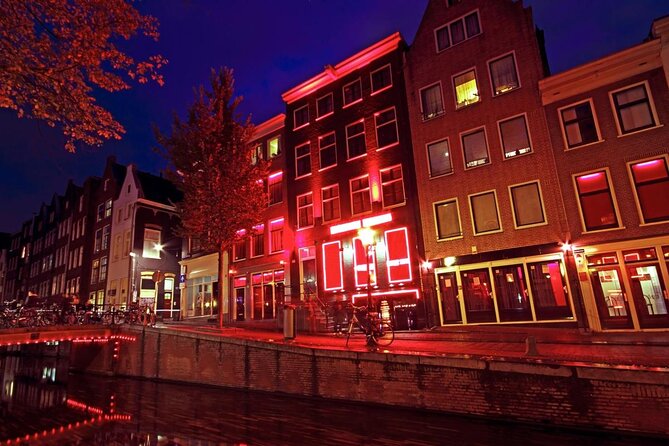
- Legal context first: prostitution is legal in the Netherlands, and marijuana is tolerated—framed clearly, not sensationally.
- Coffee shop culture explained: you’ll learn how it fits into Amsterdam life beyond the stereotypes.
- A private group feel: only your group participates, so you get real conversation time.
- Stop-to-stop history: from old city foundations to surviving wooden buildings, you’ll see layers of time.
- Optional upgrade paths: an upgrade may include the Erotic Museum or a coffeeshop visit with your guide.
Why Amsterdam’s Red Light District makes sense when you know the rules
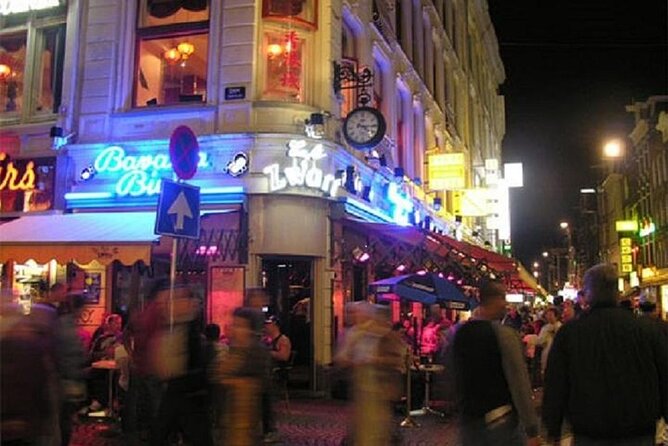
The Red Light District can feel confusing from a distance. The lights are easy to spot. The laws behind them are not. That’s why I like this tour’s approach: it starts with how Amsterdam thinks and what the Dutch system allows.
Prostitution being legal in the Netherlands changes the whole story. Instead of treating the area like a hidden underworld, the city treats it as regulated work—plus the area has its own modern rules, visitors’ expectations, and neighborhood politics. Your guide will connect those dots in plain language.
The same happens with marijuana. Amsterdam doesn’t frame it the way some places do. You’ll hear how cannabis is tolerated, and you’ll get a sense of why coffee shops play a role in the broader system. This is less about encouraging anything and more about understanding how everyday rules shape the street scene.
And if you’re nervous about the vibe? Most of the guide ratings I saw emphasized a tasteful tone. People described it as safe, comfortable, and not awkward—even when families with teenagers joined.
You can also read our reviews of more tours and experiences in Amsterdam.
Meeting at Damrak: how to start with confidence
You meet and finish at Damrak (near Damrak, 1012 Amsterdam). That matters more than you’d think. Damrak is central, easy to reach, and not a maze to find if you’re starting your day in Amsterdam.
Because the tour is a private walking format, you won’t be herded into a big pack. You’ll also avoid the usual stress of coordinating with strangers while you’re trying to get your bearings. The guide sets the pace from the start and tells you what you’re looking at before you hit the busiest streets.
Plan on casual walking shoes. Even in good weather, the route is built around short blocks, crossings, and quick context. In rain, you’ll still be outside for much of it—one of the most common positives in the feedback was that the tour worked well even on a cold, rainy night.
The Red Light District walk: history, laws, and a respectful lens
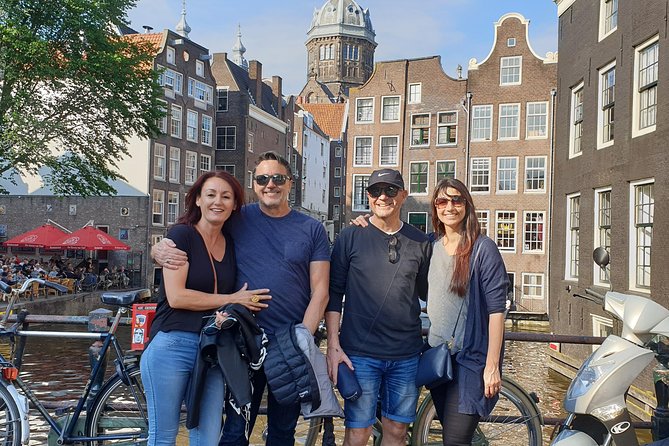
The main part is a historical walking tour through Amsterdam’s famous Red Light District neighborhood. You’ll learn about how it developed and why it looks the way it does today. But the real value is the framing.
A lot of visitors arrive with a bundle of rumors. Your guide swaps rumors for structure:
- what the district is known for, and what it represents in Amsterdam life
- how Dutch law is applied in practice
- why the area exists where it does
- how coffee shop culture grew alongside broader tolerance rules
Guides like Robin and Ben were repeatedly praised for mixing humor with clear explanations. That blend helps when the subject is inherently sensitive. It also helps you ask questions in the moment without feeling like you’re disrupting the tour.
You should also know a likely limitation: this kind of overview walk can’t cover every alley in deep detail. One honest note in the feedback pointed out that the tour can feel somewhat limited in how far it goes into the district. So if your goal is to spend hours wandering every back street, you may find this more of a focused orientation than a full-length exploration.
Still, the guides were described as respectful and comfortable for a wide range of ages. If you want to understand the area without turning it into a spectacle, this format tends to fit well.
Dam: Amsterdam’s wooden-pole foundations and the city’s first brain
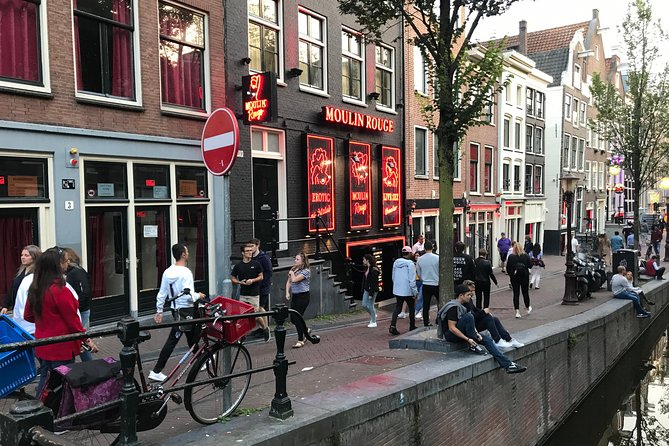
One of the stops you’ll make is the Dam area—and it’s a smart choice. Before you talk about modern tolerance, you get a quick lesson in how the city physically survives.
Amsterdam’s soil is tricky: it sits on fen and clay, so buildings need deep support. Houses are built on wooden poles driven down until they reach more solid sand layers. In other words, the city is literally engineered on wood and patience.
This context makes the rest of the walk click. You start to see Amsterdam as a place where planning and rules matter, not just a place of canals and bikes. And because the Dam area is tied to older city parts, you’ll also get more historical weight as you move through the older streets.
Pub The Ape (Int Aepjen): wooden architecture that outlived a fire
You’ll visit Pub The Ape, also known as Int Aepjen. It’s special because it’s one of only two remaining wooden buildings in Amsterdam, built around 1540.
Why does that matter? Cities change after disasters. Amsterdam had a major fire in 1452, and after that point, the city pushed toward brick facades. Seeing surviving wood from that earlier era turns the walk into something more than a set of talking points. It becomes proof—right there on the street—that Amsterdam’s past didn’t disappear overnight.
Expect your guide to connect the building to broader Amsterdam history and building choices. It’s a great stop if you like architectural stories and small, specific details that you’d miss on your own.

Waag: a former city gate and the guild world behind it
Next comes the Waag (Waaggebouw). You’ll hear that it used to be one of Amsterdam’s city gates, part of the defensive wall built around the 1400s. Then the story shifts from protection to trade.
Later, it became a base for guilds—craftsmen’s organizations—who settled in and around the square. That means the Waag wasn’t just a gate. It was a busy civic space where the city’s economic life had a physical home.
This is one of those stops that helps you see the Red Light District in a bigger frame. Amsterdam’s streets weren’t only about commerce; they were about governance too. And when your guide explains how neighborhoods form around institutions, the city starts to feel less like random sightseeing and more like one long system.
Smallest house and the VOC connection: why even tiny places tell big stories
You’ll also pass by the smallest house of Amsterdam. You’ll hear it was built around the 1700s, originally used for storage tied to the VOC trading company. Over time, people lived in it for long periods.
It’s a surprisingly effective stop. When you look at a tiny building, you instantly wonder who it was for and why space mattered so much. Your guide turns those questions into a quick social and economic snapshot of Amsterdam’s trading era.
This pause is useful because it gives your brain a break from the more intense themes of the Red Light District. It’s still part of the same walk, but it changes the mood and keeps the history broad rather than single-topic.
Condomerie: a modern shop that reveals Amsterdam’s approach to business
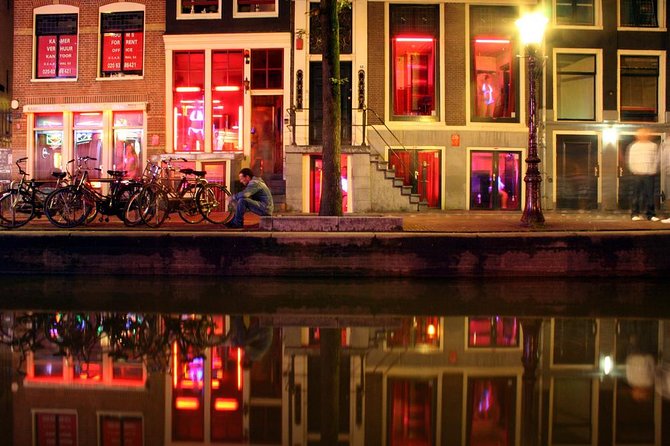
The route also includes the Condomerie, described as the world’s first condom shop, specializing in condoms since 1987. It’s a very modern stop compared to the old stone-and-wood highlights, and that contrast is exactly why it works.
It signals something important: Amsterdam didn’t just tolerate things. It created structures around them—specialty shops, regulated spaces, and consumer options in a very public way. Whether you’re shopping or just observing, it’s a reminder that the city treats commerce as normal and practical, even when the subject is sensitive.
If you prefer tours that show how modern Amsterdam handles adult topics without hiding them, this stop delivers.
Coffee shop culture and the optional Erotic Museum upgrade
One of the headline features is understanding coffee shop culture. Your guide will explain how it fits into tolerance rules and why it’s part of daily Amsterdam life.
There’s also an upgrade option mentioned in the tour description. Depending on what you choose, it can include a visit to the Erotic Museum or a coffeeshop visit with your guide. That matters for your planning because it changes how much “inside time” you get.
Here’s my practical take: if you want a deeper look inside places rather than only hearing about them, upgrade options are where you’ll likely feel the biggest payoff. If you just want context and a strong orientation walk, the standard guided walk can still satisfy you.
Also, a quick reality check: this is not framed as a food tour. You’re not buying meals on the tour, so plan your snack and drink breaks around the walking pace.
Price and value: what $41.60 buys you (and what it doesn’t)
At about $41.60 per person, this sits in the reasonable range for Amsterdam, especially for a private-format historical walk with a local guide. The key value is not the number. It’s what your guide does with the time.
You’re paying for:
- a guided walk with historical interpretation
- legal and cultural context that you probably won’t piece together on your own
- private-group pacing so you can ask questions
What you’re not paying for:
- food and drinks
- hotel pickup and drop-off
So if you’re the type who likes to save energy and use one paid activity to collect lots of accurate context, this price makes sense. If you want a long, multi-hour deep dive with lots of stops that require extra admissions, you might feel the need to add the optional upgrade and/or pair it with another museum visit.
One thing to note from the strong feedback: many people said the tour felt “worth it,” especially when booked privately. They liked that it felt safe, tasteful, and built around learning rather than gawking.
Best ways to enjoy it: questions, boundaries, and pace
This isn’t a tour where you stay quiet. Ask things. Guides like Luis, Guido, and Ben were repeatedly praised for being open to questions and for offering practical tips for the rest of your Amsterdam trip.
A few questions that fit the vibe:
- How do the laws get applied in daily life?
- Why are coffee shops treated differently than the rumors I’ve heard?
- What’s a respectful way to see the district without turning it into spectacle?
You’ll also get more out of it if you keep your expectations realistic. This is a walking overview through key points that connect the district to older Amsterdam foundations, architecture, and civic spaces. It’s not meant to turn into an all-day roaming session.
Finally, dress for walking. Amsterdam weather can flip quickly, and one rainy-night comment stood out because it showed the tour still works when conditions are less than perfect.
Who should book this private Red Light District and coffee shop tour?
This tour makes a lot of sense if you:
- want the legal and cultural context up front
- prefer respectful explanations over rumors
- like small, specific city history stops
- value a private guide pace rather than a crowded group
It also appears to be a good fit for mixed ages, including families with teenagers, as long as everyone is comfortable with the topic. Multiple reviews highlighted that the experience stayed comfortable and professional for different group makeups.
If you’re the kind of traveler who dislikes sensitive themes and prefers strictly mainstream museum hours, you might prefer a different Amsterdam focus. But if you’re curious and open-minded, this tour can help you understand Amsterdam’s real-world tolerance in a way guidebooks rarely manage.
Should you book? My practical verdict
Book it if you want a clear, respectful orientation to Amsterdam’s Red Light District and coffee shop culture, with a guide who can answer real questions. The private format and strong guide support are the biggest reasons it feels like good value at around $41.60.
Skip or consider pairing it if your goal is a long, street-by-street deep crawl with lots of time inside multiple venues. The tour is built to be focused. If you want more “inside time,” look at the upgrade option that includes a visit to the Erotic Museum or a coffeeshop visit with your guide.
FAQ
FAQ
How long is the Red Light District and coffee shop tour?
It lasts about 2 hours, with descriptions also noting around 2.5 hours for the walking portion.
Where does the tour start and end?
The tour starts and ends at Damrak, 1012 Amsterdam, Netherlands.
What language is the tour offered in?
The tour is offered in English.
Is this a private tour?
Yes. It is a private tour/activity, and only your group participates.
What’s included in the price?
A local guide and a guided walking tour are included.
Are food or drinks included?
No. Food and drinks are not included.
Can I upgrade the experience?
The tour description mentions an upgrade option to visit the Erotic Museum or to visit a coffeeshop with your guide.
What’s the cancellation policy?
Free cancellation is available. You can cancel up to 24 hours in advance for a full refund.
Is it easy to get to the meeting point?
Yes. The meeting point is near public transportation.