REVIEW · AMSTERDAM
Rembrandt Tour
Book on Viator →Operated by Historical Amsterdam Tours · Bookable on Viator
Rembrandt is still walking these streets. This private 3-hour walk follows his career through real places in Amsterdam, then ties those spots to what he painted and etched. If you like seeing art history as something you can walk through, this is a strong match.
I especially like the start at Museum Het Rembrandthuis, where you get hands-on context for Rembrandt’s etching methods through a workshop. I also like the way guides bring the story to ground level, with names like Tijs de Boer and Edgar Foley noted for energetic, clear storytelling that makes 17th-century details feel relevant.
One thing to consider: it is a walking tour with a moderate fitness expectation, so if you tire easily on cobblestones or long strolls, you may want to plan for breaks and comfortable shoes.
In This Review
- Key things to know before you go
- A Private Walk From Rembrandt’s Home to Dam Square
- Museum Het Rembrandthuis: where Rembrandt worked at the peak
- The workshop on etching: small details that change how you see his prints
- Rembrandtplein: connecting the present square to a 17th-century artist
- The Amstel river bridge moment: picturing what he might have seen
- Amsterdam’s role in the Dutch art progression
- Rembrandt’s first big commission: where his art scene got shaken up
- Women in Rembrandt’s life and the Oude Kerk connection
- Hidden gems and oldest streets: what you should expect in the walk
- Guides you might meet: Tijs and Edgar’s storytelling style
- Price and value: $390.52 per group can be a deal
- Who should book this Rembrandt Tour
- Practical tips for a smoother 3-hour route
- Should you book it or skip it?
- FAQ
- How long is the Rembrandt Tour?
- What does the tour cost?
- Is the tour private?
- What language is the tour offered in?
- Where do we start and end the tour?
- Do I need to buy tickets, or are tickets included?
- What kind of activity level should I expect?
- Is the meeting point convenient for public transportation?
- What is the cancellation policy?
Key things to know before you go
- Private, flexible format: only your group, so you can move at a pace that works for you
- Het Rembrandthuis start: admission included, plus a workshop focus on etching techniques
- Rembrandtplein stop: a short pause to connect today’s square (and its statue) to Rembrandt’s era
- Story-led route: you’ll answer big questions about commissions, locations, and the people in Rembrandt’s life
- Mobile ticket: easier check-in for the museum portion
A Private Walk From Rembrandt’s Home to Dam Square
This tour is built for people who don’t want Rembrandt trapped behind glass. You begin at Rembrandt House Museum on Jodenbreestraat and end at Dam Square, a central point in Amsterdam. The route takes you through winding, older streets and calmer corners than the main big arteries—exactly the kind of setting where you can picture what Rembrandt saw.
The private setup matters. With up to six people per group, you’re not stuck listening to one-size-fits-all commentary. You can ask questions, linger where something catches your eye, and generally keep the tour feeling like a conversation rather than a timed conveyor belt.
The pacing also helps. You’re out for about 3 hours, and the first stop alone is a 45-minute museum visit. That’s long enough to get oriented, then transition into the outdoor part without feeling rushed.
You can also read our reviews of more tours and experiences in Amsterdam.



Museum Het Rembrandthuis: where Rembrandt worked at the peak
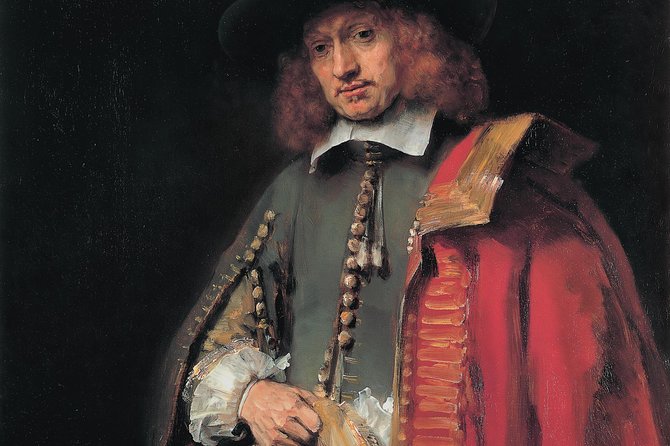
The tour kicks off at Museum Het Rembrandthuis, the house where Rembrandt lived during the peak of his career. Starting here is smart. You’re not just learning dates and facts—you’re beginning with the place itself, which makes the rest of the walk click into focus.
Admission is included, and you spend about 45 minutes in the museum. What I like about this is that it doesn’t treat Rembrandt as a distant genius. The museum portion includes a workshop that gives you insight into his famous etching techniques. Even if you’ve never touched printmaking before, you’ll come away with a clearer sense of how his line work and contrasts were built, not just admired.
A practical tip: museum time is easier when you arrive ready to slow down. Give yourself a moment before the workshop starts to look around the spaces first, then let the technique talk settle your attention. It makes the later street stops more meaningful, because you’ll be thinking about what he might have been seeing and how he translated it into prints.
There’s also a narrative benefit. This stop anchors the tour in Rembrandt’s everyday life: living space, working rhythms, and the idea that his art grew out of routine and observation—not just inspiration.
The workshop on etching: small details that change how you see his prints
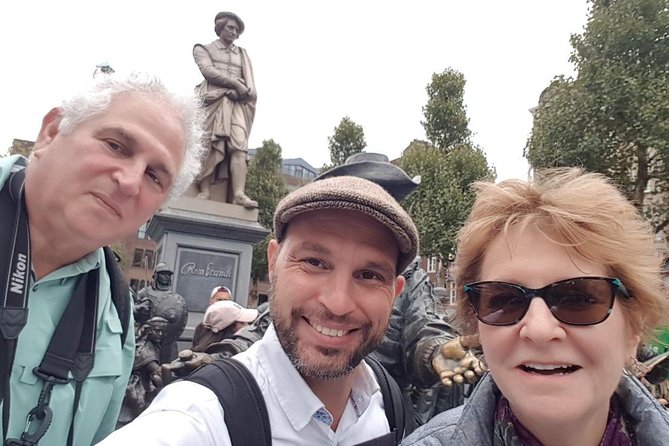
If your experience with Rembrandt is mostly images on walls, the etching workshop can be a turning point. You’ll learn about how the techniques work, not only that they work. That shift matters because it trains your eye.
You’ll start noticing things like how prints can feel both detailed and atmospheric, and how contrasts guide your attention. You begin to understand why etching was such a powerful medium for him at the time.
And because the workshop is part of the museum experience, it doesn’t feel like a random add-on. It’s timed to the start of the tour when your attention is fresh. That’s the moment when technique becomes story. Later, when your guide connects scenes to Amsterdam streets, you’re better prepared to follow the logic.
Rembrandtplein: connecting the present square to a 17th-century artist
After the museum, you move to Rembrandtplein for a short 10-minute stop. This is a quick one, but it’s not filler. Rembrandtplein is named for the man himself, but it wasn’t always called that way. The square today includes a statue and a 3D version of the famous Night Watch, and the guide uses those elements to set up a very human question: did Rembrandt even visit this square?
Even if you can’t answer that question the way a historian would in a textbook, the exercise is useful. It reminds you that Amsterdam’s map and naming evolved after Rembrandt’s lifetime. You learn to treat the city like a living archive—layers of memory, commemoration, and re-naming built on top of older urban reality.
This short stop also helps you reset physically. Walking breaks are valuable on tours like this, especially when you’re covering oldest streets and changing pavement. Use the moment to rehydrate and check your bearings before you continue.
The Amstel river bridge moment: picturing what he might have seen
Somewhere along the walk, you’ll pause for a question tied to the Amstel river: what did Rembrandt see while standing on a forerunner of a bridge overlooking the Amstel?
That kind of prompt is exactly why this tour works. Instead of treating Amsterdam as background, it turns the city into a set of viewing platforms—places where you can imagine sightlines, water movement, foot traffic, and everyday life. It’s not presented as a certainty. It’s presented as a mental exercise: look at the river setting, consider the angle, and connect it to the way Rembrandt made observations visible.
You’ll likely find this is where the tour gets most fun. It’s the moment when you stop thinking of Rembrandt as an icon and start thinking of him as a person moving through a city.




Amsterdam’s role in the Dutch art progression
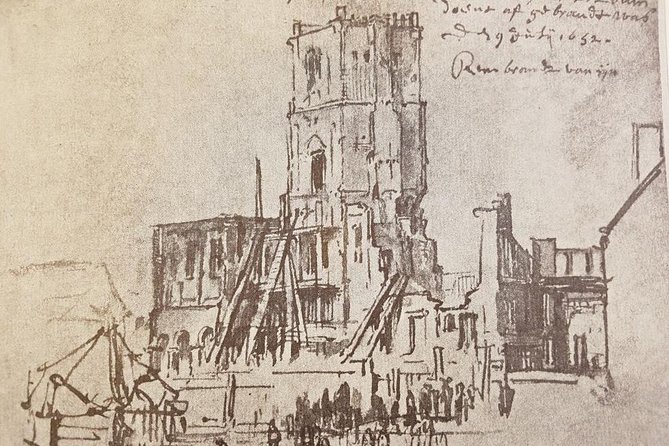
One of the key themes here is Amsterdam’s role in the progression of Dutch art. Your guide links Rembrandt’s life and output to how Dutch art developed in that era—how demand, patronage, and city culture shaped what artists made.
This is a big deal for you if you’ve ever felt that Dutch art history is just a list of painters. The better approach is to see it as a network. Amsterdam offered collectors, commissions, and a public hungry for paintings, prints, and storytelling that felt close to home.
During this walk, you’ll connect those ideas directly to the city. That connection is valuable because it helps your brain store art history as locations and cause-and-effect, not only dates.
Rembrandt’s first big commission: where his art scene got shaken up
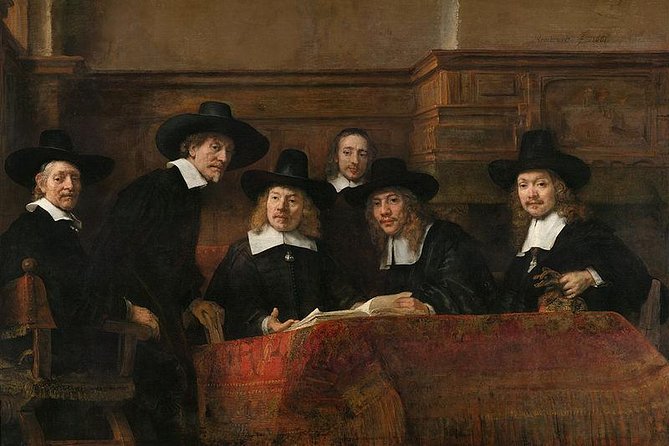
Another story thread on the route focuses on Rembrandt’s first big commission—where and how it happened, and what it changed. Rembrandt’s career didn’t rise only because he was talented. It rose because he stepped into opportunities and made work that pulled attention.
Your guide uses this part to frame the Amsterdam art scene as something in motion. You get a clear sense of how a standout commission could shift an artist from promising to prominent, and how that affects everything that comes after: subjects, technique, reputation, and networks.
For you, this turns the tour into more than a tribute walk. It becomes a career map. Once you can place a turning point in context, you’ll likely start seeing Rembrandt’s choices with more patience and less myth.
Women in Rembrandt’s life and the Oude Kerk connection
The tour also tackles a sensitive and very real side of Rembrandt: the question of the women in his life, why he never re-married after the death of his wife, and what the Oude Kerk has to do with it.
This section is useful because it keeps the story from becoming only professional. Rembrandt’s art is tied to personal reality, and your guide links that reality to the physical city. You’re not just hearing facts; you’re connecting them to a place you can recognize or later look up on your own.
It also helps to hear this kind of context while walking. The city’s pace keeps your attention flexible, and it makes heavy topics feel more like part of an unfolding story rather than a lecture.
Hidden gems and oldest streets: what you should expect in the walk
The walk is designed to take you through some of Amsterdam’s quieter corners and oldest winding streets. The benefit is simple: you’re more likely to feel the age of the city and picture 17th-century routines.
But let’s be practical. Amsterdam streets can be uneven. Even on a “moderate fitness” tour, you’ll want shoes with grip. Bring a light layer if the weather turns. And if you tend to get tired on long stretches, you can use the short stop at Rembrandtplein as your cue to check in on your energy level.
The guide’s flexibility helps here. Since it’s private, you can ask for an extra minute or take a breather without feeling like you’re breaking a fixed schedule.
Guides you might meet: Tijs and Edgar’s storytelling style
From what’s been shared, the guides can make or break an art walk. Two names that show up with strong praise are Tijs de Boer and Edgar Foley. Both are described as energetic and good at explaining how Dutch art fit into its time.
That matters because this tour balances multiple layers: techniques from etching, city history, and personal biography. You need a guide who can keep those layers connected, and the feedback points to guides who do that with humor and clarity.
If you care about understanding what you’re seeing—not just hearing facts—this type of guide style is a big part of the value.
Price and value: $390.52 per group can be a deal
The price is $390.52 per group, up to six people, for about three hours. That price can look steep at first glance. But group pricing changes the math fast.
- If you travel as a pair, you’re paying roughly $195 per person before any other costs.
- If you fill out a group of four, it’s around $98 per person.
- If you have six people, it drops to about $65 per person.
For many visitors, that makes the tour feel like a strong option because the museum portion includes admission, and you’re getting a private guide for the whole experience. Also, you’re buying context: a technique workshop plus story-led walking that connects Rembrandt to modern Amsterdam.
So the real question isn’t only the total cost. It’s whether you want a guided, narrative path through the places that shaped Rembrandt’s public life. If yes, the value tends to make sense quickly.
Who should book this Rembrandt Tour
You’ll probably love this if you:
- want Rembrandt as a lived experience, not only paintings in a museum
- like walking through older streets and connecting art to actual city geography
- enjoy technique context, especially etching basics
- prefer a private format over large group tours
You might want to think twice if you:
- dislike walking tours or have limited mobility (moderate fitness is requested)
- only want museum time and nothing outdoor
- expect a very long museum stay at multiple institutions, because this is built around a focused start plus storytelling walking
Practical tips for a smoother 3-hour route
- Wear comfortable shoes with grip for cobblestones and uneven pavement.
- Carry water. You’ll be moving through city blocks, and breaks depend on your guide’s flow.
- Dress for quick weather changes. Amsterdam can shift fast, and you’ll be outside for part of the tour.
- Bring curiosity. The tour leans on questions, like what Rembrandt might have seen from a river bridge, and those prompts make the walk more engaging.
Should you book it or skip it?
Book it if you want a personal, story-driven way to understand Rembrandt while you’re in Amsterdam. The combination of Het Rembrandthuis with an etching workshop plus the city-walk biography beats doing only museum rooms. Ending near Dam Square also makes it easy to continue exploring afterward.
Skip it only if you strongly prefer a full museum marathon, or if walking for a few hours is a deal-breaker for you. Otherwise, this is a smart, high-value way to connect the 17th century to the streets you’ll actually stand on.
FAQ
How long is the Rembrandt Tour?
It runs for about 3 hours.
What does the tour cost?
The price is $390.52 per group, with a maximum group size of up to 6.
Is the tour private?
Yes. It is a private tour/activity, and only your group will participate.
What language is the tour offered in?
The tour is offered in English.
Where do we start and end the tour?
You start at Museum Het Rembrandthuis, Jodenbreestraat 4, 1011 NK Amsterdam, and you end near Dam Square at Dam, 1012 Amsterdam.
Do I need to buy tickets, or are tickets included?
You’ll use a mobile ticket. Admission to Museum Het Rembrandthuis is included, while the Rembrandtplein stop is free.
What kind of activity level should I expect?
The tour calls for a moderate physical fitness level.
Is the meeting point convenient for public transportation?
Yes, it’s near public transportation.
What is the cancellation policy?
You can cancel for a full refund if you cancel at least 24 hours in advance of the experience start time. Free cancellation is available up to 24 hours before.