REVIEW · AMSTERDAM
Rijksmuseum & Amsterdam City Center – Exclusive Guided Tour
Book on Viator →Operated by Babylon Tours Amsterdam · Bookable on Viator
Rijksmuseum and canals in one smooth day. I love how the guide turns the museum’s Dutch Master stories into real, walkable context outside on the streets, so the art stops feel connected instead of random. I also like the focus: you hit major works like The Milkmaid and Rembrandt highlights, then you step through the historic center on foot for photos and orientation. One consideration: the Rijksmuseum can face occasional closures, and if the museum is delayed more than 1 hour from the tour start, you get an alternative but the tour notes that refunds or discounts aren’t available.
This is set up as a private-style day for your party, starting at Cobra Café at 10:00 am and ending at Papeneiland. You’re looking at about 5.5 hours total with a lunch break included, and the walk is on cobblestones—moderate fitness helps.
In This Review
- Key things that make this tour click
- Why the Rijksmuseum-to-streets pairing works so well
- Inside the Rijksmuseum: how the guide shapes what you notice
- The lunch break: how to keep momentum without overspending
- St. Nicholas Basilica and the Weeping Tower: Amsterdam’s faith and walls
- Zeedijk, Nieuwmarkt, and De Waag: where markets turn into architecture
- Trippenhuis and the East India Company courtyard: trade shows up everywhere
- Zuiderkerk, Rembrandt’s house area, and the Stopera: religion, art, and civic power
- Canal houses, Begijnhof quiet, and Dam Square’s famous center
- The Anne Frank House exterior, Westerkerk nearby, and trade-emblem façades
- Karthuizerhof, Noorderkerk, and Papeneiland: ending on a calmer canal corner
- Price and value: does $287.18 make sense?
- Who should book this tour?
- Should you book Rijksmuseum & Amsterdam City Center?
- FAQ
- How long is the tour?
- Where does the tour start and end?
- What time does the tour begin?
- Is this tour private?
- What is included in the price?
- Do I need to pay for lunch?
- What language is the tour offered in?
- Are there any bag or dress rules?
- What if the Rijksmuseum closes or is delayed?
- Is it fully refundable if I cancel?
Key things that make this tour click
- Rijksmuseum highlights in a time-boxed plan so you see the big-name works without wasting your energy wandering
- Dutch Masters with real context, including The Milkmaid and Rembrandt stories you can carry into the city walk
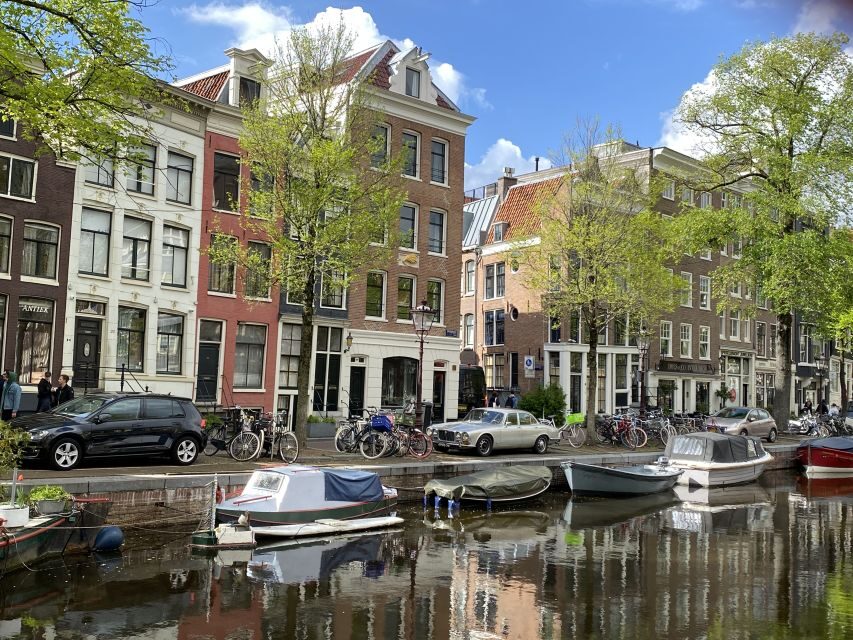
- A canal-and-cobblestone orientation walk that helps you understand where Amsterdam’s history shows up in daily life
- A private pace for your group, which makes it easier to pause for photos and keep moving without getting lost in the crowd
- Entrance fees handled, with museum admission included and many stops designed around easy viewing
Why the Rijksmuseum-to-streets pairing works so well
The smartest part of this experience is the handoff. You start inside the Rijksmuseum—one of Europe’s major art and national-history institutions—and then you leave with a toolkit for seeing the city differently. Instead of Amsterdam being just “pretty canals and bridges,” it becomes a map of themes: trade, faith, civic power, and the everyday life that produced the art you just learned to name and place.
I especially like that this day doesn’t pretend you’ll “see everything.” The museum visit is about highlights and connections, then the walk reinforces it. You get that practical outcome first-timer visitors crave: get your bearings fast.
And because it runs rain or shine, you’re not stuck with a half-day plan when the weather shifts.
You can also read our reviews of more tours and experiences in Amsterdam.
Inside the Rijksmuseum: how the guide shapes what you notice
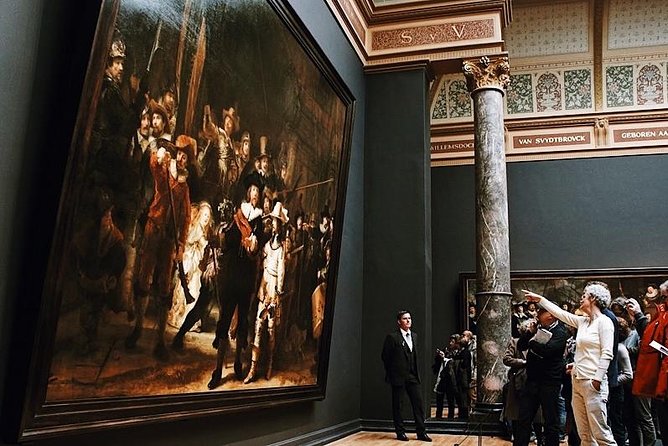
The tour includes about 2 hours 30 minutes in the Rijksmuseum with admission ticket included. That timing matters because the museum is big. Without guidance, you can end up doing the classic tourist loop: you drift toward famous rooms and miss the reasons those works matter.
Here’s what the guide helps you bring into focus:
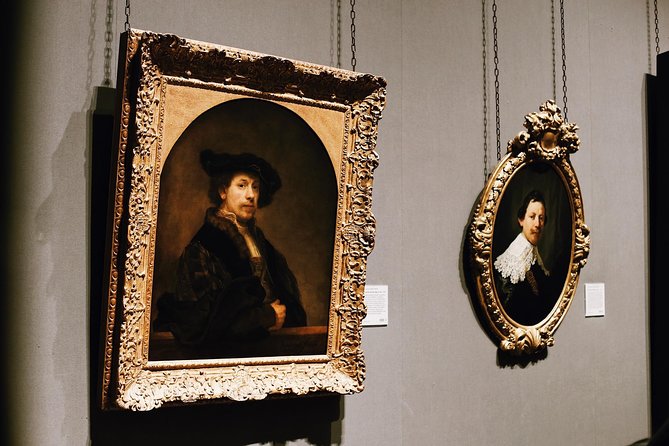
- Rembrandt and other Dutch masters, not just as names, but as part of the broader Dutch story
- Vermeer’s domestic world, including The Milkmaid, explained in a way that makes you look at the details instead of treating the painting like a postcard
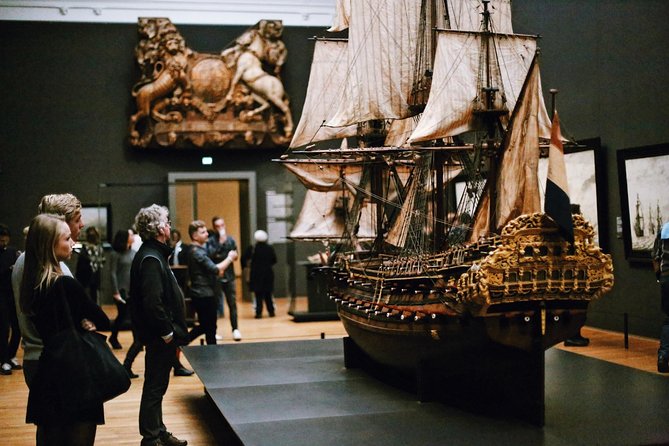
- Unexpected objects beyond the paintings, including 17th-century dollhouses and the museum’s display of Dutch history through thousands of objects
- A look at the museum’s 19th-century library, which gives a different angle on how stories were kept and studied
The Rijksmuseum also has practical rules you’ll want to follow so the day stays smooth. The tour notes that you can’t bring large bags or suitcases inside—only handbags or small thin bag packs are allowed through security. Dress is also important for entry into some sites on the route.
One more thing to plan for: some parts of the museum are quiet or have restricted rules about speaking. Your guide will flag those rooms before you go in, which is a nice touch. It’s not only about policy—it keeps the experience respectful and calmer, so you can actually hear the explanation.
The lunch break: how to keep momentum without overspending
Lunch is a break built into the 5.5-hour total, but it’s own expense. That’s normal for tours like this, and it’s actually useful. You can choose what fits your budget and food needs rather than being funneled into a single option.
My practical advice: use the lunch break to reset in a low-stress way. Pick somewhere close to your next walking segment so you don’t lose time crossing the city. Also, bring a small water bottle if you tend to get thirsty fast. Cobblestones plus walking adds up, and you’ll feel it more after museum time than you might expect.
If you’re photo-heavy, plan your lunch spot so you’re not trying to rush back in time. The day has many short “look, learn, and move” moments.
St. Nicholas Basilica and the Weeping Tower: Amsterdam’s faith and walls
After lunch and the museum segment, the walking portion starts with St. Nicholas Basilica (about 10 minutes). The tour frames it as Amsterdam’s key Roman Catholic church history—built at the end of the 19th century after Roman Catholics could once again practice publicly after centuries of prohibition. You’ll also get a quick explanation of the building’s mixed architectural styles and artistic movements.
Then you head toward the Schreierstoren, commonly known as the Tower of Tears or Weeper’s Tower (about 10 minutes). This one is short, but the story gives it emotional weight. The tour explains the belief that women wept there while husbands left from the port for war or fishing. Even if you don’t linger, hearing that legend makes the tower feel less like a random silhouette and more like a built-in part of how the city once worked.
The potential drawback here is that these stops are brief by design. If you like slow travel and long explanations, you might wish for more time at each site. But for a first visit, the benefit is that you see many layers of the city without getting stuck in one place.
Zeedijk, Nieuwmarkt, and De Waag: where markets turn into architecture

Next comes Zeedijk (about 10 minutes), described as the Chinatown area of Amsterdam. Here, the value is not a ticketed attraction—it’s street atmosphere. You’ll pass an area with Asian markets, restaurants, shops, and you’ll also see the Zeedijk Buddhist temple (noted as the largest Chinese-style Buddhist temple in Europe). It’s a quick way to show that Amsterdam’s story is also modern and international, not only 17th-century portraits and canals.
Then the tour moves to Nieuwmarkt (about 10 minutes), one of the old city center’s livelier squares. The tour explains why it became a commerce and socializing hub since the 17th century—traders and shoppers found it convenient because it sat just inside the old city gate. That’s the kind of context that makes you understand the square’s energy rather than just watching people pass.
At Nieuwmarkt you’ll also see De Waag (about 10 minutes). This is a 15th-century structure and one of Amsterdam’s oldest remaining non-religious buildings. The tour notes it originally served as a city gate and later operated as a guildhall, museum, and firestation. That “many lives” detail is exactly what I like in Amsterdam stops: a building that keeps adapting instead of staying frozen in one identity.

Trippenhuis and the East India Company courtyard: trade shows up everywhere
The next stretch leans into architecture shaped by money and policy.
You’ll see Trippenhuis and Klein Trippenhuis (about 10 minutes). The tour points out that the Trippenhuis is Amsterdam’s widest home, spanning about 22 meters, while the Klein Trippenhuis sits directly across as one of the narrowest houses. It’s a great example of how wealth and real-estate pressure shaped the city’s physical look.
Then you step into the courtyard of the Oost-Indisch Huis, the Dutch East India Company headquarters (about 5 minutes). The key detail here is the scale of ambition: it’s described as the birthplace of the world’s first multinational corporation. Even if you only see the courtyard briefly, the story connects the Dutch Golden Age art you saw earlier to the trade machinery that funded it.
The tour also includes quick views of extremely narrow architecture again (like the Kleine Trippenhuis angle) with the note that land taxes once encouraged tall, narrow construction. That’s one of those “oh, that explains everything” moments—suddenly the city’s shapes make sense.
If you’re hoping to go inside a lot of buildings, note that several of these stops are short viewing moments. The upside is you get the big patterns fast.
Zuiderkerk, Rembrandt’s house area, and the Stopera: religion, art, and civic power
As you keep walking, you’ll see Zuiderkerk (about 5 minutes). The tour presents it as Amsterdam’s first purpose-built Protestant church, designed by Hendrick de Keyser, with a defining elegant tower. It’s another quick stop, but it adds a missing context piece: Amsterdam’s religious shifts weren’t only political. They changed architecture.
You’ll also pass by Museum Het Rembrandthuis (about 10 minutes), Rembrandt’s home and workplace between 1639 and 1656. The museum is described as containing Rembrandt’s etchings and paintings of his contemporaries. In this tour, it’s mainly a pass-by stop, but it’s still useful because you’ll know why you’re seeing it—your museum time sets that up.
Then you reach the Stopera area (about 10 minutes), the building complex housing both the city hall and the Dutch National Opera and Ballet. The tour notes the construction took at least 60 years. I like stops like this because it shows how Amsterdam didn’t treat culture as an afterthought. Civic buildings and performance spaces lived side by side.
Canal houses, Begijnhof quiet, and Dam Square’s famous center

The walk includes the Huis Aan De Drie Grachten (about 5 minutes). This rare 17th-century canal house is described as having façades facing three directions at the junction of three canals. If you’ve ever wondered why some Amsterdam buildings look slightly staged from multiple angles, this is one of those “see it and get it” examples.
Then comes Begijnhof (about 10 minutes). This is one of Amsterdam’s oldest hofjes, or almshouses, built around a secluded courtyard and garden. The tour explains that it provided homes for the Beguines—unmarried women living together under vows of chastity—and that today the site includes two churches. This stop slows the pace in a good way. Even with limited time, you feel the sense of enclosure compared with the streets outside.
Near the end you reach Dam Square (about 10 minutes). The tour highlights it as one of the city’s best-known locations, with major landmarks like the Royal Place, New Church, and the National Monument. Again, it’s quick, but it helps you connect earlier “old gate and commerce” themes to the city’s most iconic civic center.
The Anne Frank House exterior, Westerkerk nearby, and trade-emblem façades
You’ll pause outside the Anne Frank House (about 5 minutes). The tour frames it as where the young diarist hid during WWII. Next door rises the Westerkerk, noted as the tallest church tower in Amsterdam. This stop is brief, but it’s a powerful reminder that Amsterdam’s history includes modern tragedy and personal courage—not only the Dutch Golden Age stories.
After that, you’ll look up at De Drie Hendricken aan de Bloemgracht 87–91 (about 5 minutes). The tour notes quirky gable stones carved with allegories and trade emblems. This is the kind of detail that rewards slowing your head tilt and paying attention. If you’re used to scanning street level only, this is a good corrective.
If lines and crowds concern you, remember the tour notes that security measures can cause lines at some attractions, and quiet-room rules exist inside the museum. The upside is your guide’s experience in keeping the day moving.
Karthuizerhof, Noorderkerk, and Papeneiland: ending on a calmer canal corner
Near the finish, you’ll see the Coöperatieve Vereniging Karthuizerhof (about 5 minutes). It’s described as Amsterdam’s largest hofje, built as almshouses around a tranquil courtyard for the city’s poor and elderly. Even as a brief look, it fits the Begijnhof theme: how Amsterdam built support systems into everyday neighborhoods.
Then you reach Noorderkerk (about 5 minutes), a 17th-century Protestant church for the Jordaan district. The tour explains its unusual cross-shaped floor plan reflecting Reformation worship ideals. Architecture like this can look “strange” if you don’t know the reason. Having the reason in your head helps you see the form as functional, not random.
Finally, the tour ends at Papeneiland (about 5 minutes). The tour frames it as one of Amsterdam’s prettiest canal corners, and it specifically mentions Het Papeneiland, a brown café from 1642 said to serve the best apple pie in town. It’s a nice finish because it feels like the city exhale: you’re not rushing to a museum entrance anymore, you’re just ending where you can linger if you want.
Price and value: does $287.18 make sense?
At $287.18 per person for about 5 hours 30 minutes, this isn’t a budget “wander with a map” deal. You’re paying for three big things:
- A guided Rijksmuseum plan rather than random museum time
The museum admission is included, and the guide helps you focus on the works and objects that matter most, including Dutch masters like Rembrandt and Vermeer.
- A guided city-center walk that connects the dots
You don’t just see canals and historic buildings. You get explanations that tie what you learned to what you’re standing next to—old gate history, trade-era architecture, and civic shifts.
- Private group attention and included logistics
The tour is described as private for your group, with private transportation included if necessary between locations. It also runs rain or shine, which is practical in Amsterdam weather.
Where the price might feel steep: if you’re already very confident at self-guided Rijksmuseum planning and don’t want a structured walk afterward. In that case, you might prefer a museum-only strategy plus your own canal routing.
Where the price usually feels fair: art lovers, first-time Amsterdam visitors, and anyone who wants history that’s explained in plain language without the chore of researching each stop.
Who should book this tour?
This fits best if you want:
- Dutch Masters explained clearly, not just name-dropped
- A fast orientation to Amsterdam’s canal-center layout
- A day plan that mixes art history and city history without needing ticket logistics juggling
- A walking pace that’s guided enough to reduce guesswork
It also helps if you’re comfortable with moderate walking on cobblestones and you can handle brief viewing stops. If you want long, silent time in museums or you dislike walking, you might prefer a different format.
One more detail I take seriously: the Rijksmuseum can face closures, and if delays go beyond an hour from start time, the tour notes alternatives without refunds or discounts. If you’re on a tight schedule where you can’t risk a shift, keep that in mind.
Should you book Rijksmuseum & Amsterdam City Center?
Yes—if your goal is to understand Amsterdam in one day while seeing the Rijksmuseum highlights with a guide. The pairing is the point: you leave the museum with context, then your canal-and-street walk makes that context feel real.
I’d especially book this when it’s your first trip or when you want Dutch history and Dutch art connected in a simple, human way. Guides linked to this tour have been described as passionate and professional, including examples like Jacopo (focused, energetic explanations), Victoria (steady professionalism even when things go wrong), Josje and Giuseppina (clear emphasis on key works), and Paola (friendly, top-notch cultural guidance). Those are the styles you want when time is limited.
If you’re trying to squeeze in a ton of museum time or you’re extremely sensitive to potential museum delays, consider whether you need a more flexible plan. Otherwise, this is a strong value for the amount of guided content you get.
FAQ
How long is the tour?
It runs for about 5 hours 30 minutes (5.5 hours), including a lunch break.
Where does the tour start and end?
It starts at Cobra Café, Hobbemastraat 18, 1071 ZB Amsterdam and ends at The Papeneiland, Prinsengracht 2, 1015 DV Amsterdam.
What time does the tour begin?
The start time is 10:00 am.
Is this tour private?
Yes. It’s listed as private for your group only.
What is included in the price?
The guided museum tour and walking tour are included, along with museum entrance fees and tickets. Private transportation between locations is included if necessary.
Do I need to pay for lunch?
Lunch is not included. The tour includes a break for lunch, but it’s an own-expense meal.
What language is the tour offered in?
The tour is offered in English.
Are there any bag or dress rules?
Yes. The Rijksmuseum may restrict what you can bring inside: no large bags or suitcases, and only handbags or small thin bag packs are allowed through security. Appropriate dress is required for entry into some sites.
What if the Rijksmuseum closes or is delayed?
The notes say Rijksmuseum may face occasional closures without warning. If the delay is more than 1 hour from the tour starting time, the tour provides an appropriate alternative, but refunds or discounts aren’t available.
Is it fully refundable if I cancel?
Free cancellation is available up to 24 hours in advance for a full refund.