REVIEW · AMSTERDAM
Self Guided Tours Amsterdam With 100 Captivating Audio Stories
Book on Viator →Operated by Trales Audio Guides · Bookable on Viator
Amsterdam feels different when you listen.
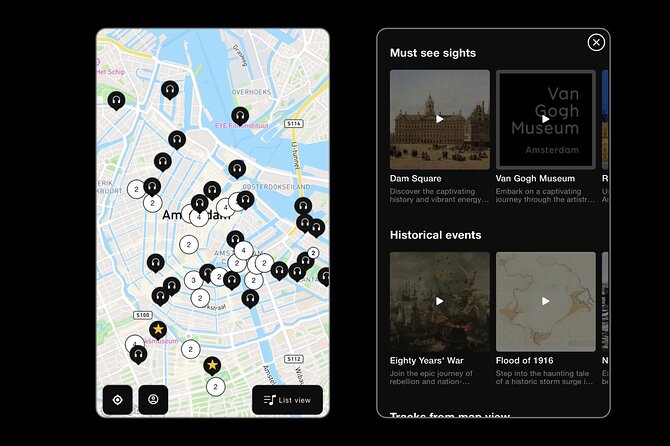
This self-guided audio experience turns your phone into a walking companion, with 100+ location-based stories that pop up around major sights and quieter corners alike. I like that it’s browser-based—no downloads—so you can start right away with your own headphones and keep moving at your pace. You can choose a short loop (about an hour) or stretch it longer (closer to two hours) without getting stuck in a fixed group schedule.
The only real catch is practical: you need a working internet connection, since it’s not built for offline use. If your plan involves spotty coverage, or you’re counting on hearing support, this may be the wrong format.
In This Review
- Key highlights to know before you go
- How the Amsterdam audio guide actually works (phone, map, and no downloads)
- Price and value at $3.46 per person: what you’re really buying
- The smart way to do it in 1–2 hours
- Royal Palace in Dam Square: power, symbolism, and a fast start
- Dam Square: the square you use as a compass
- De Wallen audio: red-lit windows with context, not just shock
- Jordaan and De Negen Straatjes: “shop and listen” streets
- Oude Kerk: Amsterdam’s oldest building, then and now
- Defence Line of Amsterdam: the strategic story you might not expect
- Zeedijk and Chinatown energy: sea meets Asia via one street
- The one thing to watch for: audio coverage quality
- Who this Amsterdam self-guided audio tour suits best
- Should you book this $3.46 Amsterdam audio experience?
- FAQ
- How long is the Amsterdam audio tour?
- What do I need to bring?
- Do I need to download an app?
- How do I activate the audio guide after booking?
- Is it available offline?
- Where does it start and end?
- Is there a refund if I cancel?
Key highlights to know before you go
- No downloads needed: activate through a simple web link and start listening fast
- Map + steps: a web app guides you by location so you don’t get lost on the route
- Royal Palace and Dam Square nearby: start with the big-name landmarks and work outward
- De Wallen, Jordaan, De Negen Straatjes: mix iconic sights with everyday street life
- Oude Kerk + art space energy: hear how Amsterdam’s oldest church connects to modern culture
- Defence Line of Amsterdam angle: you’ll get a strategy-and-fortifications story, not just postcard views
How the Amsterdam audio guide actually works (phone, map, and no downloads)
This is a self-guided smartphone tour. You bring your own phone and headphones. There’s no physical guide waiting for you—so your “tour team” is the web app on your screen.
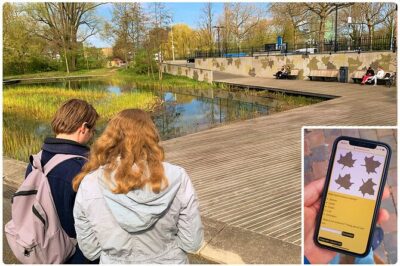
The big convenience is how you access it. You don’t download anything. You start in your browser, then use the built-in map and location-based audio “steps” to trigger stories as you move around Amsterdam. That means you’re not fumbling with apps, storage space, or permission pop-ups once you’re already out in the streets.
Activation is also straightforward. After you book, you confirm and then (per the instructions you’ll receive) you enter the last five digits of your phone number into the promo code field on Trales.io to get the link activated. If you’re the type who likes to plan ahead, I’d do that right before you walk out the door, not the next day after you forget what phone number you used.
One more practical note: this format is not set up for offline use. So if you rely on weak Wi‑Fi, or you’re traveling with data limits, plan to keep mobile data on while you’re listening.
You can also read our reviews of more tours and experiences in Amsterdam.



Price and value at $3.46 per person: what you’re really buying

At $3.46 per person, the deal here is simple: you’re paying for storytelling access, not a guided group. There’s no dedicated guide standing with you, and there’s no offline playlist you can keep forever after you download. You’re basically buying low-cost audio narration tied to where you are.
That value makes the most sense if you:
- like exploring on your own schedule,
- want context without paying for a full guided tour,
- enjoy repeating a route once you’ve heard what matters.
It’s also a good price point if you’re doing Amsterdam as a “many mini experiences” trip. You can spend a little on audio and save money for museums or food, and you won’t feel like you wasted a high-ticket guided tour when your day runs long.
The smart way to do it in 1–2 hours
The duration is listed as about 1 to 2 hours. Since it’s location-based, the time mostly comes down to how often you pause, how long you linger at each stop, and how quickly you move between areas.
Here’s how I’d pace it for the best experience:
- Choose one cluster of sights (Dam Square and Royal Palace, or Jordaan and the canal-laced shopping lanes).
- Walk slowly enough to catch the audio where you’re standing, not while you’re moving fast.
- If you hear a story that’s longer than you expected, treat it as your cue to stop for a breather rather than “power through.”
Also, because you control when you start and stop, you can fit it around your energy level. You can do a quick hit of 2–3 major moments, or keep it rolling until you feel like you’ve gotten your bearings.
Royal Palace in Dam Square: power, symbolism, and a fast start
Your first big anchor is the area around Amsterdam’s Royal Palace and Dam Square. This is the start-of-the-day kind of listening spot: grand, central, and filled with meaning even if you only skim the architecture.
From your audio, you’ll get a sense of how Amsterdam built authority at ground level. Dam Square isn’t just a meeting place. It’s a square with origins tied to the Amstel River—a dam that shaped the city’s early survival and growth. Once you hear that framing, the square stops feeling like a postcard and starts feeling like a working part of the city’s formation.
The Royal Palace story matters because it gives you a vocabulary for what you’re seeing: this is where political presence and public life share the same space. You’ll also learn to notice details you might otherwise overlook, like how the palace relates to the square’s layout and the surrounding civic feel.
One caution: Dam Square is busy. If you’re trying to hear every word clearly, give yourself a moment to step slightly away from the heaviest foot traffic before you hit play.
Dam Square: the square you use as a compass
Dam Square is described in the audio as evolving from its humble beginnings into a cultural hub. That kind of big-picture timeline is exactly what you want at the start—because it gives you a mental map for later neighborhoods.
In practice, it also makes your walking easier. You can use Dam Square like a compass: it’s a central reference point for deciding whether you head toward canal-side streets, shopping lanes, or toward the older districts.
If you only do one major listening stop, Dam Square and its surrounding palace area are the choice. It’s the most efficient way to convert your first impressions into context.





De Wallen audio: red-lit windows with context, not just shock
Next up is De Wallen, Amsterdam’s best-known district tied to a long, complicated history. The audio approach here seems built for understanding rather than gawking. You’re guided through stories behind the red-lit windows, with references to the notoriety of brothels and the surprises that come with exploring the area more carefully.
This is a good match for the way Amsterdam actually feels: not all of it is museum-clean. Some streets are messy, layered, and still operating as living neighborhoods. Hearing the stories while you walk helps you see the difference between a place that’s been performed for tourists and a place that still has its own rhythm.
Practical tip: stay alert for regular street activity. This is central and active, so keep your phone secure and your headphones volume at a level that lets you still hear normal street noise.
If you’re someone who prefers upbeat narratives, you might find some portions of De Wallen heavy. That’s not a flaw—it’s the subject—but it helps to go in knowing the tone.
Jordaan and De Negen Straatjes: “shop and listen” streets
After the major landmarks and the older district, you shift to neighborhoods that feel more like daily Amsterdam: Jordaan and the area of De Negen Straatjes (the Nine Streets).
The audio frames Jordaan as a place where history meets modern life. That combination matters because it explains why you can walk the same street and see different eras side-by-side: older building shapes, newer storefront patterns, and a neighborhood identity that doesn’t feel frozen in time.
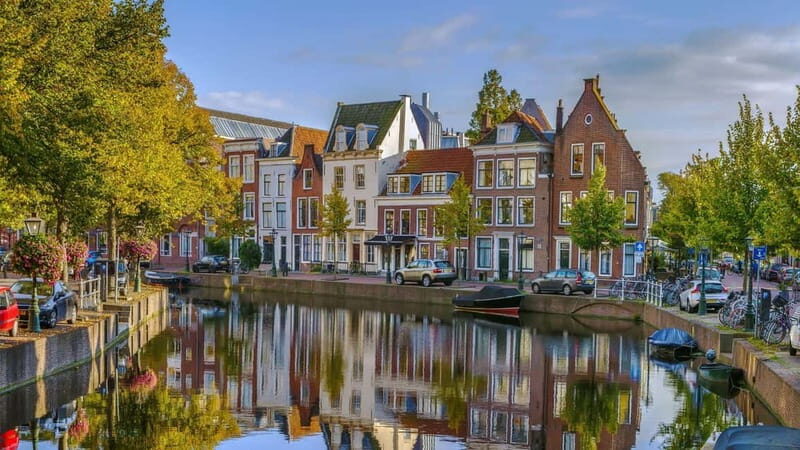
Then De Negen Straatjes is about rhythm and choice. It’s easy to get distracted here because the streets are made for wandering. That’s exactly why the audio format works. When you’re ready, you can pause and follow the story. When you’re not, you can simply keep walking and enjoy the canal-side atmosphere.
I like this part of the route because it’s flexible. If you want shopping, it’s there. If you want people-watching and side-street charm, it’s also there. You don’t need to commit to any single attraction to make this segment worthwhile.
Just watch your timing. If you’re planning to add more than one stop, don’t wait too long at shops when you still want to hear the next location story.
Oude Kerk: Amsterdam’s oldest building, then and now

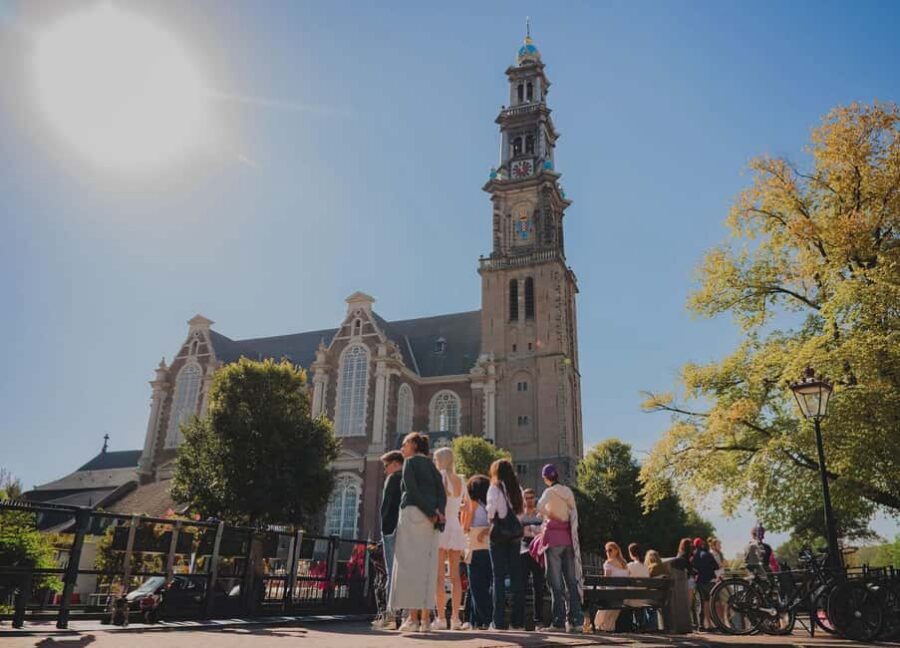
One of the standout audio choices is Oude Kerk, described as Amsterdam’s oldest building that has become a cutting-edge art hub. That’s a great premise for listening, because it shows how spaces can change roles without losing their physical presence.
What to expect when you’re there: you’ll get stories spanning centuries, then you’ll connect that past to what’s happening in the building today. In other words, you’re not just learning dates—you’re learning how a city reuses its bones.
This stop is a nice “reset” after more street-focused districts. You’re still walking, but you’re also switching from neighborhood narrative to architectural and cultural narrative. If you want a moment where the audio becomes more reflective, this is it.
If you’re short on time, I’d prioritize Oude Kerk over another long walk segment. It’s the kind of location where the audio can change how you experience the physical space.
Defence Line of Amsterdam: the strategic story you might not expect
The route also includes a Defence Line of Amsterdam story—84 miles of fortifications and strategic warfare. This is a left-field audio stop compared to the standard canal-and-church itinerary.
That’s the value for many people: Amsterdam isn’t only canals, museums, and famous houses. The city also has a defensive history, and fortifications give you a different lens on how the Netherlands protected itself.
It’s also a practical consideration. The tour is described as location-based, but the Defence Line concept covers a large area (84 miles of fortifications). You may need to be realistic about how much of that story you can meaningfully experience during a tight 1–2 hour window in central Amsterdam.
Still, even if you’re only hearing a portion of the narrative while you’re in range, it can help you understand the bigger system behind the name. It’s a strong pick if you like military history, city planning, or you simply want Amsterdam to surprise you.
Zeedijk and Chinatown energy: sea meets Asia via one street
Next comes Zeedijk, described as where the sea meets flavors of Asia, and tied to Amsterdam’s Chinatown. This is another segment where the audio does more than label a neighborhood. It explains how the area became a boundary that helped define the city’s pulse—and how it became a walking route for food and everyday life.
In a city where you can spend hours bouncing between attractions, Zeedijk is useful because it can become a food-and-street story at the same time. You don’t have to treat it as a formal “tour stop.” You can treat it as a corridor where you snack, watch, and listen.
I also like the way this kind of story changes the feel of street markets. When you understand how an area’s role developed, the shops and smells feel less random.
The one thing to watch for: audio coverage quality
Your main risk with any low-cost, phone-based audio is inconsistent audio coverage or mismatched content to your expectations. In the available feedback, one complaint points to an audio segment where a boat-related part had very little commentary, which is disappointing if you were hoping for richer narration.
What this means for you: keep your expectations flexible. If you notice a portion of the route where the audio seems thin or unclear, you can still salvage the experience by shifting your focus back to places with clearer landmark stories, like Dam Square, De Wallen, and the church area.
Who this Amsterdam self-guided audio tour suits best
This works best if you:
- want context without paying for a full guided group,
- like the freedom to stop, start, and choose your pace,
- enjoy walking city neighborhoods and listening to stories while you’re there.
It’s less ideal if you:
- want offline audio (this one is not offered),
- rely heavily on audio support due to hearing limitations (it’s not recommended for hearing impairment),
- expect every segment to be equally detailed.
It also helps if you like variety. This route mixes civic power (Dam/Royal Palace), older districts (De Wallen), neighborhood streets (Jordaan and De Negen Straatjes), a major building (Oude Kerk), a broader historical system (Defence Line), and a food-and-culture street (Zeedijk).
Should you book this $3.46 Amsterdam audio experience?
If you want a low-cost way to add meaning to Amsterdam streets, I think it’s an easy yes. The biggest strengths are practical: you start in your browser, you use your own headphones, and you get 100+ location-based stories you can choose from without committing to a rigid schedule.
I’d skip it only if offline listening is a must, or if you need audio designed for hearing impairment. And if you’re specifically expecting very detailed narration for a boat-style component, treat that as a possible weak point.
If your plan includes walking through Dam Square, drifting toward Jordaan and the Nine Streets, and ending with a church or food-focused street, this audio guide can make that time feel purposeful instead of just busy.
FAQ
How long is the Amsterdam audio tour?
It’s listed as about 1 to 2 hours, depending on how much you listen and how long you pause at each location.
What do I need to bring?
You’ll need your own smartphone and headphones. Internet access is required, since offline access isn’t included.
Do I need to download an app?
No. The guide is accessed via a web app in your browser, with a link to activate the audio guide.
How do I activate the audio guide after booking?
After confirmation, you enter the last 5 digits of your phone number in the promo code field at Trales.io to activate and access your audio guide.
Is it available offline?
No. Offline access is not included.
Where does it start and end?
You start in Amsterdam, Netherlands, and the activity ends back at the meeting point.
Is there a refund if I cancel?
No. The experience is non-refundable and cannot be changed for any reason.