REVIEW · AMSTERDAM
Amsterdam: Anne Frank History Walking Tour
Book on GetYourGuide →Operated by Flagship Bike Tours Amsterdam · Bookable on GetYourGuide
History gets personal on this Amsterdam walk. This Anne Frank History Walking Tour follows the same streets tied to her diary, while also widening the lens to the Jewish community and Dutch resistance during WWII. I love that the storytelling is anchored to real corners of the city, not just a timeline on a screen.
My second favorite part is the format: a small group lets you actually ask questions and hear the guide’s human, moving context at each stop. It’s also the kind of tour where you spot memorials and details that most people miss while rushing between major sights. One thing to consider up front: this is an exterior-only experience for the Anne Frank House—you won’t go inside.
In This Review
- Key Things to Know Before You Go
- Where the Tour Begins: Anne Frank Monument, Westerkerk Bells, and the Right First Steps
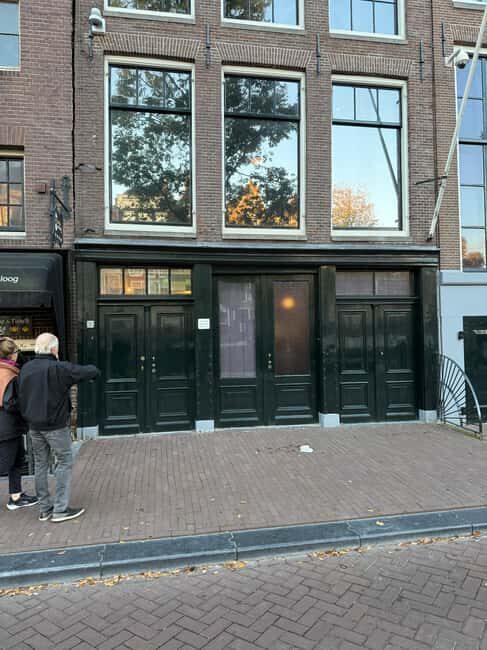
- Anne Frank House Exterior: Seeing the Building and Understanding What You’re Looking At
- Dam Square to Tragedy: How the Guide Makes the Final Days Make Sense
- Entering the Historic Jewish Quarter: From Daily Life to Memorial Impact
- De Dokwerker and Portuguese Synagogue: End With Resistance and Hope
- The Guide Factor: Small Group, Big Storytelling, and Questions That Actually Land
- What’s Included: Stroopwafel and Optional Audio, Plus Why Headphones Help
- Price and Value: Is $28 Worth It Here?
- Pace, Accessibility, and Who This Tour Best Fits
- Should You Book This Anne Frank History Walking Tour?
- FAQ
- How long is the Amsterdam: Anne Frank History Walking Tour?
- Where does the tour start and where does it end?
- Do I get to enter the Anne Frank House?
- Is the tour in English?
- Is there a small group size limit?
- What is included in the ticket price?
- What should I bring?
- Are there any rules about minors or cancellations?
Key Things to Know Before You Go

- Exterior-first approach: you see Anne Frank House from the outside, with the story brought to you on the sidewalk
- Small group size: kept to a low-cap so questions don’t get swallowed by the crowd
- Jewish Quarter focus: you move through the neighborhood context, not just one dramatic location
- Memorial stop design: places like the Auschwitz Monument use shattered-mirror symbolism to land the emotion
- Hope at the finish: you end with resistance and survival symbols near Waterloo Square
- Tour extras included: you get a stroopwafel, and an audio app if you chose that option
Where the Tour Begins: Anne Frank Monument, Westerkerk Bells, and the Right First Steps
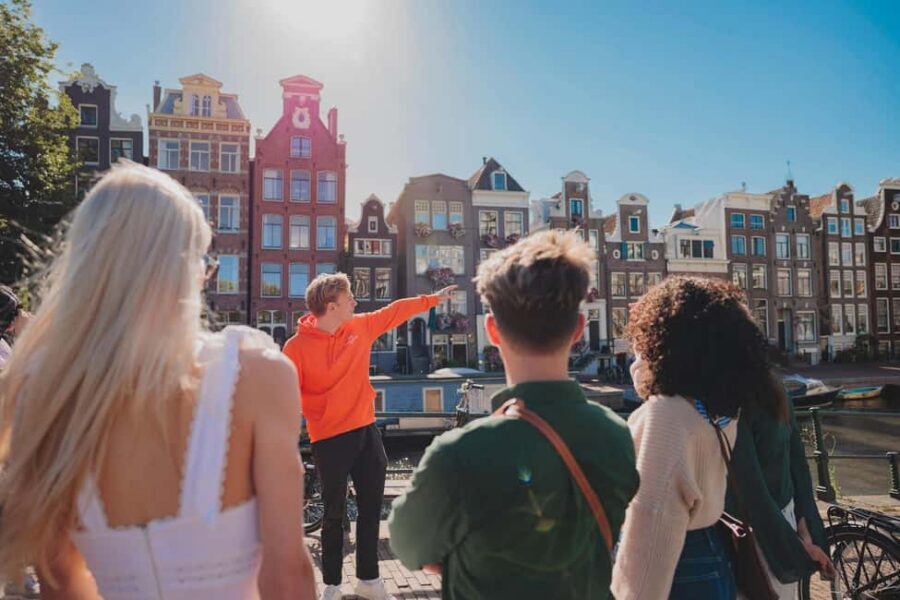
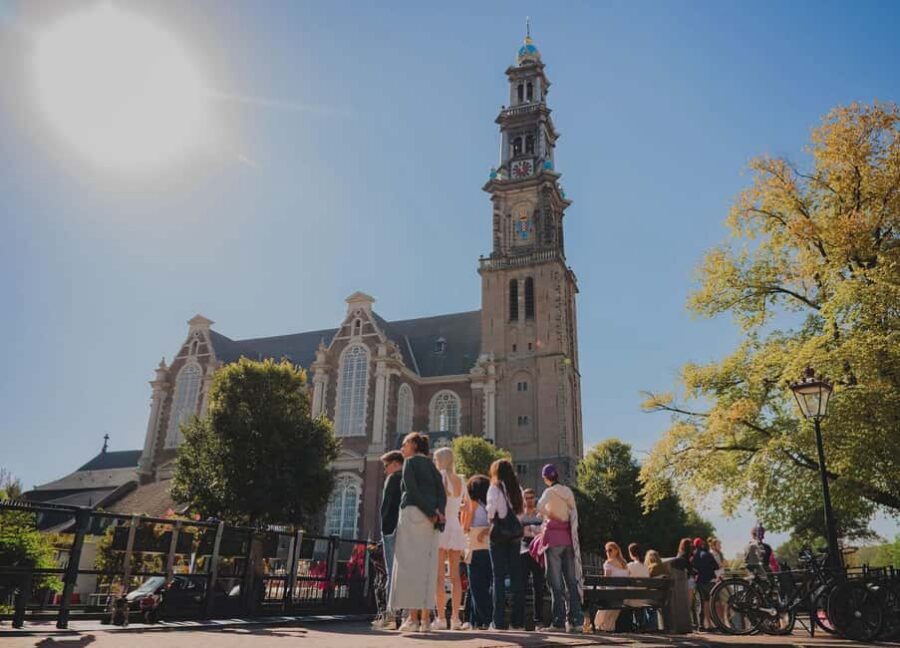
You start at the Anne Frank Monument, a short walk from the Anne Frank House. The location matters because the guide begins by linking the space directly to the world Anne Frank described—so you’re not standing there wondering why you’re in front of a monument. It also sets a tone right away: quiet, serious, and focused.
One detail I like here is the reference to the Westerkerk bells. The monument connects that sound to the life and words swirling around her diary period. In a city where you can easily bounce from café to canal to museum, starting with this kind of grounded entry helps you slow down.
Practical tip: arrive 10 minutes early. With tours like this, “close enough” can become “late enough to miss the group,” and the meeting point is right by major attractions where there’s always foot traffic.
You can also read our reviews of more walking tours in Amsterdam



Anne Frank House Exterior: Seeing the Building and Understanding What You’re Looking At
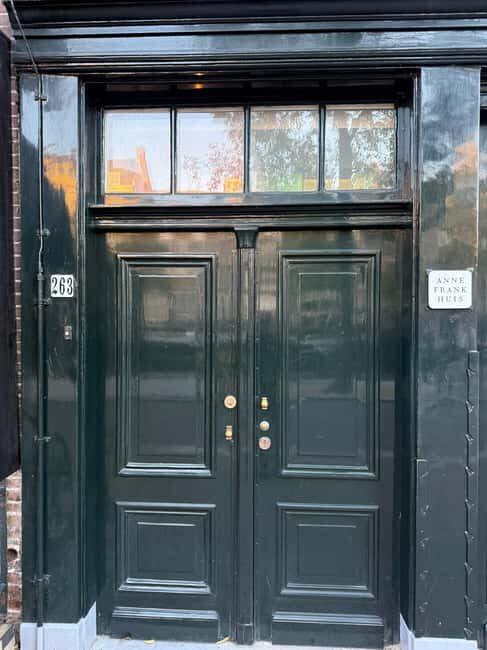
After the monument, you move past the Anne Frank House. From the outside, the building can look almost ordinary—exactly the point. The guide’s job is to help you notice how something that looks static and small carried so much meaning and risk.
This is where you get the best value if you don’t have House tickets. The Anne Frank House can be extremely hard to secure; tickets may sell out around two months in advance. This tour won’t replace entry into the House, but it can still give you a complete, coherent narrative view of why the exterior matters so much.
The big caution: if your top priority is interior access, you’ll need to book Anne Frank House separately. This tour is built to work without that, so you won’t feel shorted on story, but you should know what you’re signing up for.
Dam Square to Tragedy: How the Guide Makes the Final Days Make Sense
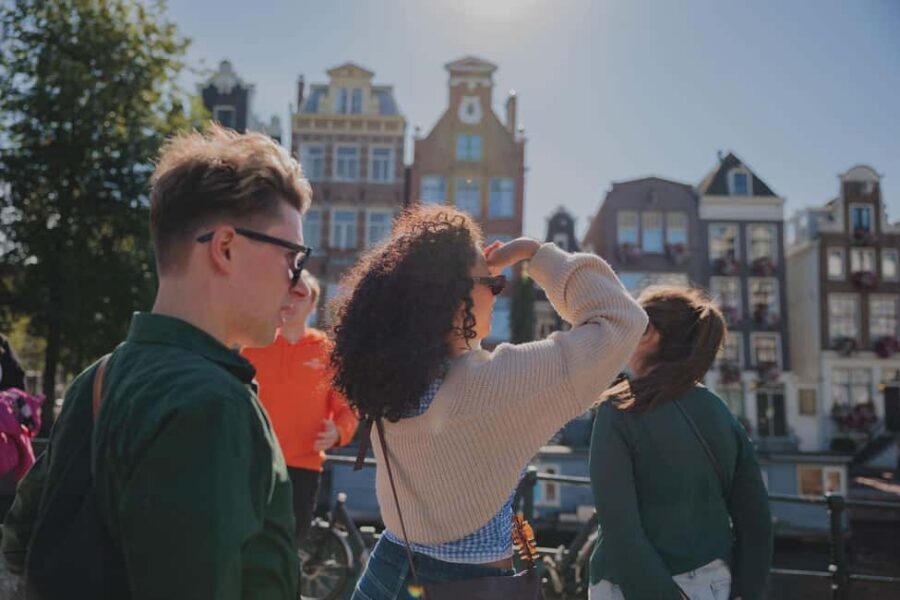
Then the route shifts toward Dam Square, which is a powerful choice. It’s a public place—busy, broad, and easy to see—so you can understand how something huge was playing out in an everyday city. The guide explains how celebration turned to tragedy in the final days of the war, and the way it’s framed helps the emotion land without turning into vague sadness.
What I like about this stop is that it doesn’t ask you to memorize dates. It puts you in the mindset: how sudden shifts in power and safety reshape daily life. For many people, that’s the moment the story stops feeling like a distant textbook and starts feeling like a set of choices and consequences in real space.
Also, since this is a walking tour, you’re moving at a pace where you can actually process. You’re not herded into a single room for a single message. You’re outdoors, hearing context while watching the city around you.
Entering the Historic Jewish Quarter: From Daily Life to Memorial Impact

Next comes the historic Jewish Quarter, and this is one of the tour’s smartest moves. The guide helps you understand that the story isn’t only about loss—it includes what life looked like before it was destroyed.
At the Jewish Museum, you get context for Jewish life before the war. Even without going inside the museum on this walk, the stop anchors you: the guide points out how community, culture, and daily routines were part of the same city that later became a place of fear and persecution. That framing changes how the later memorial sites hit you. When you’ve felt the idea of normal life first, the break into tragedy feels sharper.
Then you reach the Auschwitz Monument, and the symbolism is the point. The shattered mirrors are meant to force a reaction—something fractured, something reflected back at you, something that can’t be softened. The guide’s role here is crucial: they connect the symbolism to human experience so you don’t just see an artistic feature and move on.
If you’re the type who needs a moment to absorb, plan to pause. This stop tends to create silence on the route, and that’s normal.
De Dokwerker and Portuguese Synagogue: End With Resistance and Hope
The tour’s ending is designed to leave you with something more than grief. You finish near Waterloo Square, and you pass by symbols tied to resistance and endurance.
You’ll visit the Portuguese Synagogue area, described as still glowing by candlelight. That matters because it keeps the tone human and spiritual rather than purely mournful. Even if you’ve seen many Holocaust-related sites across Europe, this kind of emotional balance is valuable. It tells you the story includes faith, identity, and continuity, not only disappearance.
Finally, you end at De Dokwerker, which is presented as a proud symbol of resistance. This is where the “everyday courage” theme shows up—ordinary people standing up against injustice. The walk finishes near the dancing houses, so you’re ending in a part of town that feels lively and visually striking. That contrast can feel strange at first, but it actually helps you carry the meaning with you into normal city life.
The tour doesn’t leave you with a single emotion. It tries to end with an idea: hope and resistance weren’t abstract values; they were choices made in real time.
You can also read our reviews of more historical tours in Amsterdam





The Guide Factor: Small Group, Big Storytelling, and Questions That Actually Land
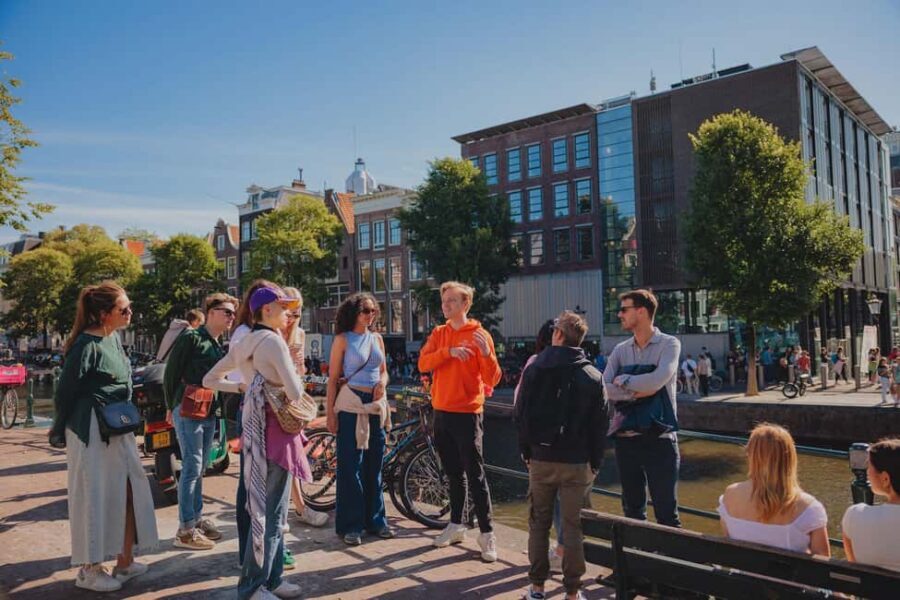
This tour runs with an English-speaking guide and keeps the group small—max 15 people. In practice, that means you aren’t stuck guessing what matters most. You can ask something specific, like how certain places connect to the diary story or what the memorial symbolism is trying to communicate.
One practical detail: the guide is easy to spot in bright orange. That’s a small thing, but it saves you from the usual airport-hunt experience in a busy city center. It also helps you start calmly instead of scanning crowds while your mind is already emotional.
You might also hear the kind of personal delivery that some people describe with the name Kevin. Even if your guide isn’t the same person, the tour’s promise is consistent: stories that go beyond the history-book version, with attention to everyday courage and heartbreaking loss.
What’s Included: Stroopwafel and Optional Audio, Plus Why Headphones Help
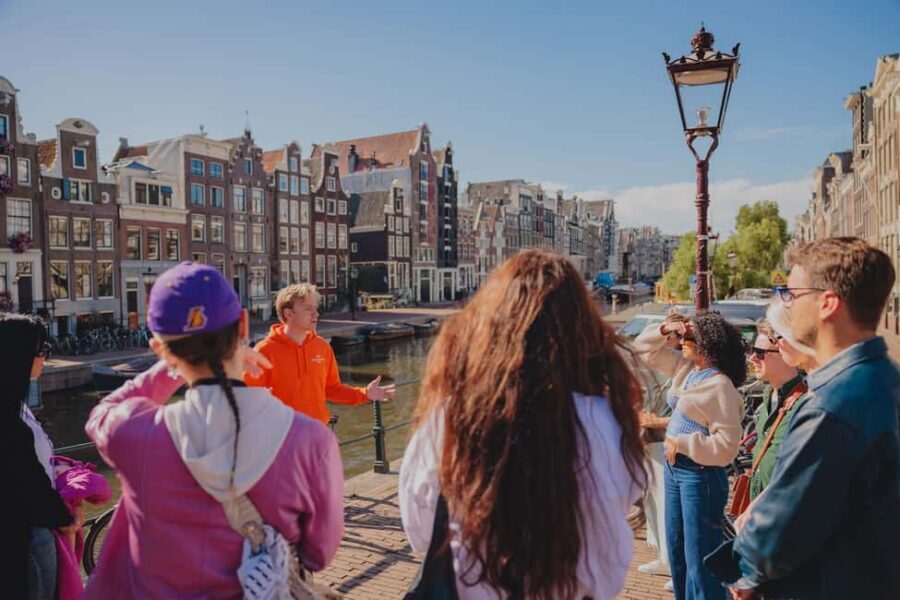
You get a few built-in perks that make the experience smoother.
- Stroopwafel: it’s a classic Amsterdam sweetness, and it also gives you a short break in the middle of a heavy narrative day
- Expert English-speaking guide: the guide is the engine that ties locations into a coherent story
- Audio guide app if selected: if you choose the audio option, bring headphones so you can follow along without fighting the street noise
Even if you don’t use the audio app, headphones are still a smart idea for comfort and clarity. You’ll want your attention for the memorial details.
Bring a charged smartphone too. You may use your phone as a timer, map backup, or photo reference if you’re trying to remember what the guide pointed out.
And yes, bring a camera if you want. Just remember some memorials are places where quiet matters more than photos.
Price and Value: Is $28 Worth It Here?
At $28 per person for a 2-hour guided walk, the value is about quality control, not quantity. You’re paying for an expert guide who connects multiple sites—monument, exterior House context, Dam Square, Jewish Quarter, Auschwitz Monument symbolism, Portuguese Synagogue area, and De Dokwerker resistance—into one flowing narrative.
You’re also paying for the small-group experience. When the group is capped in the low teens, the guide can actually respond to questions rather than rushing through prewritten stops.
If your alternative is trying to self-tour, you’d likely manage to see the places. But you’d miss what makes them connect emotionally: how the guide frames everyday life before WWII, how they explain transitions into persecution, and how they interpret resistance themes at the end.
One more value note: the tour includes stroopwafel, which sounds minor, but it’s one of those tiny “you’re taken care of” gestures that make the timing feel less stretched.
Pace, Accessibility, and Who This Tour Best Fits
This is a 2-hour walking tour, so you’ll want comfortable shoes. The good news is that the stops are close enough to manage without feeling like you’re grinding miles. Still, plan to stand and walk steadily through central Amsterdam.
It’s also listed as wheelchair accessible, which is a big help if you need step-free routing. I can’t promise every sidewalk detail will be perfect for every chair or mobility device, but it’s designed to be reachable for people who rely on mobility support.
The tour has a clear rule: unaccompanied minors aren’t allowed. So if you’re traveling with kids, you’ll need an adult presence with the group rules in mind.
Who this suits best:
- You want a guided story that ties multiple locations together
- You want more than a quick photo stop at a single memorial
- You’re visiting during a time when Anne Frank House tickets are tough to get
If you’re only interested in the Anne Frank House interior, this won’t fully meet that goal.
Should You Book This Anne Frank History Walking Tour?
If you want an emotionally grounded, street-level way to understand Anne Frank’s world and the Jewish community’s experience during WWII, this is a strong choice. I’d especially recommend it if Anne Frank House tickets are sold out or far beyond your schedule—because this gives you the narrative structure and the key exterior context even when you can’t get inside.
Skip it only if your priority is strictly Anne Frank House entry. This tour is designed as an exterior-based story walk, not a replacement for interior access.
One last practical thought: start your morning ready to listen. Bring headphones, a charged phone, and a willingness to pause at memorial stops. The tour’s power comes from how the guide links real places to real human stakes—so the more mentally present you are, the more the experience will stick with you long after you’re back in Amsterdam’s everyday pace.
FAQ
How long is the Amsterdam: Anne Frank History Walking Tour?
The tour lasts 2 hours.
Where does the tour start and where does it end?
You meet at the Anne Frank Monument. The tour ends near Waterloo Square, close to the dancing houses.
Do I get to enter the Anne Frank House?
No. This tour includes an exterior visit only, not entry to the Anne Frank House.
Is the tour in English?
Yes. The live tour guide is English-speaking.
Is there a small group size limit?
Yes. The group is kept small, with a maximum of 15 people.
What is included in the ticket price?
The tour includes an expert English-speaking guide, a walking tour, and a stroopwafel. An audio guide app is included if you select the audio option.
What should I bring?
Bring a camera, headphones, and a charged smartphone.
Are there any rules about minors or cancellations?
Unaccompanied minors are not allowed. The tour also offers free cancellation up to 24 hours in advance for a full refund.