REVIEW · AMSTERDAM
Small-Group: Culture & History Walking Tour of Amsterdam
Book on Viator →Operated by Trigger Tours · Bookable on Viator
Amsterdam history starts here. This small-group walk threads together about 700 years of central Amsterdam, with stops that explain why the city looks the way it does. You’ll move through the political heart at Dam Square, glide along the UNESCO-listed canal ring, and learn what’s behind the big postcard views.
Two things I especially like are the guide-led storytelling and the intimate size. The experience caps at 15 travelers, so questions don’t get lost in the crowd, and the guide can point out context you’d miss on your own. And in at least one very memorable case, the guide Gio brought real energy and detail, answering questions with confidence and steering the group toward useful local perspective.
One drawback to keep in mind: the meeting spot can feel a little too open-ended. If you’re aiming to catch the tour on time, I’d plan to arrive right at Damrak 1-5 (1012 LG) and follow the exact start-point instructions given to you at booking.
In This Review
- Key highlights to watch for
- The 2-hour route through central Amsterdam’s big story
- Dam Square: where Amsterdam’s political center meets daily movement
- The UNESCO canal ring: seeing planning behind the postcard views
- Oude Kerk: Amsterdam’s oldest surviving building and how its role changed
- Nieuwmarkt: from former city walls to a market square you can feel
- Why this guide format works: local know-how in a tight group
- Price and value: what $41.10 buys you in Amsterdam center
- Logistics that matter more than you think
- Should you book this Amsterdam culture-and-history walking tour?
- FAQ
- FAQ
- How long is the Small-Group Culture & History Walking Tour of Amsterdam?
- What’s the group size limit for this tour?
- Where does the tour start?
- Is food and drinks included?
- What language is the tour offered in?
- What is the cancellation policy?
Key highlights to watch for
- Small group of up to 15: more Q&A, less rushing, easier to hear your guide
- Dam Square context: learn how the political and cultural center shaped daily life
- UNESCO canal ring: see the engineering and urban planning behind the canals
- Oude Kerk (13th century): understand how a church’s religious role shifted over time
- Nieuwmarkt and the market square: spot the layers from old city walls to modern cafés and daily commerce
- Guide-led recommendations: you’ll leave with practical tips for what to do next
The 2-hour route through central Amsterdam’s big story
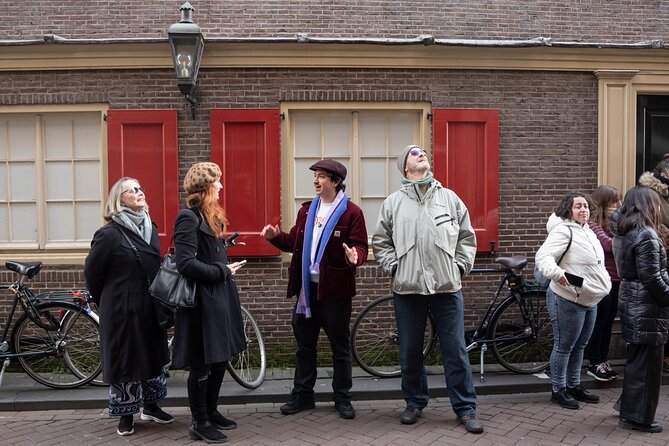
This is a focused walking history loop through the densest, most meaningful parts of the city center. The format is simple: you start at Damrak 1-5 (1012 LG Amsterdam), spend about 2 hours on foot, and return back to the same area at the end. At $41.10 per person, it’s priced like a “good-value orientation tour” rather than an all-day museum marathon.
What you’re paying for is not just seeing landmarks. You’re paying for a local guide who can connect the dots quickly—politics to places, architecture to faith, and older city structures to what’s happening there now. That’s the real value in a short tour like this: you get a guided mental map fast, then you can roam afterward with fewer detours.
Also, the tour is offered in English, which helps a lot in Amsterdam’s center where multilingual signage and fast-moving crowds can make independent exploring feel more complicated than it needs to be.
You can also read our reviews of more tours and experiences in Amsterdam.



Dam Square: where Amsterdam’s political center meets daily movement

Your first major stop is Dam Square, described as the heart of Amsterdam with political and cultural importance reaching back for centuries. This matters because Dam Square isn’t just a pretty public space. It’s the kind of place where authority and public life overlap, so the buildings and the flow of people are tied to long-running power and civic identity.
When you’re there with a guide, the difference is how quickly you can interpret what you’re looking at. Without context, Dam Square can feel like another city square. With context, you start noticing how a city’s priorities get written into its center—who gathers, what kind of events happen nearby, and why certain streets and routes develop the way they do.
Practical tip: since this is a central meeting point area, it can be busy. If you’re sensitive to crowds, arrive a few minutes early so you can settle without feeling rushed.
The UNESCO canal ring: seeing planning behind the postcard views
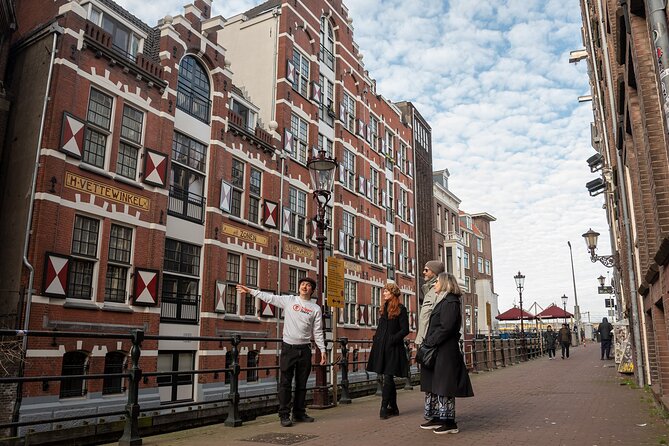
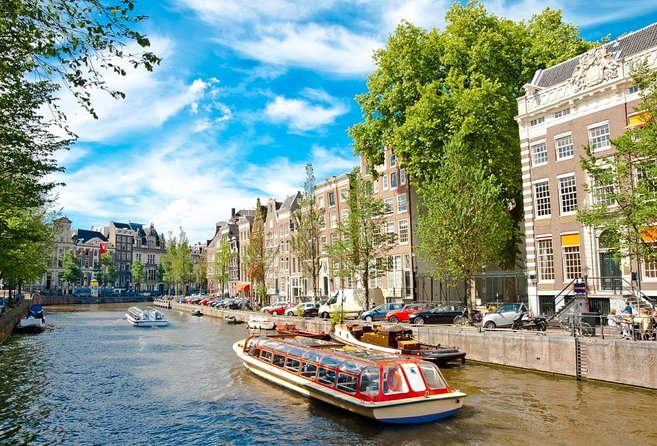
Next comes the canal ring, a UNESCO World Heritage Site and one of Amsterdam’s most picturesque areas. You’ll be looking at canals, bridges, and classic canal-side buildings, but your guide’s focus (and the tour’s angle) is on why these canals were built the way they were—highlighting the city’s urban planning and engineering, not just the aesthetics.
That shift changes how you experience the area. Instead of thinking of the canals only as views, you start thinking about them as systems: waterways shaped by design choices, built to support a dense city and its commerce. It’s a good reminder that Amsterdam’s beauty has a practical backbone.
If you plan to explore on your own afterward, this stop helps you navigate smarter. You’ll know what to look for, which streets to try next, and how the canal ring fits into the broader layout of the center.
Oude Kerk: Amsterdam’s oldest surviving building and how its role changed
One highlight built into this walk is Oude Kerk, Amsterdam’s oldest surviving building. It dates back to the 13th century, and it originally was a Catholic church. Over time, it was used by Protestant congregations, and today it functions as a cultural center.
That timeline is the point. The building isn’t just old for the sake of being old. It’s a physical record of how Amsterdam’s religious and cultural life shifted. With a guide, you’ll get the story in plain language, so you can connect the architecture and the building’s purpose to the historical changes around it.
If you like history that explains how societies evolve, this stop is especially satisfying. It’s not a lecture about dates. It’s a walking explanation of how one building can hold multiple eras of meaning.
Practical consideration: keep an eye on the schedule of the day if you’re planning any extra stops around Oude Kerk after the tour. Your guide’s context can make it easier to decide what to revisit or where to go next.
Nieuwmarkt: from former city walls to a market square you can feel
The tour then heads to Nieuwmarkt, once the site of Amsterdam’s 17th-century city walls. Today, the walls are gone, but the square remains active as a gathering spot with a daily market, cafés, and restaurants. It’s surrounded by historic buildings and it’s a place locals and tourists both use.
Here’s why I like this stop: it shows how cities don’t erase their past so much as they repurpose it. The city walls tell you where boundaries used to be. The market square tells you how the area functions now—day-to-day life, food, and meeting routines. It’s history you can still see in how the space is used.
If you want to keep your Amsterdam days efficient, this stop is also strategically useful. After a history-focused tour, you’ll often want to grab a snack or reposition yourself for the next area. Nieuwmarkt’s concentration of cafés and restaurants makes it easier to do that without extra transit.





Why this guide format works: local know-how in a tight group
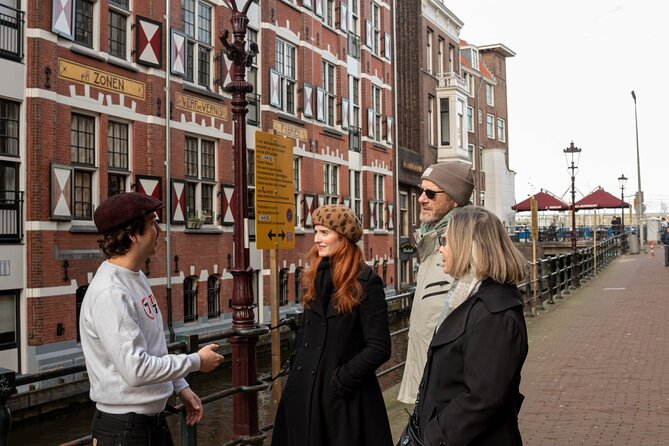
This is where the experience earns its strong rating. The tour is designed for groups of up to 15, and that size changes the whole feel. You can actually hear your guide. You can ask questions without holding up ten other people. You’re not stuck watching the back of someone’s camera while your questions wait their turn.
The guides bring more than facts. The experience includes local guidance, and the guide shares recommendations and tips you can use right away. In the best examples from past visitors, the guide Gio stood out for being enthusiastic, explaining details, and answering questions thoroughly.
That’s a big deal in Amsterdam. The city rewards curiosity, but it’s easy to get overwhelmed by how much there is to see. A good guide gives you a route-shaped understanding, so you don’t just collect highlights—you build a sense of what each area represents.
Also, the tour uses a mobile ticket, which is a small thing, but it matters when you’re moving through busy central streets. You’re less likely to waste time sorting out printed confirmations.
Price and value: what $41.10 buys you in Amsterdam center
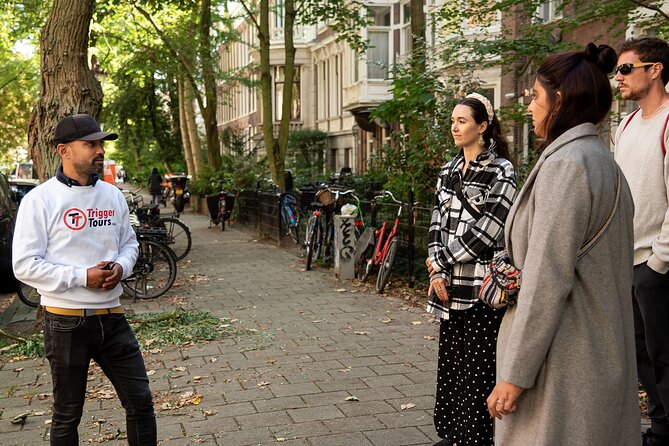
At $41.10 per person for about 2 hours, this falls into the practical category: you’re paying for a time-efficient way to get context in a city where self-guided exploring can quickly become random if you don’t know what to look for.
Is it a bargain? It’s a fair price for a guided walk with a local expert, and the small-group size helps justify that cost. If you were to replicate this with a couple museum visits plus time spent researching on your own, the guided route often ends up saving more effort than money.
Who gets the best value? People who want:
- a short, central itinerary that makes tomorrow’s wandering easier
- clear explanations tied to the exact places you’re seeing
- a less crowded group experience
If you’re the type who only wants to photograph and move on, you might feel the tour is more talk than you expected. But if you like understanding how the city works—politics, faith, urban planning, and how squares evolve—this is exactly the right length.
Logistics that matter more than you think
You’ll start at Damrak 1-5 and finish back near the same point. That back-to-start structure is handy if you’re continuing your day on foot or planning a quick connection to another part of the city via public transport.
The tour is near public transportation, so you can fit it into a busy schedule without a long pre-planning stretch. Service animals are allowed, and the tour notes that most people can participate—good signals if you’re traveling with flexibility needs (though you still should judge based on your own walking comfort).
One last practical note: because this is a tight central route, wear shoes you trust. Amsterdam’s core is walk-heavy, and a 2-hour walk adds up faster than you’d expect when you’re stopping, looking up, and crossing open areas.
Should you book this Amsterdam culture-and-history walking tour?
If your goal is to get oriented fast and understand what you’re actually looking at, I’d say yes. This is a well-shaped route through Dam Square, the UNESCO canal ring, Oude Kerk, and Nieuwmarkt—four stops that collectively explain central Amsterdam in a way that’s hard to piece together alone in just a couple hours.
Book it especially if you:
- want a small-group experience rather than a big crowd
- prefer a guide who answers questions and shares recommendations (like Gio)
- like history that shows up in real places you can still walk around
Pass or choose something else if you:
- hate walking in busy city-center areas
- want a stop-by-stop museum-style deep dive (this is a shorter route by design)
- need on-tour food included (this tour doesn’t include food and drinks)
FAQ
FAQ
How long is the Small-Group Culture & History Walking Tour of Amsterdam?
It lasts about 2 hours.
What’s the group size limit for this tour?
The tour has a maximum of 15 travelers.
Where does the tour start?
The meeting point is Damrak 1-5, 1012 LG Amsterdam, Netherlands.
Is food and drinks included?
No. Food and drinks are not included.
What language is the tour offered in?
The tour is offered in English.
What is the cancellation policy?
You can cancel for a full refund up to 24 hours before the experience starts. If you cancel less than 24 hours before, the amount you paid is not refunded.