REVIEW · NETHERLANDS
Hattem’s Windmills, Bakeries and Ghosts: A Self-Guided Audio Tour
Book on Viator →Operated by VoiceMap Audio Tours · Bookable on Viator
Hattem gets spooky, sweet, and scenic in an hour. This self-guided audio tour strings together windmills, gates, museums, and small-town legends, with offline audio so you can wander without data panic. I like how the route feels story-driven, especially the ghost-leaning segments, and how it’s built for flexible pacing. One drawback to consider: you bring the basics (smartphone and headphones), and museum entry fees or food are not included.
You can do the walk fast (around 45 minutes) or take your time (up to about 2 hours 20 minutes). It starts at Dorpsweg 2 (8051 VK) and ends at Zuidwal 52 (8051 GX), and the finish is a short stroll from where you started—useful if you’re planning a coffee after.
In This Review
- Key things you’ll notice on this Hattem audio route
- Hattem in 45 minutes to 2h20: the pace that makes this work
- Price and value: why $8.99 can be a bargain
- What you must bring (and what you don’t need)
- Stop-by-stop: windmills, gates, and the Anton Pieck museum connection
- The Dutch Bakery Museum: smells, café time, and a shopping stop
- Vermeer, Daendels, and a house that pulls big names into small-town streets
- Medieval castle forecourt ruins and ghost talk near the walls
- The church that’s almost 1,000 years old: two organs and gravestones underfoot
- Inside a historic homestead museum: low ceilings, tiled floors, and a private garden feel
- Timing tips: when to walk and how to keep the day easy
- Who this tour is for (and who might want something else)
- Should you book Hattem’s Windmills, Bakeries and Ghosts?
- FAQ
- How long is the Hattem Windmills, Bakeries and Ghosts audio tour?
- What language is the tour available in?
- Does the tour work offline?
- What do I need to bring with me?
- Are museum tickets included?
- Where does the tour start and end?
- Is this tour always available?
- Is the tour private?
- Do I get confirmation after booking?
- Can I get a refund if I cancel?
Key things you’ll notice on this Hattem audio route
- Offline VoiceMap: audio, maps, and geodata are available without using your data plan
- Ghost-friendly storytelling: including het Spookhuys and a walk outside the city wall
- Dyke Gate on the old inner wall: the only one of four original inner entrance gates still standing
- Dutch Bakery Museum stop: plan for smells, photos, and a café moment (entry/tickets may be extra)
- An almost 1,000-year-old church: white ceiling flowers, gravestones underfoot, and two organs
Hattem in 45 minutes to 2h20: the pace that makes this work
This tour is designed for real life. You’re not locked into a group schedule. When the audio tells you to pause, you can pause. When you feel like a quick photo, you can take one and keep moving. That flexibility is the main reason this kind of self-guided route fits so well in a small Dutch town like Hattem.
Hattem’s old core is compact, and the route leans into that. You get a sequence of sights that makes sense as you walk: start with something iconic (a windmill), move through the old fortifications, then shift to culture and craft (art museums and the bakery museum), and finally land at the big anchor (the old church). Add in the ghost stories, and you’ve got a mix that doesn’t feel like one long lecture.
The sweet spot for most people is about 1 to 1.5 hours. That’s enough time to read the audio cues, look around each stop, and still have energy for a second walk, a snack, or a café table by the end.
You can also read our reviews of more tours and experiences in Netherlands.



Price and value: why $8.99 can be a bargain
At $8.99 per person, you’re paying for two things: story and convenience. Story, because the route links the town’s places into a narrative—windmills, medieval gates, famous names, and those ghost-leaning legends. Convenience, because you’re not hunting for interpretation panels one by one.
Here’s what pushes the value higher than a basic audio-only download:
- Lifetime access means you can repeat it later if you return to Hattem.
- The VoiceMap app includes offline access to audio plus maps and geodata, which matters in places where reception can be spotty.
- It’s in English, so you’re not stuck translating.
Now the trade-off: this is still self-guided. You won’t have a live guide waiting with answers. And while the tour takes you past and into major stops, museum entrance fees and food aren’t included, so you may pay extra if you choose to go deeper inside.
What you must bring (and what you don’t need)
This is a smart setup, but you need to be prepared. The tour includes the app and offline content, but it does not include the physical gear.
Before you leave, make sure you have:
- Your smartphone
- Headphones
What’s not included:
- Transportation
- Food and drink
- Tickets/entrance fees for museums or attractions along the way
On the practical side, this tour ends close to where it starts. That means you don’t need to plan a complicated bus or tram connection just to finish. It also lists “near public transportation,” so you can treat Hattem like a casual stop rather than a complicated logistics puzzle.
Stop-by-stop: windmills, gates, and the Anton Pieck museum connection
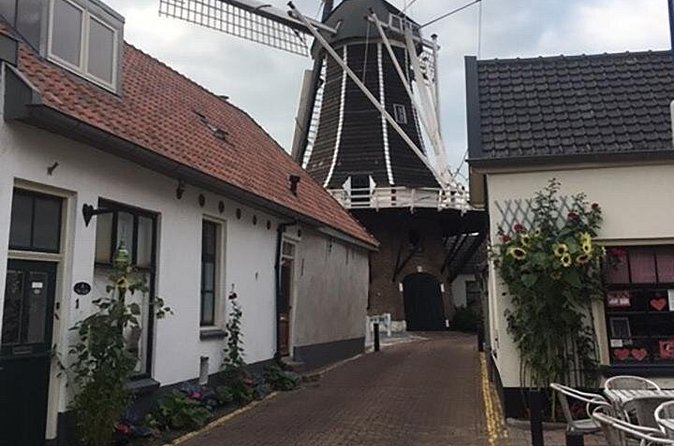
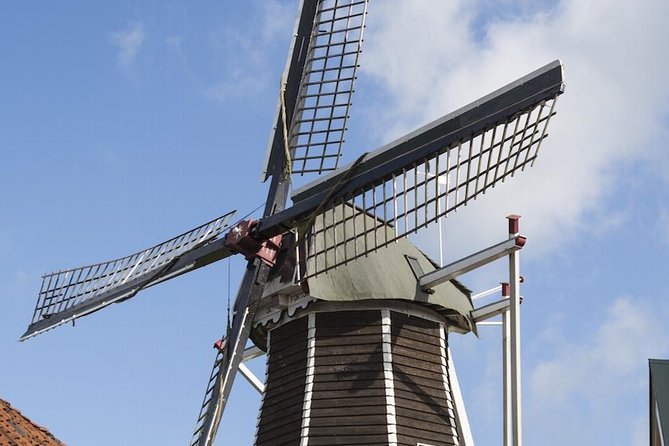
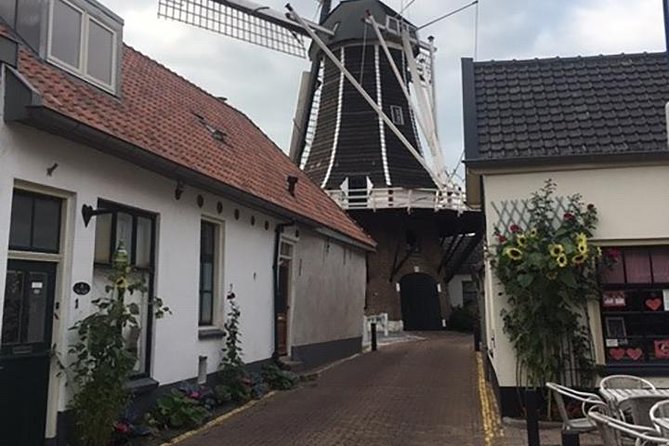
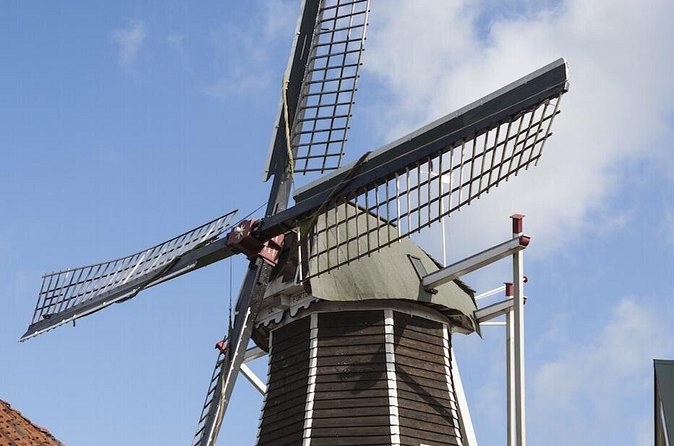
The route starts with a natural opener: a windmill. In the Netherlands, windmills aren’t just postcard furniture—they’re part of how people worked the landscape and managed water. Even if you don’t stop for a long look, this first audio segment helps you get your bearings fast, so later details about fortifications and trade make more sense.
Next comes a museum dedicated to one of the Netherlands’ best-loved artists and illustrators—Anton Pieck. This is a great mid-walk reset. When the audio starts talking about his life and work, you’ll have something “indoor-minded” to focus on instead of just chasing exterior photos. The downside is that museum entry may cost extra depending on what you want to see inside, so build a little wiggle room if you want more than just a quick look.
Then you hit a highlight for anyone who likes old-town structure: the Dyke Gate. It’s described as the only one of four original inner entrance gates to the old walled city. That line alone sets expectations. You’re not looking at a random historic doorway—you’re standing in a surviving piece of medieval city-defense logic. The audio nudges you to imagine castles, knights, and fortifications, which turns architecture into story.
If you love photos, this section is where you’ll probably slow down. Gates and walls give you strong angles, and they make a good “before/after” comparison with later stops like the church and the historic homestead museum.
The Dutch Bakery Museum: smells, café time, and a shopping stop
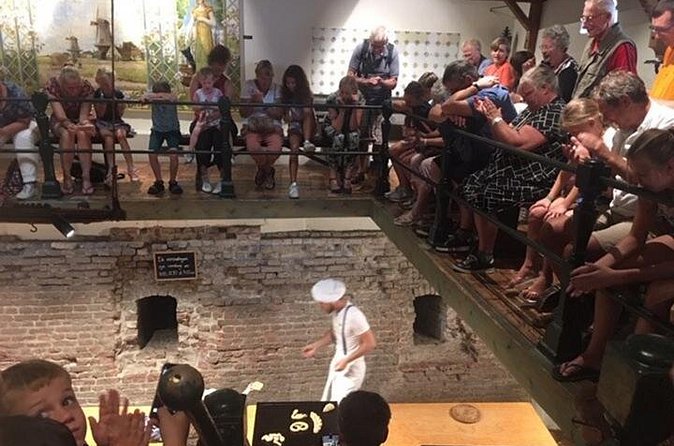
This is the stop that makes the tour feel playful. The Dutch Bakery Museum is built around sensory details, and the audio encourages you to notice the sights, smells, and sounds while you’re there. That’s a useful instruction: don’t just rush through because you think you’ve “seen enough.” Bakery-related museums work best when you treat them like a small experience, not a checklist.
There’s also a museum café included in the plan. You’ll get prompted to order a coffee with traditional Dutch baked temptations. If you’re doing this in colder months, this is the exact moment to warm up. If you’re doing it in summer, it’s still a good pause so your walk doesn’t become a nonstop photo mission.
One caution: the tour doesn’t include tickets or museum entrance fees. So if you want to go inside for everything the museum has to offer, expect possible extra cost. If you’re mainly there for the café and the shop, you might spend less, but you’ll still benefit from the audio context.
And yes, there’s a shop stop. This is practical if you want something tasty to bring home without trying to guess what will survive travel.
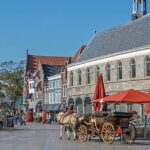




Vermeer, Daendels, and a house that pulls big names into small-town streets
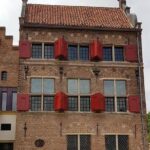
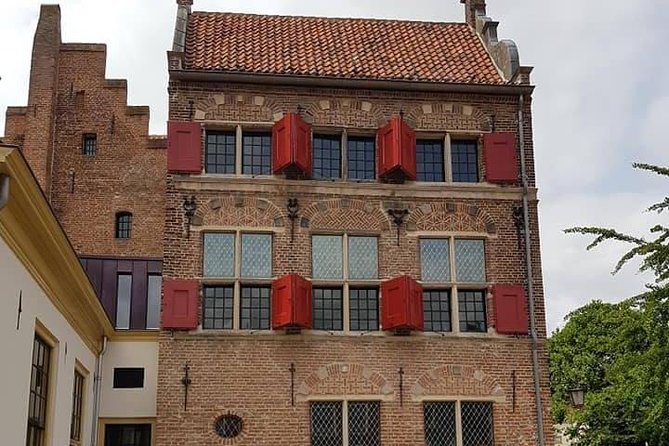
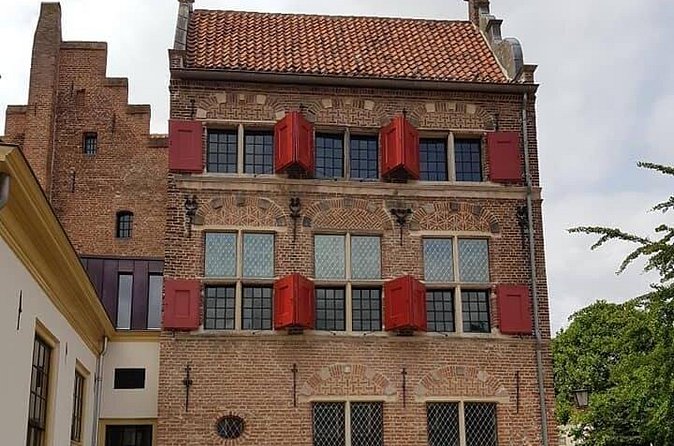
After pastry comes art history, but in a very Hattem way. The tour points you to a picture-perfect house that connects to the Dutch master Johannes Vermeer—and even the possibility that a woman with pearl earrings lived there is part of the storytelling theme. Then it swings to another famous name: Herman Willem Daendels, tied to the Dutch East Indies.
This kind of stop is valuable because it changes how you see a town. Instead of thinking, I’m just looking at old buildings, you start thinking, These streets carried real people who mattered beyond the region. Even if you already know Vermeer’s work, hearing those links while you stand outside a specific building makes the name feel more grounded.
Practical tip: this is a great place to slow down and look at details you might otherwise ignore—doorways, windows, and how the building sits in the street. The audio’s job is to give you reasons to look. Your job is to take those reasons seriously for five minutes.
Medieval castle forecourt ruins and ghost talk near the walls
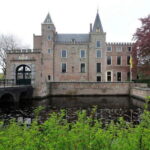
This is where the tour turns fun in a slightly spooky way. There’s a restaurant stop located on the remains of the forecourt of a very large medieval castle that stood nearby. The audio even encourages a simple question: ask staff if they’ve seen any ghosts.
Is it a literal séance? Of course not. But it fits the tour’s tone. In a place with old stonework and medieval wall lines, ghost stories feel less like gimmick and more like local folklore doing its job: adding atmosphere.
A nearby administrative stop follows: Hattem’s Town Hall, with a watchful view over the market square and the main church. Town halls aren’t just paperwork buildings in old towns—they’re part of civic life. When the audio frames it that way, you start noticing sightlines: where people would have gathered, where announcements and activity likely flowed.
Then the route brings you to the heart of the town’s medieval identity again through the walking outside the city wall. That matches what people often like about this tour: you’re not just stuck indoors or in museum rooms. You get to connect the sights to the shape of the town itself.
If you’re the type who likes legends (even if you don’t fully believe them), this section is a winner.
The church that’s almost 1,000 years old: two organs and gravestones underfoot
Hattem’s church is a major payoff stop. The audio frames it as almost 1,000 years old and at the center of Hattem. When you step inside, the instruction is basically to notice how Northern European church interiors often work: less can mean more, if the space and details are handled with care.
Here’s what the audio highlights so you know where to focus:
- A soaring white ceiling decorated with flowers
- Inscribed gravestones underfoot
- A surprisingly tuned, elegant feel rather than clutter
Then there’s the organ story. The audio notes that there are two organs, which is a detail you’ll likely remember even after you walk out. If you like architecture and sound, this is where your mind will start making connections between the room and the way people used it over centuries.
Practical drawback: church interiors can be active at certain times, and you’ll want to be mindful of how people are using the space. The audio gives you a guide for when to look down at gravestones and when to look up at the ceiling, which helps you avoid rushing.
Inside a historic homestead museum: low ceilings, tiled floors, and a private garden feel
The final museum stop shifts from big public buildings to domestic life. You’ll be guided inside a historic homestead with low ceilings, tiled floors, and a private garden. That setting matters because it changes what you expect from a museum.
Instead of only displaying items in a sterile white room, this one uses space like a storytelling tool. The audio nudges you to think about how people actually lived—how rooms shaped daily routines, and how collections connect to the town’s layered past.
The displays cover:
- Art
- Historical objects
- Archaeological objects
That mix is useful for a self-guided route because it helps you understand Hattem in multiple time periods without needing separate tickets for totally different experiences. It’s also a nice ending mood. After windmill legends, pastries, and ghost talk, a homestead museum feels grounded and calm.
Timing tips: when to walk and how to keep the day easy
Even though the audio tour is available around the clock on the platform’s schedule, the places you pause at (museums, cafés) can have their own real-world hours. The tour itself is flexible, but your comfort depends on timing.
Here’s how I’d plan it:
- Start with an hour buffer if you want to do cafés and take your time with photos.
- If you’re visiting in winter, build in extra warmth at the bakery museum café stop.
- If you’re doing it in a short day, commit to the “fast” pace and treat each stop as a focused look rather than a full-length museum visit.
Also, because it’s offline, it’s smart to start with the app ready and the audio downloaded as needed. You want to avoid the one annoying moment where your phone is at 3% battery and you’re outside a gate with no time to recharge.
Finally, remember that the tour is private for your group. That doesn’t mean you’ll be alone physically, but it does mean your experience is self-contained, which you can treat like a personal walk rather than a timed group activity.
Who this tour is for (and who might want something else)
I think this audio route is perfect if you like:
- Photo-friendly old-town wandering inside medieval walls
- Light folklore mixed with real places
- Museums that are approachable rather than intimidating
- A route you can speed up or slow down depending on your energy
It’s less perfect if you want a human guide standing next to you at every stop, explaining details on the spot. This is still a self-guided experience, and that’s a big part of the value.
Also, if you’re traveling with zero tolerance for app-based navigation, plan around the requirement for your smartphone and headphones. This is not a “just show up and someone greets you” kind of tour.
Should you book Hattem’s Windmills, Bakeries and Ghosts?
If your idea of a great travel day is a walk that tells stories—without locking you into a schedule—then book it. For $8.99, you get lifetime access, offline audio and maps, and a route that balances practical sightseeing with playful storytelling. The Dyke Gate, the almost 1,000-year-old church with two organs, and the bakery museum stops alone make it worth a try, and the ghost-leaning bits add personality.
I’d only hold off if you know you won’t use a smartphone for navigation or you’d rather pay for a full guided experience instead. Self-guided is the whole deal here.
If you’re in Hattem and you want an easy way to understand what you’re looking at—while also getting a coffee and a few moments of spooky fun—this is a strong match.
FAQ
How long is the Hattem Windmills, Bakeries and Ghosts audio tour?
The duration is listed as approximately 45 minutes to 2 hours 20 minutes, depending on how fast you walk and how long you spend at each stop.
What language is the tour available in?
The tour is offered in English.
Does the tour work offline?
Yes. The VoiceMap app includes offline access to audio, maps, and geodata.
What do I need to bring with me?
You need your smartphone and headphones. Transportation, food, and drink are not included.
Are museum tickets included?
No. Tickets or entrance fees to museums or attractions along the route are not included.
Where does the tour start and end?
It starts at Dorpsweg 2, 8051 VK Hattem, Netherlands, and ends at Zuidwal 52, 8051 GX Hattem, Netherlands. The finish is a short stroll from where it begins.
Is this tour always available?
The schedule listed shows it as available daily from 12:00 AM to 11:59 PM during the date range provided.
Is the tour private?
Yes. It’s described as a private tour/activity, so only your group participates.
Do I get confirmation after booking?
Confirmation is received at the time of booking.
Can I get a refund if I cancel?
No. This experience is non-refundable and cannot be changed for any reason.