REVIEW · AMSTERDAM
Van Gogh Museum Amsterdam Small Group Guided Tour
Book on Viator →Operated by 360 Amsterdam Tours · Bookable on Viator
Van Gogh gets personal with the right guide. This 2-hour small-group museum tour strings together his major artistic phases, so you stop seeing paintings as random objects and start seeing them as a timeline you can follow. With a wireless whisper system, you get clear explanations without craning your neck over other visitors.
I love the small group size (max 14), because you can ask questions and still hear your guide clearly. I also like how the route follows Van Gogh’s life chapters step by step, from self-portraits through Paris, Arles, Saint-Rémy, and finally Auvers.
One possible drawback: the tour is adult-only (18+), and the schedule is tight. If you want to linger on a single section longer than 20 minutes, the pacing may feel a bit brisk.
In This Review
- Key points to know before you go
- Why this Van Gogh Museum tour feels tighter than going alone
- Price and what you get for $77.43
- Meeting at Cobra Café and finishing inside the museum
- How the whisper system changes the experience
- Your guided itinerary: Paris, Arles, Saint-Rémy, and Auvers in 2 hours
- Stop 1: Self-portraits to set the tone (about 20 minutes)
- Stop 2: The first-floor foyer and the peasant world (about 20 minutes)
- Stop 3: Paris years (1886–1888) and a new kind of energy (about 20 minutes)
- Stop 4: Arles and the South of France (1888) (about 20 minutes)
- Stop 5: Saint-Rémy-de-Provence on Level 3 (about 20 minutes)
- Stop 6: Auvers Room (about 15 minutes)
- How to use your extra time after the tour
- Guides you might meet and what to watch for
- Who should book this tour (and who might skip it)
- Should you book this Van Gogh Museum small-group tour?
- FAQ
- What language is the tour offered in?
- How long is the Van Gogh Museum small-group guided tour?
- How many people are in the group?
- Is the museum admission included?
- Does the tour use a headphone system?
- Where does the tour start?
- Where does the tour end?
- Can I visit special exhibitions during the tour?
- Is this tour for adults only?
- How does cancellation work?
Key points to know before you go
- Wireless whisper system: you hear your guide clearly, even in a busy museum.
- Small group cap of 14: more attention, easier questions, less crowd stress.
- Guided journey through major eras: Paris (1886–1888), Arles (1888), then Saint-Rémy and Auvers.
- Included museum admission: you get in without figuring out ticket timing mid-trip.
- Ends inside the museum: you can stay for more at your own pace after the tour.
Why this Van Gogh Museum tour feels tighter than going alone
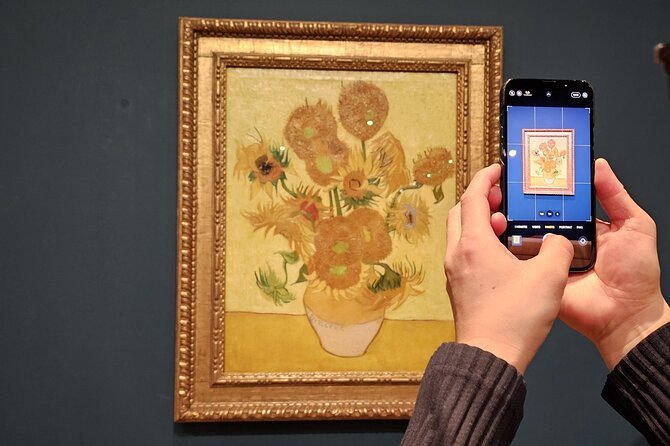
If you’ve ever walked a big museum and thought, I like this, I like that, but… what connects it all, this is the fix. In two hours, you’re given a clear structure—what to notice, why it matters, and how Van Gogh’s choices change as his life changes.
The tour uses a wireless headphone setup (often described as a whisper system), which makes a real difference in a place like this. You’re not competing with room noise or other groups talking loudly. It’s also handy if you need extra help hearing clearly; people have specifically mentioned the system worked well even with hearing aids.
The other big advantage is the group size. With a maximum of 14, you don’t get swallowed by the crowd. That means your guide can steer attention to details—like brushwork, composition, and recurring subjects—without losing the room.
You can also read our reviews of more tours and experiences in Amsterdam.

Price and what you get for $77.43
At $77.43 per person for about two hours, this isn’t a budget option. But it becomes easier to justify when you look at what’s bundled in.
You get:
- a live English-speaking guide
- a wireless headphone system
- a guided route through the museum’s permanent collection
- museum admission included as part of the tour experience
Instead of paying for admission and then hoping you’ll find your way through the museum’s timeline on your own, you’re buying time-saving focus. And for art lovers, that focus is the whole point: learning what to look for while you’re standing in front of the work.
If you’re the type who already knows Van Gogh inside out and plans to wander slowly for hours, you might prefer self-guided tickets. But if you want a strong framework fast, this price starts to feel fair.
Meeting at Cobra Café and finishing inside the museum
The tour starts at Cobra Café, Hobbemastraat 18, 1071 ZB Amsterdam. It’s also near public transportation, which matters in Amsterdam where the walk from one stop can turn into a surprise cardio session.
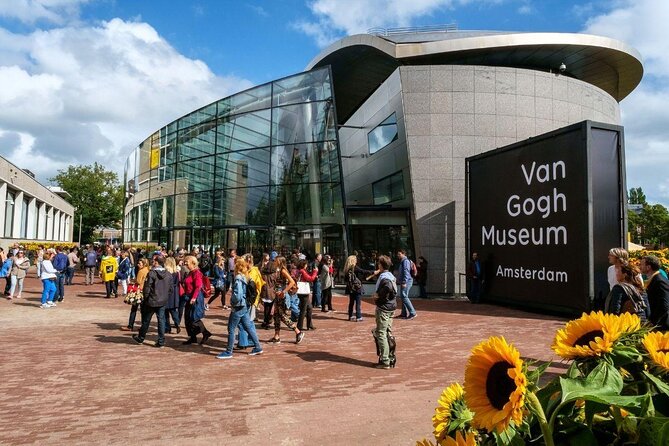
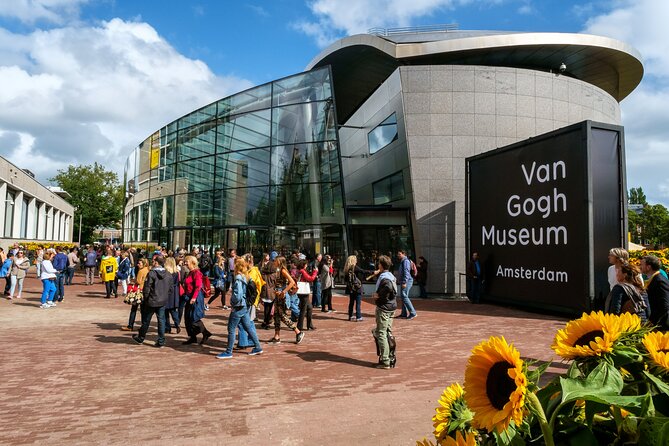
You end at Museumplein 6, 1071 DJ Amsterdam, and the best part: you finish inside the Van Gogh Museum. That means you’re not rushed out right when your legs are tired. You can stay until closing to catch anything you missed during the guided route, or to revisit favorites with fresh context.
Practical tip: wear comfortable shoes. Even with a guided pace, you’ll be moving through multiple floors and rooms.
How the whisper system changes the experience
A museum can be loud in ways you don’t expect—soft voices, footsteps, groups trying to “beat” the line by arriving together. The wireless whisper system solves the audio problem so you don’t have to stand in a weird spot just to hear.
It also helps you do something most people don’t manage on their own: look carefully while still following the story. Your guide points out details while you stay oriented, instead of you repeatedly stepping back, re-reading a label, then rushing forward again.
One more benefit: the system keeps the conversation inclusive. If you have hearing challenges, this kind of setup can be a game-changer. Just bring your usual hearing-aid settings (if you use them), and you’ll be in good shape.
Your guided itinerary: Paris, Arles, Saint-Rémy, and Auvers in 2 hours
The tour is built around Van Gogh’s major turning points. Each stop lasts about 15–20 minutes, with admission handled as part of the experience. You’re not just seeing famous titles—you’re getting a sense of the direction he’s moving in.
A note on pacing: this is not a slow contemplation tour. It’s a guided sprint with stops designed to show contrasts across his career.

Stop 1: Self-portraits to set the tone (about 20 minutes)
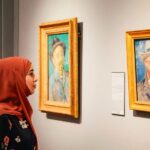
You begin with self-portraits, which is a smart opener. Self-portraits do more than show his face—they show how he understood himself as an artist, how he wanted to be seen, and how his style becomes his language.
Expect your guide to help you notice things like:
- how he frames expression
- how technique and mood shift even when the subject is consistent
If you love self-portraits, this start is a strong match. If self-portraits aren’t your main obsession, you might find you’re eager to get to the landscapes and interiors sooner—one thing to be aware of with a tight schedule.
Stop 2: The first-floor foyer and the peasant world (about 20 minutes)
Next you move through the first floor foyer, where the guide links Van Gogh to the broader European influences of the time. You’ll see works connected to Millet and Jules Breton, plus key pieces tied to everyday life.
Highlights here include:
- Woman Lifting Potatoes
- Head of a Peasant Woman
- The Potato Eaters
This is the part of the route where context matters. You’re seeing subject matter that’s grounded in work, hardship, and ordinary faces, and you can start understanding what Van Gogh was reacting to when he chose themes that felt real and urgent.
Stop 3: Paris years (1886–1888) and a new kind of energy (about 20 minutes)
Then comes the Paris chapter, covering his move to the city between 1886 and 1888. This segment is where Van Gogh’s palette and focus start to feel more electric and experimental.
You’ll see:
- Self Portrait with Felt Hat
- Still Life with Absinthe
- In the Café: Agostina Segatori in Le Tambourin
- Garden with Courting Couples
What I like about this stop is how it shifts from rural labor toward city life and social scenes. You can feel the difference in atmosphere, and your guide can connect that shift back to his experiences and the art world around him.
Stop 4: Arles and the South of France (1888) (about 20 minutes)
In the Arles and South of France stop, the tour zeroes in on his move to Arles in 1888. This is where color, symbols, and domestic spaces start speaking louder.
Key works include:
- Sunflowers
- Almond Blossoms
- The Bedroom
- Japanese Paintings (copies from prints)
- The Yellow House
If you’ve heard people talk about Van Gogh’s boldness, this is where it becomes obvious. The guide helps you connect the familiar titles to what Van Gogh may have been searching for—comfort, intensity, new visual rhythms, and a sense of place.
Also, the mention of Japanese paintings copied from prints is worth paying attention to. It shows how he learned by translating styles, not just copying images.
Stop 5: Saint-Rémy-de-Provence on Level 3 (about 20 minutes)
On Level 3, you enter the Saint-Rémy-de-Provence room. This stop focuses on works linked to the period often associated with his intense creative output and shifting inner life.
You’ll see:
- Almond Blossoms
- Wheatfield with a Reaper
- Iris
- Pieta (After Delacroix)
This combination matters. You’re looking at nature scenes alongside a reference to Delacroix, which gives you a bridge between Van Gogh’s own world and the wider tradition he was drawing from.
Stop 6: Auvers Room (about 15 minutes)
Finally, the tour closes on the Level 3 Auvers Room, with a slightly shorter stop at about 15 minutes.
Works include:
- Tree Roots
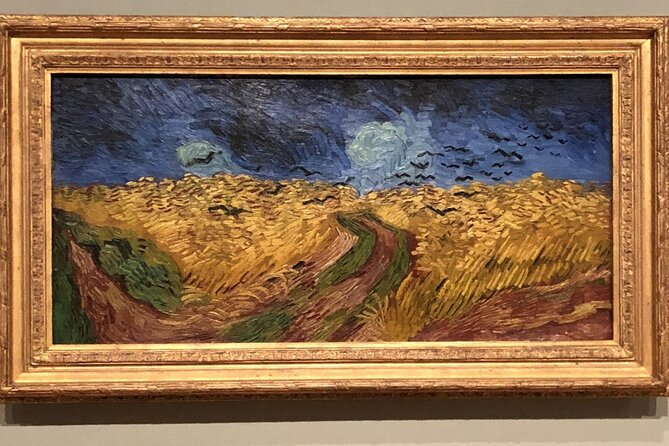
- Wheatfield with Crows
Even with the shorter time, the last room helps you land the story. It’s a closing note that feels heavy with mood and movement—especially when you’ve just spent time on the Saint-Rémy works.
How to use your extra time after the tour
Because the tour ends inside the museum, you can treat the guided portion as your map. After the last stop, you’ll usually know what to look for next:
- revisit the painting you couldn’t stop staring at
- compare two works you now understand as connected
- slow down in the areas your guide helped you notice
Special exhibitions aren’t part of the tour, but you can visit them afterward on your own pace. If you’re planning to see both permanent and special exhibitions, give yourself a longer museum window than you think you need. This tour is great, but it’s still only about two hours.
Guides you might meet and what to watch for
Guide names shared in the experience details include people like Martina, Clare, Kawika, Sylvia, Roland, and Marlene. The common thread across these guides is that they connect painting technique to life context, and they push you to look closely—often encouraging the group to move in for a better view.
If you can, arrive a few minutes early at the start point so you can settle and get oriented. Then during the tour, keep one simple goal in mind: pick one question to ask. A good question could be as basic as why a certain subject matters to the next phase of his work. With a max group size of 14, you’re more likely to get time for that.
Who should book this tour (and who might skip it)
Book it if:
- you want a clear timeline view of Van Gogh’s development
- you like learning what to notice while you’re standing in front of the art
- you appreciate a small group and a guided plan rather than wandering for hours
- you want included museum admission without handling the ticket process yourself
Consider skipping or supplementing it if:
- you want to linger a long time in one room
- you dislike a structured route (this tour is intentionally paced)
- you’re mostly interested in temporary special exhibitions, since those are not part of the guided package
Should you book this Van Gogh Museum small-group tour?
My call: yes—if you’re aiming to understand Van Gogh’s changes across his major phases without spending your whole day figuring it out. The combination of small-group size, an English live guide, and the whisper headset makes this feel like the most practical way to get the museum working for you.
If you already have a strong plan for self-guided pacing and you’re happy reading labels solo, you could skip the guide. But for most people, especially first-timers, this is the kind of tour that turns famous paintings into a coherent story fast.
FAQ
What language is the tour offered in?
The tour is offered in English.
How long is the Van Gogh Museum small-group guided tour?
It lasts about 2 hours.
How many people are in the group?
The tour has a maximum of 14 travelers.
Is the museum admission included?
Yes. Admission tickets for the museum are included as part of the tour.
Does the tour use a headphone system?
Yes. It uses a wireless whisper system so you can hear the guide easily.
Where does the tour start?
The start point is Cobra Café, Hobbemastraat 18, 1071 ZB Amsterdam.
Where does the tour end?
The tour ends inside the Van Gogh Museum at Museumplein 6, 1071 DJ Amsterdam.
Can I visit special exhibitions during the tour?
Special exhibitions are not included in the guided portion, but you can visit them afterward at your own pace.
Is this tour for adults only?
Yes. It is only available for adults age 18 and older.
How does cancellation work?
You can cancel for free up to 24 hours in advance for a full refund.