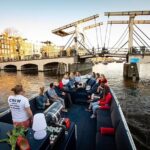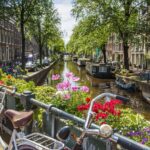
Bubbles on the canal beats any museum detour. This Amsterdam canal brunch cruise pairs a simple, satisfying brunch with Prosecco and beer while you float past the places that make the city feel unmistakably Amsterdam. It runs about an hour, with a small group capped at 12, so the vibe stays friendly instead of chaotic.
What I like most is the combo of brunch on the water and the fast hit of iconic canal views in one loop. You’ll pass the Herengracht and Reguliersgracht “seven bridges” sightline, then slide into neighborhoods and landmarks like the Jordaan, Westerkerk, and the Skinny Bridge area.
One thing to plan for: it’s a short ride. If you’re hoping for long stops or a full-on museum visit, this isn’t that—it’s built for seeing a lot from the water, then eating and drinking along the way.
In This Review
- Key highlights you’ll actually care about
- A 1-hour Amsterdam brunch cruise that starts at Amstel 51F
- What you get to eat and drink (and why it works on a boat)
- The route: Herengracht, the seven-bridge view, and the canal belt in one go
- Herengracht: the classic canal-belt beauty
- Reguliersgracht: the famous seven-bridges view
- The canal belt (Grachtengordel): UNESCO scale in quick numbers
- Jordaan streets, Anne Frank’s address, and Westerkerk’s 87-meter tower
- Jordaan: working-class planning you can still see
- Anne Frank House: Prinsengracht #263 from the canal
- Westerkerk: renaissance architecture and a famous crown
- Prinsengracht: a “modest” canal with a purpose
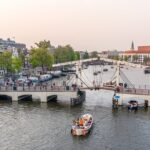
- Amstelkerk, Magere Brug, and the skinny bridge factor
- Amstelkerk: a stone church that never replaced the temporary one
- Magere Brug (Skinny Bridge): old, working, and historically narrow
- H’ART Museum/Hermitage and Blauwbrug: culture plus bridge power
- Hermitage Museum (Amstelhof): a floating connection to St Petersburg
- Blauwbrug (Blue Bridge): inspired by Pont Neuf
- Price and value: is $59.15 worth it?
- Who this brunch cruise fits best (and who should skip it)
- Little practical tips so you enjoy it more
- Should you book the Amsterdam Brunch Cruise with Bubbles?
- FAQ
- How long is the Amsterdam Brunch Cruise with Bubbles?
- What’s included in the brunch?
- What alcoholic drinks are served?
- Where is the meeting point?
- Is there a guide, and what language is it in?
- How big is the group?
- Is free cancellation available?
Key highlights you’ll actually care about
- A 1-hour canal loop that’s long enough for photos and facts, short enough to fit any schedule
- Brunch included: artisan sandwiches, pastries, plus coffee/tea/orange juice and water
- Bubbles included: Prosecco, with Heineken beer also served
- Small group (max 12) for an easy, conversational feel with the captain/guide
- Photo-friendly route through the canal belt, including the seven-bridge view and Skinny Bridge area
A 1-hour Amsterdam brunch cruise that starts at Amstel 51F
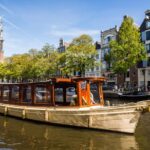
This experience is built for people who want Amsterdam without the “stand in line, read another plaque” rhythm. You meet at Amstel 51F (near public transit) and the tour ends back at the same spot, so you don’t have to untangle your evening plans afterward.
The duration is about an hour. That matters because canal schedules and weather can be unpredictable—an hour keeps it realistic. It also means you’re not stuck waiting around while the boat goes slow. You’re moving, eating, and learning as you go.
If you’re a solo traveler or you’re traveling as a small group, the max-12 limit makes a difference. The boat doesn’t feel like a bus. The guide-captain style also tends to work better when everyone can actually hear and ask a question.
You can also read our reviews of more tours and experiences in Amsterdam.
What you get to eat and drink (and why it works on a boat)
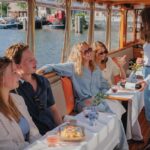
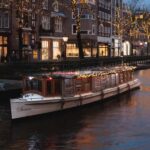
The food setup is simple and practical: a fine selection of artisan sandwiches and pastries. On top of that, you get coffee, tea, orange juice, and water—so you’re not forced into caffeine-only mode or alcohol-only mode.
For the “with Bubbles” part, you’ll be served Prosecco, plus Heineken beer. That mix is smart. It gives you options depending on how you feel during the cruise—cheers now, switch to something non-alcoholic later.
What I’d watch for: the brunch is planned for boat logistics. So yes, it’s filling enough to feel like brunch, but it’s not an all-day banquet. If you’re the type who needs a huge meal before you walk a lot afterward, you may still want a snack later.
The route: Herengracht, the seven-bridge view, and the canal belt in one go
The magic of Amsterdam’s canals is that everything is close, but it’s not all the same. This cruise leans into that. You’re not just passing water—you’re passing different social worlds, different architecture styles, and different city planning ideas.
Herengracht: the classic canal-belt beauty
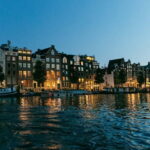
You start by cruising through Herengracht, known for its grand canal-belt character. Expect long, photogenic stretches and the kind of waterfront elegance that makes Amsterdam look like a postcard even on a grey day.
It’s a strong opener because Herengracht helps you “read” what you’re about to see. Once you’ve got that visual baseline, the contrast at the next canals hits harder.
Reguliersgracht: the famous seven-bridges view
Next comes Reguliersgracht, including the monumental view often called the seven-bridges sightline. This is one of those Amsterdam moments that’s hard to describe and easy to spot once you’re there. You’re lined up to see a run of bridges in a single view—exactly the kind of photo that saves you time later.
This stop works well on a cruise because the boat naturally positions you for sightlines. You’re not climbing stairs or crowding a sidewalk for the same frame.
The canal belt (Grachtengordel): UNESCO scale in quick numbers
As you move along, you’ll get the bigger picture: the canal belt is on UNESCO’s World Heritage List, and it’s massive—165 canals, about 100 km in total length, with 1680 bridges. Venice, for comparison, is listed with only 400 bridges in the provided context.
Even if you don’t remember every number, it helps your brain. Amsterdam isn’t “a few canals.” It’s a full city system, and that’s why the views never stop.
Jordaan streets, Anne Frank’s address, and Westerkerk’s 87-meter tower
After the high-sheen canal sections, the route shifts gears. That’s where this cruise gets more interesting than just scenery.
Jordaan: working-class planning you can still see
You’ll glide into the Jordaan area, where the layout and building scale reflect its roots as a working-class neighborhood. The name traces back to jardin, meaning garden, and that theme shows up in street naming tied to plants and trees.
What I like here is the visual logic. The houses are smaller than on the main canal belt, and the street patterns differ. In other words, you’re seeing the city’s economics in brick and street lines—without having to do deep research.
Anne Frank House: Prinsengracht #263 from the canal
The cruise passes by Prinsengracht #263, the former home of Anne Frank. This is where the family went into hiding during World War II, connected to her diary, Het Achterhuis.
Important note: the cruise context here is about viewing from the water. The stop is listed with admission marked free in the tour description, so treat it as a pass-by/see-from-the-canal moment, not a ticketed museum visit.
Westerkerk: renaissance architecture and a famous crown
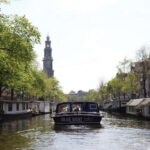
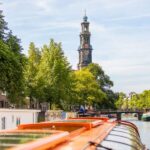
Next is Westerkerk, built between 1620 and 1631 in Renaissance style. The tower reaches 87 meters, making it Amsterdam’s highest church tower. You’ll also hear the connection to Anne Frank’s writing about the tower, plus the imperial crown detail.
That crown sits on top of the tower and is described as a gift tied to Maximilian I, with the city later allowed to use a matching crown in its arms. It’s a reminder that Amsterdam’s canal wealth didn’t just build houses—it built symbols. From the water, you get that tower-in-context feeling.
Prinsengracht: a “modest” canal with a purpose
Then you move along Prinsengracht, described as relatively modest compared to the richer canals. The canal is framed as a transitional zone: upper-class canal belt moving toward working-class neighborhoods like the Jordaan.
You can see that difference in the homes—less wide, more sober, fewer decorations. It’s a useful contrast because it makes the city’s social design feel tangible, not abstract.
Amstelkerk, Magere Brug, and the skinny bridge factor
At some point, every first-time Amsterdam trip hits bridges. This cruise uses them in a smart sequence so you don’t just spot them—you understand what’s special.
Amstelkerk: a stone church that never replaced the temporary one
You’ll pass Amstelkerk, dating from 1668. Here’s the odd-but-fascinating detail: the original plan was for a permanent stone church, but that plan didn’t happen. The text notes the temporary wooden church remained for almost 350 years.
Today, it hosts cultural events. From the canal, it’s one more piece of Amsterdam’s “plans changed, buildings stayed” story—part of the charm, and part of the reason the city feels lived-in.
Magere Brug (Skinny Bridge): old, working, and historically narrow
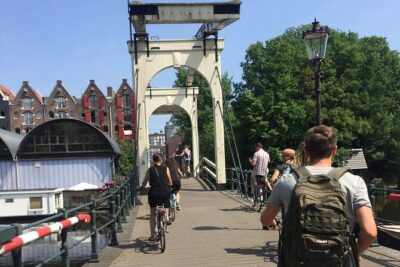
Next is Magere Brug, the Skinny Bridge. It’s described as the oldest still-working drawbridge in Amsterdam, partly wooden, and a national monument. The first Skinny Bridge dates to the 17th century, with the current version dating to 1934.
Two practical points matter for your photos and expectations:
- The bridge is famous partly because it was built cheaply and narrow—people couldn’t pass each other easily.
- Car traffic hasn’t been allowed to cross since 2003.
This is also noted as a film setting, including James Bond. Whether or not you’ve seen those movies, it helps you understand why the bridge looks so iconic in Amsterdam’s visual culture.
H’ART Museum/Hermitage and Blauwbrug: culture plus bridge power
This part of the cruise adds a little art and a little more bridge drama.
Hermitage Museum (Amstelhof): a floating connection to St Petersburg
The tour description names H’ART Museum but then explains the Hermitage museum located in the Amstelhof. The building dates to 1681 and was originally a nursing home for about 300 years, later converted into a museum in 2007.
It also notes that this Hermitage is an annex of the Hermitage in St Petersburg, Russia, sharing part of the art collection. The provided text claims the combined collections have the largest art collection in the world.
From your seat on the canal, this isn’t a replacement for museum time. Still, it’s a neat way to catch a culture anchor point and decide later if you want to go back for a deeper look.
Blauwbrug (Blue Bridge): inspired by Pont Neuf
Finally, you’ll pass Blauwbrug, the Blue Bridge. Like the Skinny Bridge, it was inspired by drawbridge logic and is described as having blue railings. The current bridge dates to 1883 and is said to have drawn inspiration from Pont Neuf in Paris.
A key detail you’ll hear: the crowns on top are described as imperial crowns connected to the city arms—again tying Amsterdam’s wealth and status to larger European power networks.
If you’re the kind of person who notices design details, this is a satisfying stop because it rewards your attention.
Price and value: is $59.15 worth it?
At $59.15 per person for roughly an hour, the value comes from three things working together:
1) You’re paying for convenience
It’s one ticket for a guided canal route, with food and drinks included. You’re not piecing together brunch somewhere and separately booking a cruise.
2) You’re not stuck choosing between food or fun
You get artisan sandwiches and pastries, plus drinks—Prosecco and Heineken on the alcohol side, coffee/tea/orange juice on the non-alcohol side. For many people, that’s the whole point of a short trip: a treat that feels “special” without extra planning.
3) Small-group comfort
With a max of 12 travelers, the boat experience tends to feel personal. One of the reviews specifically praised a perfect size for a small group, and another highlighted a relaxed, elegant atmosphere with attention to table detail. That’s the kind of quality that’s hard to fake with bigger group operators.
Possible value caveat: because it’s only an hour, you won’t get the depth of a longer cruise. If you want long storytelling sessions or long stops for photos at each landmark, look for a longer option.
Who this brunch cruise fits best (and who should skip it)
This is best for you if:
- You want a one-hour plan that’s easy to slot in.
- You like a mix of city facts and food, not just one or the other.
- You’re traveling with a partner, friends, or even solo and want a small-group feel.
- You want classic canal-belt sights without renting bikes or walking for hours first.
You might skip it if:
- You want a full museum visit at Anne Frank House or a long cultural stop (this is mainly a see-from-the-water experience).
- You don’t do alcohol at all—there are non-alcohol options, but Prosecco is part of the brand promise.
Little practical tips so you enjoy it more
- Dress warm. One review advice was to come prepared for cooler weather, which makes sense on a boat.
- Bring your camera ready, but also take a moment to look up without shooting. The bridges and canal symmetry look better when you let your eyes do the framing.
- If you’re sensitive to cold or wind, choose what you wear accordingly. Grey skies still work for photos, but wind can be the real factor on the water.
Should you book the Amsterdam Brunch Cruise with Bubbles?
If you want a compact Amsterdam experience that feels like a treat—Prosecco and brunch included, plus a guided canal route through the most recognizable sights—this is a strong pick. The small-group size keeps the mood relaxed, and the route hits a smart mix: Herengracht, the seven-bridges view, Jordaan, Westerkerk, Skinny Bridge, and more.
I’d book it if you’re juggling limited time, want value in one ticket, and like the idea of seeing the city from the canal before you decide what to explore on land later.
FAQ
How long is the Amsterdam Brunch Cruise with Bubbles?
The cruise runs for about 1 hour.
What’s included in the brunch?
You get a fine selection of artisan sandwiches and pastries, plus coffee, tea, orange juice, and water.
What alcoholic drinks are served?
Prosecco and Heineken beer are included.
Where is the meeting point?
The meeting point is Amstel 51F, 1018 EJ Amsterdam, Netherlands, and the tour ends back at the same place.
Is there a guide, and what language is it in?
Yes. The guide is in-person and the experience is offered in English, with guides also listed as English and Dutch.
How big is the group?
The tour has a maximum of 12 travelers.
Is free cancellation available?
Yes. You can cancel up to 24 hours in advance for a full refund.