REVIEW · AMSTERDAM
Amsterdam’s Red Light District: A Self-Guided Audio Tour
Book on Viator →Operated by VoiceMap Audio Tours · Bookable on Viator
Audio leads you through hard streets. This self-guided Amsterdam Red Light District audio tour turns a chaotic area into a focused walk, using phone GPS and offline playback so you can learn on the move. It’s designed to be fully compliant with local rules that restrict live Red Light District tours.
I like two things right away: the automatic audio kicks in as you reach each stop, and the directions are clear enough that you’re not constantly checking your screen. I also appreciate that the narration isn’t just shock-value; it points you toward context, including the Belle sex worker commemorative statue and the stories around places you walk past.
One drawback to plan for: this is a short, stop-based route, not a cover-everything tour. If you’re hoping to see a specific set of big sights, you may feel a bit underwhelmed, because you’ll mostly stick to the locations covered in the audio.
In This Review
- Key things you’ll notice on this Red Light District audio walk
- Entering Amsterdam Red Light District with a 35-minute plan that actually works
- Price and value: what $9.99 buys you in Amsterdam
- VoiceMap on your phone: clear directions, offline audio, and smart pacing
- Route basics: from Dam Square to the Belle statue
- Stop-by-stop: what the audio tells you as you walk
- Dam Square: look past the noise and find the neighborhood story
- Zeedijk: the sea-dike you never see, but feel in the streets
- Nieuwmarkt Square: hipsters, markets, and seasonal surprises
- Belle sex worker commemorative statue: Els Rijerse and the message of respect
- Near the end: de Oude Kerk and why Amsterdam’s buildings keep changing
- What I’d watch for as you walk (especially in a sensitive area)
- When timing matters: empty squares vs markets vs carnival energy
- Who this audio tour fits best
- Quick practical tips before you press play
- Should you book this Amsterdam Red Light District audio tour?
- FAQ
- How long is the Amsterdam Red Light District audio tour?
- What does it cost?
- Is the tour available in English?
- Does the audio work offline?
- Where does the tour start and end?
- Do I need to bring a smartphone?
Key things you’ll notice on this Red Light District audio walk
- GPS-triggered audio plays as you arrive at each stop, with pause and replay support
- Offline access for audio, maps, and geodata, so you can save your mobile data
- Respect-first content that includes the Belle statue’s message of dignity
- Local context along the way, from Zeedijk’s flood-protection roots to Nieuwmarkt’s shifting vibe
- Designed for independent pacing, so you can slow down without feeling behind
Entering Amsterdam Red Light District with a 35-minute plan that actually works
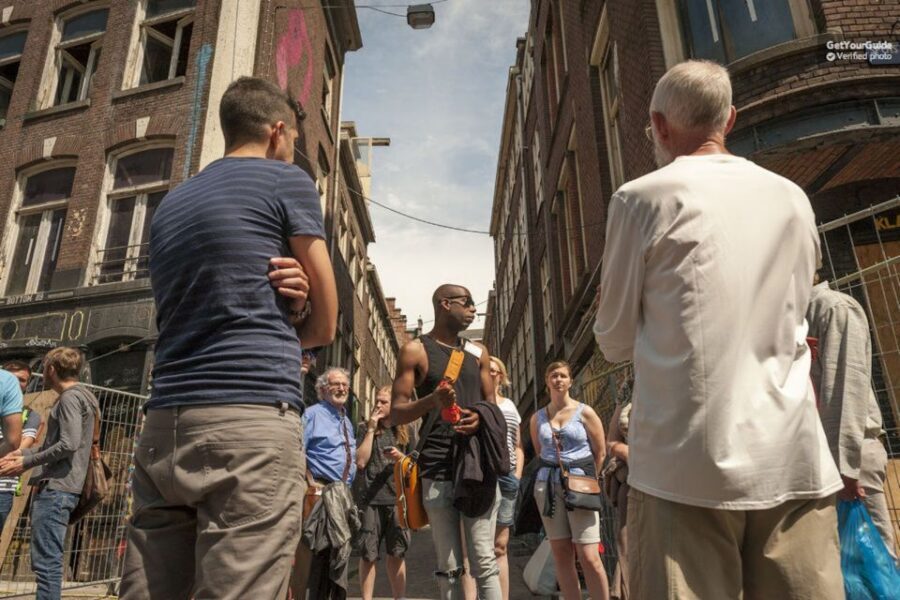
Amsterdam’s Red Light District can hit you fast: bright windows, loud streets, and plenty of alcohol-driven noise. This self-guided audio tour is built for moments like that. It gives you a simple route and a steady story thread, so you’re not just drifting through the area with your attention scattered.
The total time is about 35 minutes, which matters more than you’d think. You get enough time to learn and orient yourself, but not so much time that you end up tired, annoyed, or numb. You also avoid the common problem with guided walks: you can’t control the pace, and you don’t always get close enough to what the guide is explaining.
And the compliance point isn’t just legal boilerplate. The tour is made to follow the restrictions that limit live Red Light District tours. So instead of trying to squeeze into a format that’s often not allowed, you get a route where the main focus is learning while you walk.
You can also read our reviews of more tours and experiences in Amsterdam.



Price and value: what $9.99 buys you in Amsterdam
At $9.99 per person, this is a low-cost way to turn casual strolling into something that feels intentional. The best value isn’t just the price—it’s what’s included.
You get lifetime access to the tour, plus the VoiceMap app. That means you can repeat it later if you want a second pass after the first time you understand the flow. In a city like Amsterdam, that flexibility is real value, because you’ll often want to revisit streets with better context.
It also includes offline access to audio, maps, and geodata, which can save data costs and reduce stress. If you’ve ever fumbled with spotty signal while trying to read signage in a busy area, you’ll appreciate not having to fight your phone.
What’s not included is also part of the value equation. There are no museum stops, no transport, and no entrance tickets. You’re paying for a focused walking-and-listening experience, not a bundle of extras.
VoiceMap on your phone: clear directions, offline audio, and smart pacing
This tour uses the VoiceMap application with phone GPS. The audio plays automatically, and it also works offline. That combination is the sweet spot for Amsterdam sightseeing.
Here’s why:
- Automatic playback helps you keep walking instead of stopping every few steps to press play.
- Offline support reduces the chance your tour becomes a dead screen if signal drops.
- The tour is private in the sense that only your group participates—so you’re not sharing audio time with a crowd.
You’ll want to bring a smartphone, and you’ll likely want headphones or at least comfortable audio levels. The district is loud, so you don’t want music blasting over the narration.
One practical consideration from real-world use: you’ll have an easier time if you download the audio package when you’re connected to Wi-Fi. The tour includes offline access, but offline only helps once you’ve got the content ready on your device.
Route basics: from Dam Square to the Belle statue
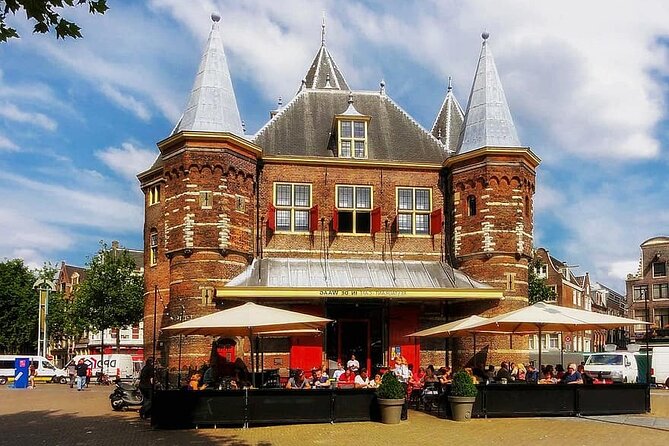
Your walk starts at Dam Square (Dam, 1012 Amsterdam, Netherlands) and ends at Belle (Sex Worker Commemorative Statue), Oudekerksplein 19, 1012 GX Amsterdam. The audio is built around a sequence of stops that make the area easier to understand.
You’re also not locked into a specific time of day. The experience is listed as open every day from 12:00 AM to 11:59 PM, which gives you flexibility if you’re balancing a busy itinerary.
And yes, you can usually join if you’re short on time. Most people keep it to the intended pace, but since it’s self-guided, you can slow down where you want—especially if the streets are crowded and you need a moment to breathe.
Stop-by-stop: what the audio tells you as you walk



Dam Square: look past the noise and find the neighborhood story
The first thing the narration does is reset your eyes. The Red Light District can feel like a party zone, and the crowd can be messy. You’ll get prompted to look beyond the drunken-tourist energy and treat this like a real neighborhood instead of a stage.
That approach changes how the rest of the walk lands. Instead of rushing to tick boxes, you start paying attention to street layout, location names, and why these places exist.
Zeedijk: the sea-dike you never see, but feel in the streets
Next up is Zeedijk. The audio explains what the name hints at: it was a former dike, basically early flood protection. Amsterdam’s relationship with water is a major part of its identity, but it’s easy to miss that when you’re focused on canals and postcards.
You’ll learn that Zeedijk was most likely built around the 1100s to protect early Amsterdam from the sea’s tides. Hearing that while you walk makes the street feel less random. It turns a narrow path into something with a job: keeping people safe.
A small “don’t overthink it” note: you’re not standing in a museum here. You’re learning through placement. If you like historical context you can carry in your head, this kind of stop works well.
Nieuwmarkt Square: hipsters, markets, and seasonal surprises
Then comes Nieuwmarkt Square. The narration acknowledges something practical: this place doesn’t always look the same. Depending on the time of year, you might see it calmer than expected, catch a market, or even spot something like a carnival.
That matters for your experience because Nieuwmarkt is a living square, not a frozen landmark. If you arrive expecting it to look one specific way, you can feel disappointed. The audio quietly prepares you for variation, which helps you relax and just observe.
It also gives you a lens for modern Amsterdam: Nieuwmarkt as a hotspot for today’s creative crowd. Even if you’re not shopping or partying, the square’s energy tells you a lot about how the city has shifted over time.
Belle sex worker commemorative statue: Els Rijerse and the message of respect
One of the most meaningful moments on the walk is Belle, created by Dutch artist Else Rijerse at the request of Mariska Majoor, the founder of the Prostitutes Information Center.
You don’t just get who made it. You also get what it’s trying to do: the statue’s aim is to engender respect. In an area where people often treat sex work like entertainment, that’s a different frame.
Standing at Belle with the audio running gives you a chance to reflect on why this district is so loaded with opinions and stereotypes. The narration pushes you away from voyeur mode and toward human context.
If you’re doing this because you want a more thoughtful way to understand the Red Light District, this stop is a big part of the payoff.
Near the end: de Oude Kerk and why Amsterdam’s buildings keep changing
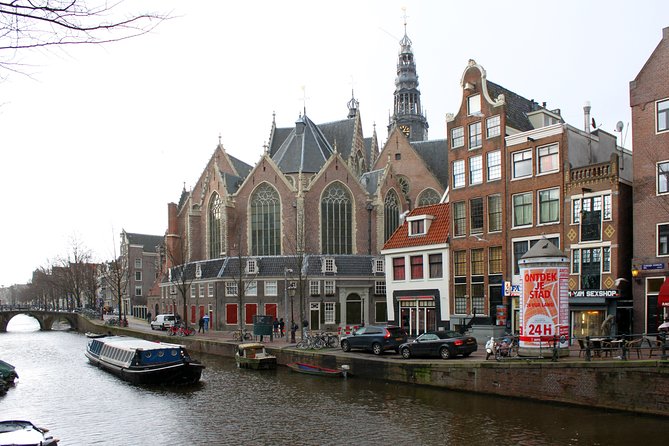
Right near the finish, the audio turns to de Oude Kerk. You’ll hear a detail that connects architecture to long timelines: the first wooden church at the site dates to the 1200s, and it was replaced in 1306 by a brick structure.
The narration explains that today the main hall remains, while other parts have been added across centuries. The takeaway is simple: Amsterdam’s religious buildings aren’t one-era objects. They’re layered, rebuilt, and adjusted like everything else in a city that’s always been adapting.
This final historical note helps anchor the Red Light District in the broader Amsterdam story. It stops your walk from feeling like a single-topic corridor.
What I’d watch for as you walk (especially in a sensitive area)
This tour includes sexual themes, and you’ll get a heads-up about that from the start. Keep that in mind, especially if you’re traveling with someone who prefers less explicit content.
Also, remember the core rule of the area: this isn’t a normal sightseeing street. Even if you’re curious, you need to keep your behavior respectful and your attention on the route. The audio is built to help you do that, because it gives you a reason to look at the street and its context rather than turning people into entertainment.
Finally, you’re in control of pacing. If something is too intense in the moment—sound, crowd pressure, or awkwardness—pause the audio and step aside. Self-guided means you can create distance.
When timing matters: empty squares vs markets vs carnival energy
Nieuwmarkt Square is the stop where timing can shift your whole mood. The audio explicitly notes that the square might be empty at times, or it might include a market or even a carnival, depending on season.
So here’s how I’d plan your day:
- If you want quieter walking, pick a time when the square is less likely to be packed.
- If you like people-watching and street atmosphere, lean into a time that matches markets or seasonal events.
The rest of the walk keeps its structure, but the street-level vibe will change with the day and time you choose.
Who this audio tour fits best
This experience is a great match if you want:
- a short route that won’t swallow your day
- a learning-focused way to understand the neighborhood beyond window-staring
- a flexible pace where you can pause and replay
It’s also ideal when live Red Light District walking tours aren’t an option for you. The audio format is built for the reality of the area and the rules around it.
One more practical fit: service animals are allowed, and you’re near public transportation. So if you’re using transit to stitch together Amsterdam days, this doesn’t feel like a remote detour.
Quick practical tips before you press play
These are the small things that make the experience smooth:
- Download the audio when you have Wi-Fi, then switch to offline for the walk.
- Bring a phone with enough battery life. A GPS-triggered audio tour is still a phone-first experience.
- Wear comfortable shoes. This is a short walk, but the area is dense and you may be stopping for context.
- Use pause if crowds get thick. Self-guided is forgiving.
And because the district can be a magnet for party energy, keep your head up. Follow the audio stops and give yourself room to navigate.
Should you book this Amsterdam Red Light District audio tour?
Yes—if you want a respectful, easy-to-follow GPS audio walk that teaches you why the places in this district matter. The main selling points are the clear stop-based structure, the offline playback, and the way the narration centers context like Zeedijk’s sea-dike past and the Belle statue’s message of respect.
Skip it—at least for your first visit—if you’re expecting a big sightseeing list with lots of dramatic, standalone attractions. This is not that. It’s a tight route with specific stops, and the value is in the focus.
If your goal is to understand the neighborhood rather than just pass through it, this tour earns its low price.
FAQ
How long is the Amsterdam Red Light District audio tour?
The tour is approximately 35 minutes.
What does it cost?
It costs $9.99 per person.
Is the tour available in English?
Yes, it’s offered in English.
Does the audio work offline?
Yes. You get offline access to audio, maps, and geodata, so you can save mobile data.
Where does the tour start and end?
It starts at Dam Square and ends at the Belle (Sex Worker Commemorative Statue) at Oudekerksplein 19.
Do I need to bring a smartphone?
Yes. A smartphone is not included, and the tour uses the VoiceMap application.